The American Audio Landscape: Digital Platforms Ascendant as Podcasts and Streaming Dominate Listening Habits

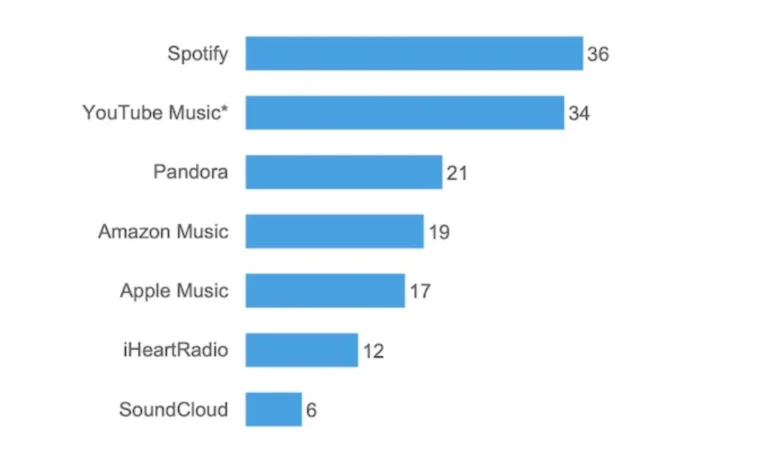
The latest data from the influential "Infinite Dial" survey, conducted in January 2026 by Edison Research in partnership with Sirius XM Media, paints a vivid picture of a dynamic and rapidly evolving audio consumption landscape in the United States. The comprehensive study, which surveyed 2,050 individuals aged 12 and older, reveals that a staggering 219 million Americans now engage with online audio platforms weekly, underscoring the profound shift from traditional broadcast to digital streaming. This widespread adoption positions online audio as an indispensable component of daily life for a vast majority of the population, impacting everything from personal entertainment to in-car experiences and the burgeoning podcast industry.
The Ascent of Online Audio Platforms: Spotify, YouTube Music, and Pandora Lead the Charge
At the forefront of this digital audio revolution are Spotify, YouTube Music, and Pandora, identified by the 2026 Infinite Dial report as the most listened-to online audio platforms in the nation. This triumvirate has successfully captured the attention of millions, offering diverse content ranging from extensive music libraries to podcasts and live radio streams. Their dominance reflects a culmination of strategic investments in content acquisition, user experience design, and sophisticated recommendation algorithms that cater to individual preferences.
Spotify, in particular, demonstrates a pronounced strength among younger demographics. The report highlights that the platform is "significantly more popular with younger listeners (age 12-34) compared with older listeners." This generational divide is not a new phenomenon; earlier Infinite Dial reports have consistently shown a strong affinity for digital-native platforms among Gen Z and Millennials. For instance, data from the 2024 Infinite Dial indicated that Spotify had already solidified its position as a primary audio source for individuals under 35, a trend that has only intensified by 2026. This demographic stronghold is crucial for long-term market leadership, as these younger users represent the future revenue base and growth engine for the digital audio industry. Spotify’s early adoption of podcasts and its aggressive expansion into exclusive audio content, including major deals with high-profile creators, have undoubtedly contributed to its widespread appeal across various age groups, but particularly resonated with a demographic seeking diverse and on-demand content.
YouTube Music, leveraging the immense reach and video integration capabilities of its parent company, Google, has rapidly ascended to become a major player. Its strength lies in seamlessly blending music videos, official audio, live performances, and user-generated content, offering a unique hybrid experience that appeals to a broad audience, especially those accustomed to visual content. Pandora, a pioneer in personalized internet radio, continues to maintain a strong presence, particularly appealing to users who prefer a curated, lean-back listening experience without the need for active selection. Its long history and established user base, cultivated through years of refining its music genome project, demonstrate the enduring value of personalized radio.

The overall growth in weekly online audio listenership from previous years further emphasizes this trend. While specific historical figures for 2025 are not provided in the summary, previous Infinite Dial reports showed a steady climb: in 2020, 75% of Americans aged 12+ (approximately 212 million people) listened to online audio monthly, with 67% (190 million) listening weekly. By 2023, weekly online audio listening had reached 73% of the U.S. population aged 12+, translating to roughly 209 million people. The 2026 figure of 219 million weekly listeners represents a continued, robust expansion, highlighting the sustained momentum of digital audio as a mainstream medium. This growth translates directly into a booming digital audio advertising market, with projections indicating billions of dollars in ad spend shifting from traditional media to streaming platforms and podcasts, underscoring the economic significance of these platforms.
The Evolving In-Car Audio Experience: AM/FM Radio’s Resilience Amidst Digital Gains
The automobile, long a bastion of terrestrial radio, is also experiencing a significant transformation in how Americans consume audio. The 2026 Infinite Dial survey reveals that the most listened-to audio sources in vehicles are AM/FM radio, online audio, and podcasts. This hierarchy underscores a fascinating duality: while traditional radio retains a powerful hold, especially among older demographics and for its immediacy in news and local information, digital alternatives are rapidly closing the gap and carving out substantial market share.
AM/FM radio’s enduring presence in vehicles can be attributed to several factors: its ubiquitous availability, ease of access (no data plan required), and its role as a source for local news, traffic, and community updates. For decades, the car dashboard was synonymous with the radio dial, and for many, this habit persists. However, the integration of advanced infotainment systems, smartphone connectivity (Apple CarPlay, Android Auto), and built-in cellular modems in newer vehicles has dramatically expanded the options available to drivers and passengers.
Online audio, encompassing streaming music services like Spotify and YouTube Music, as well as internet radio, has seen substantial growth in car usage. Listeners are increasingly leveraging their mobile devices or in-car apps to access their personalized playlists, podcasts, and on-demand content, transforming the daily commute into a personalized listening session. This trend began to accelerate significantly in the mid-2010s with the widespread adoption of smartphones and improved cellular infrastructure. By the early 2020s, a majority of new vehicles came equipped with advanced connectivity options, making digital audio consumption in cars more seamless than ever before.
Podcasts, too, have firmly established themselves as a key in-car audio source. The episodic nature of podcasts makes them ideal for commutes, allowing listeners to catch up on their favorite shows, learn new things, or be entertained during their drive. The convenience of downloading episodes for offline listening or streaming them directly through connected car systems has contributed to their growing popularity on the road. The rise of "car-friendly" podcast content, designed for passive listening, has also played a role.

Industry experts from automotive technology companies often highlight that the future of in-car audio is about seamless integration and choice. "Drivers today expect the same level of connectivity and personalized content in their cars as they have at home or on their phones," an inferred statement from a senior executive at an automotive tech firm might suggest. "Our focus is on creating intuitive interfaces that allow users to switch effortlessly between AM/FM, satellite radio, streaming services, and podcasts, ensuring a rich and personalized audio experience." This indicates a future where diverse audio options coexist and complement each other, rather than one completely replacing the other.
The Podcast Phenomenon: Listening, Watching, and the Future of Content Consumption
Perhaps one of the most compelling narratives from the 2026 Infinite Dial report is the continued, robust expansion of podcast consumption. The survey estimates that a remarkable 130 million Americans consume podcasts weekly. This figure represents a significant milestone, showcasing podcasts’ transition from a niche medium to a mainstream entertainment and information source. To put this into historical context, the 2015 Infinite Dial report showed only 17% of Americans (around 48 million people) had ever listened to a podcast, with a much smaller weekly listenership. By 2020, 37% of Americans (104 million) had listened to a podcast in the last month, and weekly listeners stood at 24% (68 million). The leap to 130 million weekly listeners by 2026 signifies an almost doubling of weekly engagement in just six years, an explosive growth trajectory unmatched by many other media formats.
Beyond mere listenership numbers, the report delves into the evolving modalities of podcast consumption, revealing a nuanced picture that challenges the traditional "audio-only" perception of podcasts. The data indicates that 13% of respondents reported only listening to podcasts in the past week, maintaining the classic audio experience. However, a significant 26% stated they both listened to and watched podcasts, pointing to the growing trend of multi-modal engagement. Furthermore, 6% reported only watching podcasts, highlighting the increasing prominence of video podcasts.
This breakdown – 13% audio-only, 26% audio+video, and 6% video-only – indicates that nearly one-third of weekly podcast consumers are engaging with the visual component of podcasts to some degree. This trend is largely driven by platforms like YouTube, which has become a de facto podcast destination, especially for video-first creators. Many popular podcasts now record their sessions with cameras, offering a visual dimension that can enhance the storytelling, capture host dynamics, or display visual aids. For content creators, this presents both an opportunity and a challenge: the opportunity to reach wider audiences and offer a richer experience, and the challenge of adapting production workflows to accommodate both audio and video formats.
The implications for content creators and platforms are profound. Publishers are increasingly investing in studios equipped for video production alongside audio, and platforms are developing features to better integrate video playback into their podcast offerings. For instance, Spotify has been actively promoting video podcasts for several years, recognizing the power of visual storytelling to drive engagement and attract new audiences. An inferred statement from a podcast network executive might be: "The data confirms what we’ve seen on the ground: video is no longer an optional add-on for podcasts; it’s an integral part of the content strategy for many top shows. We’re investing heavily in tools and talent that support creators in producing high-quality audio and video experiences simultaneously." This shift also opens up new avenues for advertising and sponsorship, as video allows for more diverse ad placements and brand integrations.

The Infinite Dial Report: A Cornerstone of Digital Audio Research
The "Infinite Dial" report, from which these insights are drawn, stands as one of the longest-running and most respected studies of consumer behavior in digital audio. Launched by Edison Research in 1998, it predates the mainstream internet and the advent of many of the technologies it now tracks. Over nearly three decades, the Infinite Dial has meticulously documented the evolution of online audio, internet radio, podcasting, and smart speaker adoption, providing invaluable data for broadcasters, advertisers, content creators, and technology companies.
The report’s consistent methodology, surveying thousands of Americans aged 12 and older across the United States annually, ensures its reliability and allows for robust year-over-year trend analysis. The partnership with Sirius XM Media, a leading audio entertainment company, further solidifies the report’s industry relevance and reach. The January 2026 survey, with its sample size of 2,050 individuals, continues this tradition of rigorous data collection, offering a current snapshot of the American audio landscape.
Industry Reactions and Strategic Implications
The findings of the 2026 Infinite Dial report are likely to elicit strong reactions and reinforce strategic directions across the audio industry. From the perspective of Edison Research and Sirius XM Media, the report underscores the dynamism of the digital audio market. "The consistent growth in online audio and podcast consumption, coupled with the intriguing shifts in how people engage with content, highlights an industry brimming with innovation and opportunity," an inferred statement from a spokesperson for the partnership might articulate. "Our data serves as a critical compass for stakeholders navigating this rapidly changing environment."
For leading platforms like Spotify, YouTube Music, and Pandora, the data validates their ongoing investments. Spotify, seeing its strong youth appeal, will likely double down on its strategy of exclusive content, personalized experiences, and potentially explore new interactive features to maintain its edge. YouTube Music will continue to leverage its unique position at the intersection of music and video, potentially integrating more sophisticated podcast discovery and playback features. Pandora might focus on enhancing its personalized radio offerings and exploring new ways to engage its loyal user base, possibly through more interactive content or live events.

Advertisers and marketers will undoubtedly view these trends as confirmation of the continued shift in consumer attention and ad dollars. The significant weekly listenership for online audio and podcasts presents a massive, engaged audience that is increasingly attractive for targeted campaigns. The rise of video podcasts, in particular, offers new creative opportunities for brands to tell their stories visually within an audio-first context. "The ability to reach 130 million weekly podcast consumers, many of whom are actively seeking out specific content, is incredibly powerful for advertisers," an inferred marketing executive might state. "The data showing the blend of audio and video consumption also opens up exciting new possibilities for integrated brand experiences."
Content creators, from independent podcasters to large media companies, must now consider a multi-platform, multi-format approach. The data suggests that simply producing audio might no longer be sufficient for maximum reach and engagement. Investing in video production, optimizing content for different consumption contexts (in-car, at home, on mobile), and understanding audience demographics will be paramount for success.
Broader Impact and Future Outlook
Looking ahead, the 2026 Infinite Dial report signals a continued blurring of lines between traditional and digital media, and between audio and video content. The future of audio consumption will likely be characterized by:
- Hyper-Personalization: Advanced AI and machine learning will further refine content recommendations, creating bespoke listening experiences for every individual.
- Seamless Integration: Audio will become even more integrated into our daily lives, accessible across a multitude of devices – smart speakers, wearables, connected cars, and augmented reality platforms – with effortless transitions between them.
- Interactive Audio: Expect more interactive podcasts and audio experiences, where listeners can influence the narrative or engage with content creators in real-time.
- The Metaverse and Spatial Audio: As immersive digital environments evolve, spatial audio will play a crucial role in creating realistic and engaging soundscapes, potentially opening new frontiers for audio content.
- Economic Expansion: The digital audio industry’s economic footprint will continue to grow, driven by advertising, subscriptions, and new monetization models for creators.
While AM/FM radio maintains a resilient presence, particularly in vehicles, the trajectory is clear: digital platforms and on-demand content, especially podcasts, are increasingly defining the American audio experience. The 2026 Infinite Dial report serves not just as a snapshot but as a vital guidepost, illuminating the path forward for an industry in perpetual motion, driven by technological innovation and evolving consumer preferences.
Related posts: