The Dawn of Answer Engines: A Paradigm Shift in Information Retrieval
The genesis of Answer Engine Optimization can be traced back to the burgeoning adoption of generative AI technologies, particularly large language models (LLMs), which gained mainstream prominence in late 2022 and early 2023. Prior to this, search engine optimization (SEO) predominantly focused on ranking web pages in organic search results, driving traffic to websites through keywords and backlinks. However, the advent of sophisticated AI tools capable of synthesizing vast amounts of information into concise, direct answers has fundamentally altered user behavior. Instead of clicking through multiple search results, users are now accustomed to receiving immediate, comprehensive responses, often without ever visiting an external website. This shift necessitates a new strategic approach, where the goal is not just to rank, but to be the source of the answer, or at least be cited within it.
AEO, while complementing SEO, diverges significantly in its objectives and methodologies. While SEO aims to drive traffic to a website, AEO prioritits brand visibility and authority within the AI’s response itself. This means optimizing content not just for keywords, but for clarity, conciseness, factual accuracy, and the ability to directly answer common user queries in a format easily digestible by AI models. The emphasis moves from being "found" to being "the answer."
Key Trends Driving AEO Adoption and Urgency
Several compelling data points underscore the immediate importance and escalating trajectory of AEO:
Rapid Growth and Superior Conversion Rates of AI Referral Traffic: According to a comprehensive analysis by Search Engine Land, referral traffic originating from LLMs such as ChatGPT and Gemini experienced a threefold increase in 2025. This surge is not merely in volume; it also translates into significantly higher-quality engagements. A study conducted by Semrush, spanning over 500 high-value digital marketing topics, revealed that visitors referred by LLMs converted at a rate 4.4 times higher than those arriving through traditional organic search channels, as further analyzed by Growth Marshal. This stark difference indicates that even a modest share of AI-referred traffic can exert a substantial positive impact on a business’s sales pipeline and overall conversion metrics. The implication for marketers is clear: AI-driven traffic represents highly motivated, often pre-qualified leads, making its acquisition a high-priority strategic imperative.
The Pervasive "Zero-Click" Era: A landmark 2024 study by SparkToro and Datos highlighted a significant trend: approximately 60% of all Google searches now conclude without the user clicking on any search result. This phenomenon, termed the "zero-click" era, is largely attributable to the increasing prevalence of AI Overviews, featured snippets, and direct answer boxes within search engine results pages (SERPs). Buyers are effectively obtaining the information they need directly from the search interface, obviating the necessity of visiting external websites. For brands, this signifies a critical shift: mere ranking on a SERP is no longer sufficient. Brand visibility within the immediate answer provided by the AI or search engine has become as, if not more, crucial than traditional page rankings. This demands content that is not only discoverable but also explicitly answer-oriented and authoritative enough to be chosen for direct display.
Buyers Actively Leveraging AI for Vendor Evaluation: Research conducted by McKinsey in 2025 revealed that between 40-55% of shoppers across popular industry sectors are actively employing AI search tools to inform their purchasing decisions. This data points to AI’s emerging role as a trusted advisor or digital concierge in the buyer’s journey. Consumers are not just using AI to browse; they are making critical vendor selections and product choices based on the information and recommendations provided by these AI systems. This positions AI as a pivotal gatekeeper in the decision-making process, making it imperative for brands to ensure their offerings are favorably represented and accurately described within AI-generated responses.
Competitive Blind Spots in the AI Landscape: A critical challenge in AEO is the potential for significant competitive blind spots. Many brands remain unaware of what AI models are articulating about their specific industry or product category. Competitors might be consistently cited in ChatGPT responses to critical prompts that potential buyers are asking, while a brand remains entirely unmentioned. Without dedicated monitoring, these crucial visibility gaps can go undetected, allowing competitors to capture mindshare and market share through AI channels. Specialized AEO tools are designed to illuminate these discrepancies, providing a baseline understanding of a brand’s competitive standing within answer engines.
The Holistic Nature of AI’s Information Synthesis: Unlike traditional SEO, which often prioritizes owned content, answer engines adopt a much broader, holistic approach to information synthesis. They pull data from an expansive array of sources, including review platforms (e.g., G2, Capterra), social media discussions (e.g., X, LinkedIn), community forums (e.g., Reddit), news coverage, and various third-party mentions across the web. This means a brand’s AEO visibility is intricately shaped by its overall digital footprint and broader brand presence, not solely by its owned website content. Brands with quiet social channels, sparse reviews, or limited third-party mentions will find these deficiencies reflected in their AI answers, underscoring the need for a comprehensive, integrated digital strategy.
Navigating the AEO Landscape: Practical Insights and Tools

Understanding these overarching AEO trends is foundational, but translating them into actionable insights specific to an individual brand is where the real work begins. Identifying where a brand is visible, where it’s absent, and what specific content or strategic adjustments are needed to bridge those gaps requires dedicated tools and systematic processes. Manually querying various AI models to gauge brand mentions is inefficient, inconsistent, and impractical at scale. This is where specialized AEO tools become invaluable.
Taking a cue from capabilities offered by platforms like HubSpot AEO, the core workflow typically involves:
-
Defining Scope: Marketers begin by inputting their brand name, key competitors, and a curated list of "prompts" – the questions their target audience is likely asking answer engines. Advanced tools can even suggest prompts based on existing CRM data or industry trends, allowing for segmentation by product line or customer segment.
-
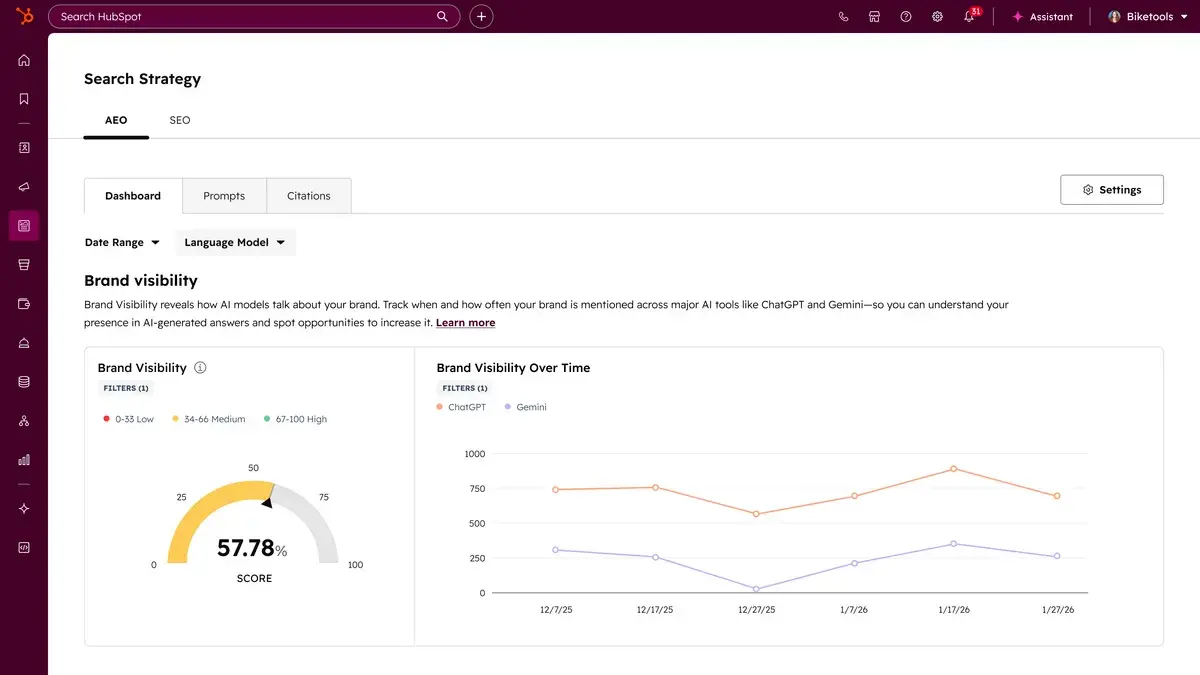
Monitoring Brand Visibility: The tool then tracks a "Brand Visibility Score," quantifying how frequently the brand is mentioned in AI responses to the monitored prompts. This score provides a clear baseline, tracked over time and across different answer engines (e.g., ChatGPT, Perplexity, Gemini), enabling marketers to observe trends and measure the impact of their AEO efforts.
-
Competitive Analysis and Share of Voice: A crucial component is the competitive analysis, which illustrates a brand’s "Share of Voice" – the proportion of brand mentions in AI responses attributed to the brand versus its competitors. This highlights specific prompts where competitors are dominant, revealing high-leverage opportunities for the brand to gain ground.
-
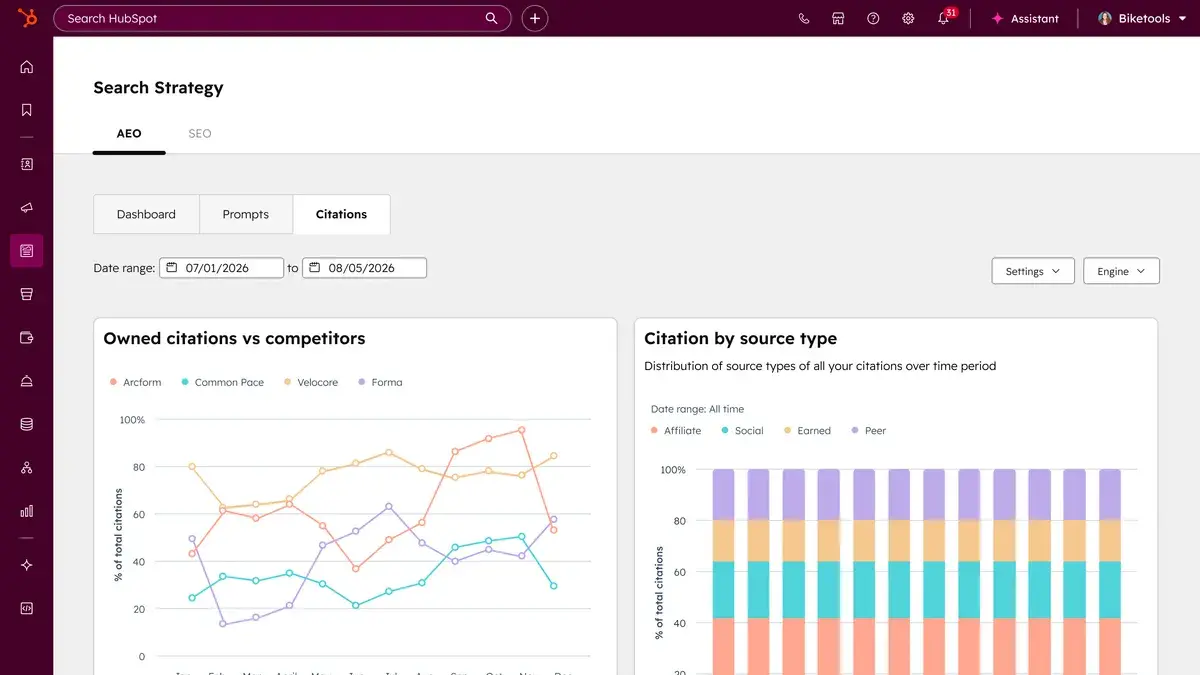
Citation Analysis: Answer engines synthesize information from various web sources. A robust AEO tool provides a detailed "citations view," showing which sources (e.g., blog posts, comparison articles, review sites, Reddit threads, news outlets) and specific domains are being referenced by AI when responding to category-specific prompts. This granular insight informs content strategy, revealing which formats and channels are most effective in earning AI citations. For instance, if comparison-style content consistently earns citations for high-intent queries, it signals an area for increased investment.
-
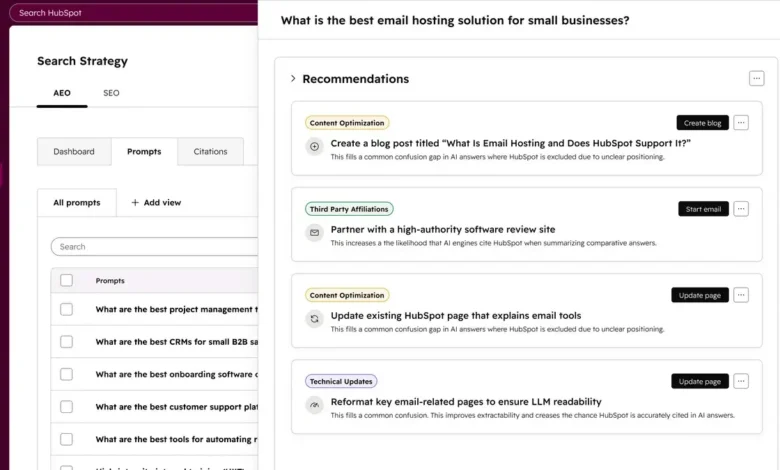
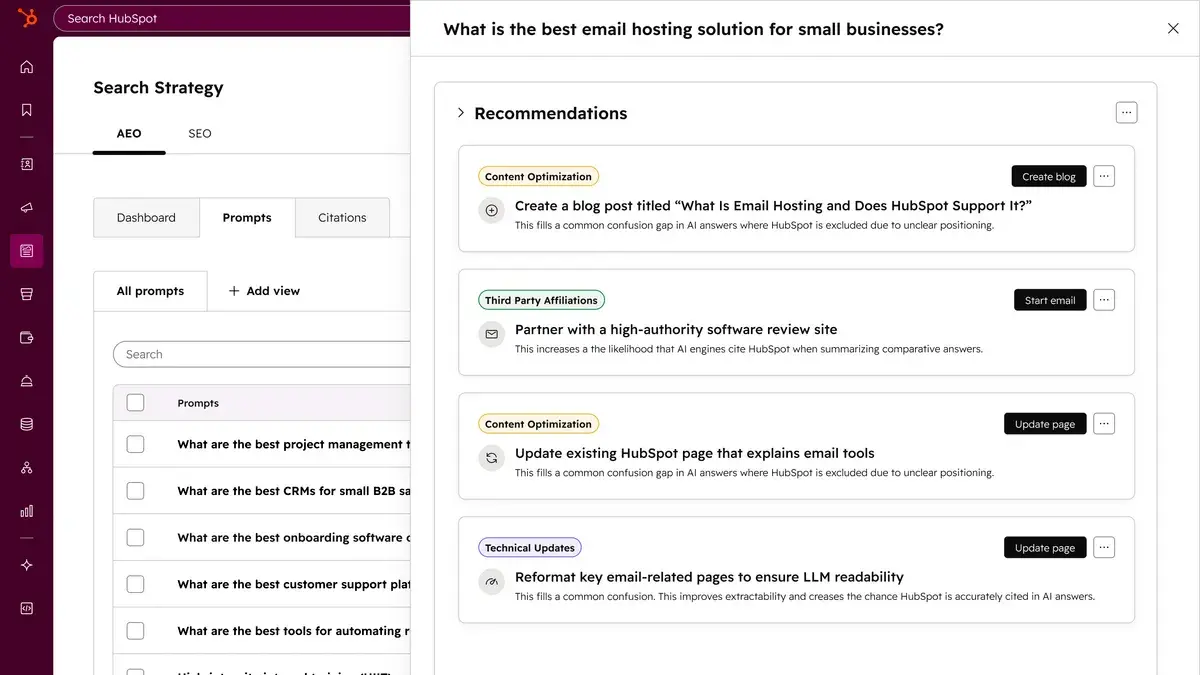
Actionable Recommendations: Beyond data, effective AEO tools offer prioritized recommendations for content creation, optimization, and outreach. These recommendations are typically ranked by their potential impact on visibility and come with detailed context, including suggested content titles, target audiences, keywords, and the underlying rationale derived from prompt performance and citation data.
-
Granular Filtering and Refinement: As AEO strategies mature, the ability to filter data by specific answer engine, date range, or prompt group becomes essential. This allows marketers to analyze performance for distinct product lines or customer segments, identifying nuances (e.g., strong visibility on ChatGPT but poor visibility on Gemini) and tailoring optimization efforts accordingly. Regular, ideally monthly, reviews of AEO data are critical for continuous improvement.
Crafting an AEO Strategy: From Content to Technical Optimization
Implementing an effective AEO strategy requires a multi-faceted approach, encompassing content formatting, technical SEO enhancements, and a broader understanding of how AI consumes and synthesizes information.
Optimizing Content for AI Citation:
- Direct Answers: Craft content that provides clear, concise, and authoritative answers to specific questions, often using a Q&A format.
- Structured Data: Employ bulleted lists, numbered lists, tables, and short paragraphs to make information easily digestible and extractable by AI models.
- Topic Authority: Develop comprehensive content clusters around key topics, establishing your brand as a leading authority, which AI models favor.
- Clarity and Simplicity: Avoid jargon and overly complex sentence structures. AI prioritizes clear, unambiguous language.
Leveraging Schema Markup for AI Understanding:
Schema markup is crucial for providing machine-readable context to AI engines. While not a guaranteed citation, it significantly reduces ambiguity.
- FAQPage Schema: Ideal for content that addresses common questions, explicitly pairing questions with their answers.
- HowTo Schema: Useful for step-by-step guides, helping AI understand procedural content.
- Product/Review Schema: Essential for commercial pages, providing structured data about products, ratings, and reviews, which AI can use for recommendations.
- Article/NewsArticle Schema: Provides context about authors, publishers, and publication dates for editorial content, enhancing credibility.
- Organization Schema: Helps AI understand your brand’s official name, contact information, and social profiles.
Fast Technical Wins for AEO:
- Robots.txt Configuration: Ensure AI crawlers like OAI-SearchBot (for ChatGPT) are not inadvertently blocked. Many sites still carry legacy blocks that could hinder AI citations.
- Mobile-First Indexing: Maintain a mobile-responsive site, as AI increasingly prioritizes mobile-friendly content.
- Core Web Vitals: Optimize for page speed, interactivity, and visual stability, as these user experience factors indirectly influence AI’s perception of content quality.
- SSL Certificates: Secure your site with HTTPS; trust signals are paramount for both users and AI.
AEO Tactics Compound with Inbound for Sustainable Growth
For brands already invested in inbound marketing and content-led SEO, AEO represents a natural extension rather than a replacement. It builds upon the existing foundations of helpful content, topical authority, and brand trust. Where AEO adds a new dimension is in the breadth of signals it rewards. While traditional SEO often heavily weighted on-page optimization and backlinks, AEO considers a much wider ecosystem: review sites, social media, community discussions, and news coverage. A single, high-quality blog post can now simultaneously earn organic traffic and increase citation chances in AI answers. A positive G2 review can bolster domain authority and also serve as a cited source when an AI recommends tools in a specific category. This compounding effect, where consistent brand presence across multiple channels reinforces AI’s perception of authority and consensus, is a strong driver of AI recommendations.
Practical Ways to Optimize Your Site for AI Answer Engines: A Prioritized Checklist
To effectively optimize for AI answer engines, a structured and iterative approach is necessary.
Start Here (Week 1): Immediate High-Leverage Actions
- Review and Adjust Robots.txt: Confirm that AI crawlers (specifically OAI-SearchBot) are allowed to access your site. Blocking them will prevent your content from being cited.
- Implement HubSpot AEO (or similar tool): Set up your brand, key competitors, and initial prompts (questions your buyers are asking). Utilize CRM data for prompt suggestions if available.
- Organize Prompts: Group prompts by product line, service, or audience segment to enable granular performance tracking.
- Baseline Brand Visibility: Immediately check your initial Brand Visibility Score and competitive Share of Voice to understand your starting position.
Build Your Foundation (Weeks 2–4): Strategic Content and Technical Adjustments
- Content Audit for Answer-Readiness: Identify existing content that directly answers buyer questions. Prioritize optimizing these pages with clear, concise answers, structured data (lists, tables), and relevant headings.
- Implement Key Schema Markup: Focus on FAQPage, HowTo, Product, and Article schema where appropriate. Use Google’s Structured Data Testing Tool to validate implementation.
- Address Core Web Vitals: Work on improving page speed, responsiveness, and visual stability to enhance overall site quality, a factor indirectly considered by AI.
- Develop a Review Strategy: Actively solicit and manage reviews on relevant third-party platforms (e.g., G2, Capterra, industry-specific sites), as these are frequently cited by AI.
Maintain and Compound (Monthly Cadence): Ongoing Optimization
- Regular AEO Data Review: Dedicate monthly time to review your Brand Visibility trends, Share of Voice against competitors, and new recommendations from your AEO tool.
- Content Gap Analysis: Identify new prompts where your brand is invisible or underrepresented, using competitive insights and AI recommendations. Prioritize creating new, answer-oriented content for these gaps.
- Monitor Citation Sources: Track which external sites (review sites, news, forums) are consistently cited by AI. Develop strategies to enhance your presence on these platforms through outreach or content contribution.
- Iterative Content Optimization: Continuously refine existing content based on performance data. Update answers, improve clarity, and add new data points to maintain authority.
- Track AI Referral Traffic: Monitor traffic from ChatGPT (utm_source=chatgpt.com) and Perplexity (perplexity.ai referral) in your analytics platform to understand engagement and conversion rates from these channels.
Frequently Asked Questions About AEO
Should I block or allow AI crawlers like GPTBot?
The decision to block or allow AI crawlers should align with your specific business goals. OpenAI primarily uses two distinct crawlers: GPTBot, which crawls content for model training purposes, and OAI-SearchBot, which gathers information to generate cited responses when ChatGPT performs a web search. Blocking OAI-SearchBot will generally prevent your site from appearing as a source in ChatGPT’s direct answers. If your primary concern is preventing your data from being used for model training while still aiming for visibility in AI answers, you can selectively block GPTBot while allowing OAI-SearchBot via your robots.txt file. It is prudent to review your robots.txt immediately, as many sites still have blanket AI-bot blocks that could inadvertently reduce their eligibility for AI-generated citations and summaries.
Which schema is most impactful for AEO?
There isn’t a single "most impactful" schema for AEO; the optimal choice depends heavily on the content type and its intended purpose. For question-and-answer focused content, FAQPage schema is particularly useful as it explicitly delineates questions and their corresponding answers, making it highly legible for AI. For editorial pieces, Article schema helps AI interpret crucial context like the author, publisher, and publication date, enhancing credibility. For commercial pages, Product and Review schema are often most relevant, aligning with buyer-intent queries and providing structured data about offerings and user feedback. However, schema markup should be viewed as an enhancer for strong content, not a fix for weak or thin content. It ensures that valuable information is more easily parsed by machines but does not inherently imbue poor content with authority.
How do I track traffic from Perplexity or ChatGPT browsing?
For ChatGPT, tracking is often straightforward: the platform automatically appends the UTM parameter utm_source=chatgpt.com to outbound links when it returns search results. Most analytics platforms are configured to capture these UTM parameters, allowing for clear tracking and analysis of inbound traffic specifically from ChatGPT. For Perplexity, you should look for perplexity.ai within your referral traffic reports in your analytics platform. To gain granular insights, it is advisable to set up dedicated segments or filters within your analytics tools for these specific sources. This will enable you to monitor volume, user engagement metrics, and conversion rates from AI-driven referrals independently from traditional organic search traffic, providing a clearer picture of AEO’s impact.