The Future of E-commerce How AI Agents and Agentic Commerce are Redefining the Digital Storefront


The landscape of global retail is undergoing a fundamental transformation as artificial intelligence shifts from a backend operational tool to a frontline consumer intermediary. This evolution, characterized by the rise of "agentic commerce," represents a departure from traditional search-and-browse behaviors toward a model where autonomous AI agents identify, compare, and eventually purchase products on behalf of human users. According to recent data from McKinsey, approximately 50 percent of all consumers now utilize AI-integrated search tools, signaling a permanent change in the digital path to purchase. As financial institutions like Visa, Mastercard, and American Express accelerate the development of transaction-capable AI agents, the e-commerce sector is bracing for a shift that could influence up to $5 trillion in global retail revenue by 2030.
The current transition is categorized by four distinct stages of AI integration. The first, AI-assisted tools, involves the use of generative AI for efficiency-based tasks such as writing product descriptions or personalizing email marketing. The second stage, AI-enhanced browsing, is currently visible in search engines like Google and Bing, where AI-generated summaries curate product recommendations before a user even clicks on a merchant’s link. The third stage involves AI-optimized processes, where retailers use predictive analytics for inventory forecasting and dynamic pricing. The final and most disruptive stage is agentic commerce, where AI agents act as autonomous proxies for shoppers, navigating the web to execute complex purchasing decisions based on specific user-defined criteria.
The economic implications of this shift are staggering. McKinsey’s projections suggest that AI-driven commerce could account for $1 trillion in U.S. retail revenue alone within the next decade. This growth is underpinned by the increasing sophistication of Large Language Models (LLMs) and the development of standardized protocols that allow these models to interact directly with merchant databases. However, the adoption of agentic commerce is not uniform across all product categories. Research from Checkout.com indicates a "trust threshold" in consumer behavior; currently, U.S. consumers express comfort in allowing AI agents to spend an average of $233 on their behalf. This suggests that while routine replenishment and mid-market comparison shopping are ripe for AI automation, high-ticket luxury items and complex emotional purchases still require a "human-in-the-loop" approach.
To understand the trajectory of this technology, it is essential to examine the chronological development of AI in the retail sector. The 2010s were defined by recommendation engines and basic predictive algorithms, largely pioneered by giants like Amazon. The release of GPT-3 in 2020 marked the beginning of the generative era, allowing for more conversational search. By 2023, the integration of AI into search engines (Search Generative Experience) began to redirect traffic away from traditional organic listings toward AI-curated answers. In 2024 and 2025, the focus has shifted toward the "Protocol Era," where industry leaders are establishing the technical rules of engagement that allow AI agents to talk to digital storefronts.

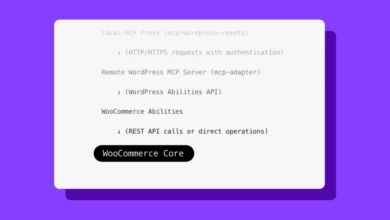
Three primary protocols have emerged as the frontrunners in this new infrastructure. The Model Context Protocol (MCP), introduced by Anthropic, provides a standardized framework for AI models to securely access external systems, such as a store’s live inventory and pricing data. This solves the "hallucination" problem common in LLMs, ensuring that an AI agent does not recommend an out-of-stock item based on outdated training data. Simultaneously, the Agentic Commerce Protocol (ACP), a collaborative effort involving OpenAI and Stripe, focuses on the discovery and cart-building phase within the ChatGPT ecosystem. Finally, Google’s Universal Commerce Protocol (UCP) leverages the Google Merchant Center to enable AI agents—including Gemini—to discover products and facilitate checkouts directly within search interfaces.
These protocols represent a significant shift in how independent merchants compete with market dominant platforms. For years, the e-commerce landscape has been bifurcated between the convenience of Amazon and the brand identity of independent stores. Interestingly, the rise of AI agents may favor the latter. Amazon has notably blocked OpenAI’s crawlers from accessing its product listings, effectively making millions of products invisible to ChatGPT’s organic search. In contrast, specialty retailers who utilize open-source platforms like WooCommerce can leverage structured product data to surface in AI recommendations. Because AI agents prioritize relevance and data accuracy over traditional ad spend, a well-optimized independent store can theoretically outrank a corporate giant in an AI-driven query.
The practical application of agentic commerce is most visible in "considered purchases"—items that require research but fall below the high-stakes trust threshold. For example, a consumer seeking a specific set of outdoor gear for a high-altitude trek would traditionally spend hours cross-referencing reviews, weather ratings, and shipping times across multiple websites. An AI agent, utilizing ACP and MCP, can aggregate this data in seconds, assembling a "kit" from various specialized merchants that meets the user’s budget and technical requirements. This capability transforms the merchant’s role from a destination to a data source; the store must ensure its product specifications are "machine-readable" to be included in the agent’s final recommendation.
Industry reactions to these developments are mixed but generally optimistic regarding efficiency. Analysts suggest that the shift will force a move away from traditional Search Engine Optimization (SEO) toward "AI Optimization" (AIO). While SEO focused on keywords and backlinks to appease search algorithms, AIO focuses on structured data (Schema.org) and API accessibility to satisfy AI agents. This requires a higher level of technical hygiene from merchants. Platforms like WooCommerce are responding by integrating MCP and UCP directly into their core infrastructure, allowing small-to-medium enterprises (SMEs) to participate in the agentic economy without the need for custom-built AI connectors.
However, the transition is not without risks. The centralization of commerce through AI assistants raises concerns about data privacy and the potential for "algorithmic bias," where an AI agent might favor certain merchants based on hidden incentives. Furthermore, the "Direct Access" model vs. the "Centralized Catalog" model presents a strategic crossroads for retailers. In a centralized model, merchants upload data to a third-party platform that controls the presentation. In the direct access model—supported by open-source frameworks—the AI agent connects directly to the merchant’s site, allowing the retailer to maintain control over the customer relationship and branding.

The broader implications of agentic commerce extend into the global supply chain and logistics sectors. As AI agents become more prevalent, the demand for real-time inventory accuracy will become absolute. A merchant who fails to update stock levels in real-time will find their products penalized by AI agents seeking to minimize transaction friction. This will likely lead to a surge in investment in automated warehouse management systems and real-time data synchronization tools. Moreover, as AI agents begin to handle routine replenishment, the "subscription economy" may evolve into an "agentic replenishment economy," where the AI optimizes the timing of purchases based on fluctuating prices and shipping speeds rather than a fixed monthly schedule.
For the modern merchant, the immediate priority is the refinement of product data. The emerging AI infrastructure relies on clean, comprehensive, and structured information. This includes not only prices and descriptions but also nuanced attributes like "fair-trade certification," "shipping carbon footprint," or "specific material durability." In an era where a digital agent is the primary shopper, the richness of a product’s metadata becomes its most valuable marketing asset.
As 2030 approaches, the distinction between "searching" and "buying" will continue to blur. The integration of payment rails into AI protocols ensures that the final hurdle—the transaction—is becoming a seamless background process. While the human element of shopping—the desire for brand connection, aesthetic appeal, and community—will remain, the mechanical tasks of filtering and comparing are being permanently outsourced to the machine. The merchants who successfully navigate this shift will be those who view AI not as a threat to their storefront, but as a new type of customer that requires a new type of service. The window for this preparation is currently open, as the protocols being written today will define the commercial landscape for the next generation of digital trade.
Related posts: