Navigating the Complexity of Google Ads Sensitive Category Restrictions and the Impact on Digital Marketing Strategy


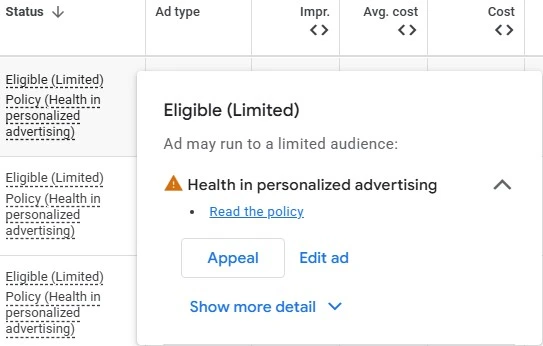
The "Eligible (limited)" status within the Google Ads dashboard serves as a critical regulatory signal, indicating that while an advertisement is permitted to run, its reach and targeting capabilities are constrained by specific policy frameworks designed to protect user privacy and ensure legal compliance. This status often triggers concern among digital marketers and business owners, yet it represents a fundamental component of the modern advertising ecosystem’s move toward increased data privacy and ethical targeting. Rather than signaling a failure or a "broken" campaign, the limited eligibility status reflects Google’s internal enforcement of "Sensitive Interest Categories," a classification system that restricts personalized advertising for industries involving personal hardships, identity, belief, and access to essential opportunities. Understanding the nuances of these restrictions is essential for advertisers operating in regulated sectors, as it dictates the difference between a high-performing campaign and one that fails to reach its intended audience due to algorithmic suppression.
The Regulatory Framework of Sensitive Categories
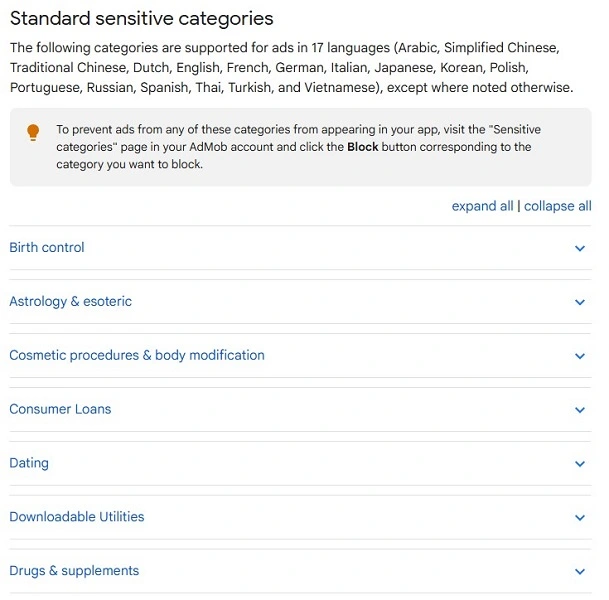
A sensitive category in the context of Google Ads refers to any industry or subject matter where Google prohibits the use of personalized advertising features. This prohibition is rooted in two primary motivations: the protection of individual user privacy and adherence to international legal standards regarding discrimination and data protection. Personalized advertising relies on tracking user behavior across the web to create detailed profiles—segments that Google refers to as "Affinity," "In-Market," or "Remarketing" lists. However, when a business falls under a sensitive category, Google disables these features to prevent the potential for predatory targeting or the unintentional exposure of a user’s private struggles or protected characteristics.
For example, a business offering debt relief services is classified under "personal hardships." Because Google’s algorithms recognize that financial distress is a sensitive state, the platform prevents advertisers from "following" these users with remarketing ads, as this could be perceived as invasive or exploitative. Similarly, the "access to opportunities" category—which includes housing, employment, and credit—is strictly regulated to prevent digital redlining. In these sectors, advertisers are prohibited from targeting or excluding audiences based on gender, age, parental status, or zip code, ensuring that all users have equal access to essential life resources regardless of their demographic profile.

The Evolution of Ad Policy: A Chronology of Compliance
The current landscape of sensitive category restrictions is the result of a multi-year evolution in both tech policy and global legislation. The timeline of these changes illustrates a clear shift from an "open-web" targeting model to a "privacy-first" framework.
In 2018, the implementation of the General Data Protection Regulation (GDPR) in the European Union forced major tech platforms to reconsider how they processed user data for advertising. This was followed closely by the California Consumer Privacy Act (CCPA) in 2020, which introduced similar protections in the United States.
A pivotal moment occurred in 2019 when the U.S. Department of Housing and Urban Development (HUD) filed charges against major social and search platforms, alleging that their targeting tools allowed for discriminatory practices in housing advertisements. In response, Google overhauled its "Housing, Employment, and Credit" (HEC) policies in late 2020. This update effectively removed the ability for advertisers in these sectors to use demographic or location-based exclusions, fundamentally changing the strategy for thousands of real estate and recruitment firms.
By 2021 and 2022, Google expanded these protections further, introducing more stringent rules regarding "Personal Hardships," which now include everything from health conditions and addiction treatment to financial ruin and relationship status. The 2023 rollout of "Demand Gen" campaigns further complicated this landscape, as these AI-driven campaigns face even stricter scrutiny on Google’s owned properties like YouTube and Discover than standard Display Network ads.
Data Insights: The Scale of Ad Moderation
The scale of Google’s enforcement is vast. According to Google’s 2023 Ad Safety Report, the company blocked or removed over 5.5 billion ads for violating various policies, including those related to sensitive categories. Furthermore, the report highlighted that Google suspended more than 12.7 million advertiser accounts—nearly double the number from the previous year. This surge in enforcement underscores the importance of understanding "Eligible (limited)" statuses; as automated systems become more aggressive, advertisers must be proactive in ensuring their creative assets and targeting methods align with current guidelines to avoid account-level penalties.
In the financial services sector, for instance, the implementation of the "Financial Services Verification" process in countries like the UK and Australia has led to a significant increase in limited eligibility statuses. Advertisers who fail to provide third-party verification of their licensing find their ads restricted or entirely blocked, reflecting a broader trend of "permission-based" advertising in sensitive niches.
Official Responses and Stakeholder Perspectives
The reactions to these restrictions are polarized between privacy advocates and the business community. Privacy groups, such as the Electronic Frontier Foundation (EFF), have generally lauded these restrictions, arguing that the "surveillance advertising" model poses a threat to civil liberties. They contend that by limiting personalized targeting in sensitive categories, Google is taking a necessary step toward preventing the algorithmic amplification of bias.
Conversely, small business advocacy groups have expressed concern that these broad-brush policies disproportionately harm smaller players. Without the ability to use "lookalike" audiences or remarketing, small businesses often see a rise in Customer Acquisition Costs (CAC). A spokesperson for a leading digital marketing association noted that "while the intent of these policies is noble, the execution often leaves legitimate businesses in a ‘grey zone’ where they are paying higher prices for less relevant traffic because they cannot use the precision tools available to other industries."
Strategic Adaptations for Restricted Accounts
Despite the limitations imposed on personalized advertising, sophisticated advertisers have developed methodologies to maintain high performance. These strategies shift the focus from "who" the user is to "what" the user is doing or "where" they are looking.
1. Contextual and Content Targeting
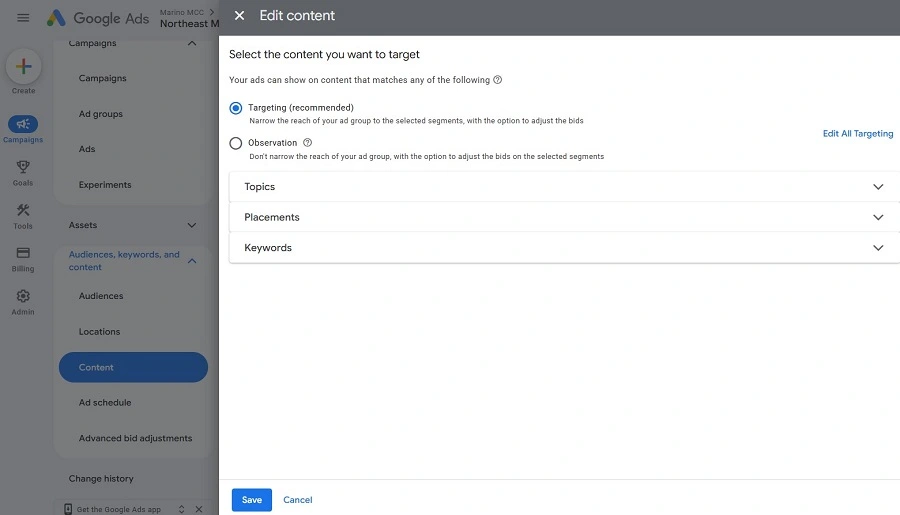
While personalized segments are off-limits, content targeting remains a potent tool. This involves placing ads based on the specific environment of the user. For a divorce attorney—a business in a sensitive category—this might mean targeting specific YouTube videos about "how to file for legal separation" or websites that provide legal advice. By targeting the context of the page rather than the history of the user, the advertiser reaches a high-intent audience without violating privacy protocols.
2. Non-Linear Audience Overlap
This strategy involves using "In-Market" segments that are not directly related to the sensitive category but share a high degree of correlation with the target audience. For example, a non-profit organization focusing on cancer support may not be able to target users based on health history. However, they can target segments interested in "charitable giving," "volunteer opportunities," or "healthcare news." This "non-linear" approach casts a wider net that inevitably captures the target demographic while remaining compliant with Google’s prohibition on health-based profiling.
3. Creative-Led Targeting and Algorithmic Training
In the absence of manual targeting levers, the ad creative itself becomes the primary targeting tool. Modern Google Ads algorithms, particularly in Performance Max and Demand Gen campaigns, use machine learning to analyze which users engage with which creative assets. If an ad for a specialized medical device is very specific in its headline and imagery, users who are not interested will likely scroll past. The algorithm notes this lack of engagement and stops showing the ad to similar profiles. Over time, the creative "filters" the audience, effectively training the AI to find the right users even when demographic toggles are disabled.
Broader Impact and the Future of Digital Advertising
The rise of sensitive category restrictions signals the end of the "wild west" era of digital tracking. As third-party cookies continue to be phased out and privacy regulations like the European Union’s Digital Markets Act (DMA) take full effect, the "Eligible (limited)" status will likely become the new standard for a growing number of industries.
This shift is forcing a return to traditional marketing principles: high-quality creative, strong value propositions, and a deep understanding of the customer journey. For the digital advertising industry, the implication is clear: success will no longer be defined by the ability to exploit data loopholes, but by the ability to build trust and relevance within a regulated framework. As Google continues to refine its AI-driven "Privacy Sandbox," the line between personalized and contextual advertising will blur, but the core requirement for ethical, non-discriminatory, and privacy-conscious marketing will remain the cornerstone of the platform’s global operations.
Related posts: