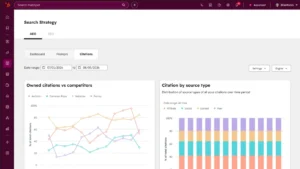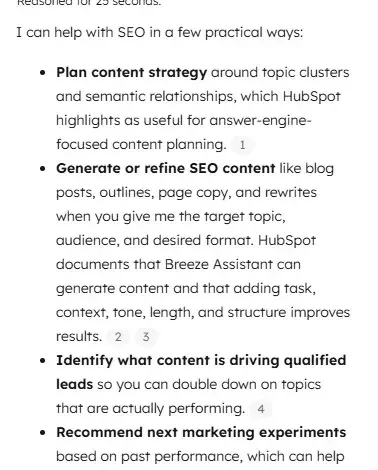
In the dynamic landscape of digital marketing, enterprise rank-tracking software has evolved from a simple keyword position checker into a sophisticated intelligence platform, crucial for large organizations navigating an increasingly complex search environment. This advanced tooling goes far beyond monitoring a handful of keywords, instead tracking millions of data points across diverse devices, geographical locations, and ever-expanding search features, including the pivotal AI Overviews, traditional featured snippets, and localized search packs. The insights garnered from this extensive monitoring are then seamlessly integrated into organizational dashboards, CRM workflows, and executive reports, enabling data-driven action across vast, cross-functional teams.
The Shifting Paradigm of Search Visibility
The foundational concept of search engine optimization (SEO) has undergone a profound transformation over the past decade. What began as an effort to rank for specific keywords on desktop search engines has expanded exponentially. The proliferation of mobile devices, voice search, personalized results, and multimodal search experiences has fragmented the traditional "ten blue links" model. For enterprises, this means that maintaining digital visibility is no longer a singular, straightforward task but a continuous, multi-layered challenge. Early rank trackers, often rudimentary tools, provided daily snapshots of keyword positions for a limited set of terms. While adequate for smaller websites, this approach proved insufficient for large organizations managing thousands, if not millions, of pages, diverse product lines, and global audiences. The sheer volume of data, coupled with the need for granular insights across various markets and customer segments, necessitated a new generation of software. This gave rise to enterprise-grade solutions designed to handle high data volumes, offer real-time or near-real-time refresh rates, and provide deep integrations with existing business systems.

Key Drivers for Enterprise-Grade Solutions
The demand for sophisticated rank-tracking solutions is fueled by several critical factors unique to enterprise operations. First, the scale of operations dictates the need for automated, comprehensive data collection. Large enterprises typically target vast keyword portfolios, often spanning multiple languages and regional variations. Manually monitoring these at scale is impossible. Second, the increasing complexity of Search Engine Results Pages (SERPs) requires more than just position tracking; it demands an understanding of how brands appear within rich results, local packs, and, most recently, AI-generated answers. A significant report by Grand View Research estimated the global SEO software market size at USD 2.6 billion in 2022, projected to grow at a compound annual growth rate (CAGR) of 13.9% from 2023 to 2030, underscoring the escalating investment in these tools. This growth is largely driven by the enterprise segment’s need for advanced functionalities.
Third, enterprise decision-making relies heavily on integrated data. Ranking data, while valuable on its own, achieves its full potential when correlated with other business intelligence. Connecting keyword performance to web analytics reveals whether visibility translates into traffic. Integrating with customer relationship management (CRM) systems allows a direct line to be drawn between improved search rankings and measurable upticks in lead generation and revenue pipelines. Without this integration, SEO efforts risk remaining isolated, making it difficult to demonstrate tangible business impact to executive stakeholders. Leading industry analysts frequently highlight data unification as a top priority for CMOs in the digital age, emphasizing that siloed data impedes strategic agility and accurate ROI measurement.
Evaluating Enterprise Rank Tracking Software: A Holistic Approach
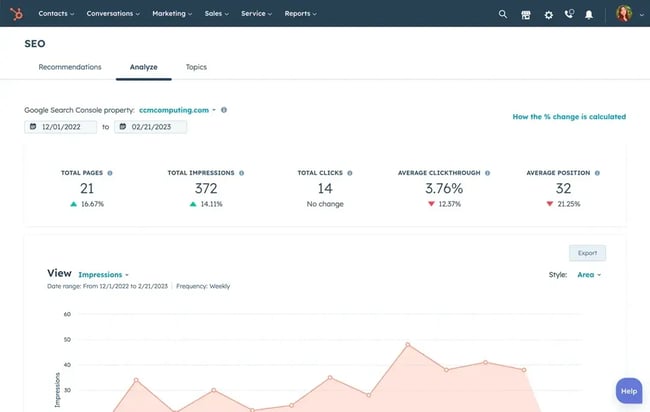
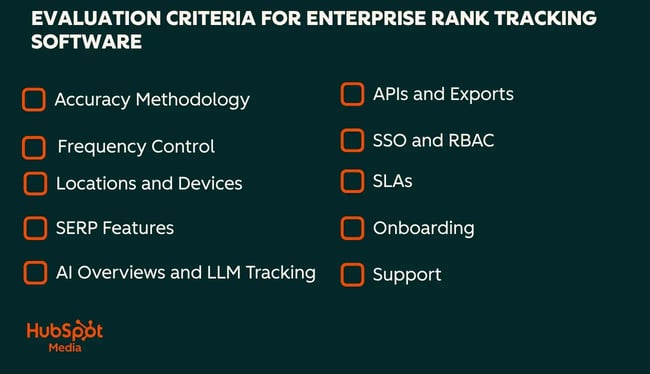
Choosing the right enterprise rank-tracking platform is a strategic decision that demands careful consideration beyond a simple feature checklist. It requires understanding a business’s unique operational needs, workflow integrations, and long-term scalability requirements.
- Accuracy Methodology: The veracity of ranking data is paramount. Enterprise solutions must demonstrate robust data collection methods, utilizing a mix of dedicated datacenter IPs and residential proxies to mitigate personalization and localization biases. Vendors should provide detailed methodology documents outlining how they ensure results accurately reflect what real users see across different locations and devices.
- Frequency Control: For enterprises with dynamic content or operating in fast-moving industries, daily tracking, while standard, may not suffice. The ability to set custom crawl schedules—hourly or on-demand—is crucial during product launches, major sale events, or during critical news cycles to capture immediate shifts in visibility.
- Locations and Devices: Global or multi-regional enterprises require highly granular tracking. The software must support multi-location monitoring, often down to city, zip code, or even coordinate level, and independently track both desktop and mobile rankings, acknowledging their frequent divergence.
- SERP Feature Tracking: The modern SERP is a rich tapestry of content types. Effective enterprise software must track not only the "ten blue links" but also featured snippets, local packs, "People Also Ask" boxes, image and video carousels, and shopping units. The ability to trigger alerts based on changes in feature ownership is a significant competitive advantage.
- AI Overviews and LLM Tracking: This is rapidly becoming a non-negotiable capability. With generative AI increasingly influencing search results, platforms must monitor AI Overview appearances, identify cited URLs, and capture prompt-level data. The inclusion of historical snapshots and robust prompt libraries allows for longitudinal analysis of AI visibility.
- APIs and Exports: Enterprise teams rarely operate solely within a single platform’s native UI. A well-documented API with sufficient rate limits, flexible export options (CSV, JSON), and direct connectors to data warehouses or business intelligence (BI) tools are essential for integrating ranking data into broader analytical ecosystems.
- SSO and RBAC: Security and governance are critical for large organizations. Single Sign-On (SSO) integration with corporate identity providers and Role-Based Access Control (RBAC) are prerequisites. Permissions should be configurable at team, market, or campaign levels to ensure data access is appropriate and secure.
- Service Level Agreements (SLAs): Comprehensive SLAs are vital. Enterprises need guaranteed uptime, clear protocols for data recovery in case of crawl failures, and contractual commitments to data freshness, along with defined remedies if these are not met.
- Onboarding and Support: The implementation of enterprise software can be complex. Dedicated onboarding teams, structured implementation support, realistic timelines for full production use, and ongoing access to named account managers or customer success contacts are critical for successful adoption and long-term value.
The Rise of Answer Engine Optimization (AEO) and AI Visibility
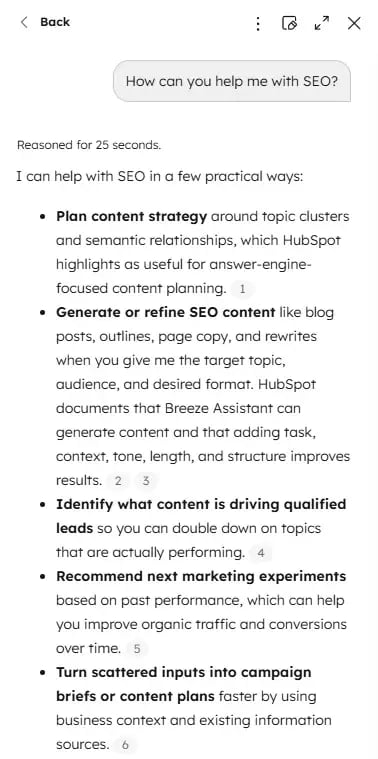
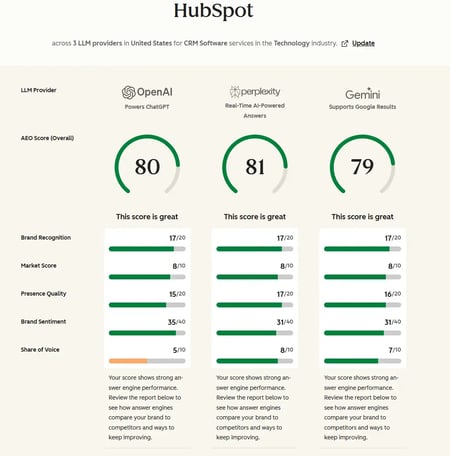
The advent of large language models (LLMs) and their integration into search experiences, epitomized by Google’s AI Overviews and platforms like ChatGPT and Perplexity, marks a paradigm shift. For enterprises, this introduces a new layer of complexity: Answer Engine Optimization (AEO). AEO focuses on optimizing content not just for traditional search rankings but for how it is summarized, referenced, or directly answered by AI systems. This new frontier requires specialized tools that can track brand mentions, sentiment, and factual accuracy within AI-generated responses. Industry thought leaders consistently emphasize that ignoring AEO is akin to ignoring mobile search a decade ago – a significant oversight with long-term competitive implications. Early tools in this space, such as HubSpot’s AEO Grader, offer a crucial starting point for benchmarking AI visibility, assessing how a brand is characterized by various AI systems, and identifying content gaps or inconsistencies that could impact brand perception in generative search environments. The ability to conduct competitive analysis within AI-generated answers provides a unique vantage point into how rivals are being positioned.
Strategic Integration: The Core of Enterprise SEO Success
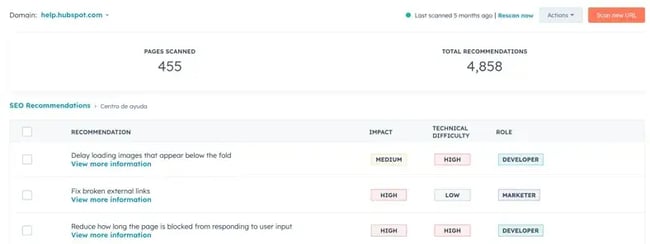
One of the most profound implications for enterprises is the strategic imperative of integrating rank-tracking data within a unified customer platform. Data fragmentation is a persistent challenge for large organizations, often leading to disparate systems for marketing, sales, customer service, and operations. When SEO data resides in a separate silo, connecting visibility gains to tangible business outcomes becomes a manual, resource-intensive task.
Platforms like HubSpot’s Marketing Hub exemplify the value of an integrated ecosystem. By situating SEO tools alongside CRM, content management, analytics, and campaign management, enterprises can achieve a seamless flow of data. Keyword performance can be directly linked to lead attribution, customer journeys, and ultimately, revenue. This holistic view enables marketing teams to demonstrate the direct business impact of SEO investments, moving beyond vanity metrics to strategic contributions. For instance, an increase in ranking for a high-intent keyword can be tracked through to conversions in the CRM, providing concrete evidence of ROI. This integrated approach also streamlines workflows, reduces data transfer errors, and enhances collaboration across departments, from content creators and SEO specialists to sales and product teams.

Competitive Intelligence: Beyond Simple Rankings
At an enterprise scale, competitor rank tracking is a sophisticated exercise in market intelligence. It moves beyond merely checking if a rival outranks a brand for a few keywords.

- Share of Voice Tracking: This involves measuring how frequently a domain appears in search results relative to key competitors across defined topic clusters or commercial keyword sets. Tracking these trends over time reveals who is consistently gaining or losing market presence.
- Pixel Position Analysis: Traditional rank position can be misleading. Paid ads, AI Overviews, and rich SERP features often push organic results significantly down the page. Pixel position tracking measures the actual vertical distance from the top of the page to the first organic result, providing a more accurate measure of true visibility and valuable SERP real estate.
- SERP Feature Ownership: Monitoring which competitors own featured snippets, local packs, or video carousels provides critical insights into their content strategies and opportunities for brands to capture these high-visibility placements.
- Brand Variant and Affiliate Tracking: Large enterprises often contend with multiple sub-brands, regional domains, and affiliate partners. Tracking these entities alongside primary domains provides a comprehensive view of the brand family’s overall search presence and helps identify potential cannibalization or competitive dynamics.
- Automation and Alerting: Manual competitive analysis is unsustainable. Automated alerts for significant ranking shifts, feature ownership changes, or new AI Overview citations enable proactive strategy adjustments. Integrating this data into regular reporting ensures that content, product, and go-to-market teams are consistently informed.
Navigating the Vendor Landscape
The market for enterprise rank-tracking software features a range of providers, each with distinct strengths. Platforms like Semrush One offer a comprehensive SEO toolkit integrated with AI Visibility features, leveraging years of investment in data quality and competitive intelligence. Newer, specialized tools like Profound focus exclusively on AI visibility, tracking brand mentions and sentiment across generative AI engines, catering to large marketing and brand teams concerned with narrative shaping in this emerging channel. HubSpot’s offerings, including its SEO Marketing Software and Content Hub, stand out for their integration within a broader customer platform, emphasizing unified workflows and direct connections between SEO efforts and business outcomes. The HubSpot AEO Grader provides an accessible entry point for understanding AI search visibility, allowing enterprises to benchmark their performance against competitors in a rapidly evolving landscape.
Challenges and the Future Outlook
Despite the advancements, enterprises face ongoing challenges in SEO. Managing vast content libraries, adapting to continuous algorithmic updates, and accurately measuring the complex ROI of diverse SEO initiatives remain significant hurdles. The future of enterprise rank tracking will likely see even deeper integration with predictive analytics, allowing organizations to anticipate shifts in search demand and algorithmic preferences. The convergence of traditional SEO with AEO will become more pronounced, with tools offering a unified view of visibility across all search surfaces. Furthermore, the emphasis on data governance, security, and compliance will only intensify, making features like SSO, RBAC, and robust SLAs even more critical.
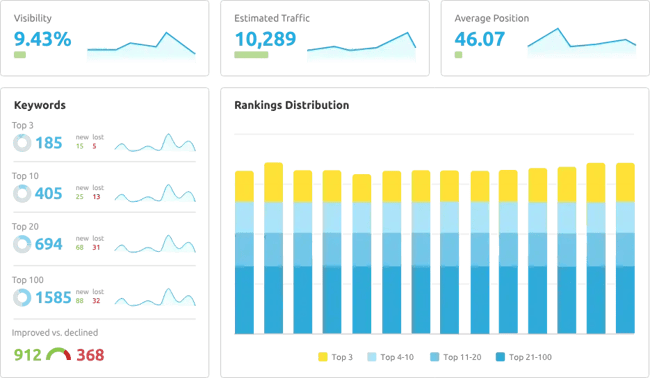
In conclusion, enterprise rank-tracking software is no longer a peripheral tool but a non-negotiable component of a comprehensive digital strategy. It enables large businesses to understand, own, and optimize their full search presence across traditional rankings, rich SERP features, and the burgeoning AI-generated results. The right platform not only delivers accurate, scalable data but also integrates seamlessly with the wider business technology stack, ensuring that enhanced digital visibility translates directly into actionable insights, measurable business impact, and sustained competitive advantage in an ever-evolving digital marketplace.
Related posts: