Millennials Reshape Acquisition Market, Steering Towards Essential Trade Businesses Amidst Boomer Retirement Wave

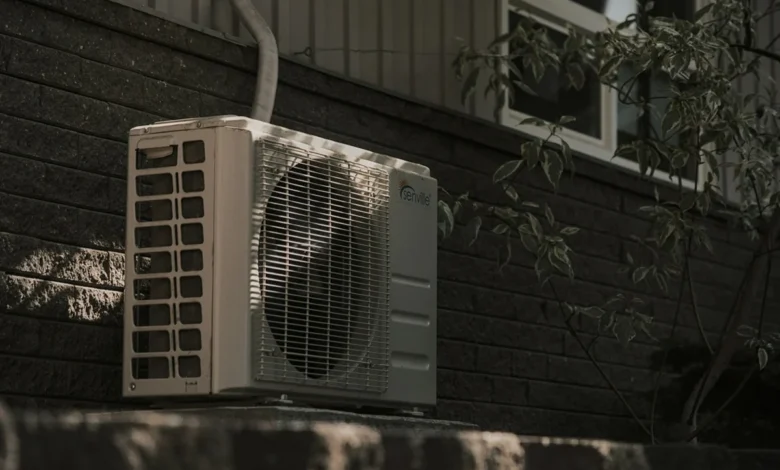
A significant and measurable shift in small business ownership is fundamentally reshaping the acquisition market across the United States, as a growing cohort of millennials, primarily in their 30s and early 40s, increasingly opt to acquire existing essential trade businesses rather than venturing into the often-perilous path of starting companies from scratch. This burgeoning trend, initially highlighted by publications like Inc. and robustly supported by a wealth of transaction data from various institutional sources, is not merely a reflection of generational preference but a complex interplay of broader economic forces, demographic shifts, and evolving entrepreneurial strategies. This pivot towards established enterprises—specifically in vital sectors such as HVAC, plumbing, and electrical services—comes at a pivotal moment. The venerable Baby Boomer generation, having built many of these foundational businesses over decades, is now reaching retirement age in unprecedented numbers, creating a substantial supply of businesses seeking new stewardship. Simultaneously, many of these retiring owners often lack formalized succession plans, leaving a void that younger, business-savvy individuals are increasingly keen to fill. Fueling this shift is the continued availability of Small Business Administration (SBA) financing, which acts as a crucial enabler for the acquisition of established, cash-flow-positive businesses. This contrasts sharply with the well-documented high failure rates and protracted timelines required for new startups to achieve profitability, making acquisition a comparatively lower-risk and more immediate path to revenue generation.
The financial landscape also plays a critical role. Private equity firms have aggressively entered this space, recognizing the stability and growth potential of fragmented essential service markets. PitchBook data, frequently cited by financial news outlets such as the Wall Street Journal and corroborated by the American Investment Council, reveals that institutional investors have acquired nearly 800 HVAC, plumbing, and electrical companies since 2022. This intense institutional appetite for "platform" businesses within the trades not only validates the sector’s attractiveness but also indirectly drives individual millennial buyers towards similar targets, though comprehensive data on whether these individual buyers are achieving higher success rates than previous cohorts is still emerging.
The "Silver Tsunami": A Generational Handover of Wealth
The primary catalyst for this acquisition wave originates from the supply side, driven by the demographic reality of retiring Baby Boomer owners. This phenomenon, often termed the "Silver Tsunami," refers to the mass exodus of a generation from the workforce, carrying with it a vast portfolio of privately-held businesses built over 40-50 years. Born between 1946 and 1964, Baby Boomers constitute a significant portion of small business owners. As the oldest boomers now approach their late 70s and the youngest their early 60s, the imperative for retirement and succession planning has become acute. Many of these entrepreneurs, having dedicated their working lives to building their enterprises, are now seeking to monetize their life’s work and ensure a smooth transition, often lacking internal family members or employees ready and willing to take the reins.
The combined U.S. HVAC and plumbing services market alone generates an estimated $205 billion in annual revenue, demonstrating its sheer scale and economic significance. This market has exhibited robust growth, with a compound annual growth rate (CAGR) ranging between 3.2% and 5.7% over the past five years, and forecasts projecting continued annual growth of 4-6% through 2030. This sustained demand is underpinned by several factors: persistent population growth, particularly in Sun Belt states like Florida, Texas, and Arizona, which are experiencing rapid demographic shifts, and the continuous aging of residential and commercial infrastructure across the nation, necessitating ongoing maintenance, repairs, and upgrades. For instance, the average age of homes in the U.S. now exceeds 40 years, driving consistent demand for these core services.
Beyond these fundamental demand drivers, the more immediate impetus for transactions is the imminent ownership turnover. A significant portion of founders who meticulously built these businesses are now in their 50s and 60s, a demographic bracket where retirement becomes a pressing consideration. Crucially, many of these owner-operators, focused on day-to-day operations and service delivery, have not established internal succession plans, leaving a vacuum at the top. Industry analysts have widely characterized this period as a historic transition, with research tracking the broader wave of small business sales from retiring boomers estimating the total value of businesses expected to change hands in the trillions of dollars. Home services and essential trades constitute a meaningful segment of this immense opportunity, largely because these sectors remain highly fragmented and predominantly founder-owned, making them ripe for consolidation and new ownership. Businesses within this segment, particularly those generating between $2 million and $8 million in annual revenue, often fall into a sweet spot. They are typically too small and operationally intensive for direct acquisition by many institutional private equity firms seeking larger platform deals, and too demanding for an absentee owner. This inherent characteristic makes them a natural and ideal fit for owner-operators—individuals who are prepared and eager to step directly into the day-to-day management and operational responsibilities, leveraging their hands-on involvement to drive growth and efficiency.
Chronology of an Evolving Entrepreneurial Landscape
The shift towards acquisition entrepreneurship, particularly in the trades, is not an overnight phenomenon but rather the culmination of several converging trends and economic developments over the past two decades.
- Pre-2008 Era: The early 2000s were largely characterized by a "startup culture," fueled by the lingering dot-com boom and a venture capital market eager to fund innovative, often technology-centric, new businesses. Entrepreneurship was synonymous with creation from scratch.
- Post-2008 Financial Crisis: The Great Recession of 2008-2009 marked a turning point. The economic downturn highlighted the inherent risks of new ventures and the value of established, cash-flow-generating businesses. Simultaneously, business schools, particularly MBA programs, began to formalize and popularize the "search fund" model, offering a structured path for graduates to acquire and operate existing companies. This period saw the nascent growth of "acquisition entrepreneurship" as a viable alternative.
- 2010s: Growing Awareness of Boomer Retirements: As the Baby Boomer generation began to near traditional retirement age, economic forecasters and small business advocates started sounding the alarm about the impending wave of business transfers. Studies, including those from the Kauffman Foundation, began to quantify the scale of businesses that would need new owners, highlighting a potential mismatch between sellers and buyers.
- Post-2020 Pandemic Acceleration: The COVID-19 pandemic significantly accelerated many of these trends. The surge in demand for reliable home services during lockdowns underscored the resilience and essential nature of these businesses. Many older owners, facing health concerns or a reevaluation of priorities, accelerated their retirement plans. Simultaneously, a tighter labor market for skilled tradespeople emphasized the value of established businesses with existing teams.
- 2022 Onwards: Private Equity Influx and Easing Credit: Starting in 2022, private equity firms dramatically increased their activity in the home services sector, recognizing the stable, fragmented, and recession-resistant nature of these markets. This institutional interest drove up valuations for larger businesses but also brought more attention and capital to the sector overall. Concurrently, easing credit conditions in 2024 and early 2025—following a period of higher interest rates—further lubricated the market, making SBA loans more attractive and accessible for individual buyers. This confluence of factors has created the current fertile ground for millennial-led acquisitions in the trades.
The broader capital markets have also played a role in shaping the timing and intensity of this trend. Eased credit conditions observed in 2024 and projected into early 2025 have demonstrably brought more buyers into the market. Within the commercial HVAC and plumbing M&A landscape, strategic buyers historically dominated transactions. However, year-to-date data for 2025 shows strategic buyers representing 49.4% of transactions, a notable decrease from 67.1% in earlier periods. This shift indicates a rising share of deal flow being captured by private equity sponsors, intensifying competition for high-quality platforms. Nevertheless, this institutional competition still leaves a substantial number of smaller, viable businesses available to individual buyers, who often rely on the crucial support of SBA financing.
Millennial Acquirers: A New Breed of Entrepreneurs
The profile of buyers moving into these essential trades is evolving. While some may indeed be career tradespeople looking to own their own businesses, a significant portion comprises individuals from diverse professional backgrounds. Many are former corporate employees, consultants, finance professionals, or MBA graduates who are consciously choosing to exit the traditional corporate ladder. These individuals, typically aged 30 to 44, represent the core millennial demographic. They bring a valuable skillset: sophisticated management practices, strategic planning capabilities, and robust capital-allocation skills, which they apply to businesses historically built and run by technically skilled founders who may not have prioritized professional management structures or aggressive growth strategies.
One increasingly popular pathway into this market for these new entrepreneurs is the "search fund" model. Under this innovative approach, an individual or a small team systematically raises an initial pool of capital specifically to finance the search for an acquisition target. Once a suitable business is identified, a separate, larger round of financing is secured to complete the actual acquisition. Search funds have been a well-established concept within MBA circles since the late 2000s, offering a structured path to entrepreneurship. Their application in the essential trades sector has accelerated dramatically as more owners approach retirement, providing a formal framework for identifying, acquiring, and operating these businesses.
A critical financing tool for individual buyers, especially for those pursuing the search fund model or direct acquisitions, is the SBA 7(a) loan program. This government-backed initiative enables qualified buyers to finance the acquisition of existing businesses with remarkably favorable terms, often requiring as little as 10% down on deals up to $5 million. The SBA guarantee significantly reduces the risk for lenders, making deals financeable that might otherwise be deemed too risky under conventional bank lending standards. For instance, a buyer looking to acquire a plumbing company with $1.5 million in seller’s discretionary earnings (SDE)—a common metric for small business valuation—can often structure a viable deal through SBA financing. However, a precise count of millennial buyers leveraging these loans remains elusive, as the SBA does not publicly publish loan approval data segmented by borrower age cohort. Consequently, the generational composition of the buyer pool is currently largely inferred from market surveys, transaction platforms like BizBuySell, and extensive anecdotal reporting from brokers and industry professionals.
Survey data regarding the broader generational business ownership transition has consistently highlighted a persistent mismatch between the considerable number of Boomer sellers seeking exits and the pace at which younger buyers are stepping into ownership roles. The current trades acquisition wave, spearheaded by millennials, appears to be actively closing a portion of that gap, representing a crucial intergenerational transfer of economic value and operational responsibility. However, the exact extent to which this gap is being narrowed is still not fully quantifiable due to existing data limitations.
The Enduring Appeal: Cash Flow, AI-Resistance, and Strategic Tailwinds
The growing appeal of acquiring trades businesses is rooted as much in sound economic principles as it is in evolving cultural preferences for tangible work and ownership. From an economic standpoint, the risk profile of acquiring an established trade business is starkly different from launching a startup. Bureau of Labor Statistics Business Employment Dynamics data consistently shows that approximately 20% of new businesses fail within their first year, and roughly 45% fail within five years. These daunting failure rates are particularly relevant for startup founders who often require years of sustained capital infusion before reaching a state of consistent profitability.
In contrast, an HVAC company with an established customer base, recurring maintenance contracts, entrenched supplier relationships, and a team of trained technicians offers a fundamentally different risk proposition. Such a business generates revenue from day one of new ownership, providing immediate cash flow and a foundation for growth, even as the new operator still navigates the complexities of labor management, customer service, pricing strategies, and market expansion. This immediate revenue stream significantly de-risks the entrepreneurial journey, making it attractive to those seeking a more secure path to business ownership.
Furthermore, the "AI-resistance" argument has gained considerable traction as a unique selling point for trade businesses. While artificial intelligence and automation are poised to disrupt numerous industries, core services like HVAC diagnostics, plumbing repairs, and electrical installations fundamentally require licensed technicians to be physically present on-site. While software applications can undoubtedly optimize scheduling, dispatch, marketing, and even parts inventory management, they cannot, in the near term, replace the essential physical service itself. This creates a valuable "labor moat" for well-run trade businesses, insulating them from the same level of digital disruption faced by many digital-first or information-based businesses.
Regulatory factors also act as significant demand drivers for these essential services. Environmental Protection Agency (EPA) refrigerant phaseouts, coupled with increasingly stringent energy-efficiency standards, are expected to fuel a sustained wave of HVAC replacement and upgrade activity through the end of the decade. These regulatory tailwinds provide buyers with a structural advantage, creating demand that is less susceptible to discretionary consumer spending fluctuations and more tied to mandatory compliance and long-term infrastructure needs.
The potential for professionalized management to transform the economics of historically founder-led trade businesses is also a powerful draw. Documented case studies, such as that of Rite Way Heating, Cooling & Plumbing, show impressive revenue growth from $30 million to approximately $70 million following strategic capital investment and the implementation of professional management practices. Institutional buyers like Alpine Investors, through its Apex service platform, report an average 20% pay increase for technicians in the first year after acquisition, demonstrating the positive impact of strategic ownership on both business performance and employee welfare. While these examples primarily stem from institutional buyers with platform-level resources, they illustrate the significant upside potential that can be unlocked through modern management and capital deployment, even if individual millennial acquirers may face different scaling challenges. Additional context from Kauffman Foundation data on small business formation trends further illuminates why acquisition is becoming increasingly attractive. Startup formation has remained volatile since its post-pandemic surge, and many new businesses are now reaching a stage where their survival rates begin to diverge sharply from the initial optimism. This reality underscores the inherent value of acquiring a business with a proven track record, established market presence, and existing operational infrastructure.
Implications and Challenges for the Future of Small Business
The millennial pivot towards acquiring trade businesses carries significant implications for the broader economy and the future of small business ownership. From an economic perspective, this trend helps to preserve local jobs and ensure the continuity of essential services, preventing the closure of viable businesses that might otherwise cease operations due to a lack of succession. It also facilitates a vital intergenerational transfer of wealth and entrepreneurial spirit, ensuring that the foundational elements of the economy remain robust.
This shift also highlights the potential for bridging a critical skill gap. While older, retiring owners often possess invaluable