Prime Minister Andy Burnham Signals Caution Over Potential Income Tax Personal Allowance Rise in First Budget

Prime Minister Andy Burnham has moved to temper public and political expectations regarding a potential increase in the income tax personal allowance, signaling that a significant tax cut for millions of workers is unlikely to feature in his government’s upcoming maiden Budget. The clarification follows a weekend of intense speculation triggered by the Prime Minister’s own remarks, which suggested he was sympathetic to the plight of taxpayers grappling with the effects of "fiscal drag." While Burnham acknowledged the significant financial pressure caused by the frozen tax-free threshold, Downing Street has since emphasized that the immediate priority remains fiscal discipline and the stabilization of the nation’s public finances.
The personal allowance—the amount an individual can earn before they begin paying income tax—has been frozen at £12,570 since April 2021. Originally implemented by the previous administration and maintained through several fiscal cycles, the freeze has become a focal point of economic debate as high inflation and rising nominal wages push more earners into higher tax brackets. By signaling a retreat from a potential adjustment to this threshold, the Prime Minister has underscored the narrow path his government must walk between providing cost-of-living relief and adhering to strict self-imposed fiscal rules.
The Evolution of the Personal Allowance Debate
The recent surge in speculation began during the Makerfield by-election campaign, where Prime Minister Burnham spoke candidly to The Times about the feedback he had received from voters on the doorstep. He noted that the "frustration about the personal allowance" was a recurring theme among the electorate and admitted that these concerns had become "lodged in his mind." This admission was widely interpreted by analysts and the media as a hint that the government was preparing to use its first Budget to unfreeze the threshold, providing a direct boost to the take-home pay of nearly 30 million taxpayers.
However, the tone shifted markedly on Monday when the Prime Minister was questioned by reporters regarding the feasibility of such a move. While he confirmed that the allowance would be "considered" as part of the broader Budget process, he cautioned that any increase would be exceptionally difficult to deliver given the "financial circumstances" inherited by his administration. This rhetorical shift appears designed to manage expectations ahead of the autumn statement, as the Treasury grapples with a complex set of economic indicators and a commitment to avoid unfunded spending.
The Prime Minister’s pivot highlights the tension within the new government. On one hand, there is a clear political mandate to alleviate the cost-of-living crisis for low- and middle-income earners. On the other, the Chancellor and the Prime Minister are determined to project an image of iron-clad fiscal responsibility to reassure international markets and maintain economic stability.
Understanding Fiscal Drag and the £12,570 Threshold
To understand the significance of the personal allowance freeze, one must look at the mechanics of "fiscal drag." When tax thresholds remain stationary while wages rise to keep pace with inflation, taxpayers effectively pay a larger proportion of their income in tax. This phenomenon acts as a "stealth tax," increasing government revenue without the political fallout of a headline rate hike.

The personal allowance was last increased in the 2021/22 tax year. Since then, the UK has experienced some of the highest inflation rates in forty years. Although the consumer price index (CPI) has begun to stabilize, the cumulative effect on wages has been substantial. According to data from the Office for National Statistics (ONS), average weekly earnings have grown significantly over the last three years, yet the tax-free buffer has not moved an inch.
For a worker earning the median wage, the freeze represents a real-terms reduction in disposable income. As more people cross the £12,570 threshold, they begin paying the 20% basic rate on a larger portion of their earnings. Furthermore, those moving from the basic rate into the 40% higher-rate band (currently starting at £50,270) face an even steeper increase in their tax liability. This "bracket creep" is estimated to have brought millions of additional people into the tax system and pushed hundreds of thousands into the higher-rate tier.
The Financial Obstacle: IFS Projections and Lost Revenue
The primary barrier to unfreezing the personal allowance is the sheer cost to the Exchequer. The Institute for Fiscal Studies (IFS) has provided a stark assessment of the trade-offs involved. According to IFS estimates, ending the freeze and uprating the personal allowance in line with current inflation could cost the government between £8.5 billion and £9 billion per year in lost tax revenue.
In the context of the current public finances, finding nearly £9 billion of "headroom" is a monumental task. The Burnham administration has pledged to honor its manifesto commitment not to increase the basic, higher, or additional rates of income tax. This "triple lock" on tax rates limits the government’s ability to generate revenue from other traditional sources. Consequently, any cut to the personal allowance would need to be funded through one of three difficult avenues:
- Spending Cuts: Reducing the budgets of departments that are already under significant strain.
- Alternative Tax Increases: Raising taxes on capital gains, inheritance, or corporations—measures that often carry their own economic and political risks.
- Increased Borrowing: A path that the government has explicitly sought to avoid in order to maintain its credibility regarding fiscal rules.
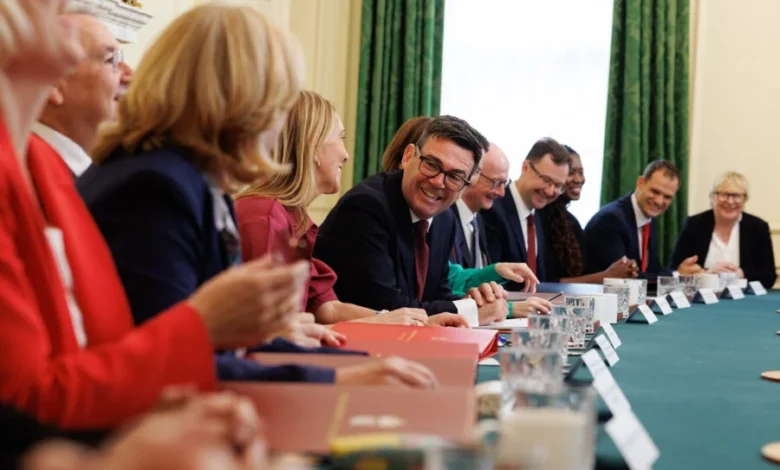
During his first Cabinet meeting on Tuesday, Burnham reiterated to his ministers that "difficult decisions" would be the hallmark of the upcoming Budget. He stressed that the government’s commitment to fiscal rules must be "genuine" and that every spending priority must be rigorously scrutinized against the backdrop of the national debt.
A Timeline of the Cost-of-Living Strategy
While the personal allowance remains frozen, the government has moved to implement a series of targeted interventions aimed at reducing household expenses. This tiered approach suggests a strategy of "micro-relief" rather than broad-based tax reform.
- April 2021: The personal allowance is frozen at £12,570.
- July 2024: Andy Burnham assumes office; the first Budget planning begins.
- August 2024: Burnham signals awareness of voter frustration regarding the tax freeze during by-election campaigning.
- September 2024: Downing Street clarifies that a personal allowance rise is not an immediate priority, citing fiscal constraints.
- October 1, 2024: A scheduled reduction in VAT on household electricity bills takes effect, estimated to save the average household approximately £45 per year.
- January 2025: The national bus fare cap in England (outside London) is set to drop from £3 to £2, aimed at reducing commuting costs for lower-income workers.
These measures, while welcomed by consumer groups, are often viewed as modest in comparison to the impact of fiscal drag. A £45 annual saving on electricity is a fraction of the several hundred pounds many workers lose annually to the effects of frozen tax thresholds.

Reactions from Business and Labor
The Prime Minister’s cautious stance has drawn a mixed reaction from various sectors of the economy. Business groups and employer organizations have expressed concern that the lack of movement on tax thresholds could dampen consumer spending. "When take-home pay is eroded by fiscal drag, it inevitably impacts the wider economy as households tighten their belts," noted one spokesperson from a leading retail trade association. Employers are also facing pressure from staff for higher wage increases to compensate for the higher tax burden, which in turn fuels concerns about a wage-price spiral.
On the other hand, some fiscal hawks and market analysts have praised Burnham’s restraint. They argue that a premature tax cut, funded by borrowing, could spook the bond markets and lead to higher interest rates, which would ultimately hurt households more through increased mortgage costs.
Labor unions and advocacy groups for low-paid workers have expressed disappointment. They argue that the personal allowance is one of the most effective tools for supporting the "working poor" and that maintaining the freeze is a regressive policy that disproportionately affects those on lower incomes. "Showing ‘visibility’ of the issue is not the same as solving it," said a representative from a prominent national union. "Workers need to see more than empathy; they need to see their take-home pay protected."
Broader Implications and the Path to the Budget
The decision to maintain the current personal allowance has significant operational implications for businesses and HR departments across the United Kingdom. Because the threshold is remaining steady, payroll systems will not require the immediate, large-scale adjustments that usually follow a change in tax codes. However, HR professionals are reporting an increase in employee inquiries regarding why pay raises are not translating into expected increases in net pay.
As the government prepares its final Budget documents, the political pressure on Burnham is likely to intensify. The "Makerfield comments" have set a benchmark against which his first fiscal statement will be measured. If the Budget fails to provide any movement on the personal allowance, the Prime Minister may face accusations of backsliding on his initial signals of support for taxpayers.
The broader implication for the UK economy is a continued reliance on "stealth taxation" to balance the books. While this approach allows the government to adhere to its manifesto promises regarding tax rates, it does little to address the underlying issue of a high tax burden on the workforce. For now, the Burnham administration appears to be betting that targeted cost-of-living measures—such as lower energy VAT and cheaper bus fares—will be enough to placate the electorate while they focus on the longer-term goal of economic growth and fiscal repair.
The upcoming Budget will be the definitive test of this strategy. It will reveal whether the Prime Minister’s "visibility of the issue" leads to a phased plan for future tax relief or if the freeze at £12,570 will become a permanent fixture of the Burnham era. In the interim, millions of UK workers will continue to see a greater share of their earnings directed to the Treasury, even as they receive the very pay rises intended to help them weather the cost-of-living storm.
Related posts: