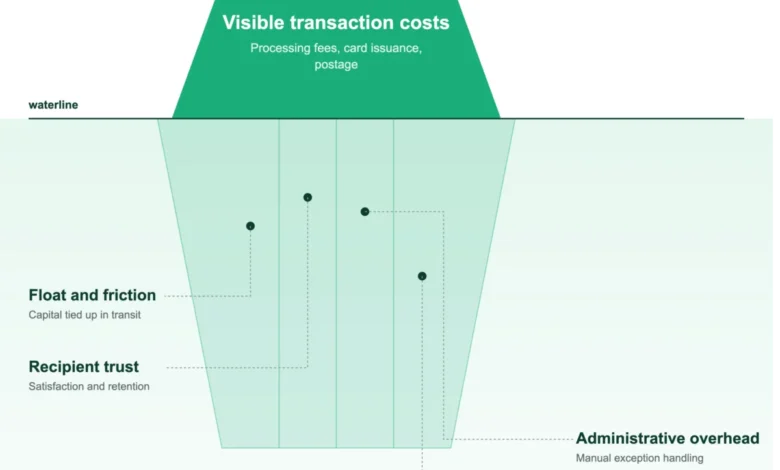
Most finance leaders can readily quote the processing fees associated with their disbursement programs. Far fewer, however, can articulate the comprehensive financial burden imposed by antiquated, check-dependent disbursement infrastructure. This burden manifests in multiple, often overlooked, areas: capital tied up in transit, frustrated recipients who seek more efficient competitors, and valuable staff hours consumed by manual remediation. A new framework, championed by industry analysts, aims to provide CFOs and operations leaders with a practical methodology to quantify these hidden costs, revealing the true financial drain of outdated payment systems.
A single check, seemingly a straightforward payment instrument, represents a recurring liability from the moment it is issued until it clears – and sometimes even beyond. It is susceptible to loss, return, interception, or simply being disregarded. Each of these potential outcomes carries a tangible financial and operational cost that rarely appears on a traditional disbursement budget line item. This realization is becoming increasingly critical as disbursements evolve from a niche back-office function into a significant conduit for financial exchange between institutions and their stakeholders. Recent research from Federal Reserve Financial Services indicates a strong and growing consumer preference for faster payment options, with 78% of U.S. consumers now favoring such methods. This shift is actively reshaping payment landscapes, with push-to-card and digital wallet disbursements gaining substantial traction, while paper checks experience a steady decline.
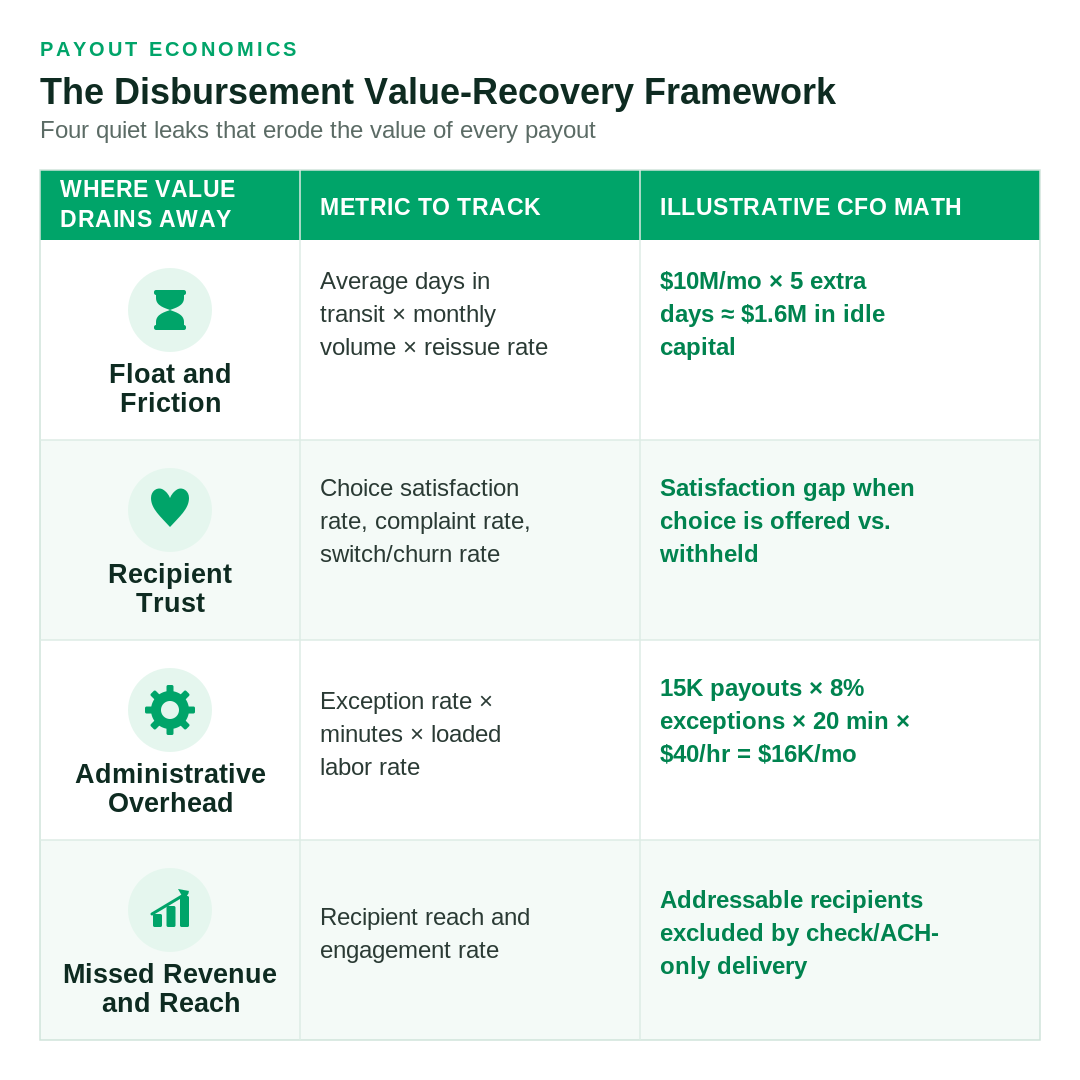
The implications of this trend are profound. Disbursement infrastructure is no longer merely a transactional mechanism; it is a critical component of liquidity management, a determinant of trust, and a driver of growth. To treat it as a routine accounts payable function is to fundamentally misunderstand its strategic importance. While most CFOs are aware that faster payout methods exist, the pressing question is whether their organizations can accurately quantify the current costs of their legacy systems. This quantification should precede any decision regarding modernization. The analysis typically identifies four primary areas where organizational value is eroded.
Where Disbursement Value Drains Away
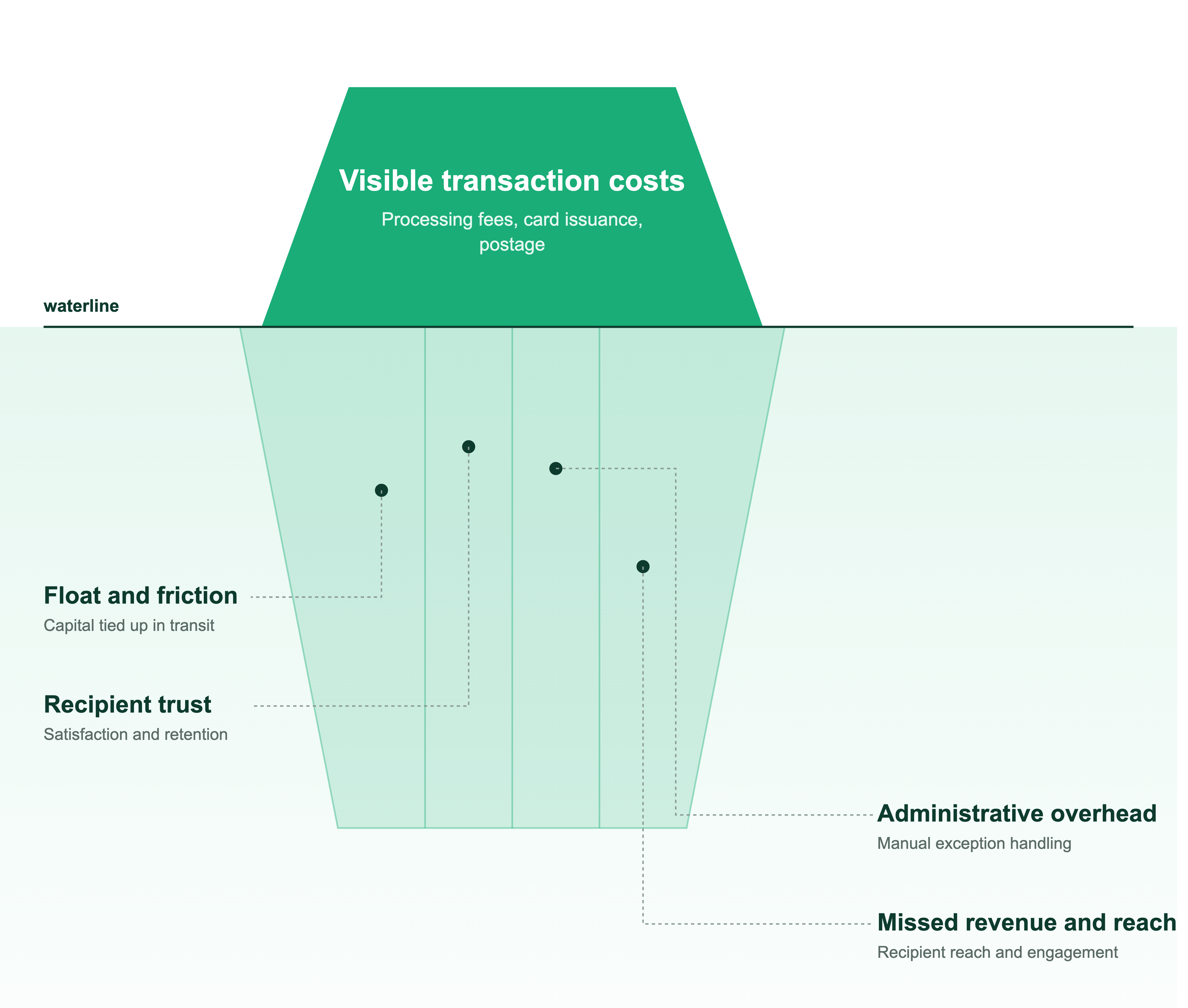
Every disbursement initiates a cascade of events: approval, issuance, transit, delivery, reconciliation, and finally, confirmation of receipt. Each stage incurs costs, and when managed with legacy systems, this process transforms from an efficient flow into a persistent drain on business resources. The visible transaction costs represent only a fraction of this overall burden.
Float and Friction: The Cost of Delayed Disbursements
The capital that remains in transit between approval and delivery is capital that an organization cannot leverage. From the payor’s perspective, this "float" represents funds that have been committed but are not yet usable until the transaction is finalized. Unlike readily deployable assets, this capital is essentially dormant, performing no productive function until it reaches its intended destination. The typical lifecycle of a mailed check involves several business days for delivery, followed by additional days for clearing after deposit. A significant portion of these checks never complete this journey without incident. Lost mail, outdated addresses, and delays in bank-side processing can all disrupt the payment chain. Each interruption triggers a predictable downstream sequence: recipient inquiries, manual investigations, the reissuance of payments, and in some cases, a secondary float period superimposed on the initial one.
The financial implications scale rapidly. An organization disbursing $10 million monthly, which experiences an average of five additional days in transit compared to same-day card funding, is effectively holding approximately $1.6 million in idle capital at any given time. This capital could otherwise be allocated to operational enhancements, debt reduction, or strategic growth initiatives. When factoring in a reissue rate of 1% to 2% for lost or undeliverable checks, the avoidable cost compounds significantly before any customer complaints are even registered.
Recipient Trust and Instant Disbursements
For recipients, disbursement speed has transitioned from a courtesy to a clear indicator of an organization’s commitment to the relationship. Federal Reserve Financial Services research consistently highlights that consumers report substantially higher satisfaction levels with financial institutions offering instant payment options compared to those that do not. Indeed, 61% of consumers consider the availability of instant payments from their financial institution to be important. Conversely, slow and inflexible payout processes are evolving from a neutral default into a distinct competitive vulnerability.

This issue is particularly acute during periods of financial exigency. An insurance claimant awaiting funds after a significant event, a gig worker anticipating same-day earnings, or a borrower expecting loan disbursements are all, in essence, evaluating an organization’s reliability in real-time. A delayed or failed payout at such critical junctures does more than inconvenience the recipient; it actively erodes the trust that the organization is striving to cultivate, precisely when that trust is most vital.
Administrative Overhead
Legacy disbursement processes are inherently labor-intensive. Tasks such as printing and mailing checks, tracking delivery status, managing inbound inquiries about missing payments, investigating stale or returned funds, and coordinating reissues and reconciliations consume considerable staff time. While these activities are not typically categorized under a specific "check-related labor" budget line, they represent a real and recurring drain on human resources. This burden scales directly with disbursement volume, rather than diminishing with operational efficiency.
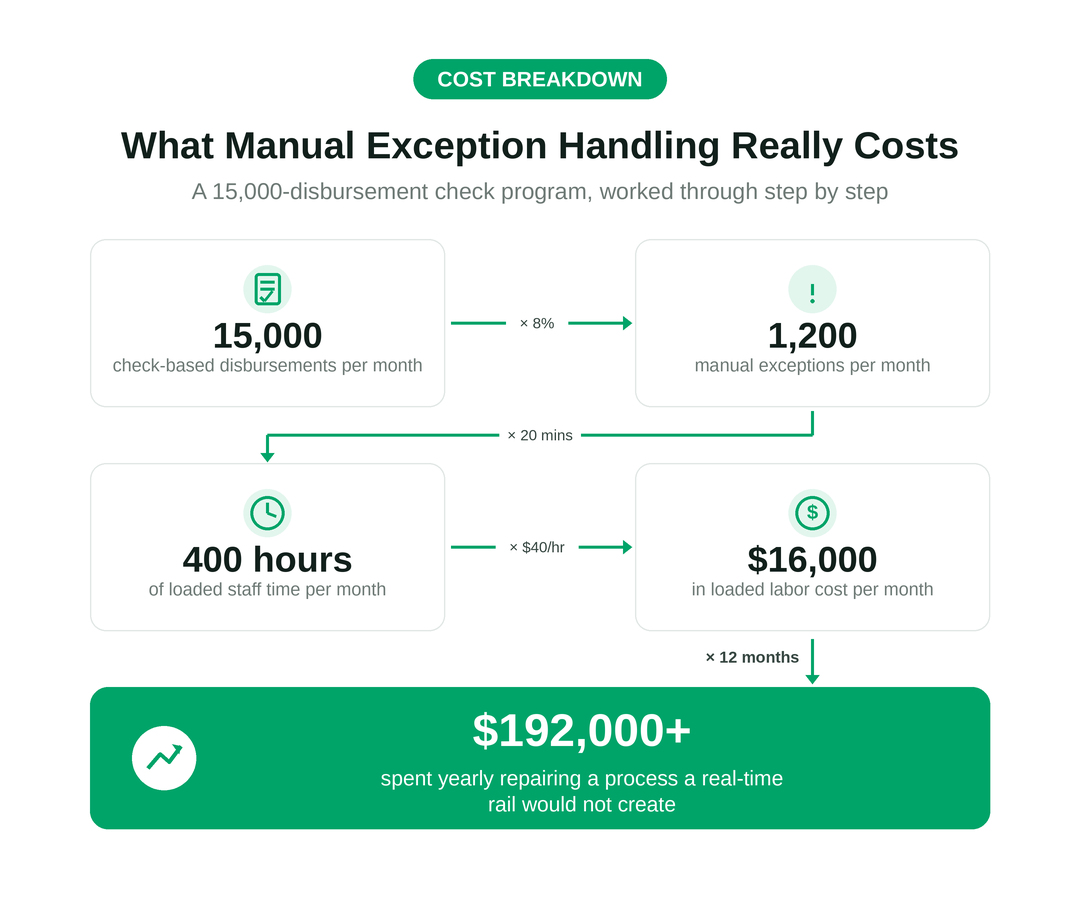
Consider an organization processing 15,000 check-based disbursements per month, where an estimated 8% necessitate some form of manual exception handling (e.g., a returned check, an address correction, a reissue request). If each exception requires an average of 20 minutes of loaded staff time, this equates to 400 staff hours per month. At a loaded hourly rate of $40, this amounts to approximately $16,000 monthly, dedicated solely to rectifying process failures that a real-time, card-based system would inherently avoid. For organizations with higher disbursement volumes, common in sectors like insurance, lending, and B2B payouts, this annual cost can easily escalate into the high six figures.
Missed Revenue and Reach
Perhaps the most underestimated cost of legacy disbursement infrastructure lies not in what it expends, but in the opportunities it fails to capture. Card-based disbursements unlock a less obvious avenue for engagement. A check represents a closed transaction, whereas a prepaid or virtual card offers an open channel. These cards can be imbued with loyalty incentives, encourage repeat usage, and establish a recurring point of contact between the organization and the recipient – a level of engagement that a one-time mailed payment can never achieve. This opens avenues for enhanced customer loyalty and potential future revenue streams.
What Modern Disbursement Infrastructure Makes Possible
Modern disbursement infrastructure transcends a mere acceleration of existing processes; it fundamentally alters an organization’s capacity to meet recipient expectations and the speed at which it can fulfill those promises.
Instant, Card-Based Funding
By supplanting checks and wires with prepaid or virtual card funding, organizations can disburse funds instantaneously upon approval. Recipients gain immediate access to their money at the point of sale, online, or at an ATM. This eliminates mail cycles, bank-side clearing delays, and the period during which a payment exists solely in a paper format. Transactions either occur or they do not, removing the multi-day limbo that characterizes traditional methods.
Unified Platform Across Disbursement Types
Historically, disparate systems have managed various disbursement types, including insurance claims, gaming winnings, loan disbursements, rebates, and B2B payouts. Each of these systems often involves unique workflows, vendors, and inherent failure points. A consolidated disbursement platform capable of supporting all these use cases allows organizations to retire redundant infrastructure, standardize control mechanisms, and launch new payout programs more efficiently, without the need to construct entirely new systems. This capability is invaluable for FinTechs, banks modernizing legacy systems, and insurers managing diverse payout workflows across separate platforms.
Real-Time Funding with Configurable Controls
The real-time nature of card-based funding enables organizations to integrate speed with robust governance. Configurable controls that dictate how, where, and when funds can be utilized empower program administrators to adhere to compliance requirements for regulated payouts (such as workers’ compensation, structured settlements, and benefits disbursements) without reintroducing the delays that real-time funding is designed to eliminate. This ensures both efficiency and regulatory adherence.
Centralized Program Management
A single management console providing comprehensive oversight of issuance, funding, tracking, and reconciliation offers administrators complete visibility into payout activities across all recipients. This replaces the fragmented landscape of spreadsheets, bank portals, and mail logs that often characterize check-based programs. This centralized visibility is crucial for accurately measuring key metrics such as exception rates, reissue rates, and float duration, transforming estimates into concrete data points.
API-First Integration
Direct, API-first connections between disbursement infrastructure and originating systems (claims platforms, lending systems, ERP workflows) facilitate straight-through processing from approval to funding. This eliminates manual handoffs, data re-keying, and multi-day queues that often separate an approved payout from its issuance. This integration is frequently the decisive factor in reducing payout times from days to mere minutes.
Reaching More Recipients, More Reliably
Card-based disbursements expand an organization’s reach to a broader and more diverse recipient base. Younger demographics, in particular, increasingly expect instant, mobile-first access to funds as the standard, rather than an exception. The overarching benefit of these six capabilities is the achievement of control without compromising speed. Modern disbursement infrastructure empowers organizations to make faster decisions, disburse funds more rapidly, and engage a wider recipient population while maintaining the necessary compliance posture for regulated payouts.
What Slows Disbursement Modernization, and How to Address It
The inertia in modernizing disbursement processes rarely stems from a lack of available technology. Instead, it often arises from a failure to construct a robust business case, inadequate consideration of compliance requirements, or an underdeveloped implementation plan that fails to match the rigor of the legacy processes being replaced.
Building the Business Case in CFO Terms
Disbursement modernization proposals that prioritize technological features over financial benefits are unlikely to survive budget scrutiny. Conversely, a case that begins with the aforementioned float framework, quantified in monetary terms rather than transaction counts, carries far greater persuasive power. The most compelling arguments are those that incorporate an organization’s own disbursement volumes, reissue rates, exception rates, and complaint data, rather than relying on industry averages. The disparity between legacy and modern costs can vary significantly depending on the program type and recipient demographics.
Compliance and Regulated Payout Types
Not all disbursements carry the same regulatory weight. Payments for workers’ compensation, structured settlements, and certain benefits are subject to state-specific regulations governing payment methods, timing, and recipient consent. A modernization plan must meticulously map which payout categories are regulated, identify the governing regulator or statute for each, and confirm how the new platform’s controls satisfy these requirements before the initial disbursement on the new rail, not as an afterthought.
Fraud Exposure During the Transition
Check-based payouts remain a significant and escalating target for fraudulent activities. The 2026 AFP Payments Fraud and Control Survey reported that 76% of U.S. organizations experienced attempted or actual payments fraud in the preceding year. Checks were identified as the most frequently targeted payment method, implicated in 58% of reported fraud incidents. A migration plan should view this exposure as an impetus to accelerate the transition away from checks, not as a justification for delay. The new card-based rail must be equipped with its own comprehensive fraud and identity controls from its inception.
Recipient Communication and Adoption
The value of a faster payout method is only realized if recipients understand, trust, and utilize it. Organizations that simply switch payment rails without clearly communicating the change or offering recipients a choice in how they receive funds often encounter lower-than-anticipated adoption rates. Providing a choice of payout methods during the transition, rather than mandating the new rail outright, typically results in smoother adoption and avoids alienating recipients who may still prefer specific legacy options.
Vendor and Platform Selection
Disbursement platforms exhibit considerable variation in their direct integration capabilities with systems that originate payouts. Platforms requiring manual file uploads or batch reconciliation can reintroduce much of the delay and manual effort that modernization aims to eliminate. The most critical evaluation criterion is not the breadth of a platform’s feature set, but rather the directness of its API connectivity to the claims, lending, or ERP system that already triggers the payout decision.
The Revenue-Recovery Scorecard
The decision to modernize disbursements should commence not with a vendor demonstration, but with a comprehensive scorecard. This tool provides a mechanism for assigning a quantifiable dollar value to the revenue and efficiency currently being lost by the existing disbursement model, prior to any technology selection.
A thorough assessment of current disbursement practices should involve scoring each relevant question on a scale of 1 to 5, where 1 indicates "not measured or not available" and 5 signifies "measured, owned, and actively managed." This scorecard should encompass critical areas such as:
- Average Float Time: Quantifying the number of days capital remains in transit per disbursement.
- Exception Rate: Measuring the percentage of disbursements requiring manual intervention.
- Reissue Rate: Tracking the frequency of payments needing to be reissued due to loss or error.
- Inquiry Volume: Assessing the number of recipient inquiries related to payment status.
- Cost per Manual Intervention: Calculating the loaded staff time and associated costs for resolving exceptions.
- Recipient Satisfaction Scores: Gauging recipient sentiment regarding payout speed and convenience.
- Fraud Incidence Rate: Monitoring the frequency of fraudulent activities related to disbursements.
- Reachability of Target Demographics: Evaluating the ability to reach specific recipient segments with current methods.
A low score in these areas does not necessitate delaying modernization; rather, it signifies that the fundamental business case is still in development. Conversely, a high score does not guarantee effortless implementation but indicates that the organization possesses a clear understanding of its costs, risks, and success metrics.
The Bottom Line
The true cost of slow disbursements is rarely apparent in visible transaction fees. It materializes as capital lying idle in transit, as recipients who migrate to more agile competitors without explicit complaint, as valuable staff hours diverted to the remediation of inefficient processes, and as an untapped segment of the addressable population that remains unreachable via paper checks.
The imperative for modernization becomes clear when these hidden costs are brought into the light. Funding for such initiatives is secured when these costs are made measurable. Success is achieved when the new platform not only accelerates fund movement but also provides the organization with a more transparent, secure, and profitable means of fulfilling its commitments to every recipient. The strategic advantage lies in transforming disbursements from a passive operational function into an active driver of financial health and customer loyalty.
Related posts: