
The stability of any subscription-based ecommerce operation hinges on its ability to minimize customer attrition while maximizing recurring revenue. In an increasingly competitive digital marketplace, understanding the underlying mechanics of churn—the rate at which subscribers discontinue their service—is no longer a secondary metric; it is the cornerstone of sustainable growth. By dissecting churn into actionable categories, merchants can move beyond reactive measures and implement precise, data-driven strategies to stabilize their revenue streams and foster long-term customer loyalty.
The Financial Anatomy of Churn
To effectively manage a subscription business, stakeholders must distinguish between two primary metrics: subscriber churn and revenue churn. Subscriber churn tracks the raw percentage of customers who opt out during a defined period, while revenue churn measures the specific financial impact of those departures. These figures often diverge, revealing critical insights about the health of the business.

For instance, if a merchant loses 5% of their total subscriber base but suffers a 10% decline in monthly recurring revenue (MRR), the data indicates a disproportionate loss of high-value, premium-tier customers. This discrepancy serves as a diagnostic tool, signaling that the attrition is not uniform and that the business’s most valuable segment is at risk. By comparing current performance against historical data—such as quarterly benchmarks—merchants can identify if these losses are part of a cyclical trend, a response to a recent price adjustment, or a signal of product-market misalignment.
Chronology of the Subscriber Lifecycle
The subscriber journey is rarely linear. It typically begins with an acquisition phase, followed by a series of successful renewals, and potentially ends in a cancellation. By segmenting churn based on the number of completed renewals, businesses can pinpoint precisely where the friction exists.
- Pre-Renewal (The Onboarding Phase): High churn here often suggests a mismatch between customer expectations set by marketing and the actual product experience.
- Mid-Lifecycle (The Usage Phase): Cancellations at this stage frequently point to product fatigue, logistical failures, or a surplus of inventory.
- Late-Stage (The Lifecycle Completion): Some churn is natural. As consumers evolve, their needs shift; a diaper subscription, for example, has an inevitable expiration date as the child matures.
Categorizing Churn for Targeted Intervention
The most effective retention strategies are those that treat different causes of churn with distinct, specialized solutions. Industry experts categorize these departures into four distinct buckets to streamline the response process.

1. Payment Recovery
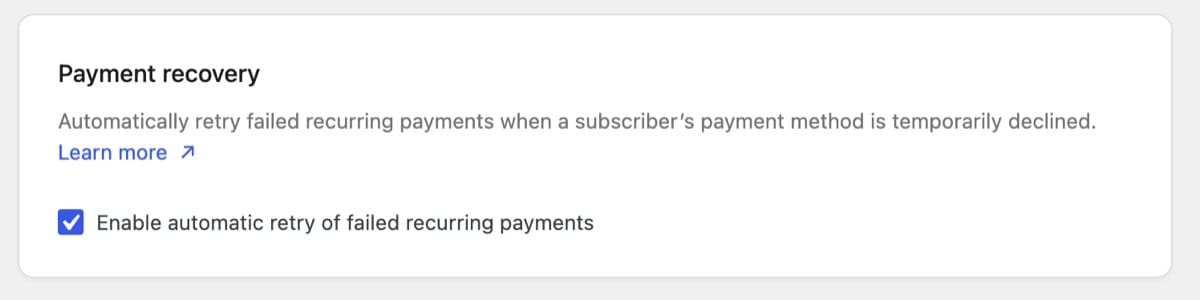
Often, "churn" is merely a technical failure. Unsuccessful renewals—frequently caused by expired credit cards, insufficient funds, or automated security blocks—represent a significant, recoverable segment of lost revenue. Data shows that a substantial portion of customers who face payment failures have no intention of canceling their service. Implementing automated payment retries and proactive, automated communication channels allows merchants to bridge this gap without human intervention, effectively reclaiming revenue that would otherwise be lost to administrative friction.
2. Plan or Product Mismatch
A customer’s needs are dynamic. When a subscriber reaches a point of cancellation, it is frequently because their current plan no longer fits their lifestyle, budget, or consumption rate. Rather than viewing this as a lost sale, merchants should offer alternatives such as plan downgrades, quantity adjustments, or the ability to pause a subscription temporarily. Providing these "soft-landing" options empowers the customer to retain a relationship with the brand while scaling their commitment to match their current circumstances.
3. Subscription Experience Failures
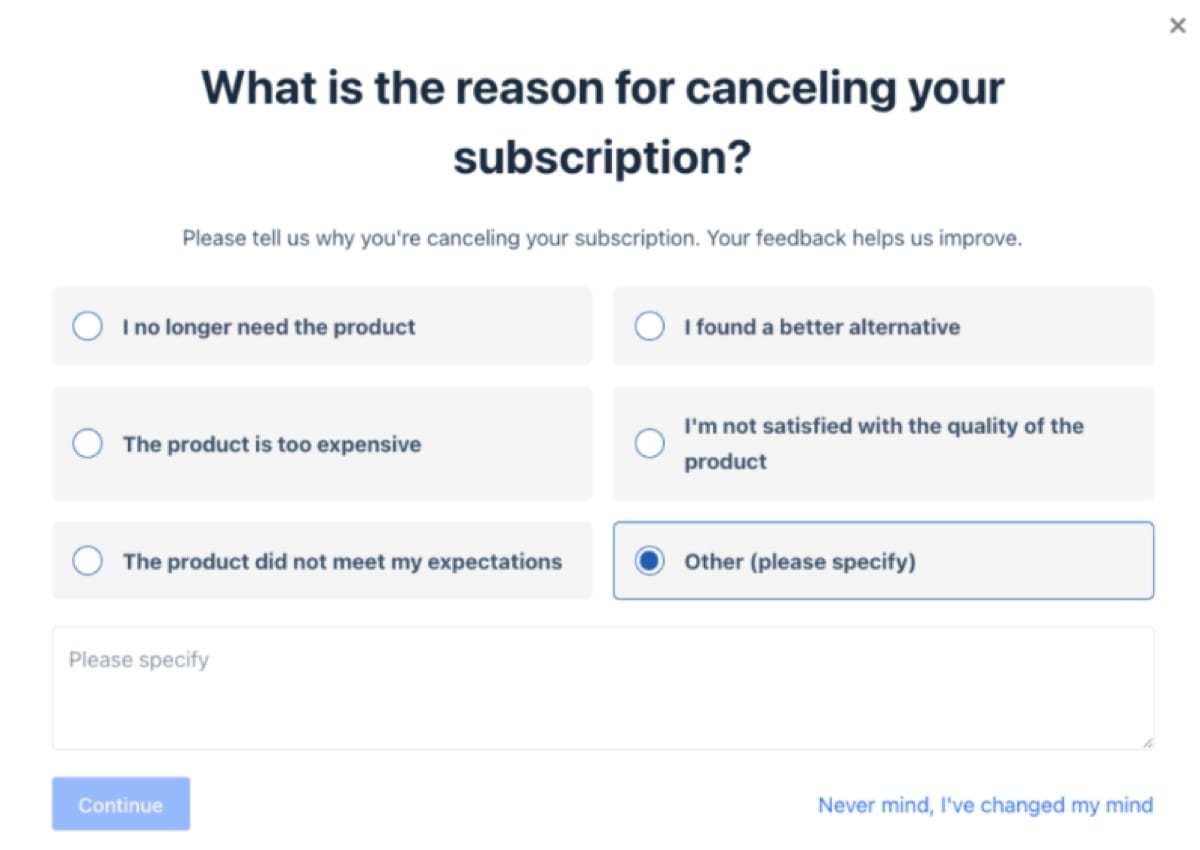
Operational shortcomings, such as shipping delays, product damage, or inconsistent service quality, are primary drivers of negative churn. While these issues are often buried in aggregate data, qualitative feedback loops—such as post-cancellation surveys—can illuminate systemic problems. When multiple users cite the same issue, it serves as a mandate for operational reform, whether that involves switching logistics providers, improving packaging materials, or refining inventory management protocols.
4. Natural Cancellations
Not all churn is preventable. Businesses must accept that some customers will eventually outgrow the product or service. In these instances, the objective shifts from retention to brand legacy. By maintaining a positive exit experience, businesses ensure the door remains open for future re-engagement. Win-back campaigns, launched at strategic intervals, can effectively re-acquire these customers when their needs realign with the merchant’s offerings.
Data-Driven Decision Making
The implementation of robust analytical frameworks is essential for any merchant aiming to scale. Relying on intuitive hunches is insufficient in a data-rich environment. Merchants should aggregate their subscription data—ideally through specialized reporting tools—to categorize each loss.
When analyzing this data, businesses are encouraged to perform a rigorous assessment of "preventability." By utilizing AI-assisted data processing, firms can rapidly sort hundreds of subscription records into the aforementioned categories. This process reveals which specific areas—whether it be payment processing, product quantity, or fulfillment quality—are responsible for the highest revenue leakage.
Broader Implications and Strategic Synthesis
The shift toward a "retention-first" mentality has profound implications for the ecommerce sector. As the cost of customer acquisition (CAC) continues to rise globally, the lifetime value (LTV) of existing customers has become the primary driver of profitability. Consequently, the ability to manage churn is a competitive advantage that directly impacts the bottom line.
A quarterly review cycle is recommended for all subscription-based operations. By analyzing the individual records of every subscription that ended during the quarter, teams can move from reactive troubleshooting to proactive strategy. This involves not only identifying the "why" behind the cancellation but also determining the "when" of intervention. Monitoring usage patterns—such as a decrease in login frequency or repeated order pauses—allows for predictive modeling, enabling the business to reach out to the customer before the final decision to cancel is made.
Conclusion: A Cycle of Continuous Improvement
Reducing churn is not a project with a fixed end date, but a continuous cycle of measurement, analysis, and optimization. By prioritizing the most impactful issues—such as payment recovery or product mismatch—merchants can achieve meaningful improvements in short order.

As the digital landscape matures, the businesses that succeed will be those that treat every cancellation not as a failure, but as a data point that informs a more resilient operation. By creating a culture where retention is treated with the same rigor as acquisition, merchants can secure a more stable, predictable, and profitable future. The objective is to build a business that is not just selling a product, but providing a sustained, evolving service that anticipates and meets the changing needs of its subscribers. Through this targeted, data-backed approach, the erosion of recurring revenue can be effectively countered, paving the way for long-term commercial sustainability.