Aurea Software Rebrands XANT to InsideSales to Revitalize Enterprise Commerce Solutions


AUSTIN, TEXAS — Aurea Software, Inc., the organization frequently characterized as the “Netflix of business software” due to its unique subscription-based enterprise portfolio model, has announced a significant strategic pivot regarding its recent acquisition of XANT. Effective immediately, the company has retired the XANT brand, restoring the widely recognized and industry-standard name, InsideSales. This branding shift follows Aurea’s acquisition of the company in August 2021, signaling a commitment to legacy brand equity and a refocusing of its “Future of Commerce” initiative.
The decision to revert to the InsideSales name—a brand that served as a cornerstone of the sales acceleration market for over a decade—is more than a cosmetic update. It represents a deliberate alignment of Aurea’s technical infrastructure with a historical narrative of trust, market recognition, and established enterprise credibility. By shedding the XANT moniker, which the company adopted in a previous attempt to pivot its identity, Aurea is positioning its sales-engagement technology as a foundational pillar for its broader suite of B2B commerce tools.
The Historical Context and Brand Evolution
To understand the weight of this decision, one must look at the trajectory of the brand formerly known as InsideSales.com. Founded in 2004, the company became a titan in the sales engagement space. At its peak, the organization was a unicorn of the Utah technology scene, reaching a valuation of nearly $2 billion. It pioneered the concept of “sales acceleration,” using data science and artificial intelligence to predict which leads sales representatives should contact and when.
However, the late 2010s proved to be a volatile period for the firm. As the sales technology market became increasingly crowded with competitors like Outreach, SalesLoft, and HubSpot, the company sought to redefine its identity. In 2019, the organization rebranded from InsideSales.com to XANT. The goal was to signal a shift from a legacy contact-management focus to an AI-driven, predictive-modeling powerhouse. Despite the ambition behind the rebrand, industry analysts frequently noted that the market remained attached to the original identity, which had become synonymous with the category of predictive sales engagement itself.
When Aurea Software acquired the company in August 2021, the new ownership performed a strategic audit. The conclusion reached by Aurea’s leadership was that the equity in the “InsideSales” name far outweighed the potential of the “XANT” brand. By restoring the original name, Aurea is effectively betting that the brand’s 15-year history of innovation will resonate more strongly with enterprise procurement departments than the previous, shorter-lived iteration.
Chronology of the Transition
The transition from the acquisition to the current rebranding effort follows a compressed timeline, reflecting Aurea’s agile operating model:
- August 2021: Aurea Software completes the acquisition of XANT, bringing the company into its “Future of Commerce” portfolio.
- September 2021: Internal restructuring and integration of XANT’s AI-powered sales tools, specifically PlayBooks, into the AureaOne platform begins.
- October 4, 2021: Aurea officially announces the retirement of the XANT brand and the restoration of the InsideSales name.
- Q4 2021 and Beyond: Migration of all digital assets, including the sunsetting of the XANT.ai domain in favor of the legacy InsideSales.com web presence.
The Strategic Value of the Future of Commerce Portfolio
Aurea’s business model is predicated on the “AureaOne” operating framework. Unlike traditional software companies that sell individual licenses or perpetual software, Aurea provides its subscribers with unlimited access to a library of enterprise-scale software products. By integrating InsideSales into this portfolio, Aurea aims to solve a specific pain point in the B2B sector: the widening gap between the B2C buying experience, which is fast, personalized, and digital-first, and the B2B experience, which remains historically cumbersome.
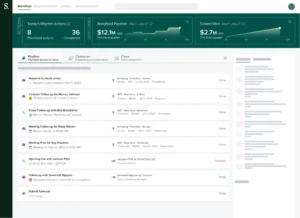
The technology acquired through the former XANT, most notably the PlayBooks platform, is essential to this mission. PlayBooks leverages artificial intelligence to analyze vast datasets, allowing sales teams to optimize contact rates by predicting the best time and channel to engage a prospect. This capability is now being marketed as a core component of Aurea’s "Future of Commerce" library, which includes other enterprise solutions such as Infer and FirstRain.
By unifying these tools, Aurea is attempting to create an end-to-end sales and marketing funnel that is more intelligent and responsive. The goal is to bridge the "initial contact" gap, ensuring that marketers and sales representatives are not just reaching out, but are reaching out with the right message at the exact moment a prospect is most likely to convert.
Executive Perspectives and Market Implications
Scott Brighton, CEO of Aurea Software, articulated the rationale behind the move during the announcement. "InsideSales is a storied name in enterprise software," Brighton noted. "Over the course of 15 years, it became one of the most recognizable brands in the industry. We’re excited to honor that track record of success, innovation, and commitment to improving how B2B enterprises sell to each other by restoring the classic InsideSales.com brand name immediately."
Industry observers suggest that this move is a validation of the power of "heritage branding" in the B2B software market. When enterprises purchase software, the sales cycle is long, and the risks of failure are high. Consequently, companies tend to gravitate toward brands they recognize and trust. By reviving the InsideSales name, Aurea is reducing the "cognitive load" on prospective customers who might have been confused by the XANT branding transition.
Furthermore, the integration into Aurea’s subscription model represents a shift in how InsideSales technology will be consumed. Customers no longer purchase a single-point solution; they gain access to a broader ecosystem. This is a significant competitive advantage for Aurea, as it allows them to cross-pollinate data between different enterprise tools, creating a more comprehensive view of the customer journey.
Broader Impact on the Enterprise Software Landscape
The rebranding of XANT to InsideSales highlights a broader trend in the enterprise software sector: the consolidation of legacy tools into comprehensive, subscription-based "suites." As cloud computing has become the standard for delivery, the value of standalone point solutions has diminished in favor of integrated platforms that can offer a wider breadth of services.
The challenge for Aurea, however, lies in the integration process. Merging the culture, codebases, and customer bases of over a dozen distinct software companies into a single operating model is a high-stakes endeavor. The successful rebrand of InsideSales is a test of whether Aurea can maintain the technical excellence of the original product while modernizing its delivery mechanism.
From an analytical perspective, the return to the original brand is a prudent financial move. Brand equity is an intangible asset that takes years to cultivate. By abandoning XANT, Aurea is effectively writing off the millions of dollars invested in that rebrand to capitalize on the high search volume and historical trust associated with the "InsideSales" keyword. For potential customers and existing clients, this transition promises a more stable, recognizable partner that is grounded in a well-established history of predictive sales technology.
Conclusion
The restoration of the InsideSales name is a definitive statement from Aurea Software regarding its long-term strategy. By honoring the heritage of the brand while embedding its AI-driven capabilities into a modern, subscription-based enterprise framework, Aurea is positioning itself to lead the next evolution of B2B commerce. As the digital landscape continues to demand more personalized, efficient, and data-backed interactions, the tools formerly known as XANT—and now proudly operating under the InsideSales banner—will likely play a central role in how enterprises manage the complexities of modern sales. The move serves as a reminder that in the fast-paced world of technology, sometimes the best way to move forward is to reach back and reclaim the identity that defined the market in the first place.
Related posts: