Data Analysis Reveals Significant Engagement Boost for Facebook Pages Prioritizing Comment Interaction

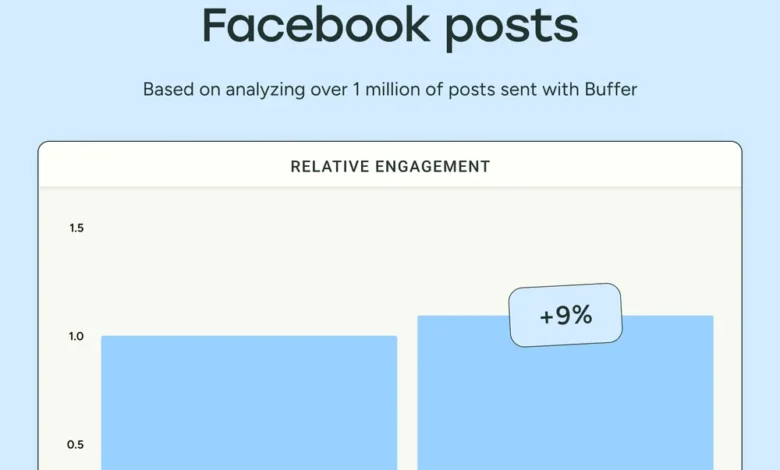
Facebook remains the dominant force in the global social media landscape, boasting a user base that recently eclipsed the three-billion monthly active user milestone. Despite the emergence of newer, high-growth platforms such as TikTok and Threads, Facebook continues to serve as the primary digital infrastructure for creators, small businesses, and multinational brands. However, as the platform’s organic reach has tightened over the last decade, marketers have struggled to identify consistent levers for growth. A comprehensive data study conducted by Buffer, analyzing over one million Facebook posts, has identified a critical, often overlooked strategy for improving visibility: the active management of comment sections.
The study, led by senior data scientist Julian Winternheimer, indicates that Facebook posts where creators or administrators reply to comments receive an average of 9.5 percent more reactions than those where the comment section is left unmoderated. While this figure appears modest compared to the 42 percent lift observed on Threads or the 30 percent boost on LinkedIn, the maturity and sheer volume of Facebook’s ecosystem make a nearly 10 percent increase a significant competitive advantage. For a platform where even fractional gains in engagement can lead to thousands of additional impressions, these findings provide a data-driven mandate for community management.
The Evolution of the Facebook Algorithm: From EdgeRank to Meaningful Social Interactions
To understand why replying to comments remains a potent tool for reach, one must examine the chronological evolution of Facebook’s News Feed algorithm. In its early years, the platform utilized a relatively simple system known as "EdgeRank," which prioritized content based on affinity, weight, and time decay. As the platform scaled, the algorithm became increasingly sophisticated, moving toward machine learning models designed to predict user behavior.
A pivotal shift occurred in January 2018, when Meta CEO Mark Zuckerberg announced a fundamental change in the News Feed’s philosophy. The company moved away from prioritizing "relevant content" toward fostering "meaningful social interactions" (MSI). Zuckerberg stated at the time that the platform would prioritize posts that spark conversations and meaningful interactions between people. This shift was a response to growing concerns regarding passive consumption and its impact on user well-being.
Under the MSI framework, the algorithm began to heavily weight "long-form" comments and back-and-forth exchanges. A post that generates a dialogue between the creator and the audience is flagged by the system as high-value content, signaling that it should be resurfaced in the feeds of friends and followers. The recent Buffer data suggests that this algorithmic preference remains a cornerstone of Facebook’s distribution logic in 2024.
Methodology: Uncovering Truth Through Fixed-Effects Regression
The study conducted by Winternheimer sought to move beyond surface-level metrics to find a causal-adjacent link between replies and reactions. The dataset comprised approximately one million posts from 97,427 unique Facebook profiles, encompassing a diverse range of industries, audience sizes, and geographical locations.
To ensure the findings were not skewed by the inherent advantages of large pages—which naturally receive more comments and reactions—the research employed a fixed-effects regression model. This statistical method is designed to control for variables that remain constant over time, such as a page’s total follower count, its specific niche, and its historical posting frequency. By comparing an individual account’s performance against itself—rather than comparing a small local business to a global media conglomerate—the study was able to isolate the impact of replying to comments.
The analysis revealed a statistical paradox: at first glance, raw data suggested that posts without replies had higher median reactions (22) than those with replies (16). However, this was a classic example of "Simpson’s Paradox," where a trend appears in several groups of data but disappears or reverses when the groups are combined. Larger pages, which often have lower reply rates due to the sheer volume of noise, were inflating the reaction numbers for the "no-reply" category. Once the fixed-effects model was applied to compare pages against their own baseline, the 9.5 percent uplift became clear and statistically significant, with a p-value of less than 0.001.
Comparative Analysis: Facebook vs. The Social Media Landscape
The study’s cross-platform scope provides essential context for Facebook’s performance. While Facebook’s 9.5 percent lift is the lowest among the platforms analyzed, it reflects the platform’s status as a "mature" network.
- Threads (42% lift): As a nascent platform focused almost exclusively on text-based discourse, Threads rewards interaction more aggressively to encourage the formation of new social graphs.
- LinkedIn (30% lift): The professional network has pivoted toward "knowledge-sharing" engagement, where the algorithm prioritizes comments that add value to the original post.
- Instagram (6.3% – 10% lift): Similar to Facebook, Instagram’s high volume of content and varied formats (Reels, Stories, Grid) result in a more moderate lift for comment interaction.
The discrepancy between Facebook and Threads highlights a difference in user intent. Facebook users often engage with a wider variety of content, including news articles, marketplace listings, and community groups, where a creator’s reply might be less central to the experience than on a conversation-first platform like Threads.
The Mechanics of Engagement: Why Replies Drive Reactions
Industry analysts and digital strategists point to three primary psychological and algorithmic drivers that explain the correlation between creator replies and increased reactions:
The Feedback Loop of Visibility: Every time a creator replies to a comment, it serves as a fresh "signal" to the Facebook algorithm. This activity can cause the post to be bumped back to the top of the News Feed for other followers who have not yet seen it. Furthermore, if a user’s friend is involved in a conversation on a post, Facebook is more likely to show that post to the friend’s network, expanding the reach through "social discovery."
The Psychology of Social Proof: An active comment section acts as a form of social proof. When a casual scroller sees a post with a high volume of comments and visible participation from the author, the post gains perceived authority. This often encourages the user to stop scrolling and contribute their own reaction (such as a ‘Like’ or ‘Love’), further boosting the post’s performance metrics.
Relationship Signaling: Facebook’s algorithm tracks the "closeness" of connections. When a Page administrator consistently interacts with a specific user, the platform registers a strong relationship signal. Consequently, future content from that Page is prioritized in that specific user’s feed, creating a long-term benefit that extends beyond the individual post.
Strategic Implications for Digital Marketers
For businesses and creators operating in an era of diminishing organic reach, the implications of this data are clear: community management is no longer a secondary task but a core component of content distribution. However, the study suggests that the quality and timing of replies are just as critical as the act itself.
The "Golden Window" of Engagement: Digital marketing experts often cite the first two hours after a post is published as the most critical period. High engagement during this window can "velocity-prime" the post, signaling to the algorithm that the content is trending and worthy of wider distribution. Creators who are available to respond to initial comments in real-time are more likely to see their posts reach the 9.5 percent uplift threshold.
Beyond the "Thank You" Response: To maximize the engagement flywheel, creators are encouraged to move beyond "low-effort" replies. Asking follow-up questions or providing additional insights encourages the original commenter to reply again, creating a multi-turn conversation. The algorithm weights these "long" threads more heavily than single-reply interactions.
The Scalability Challenge: For large organizations, replying to every comment is often unfeasible. The use of community management tools—such as Buffer’s Community tab or Meta Business Suite—allows teams to aggregate comments from multiple platforms into a single dashboard. This centralized approach enables more efficient moderation and ensures that high-value conversations are not lost in the noise.
Conclusion: The Return to Social Roots
The findings of the Buffer study serve as a reminder that social media, at its core, remains a social endeavor. While the complexity of modern algorithms can make digital marketing feel like a "black box" of technical optimization, the data suggests that basic human interaction remains a powerful force.
A 9.5 percent increase in reactions may not be a "silver bullet" for every struggling Facebook Page, but it represents a reliable, cost-effective method for growth. In a digital economy where customer acquisition costs are rising and attention is increasingly fragmented, the ability to squeeze an additional 10 percent of performance out of organic content is an opportunity that few marketers can afford to ignore. As Facebook continues to iterate on its AI-driven feed, the "meaningful interaction" signal remains a steadfast metric for success, rewarding those who take the time to talk back to their audience.