Amazon Pharmacy and eNavvi Partner to Integrate Real-Time Prescription Pricing and Delivery into Physician Workflows

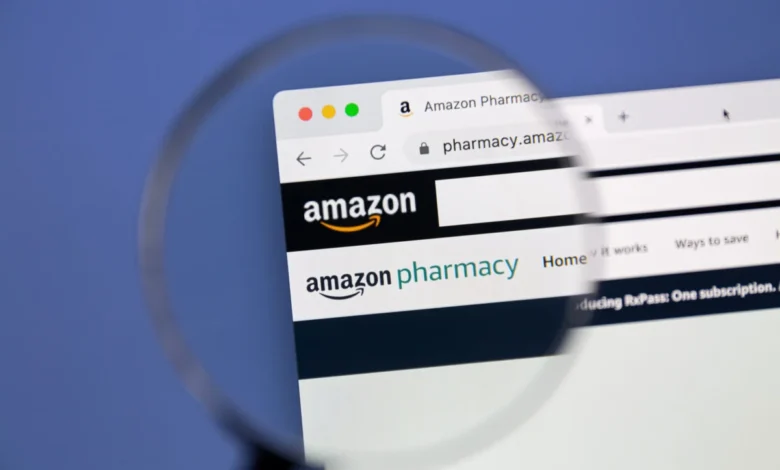
The healthcare landscape is undergoing a significant digital transformation as Amazon Pharmacy and eNavvi, a prominent digital prescription platform, announce a strategic collaboration aimed at streamlining the medication procurement process. This partnership is designed to provide healthcare providers with unprecedented access to real-time medication data, including transparent pricing, stock availability, and delivery logistics, directly within their existing clinical workflows. By embedding these capabilities into the prescribing moment, the two companies aim to convert the traditional patient-physician encounter into a seamless, single point-of-sale (POS) experience.
Under the terms of the agreement, eNavvi’s technology will integrate Amazon Pharmacy’s vast data ecosystem into the software used by physicians. This integration allows clinicians to see exactly what a medication will cost a patient—factoring in insurance or Prime discounts—before the prescription is even sent. Furthermore, the collaboration leverages Amazon’s extensive logistics infrastructure, which currently offers same-day delivery services in nearly 3,000 U.S. cities, ensuring that the transition from diagnosis to treatment is as rapid as possible.
Integrating Pharmacy Data into Clinical Decision-Making
For decades, the process of prescribing medication has been characterized by a lack of transparency. Physicians often select treatments without knowing the out-of-pocket costs for the patient or whether the local pharmacy has the drug in stock. This information gap frequently leads to "sticker shock" at the pharmacy counter, resulting in abandoned prescriptions and compromised patient health.
The partnership between eNavvi and Amazon Pharmacy seeks to solve this by bringing the "checkout" experience to the doctor’s office. Simon Chang, Chief Executive Officer at eNavvi, emphasized that this collaboration fundamentally alters the prescribing environment. According to Chang, providing clinicians with transparent pricing and real-time availability allows for better-informed clinical decisions. By routing prescriptions directly to Amazon Pharmacy through a familiar interface, the platform removes the administrative and financial barriers that traditionally stand between patients and their necessary treatments.
Tanvi Patel, Vice President and General Manager at Amazon Pharmacy, echoed this sentiment, noting that the company is committed to removing the friction that prevents patients from reliably accessing their medications. Patel highlighted that when patients have convenient access and clear pricing, they are significantly more likely to adhere to their prescribed regimens, leading to better long-term health outcomes.
A Strategic Timeline of Amazon’s Healthcare Ambitions
This collaboration with eNavvi is the latest step in a multi-year effort by Amazon to disrupt the $600 billion U.S. prescription drug market. To understand the significance of this move, it is essential to view it within the context of Amazon’s broader healthcare trajectory:
- 2018: Amazon acquires PillPack for approximately $750 million, gaining a sophisticated pharmacy infrastructure and licenses to ship prescriptions in all 50 states.
- 2020: The official launch of Amazon Pharmacy allows Prime members to manage their medications and receive discounts on generic and brand-name drugs.
- 2022: Amazon announces the $3.9 billion acquisition of One Medical, a primary care provider, signaling its intent to control both the clinical and fulfillment aspects of healthcare.
- 2023: The company introduces RxPass, a $5 monthly subscription for Prime members that covers a list of commonly prescribed generic medications.
- 2024: Amazon expands same-day delivery to nearly 3,000 cities and partners with eNavvi to embed its pharmacy services directly into the electronic health record (EHR) workflows of physicians.
This timeline illustrates a shift from being a mere delivery service to becoming an integrated healthcare provider. By partnering with eNavvi, Amazon is moving "upstream" in the healthcare journey, influencing the decision-making process at the very moment a prescription is written.
The Logistics Factor: Solving the Last-Mile Problem in Medicine
A critical component of this partnership is the utilization of Amazon’s sophisticated logistics network. While traditional pharmacies like CVS and Walgreens have physical footprints in most communities, they have often struggled to match the speed and efficiency of Amazon’s delivery system.
Amazon currently ranks No. 1 in Digital Commerce 360’s Top 1000 Database, which tracks the largest North American online retailers by annual ecommerce sales. However, the company holds the No. 158 spot in the AI Commerce Rankings, suggesting that while its logistics are unparalleled, there remains significant room for growth in how it applies artificial intelligence to consumer behavior and clinical data. In the Global Online Marketplaces Database, Amazon holds the No. 3 position, reflecting its dominance in third-party gross merchandise value (GMV).
The ability to deliver medications on the same day they are prescribed is more than a convenience; it is a clinical intervention. In many parts of the United States, "pharmacy deserts"—areas where residents must travel long distances to reach a pharmacy—pose a significant threat to public health. Alys Reynders, Chief Marketing Officer at Quickbase, noted that the Amazon-eNavvi model could mitigate these deserts by using a nationwide delivery network to bypass physical bottlenecks.
Financial Implications and the Prime Ecosystem
The integration of Amazon Pharmacy into the eNavvi platform also serves as a powerful incentive for Amazon Prime membership. Patients who are Prime members can access savings of up to 80% on generic medications when paying without insurance. Additionally, the $5 monthly RxPass program offers a predictable, low-cost option for patients managing chronic conditions such as high blood pressure or diabetes.
From a business perspective, this strategy increases "stickiness" for the Prime ecosystem. By becoming a primary source for both daily essentials and life-saving medications, Amazon creates a high-frequency relationship with the consumer. For the healthcare provider, the ability to offer these savings at the point of care enhances the patient-provider relationship, as the physician is seen as an advocate for the patient’s financial well-being.
The Convergence of E-Commerce and Clinical Workflows
The logic behind the eNavvi and Amazon partnership mirrors a broader trend in the digital economy: the convergence of discovery and purchase. Vivien Garnès, co-CEO and co-founder of Upfluence, an influencer marketing platform, observes that this shift is already well-established in social media.
Garnès points out that in the past, a consumer would discover a product on social media and then have to navigate to a separate website to complete the purchase. Today, platforms like TikTok and Instagram allow for "shoppable content," where the transaction happens the moment the decision is made.
"ENavvi embedding Amazon Pharmacy into the prescribing screen is the same logic Instagram and TikTok are applying to shoppable content," Garnès stated. "Whenever and wherever a decision gets made, that’s where checkout needs to live." In the context of healthcare, the "discovery" is the diagnosis, and the "purchase" is the prescription. By removing the steps between these two moments, Amazon and eNavvi are applying the principles of modern e-commerce to the medical field to eliminate friction and reduce the likelihood of "cart abandonment"—or, in this case, unfilled prescriptions.
Addressing the Crisis of Medication Non-Adherence
The implications of this partnership extend deep into public health. Medication non-adherence is a major crisis in the United States, costing the healthcare system an estimated $100 billion to $300 billion annually in avoidable hospitalizations and complications. Studies show that roughly 20% to 30% of prescriptions are never filled, often due to high costs or the inconvenience of visiting a pharmacy.
By providing real-time pricing and home delivery, the eNavvi-Amazon collaboration addresses the two primary drivers of non-adherence. When a patient knows exactly what they will pay and knows the medicine will arrive at their door that evening, the psychological and physical hurdles to treatment are largely removed.
Alys Reynders of Quickbase highlighted that the healthcare sector has long struggled with inefficiencies regarding the secure flow of patient data. She believes that creating a "secure corridor" for prescription data is essential for the industry to thrive in the age of digital transformation. This partnership provides a glimpse into a future where healthcare is as responsive and transparent as any other consumer-facing industry.
Future Outlook: The Scalability of Transparent Healthcare
As the partnership rolls out, the industry will be watching closely to see how traditional retail pharmacies respond. Companies like CVS Health and Walgreens Boots Alliance have already begun pivoting toward more comprehensive healthcare services, including primary care clinics and digital health tools, to counter the threat posed by Amazon.
The success of the eNavvi and Amazon Pharmacy collaboration will likely depend on its adoption rate among physicians. While the technology promises to save time and improve patient outcomes, integrating new tools into the already-strained clinical workflow can be a challenge. However, if the platform proves to reduce administrative burdens—such as the need for prior authorizations or phone calls to clarify pricing—it could see rapid uptake.
In conclusion, the collaboration between Amazon Pharmacy and eNavvi represents a pivotal moment in the "Amazonification" of healthcare. By prioritizing transparency, logistics, and user experience at the point of care, the two companies are setting a new standard for how medications are prescribed and delivered in the United States. As digital transformation continues to reshape the economy, the traditional barriers between clinical care and commercial fulfillment are increasingly becoming a thing of the past.