The Inversion of Web Architecture: Why the AI Era is Bringing the Homepage Back to Center Stage


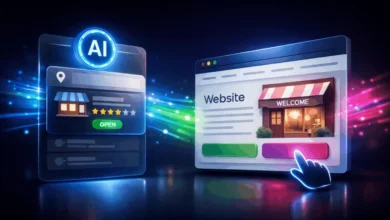
Digital marketing and web development are currently undergoing a structural realignment that mirrors the earliest days of the internet, marking a significant departure from the search engine optimization (SEO) strategies that have dominated the last two decades. For years, the prevailing wisdom in web design prioritized "deep linking" and internal landing pages, essentially decentralizing the website. However, the rapid proliferation of generative artificial intelligence (AI) and Large Language Models (LLMs) like ChatGPT, Gemini, and Perplexity is forcing a return to the "front door" of the digital experience: the homepage. This shift represents a fundamental reversal in how users discover information and interact with brands, necessitating a complete overhaul of modern information architecture.
The Historical Arc of Web Discovery
To understand the current disruption, one must look at the evolution of web navigation since the 1990s. In the early era of the World Wide Web, architecture was linear and simplistic. Websites were often referred to as "filing cabinet" sites, where a single, grand entryway—the homepage—served as the primary gatekeeper. Users arrived at the front door, consulted a directory or a menu, and manually navigated through layers of information to find what they needed.
This paradigm was shattered in the mid-2000s by the maturation of search engine algorithms. As Google became the primary arbiter of web traffic, SEO became the dominant force in design. The "front door" was replaced by thousands of "side windows." Through long-tail keyword optimization, marketers could drop users directly onto specific blog posts, product descriptions, or technical resources that matched their exact query. Consequently, the homepage lost its status as the primary navigation hub, often becoming a secondary brand-awareness page while the real commercial activity happened deep within the site’s subfolders.
The AI Disruption and the Erosion of the Deep Link
The emergence of AI search and "Zero-Click" results has fundamentally broken the traditional SEO funnel. Industry data from 2024 indicates a significant decline in click-through rates (CTR) for informational queries. When a user asks a search engine a question—such as "What are the benefits of a headless CMS?"—Google’s AI Overviews or specialized tools like Perplexity provide a comprehensive 300-word summary instantly.
For the user, the "research phase" of the buyer’s journey is now handled entirely within the AI interface. They no longer need to click through to a company’s blog to read a "Pros and Cons" list because the AI has already synthesized that data from across the web. This phenomenon is effectively "swallowing" the informational long-tail traffic that once sustained deep-link landing pages.
However, this does not mean the website is becoming obsolete. Instead, it is changing the user’s entry point. Once an AI tool convinces a user that a specific brand is the leader in a field, the user’s next move is rarely another topical search. Instead, they perform a "branded search"—searching specifically for the company name. This action leads them directly to the homepage. The result is a resurgence of the homepage as the most critical asset for conversion, but with a new challenge: these visitors are "warmed up" by AI research, yet the website owner knows less about their specific intent than they did during the era of keyword-driven deep links.
The Chronology of Search Evolution
The transition from directory-based browsing to AI-synthesized answers can be viewed through four distinct phases:
- The Directory Era (1990–2000): Dominated by portals like Yahoo!, where users navigated hierarchical categories. The homepage was the absolute center of the universe.
- The Search Revolution (2000–2010): Google’s PageRank algorithm prioritized relevance. SEO began to pull traffic toward inner pages, beginning the era of the "decentralized" website.
- The Content Marketing Boom (2010–2022): Brands focused on "inbound" marketing, creating vast libraries of content to capture every possible long-tail query. The homepage became a brand billboard rather than a utility.
- The AI Reversal (2023–Present): AI handles the informational heavy lifting. Users return to the "front door" via branded searches after receiving AI-generated recommendations.
The Psychology of the Path of Least Resistance
The shift back to the homepage is also driven by human psychology. In his seminal work on web usability, Don’t Make Me Think, Steve Krug argued that web users behave like foragers. They look for the "scent of information" and will always take the path of least resistance.
For years, the path of least resistance was a Google search that led to a specific page. Today, the path of least resistance is asking an AI and then visiting a brand’s homepage to confirm credibility or finalize a transaction. However, this creates a friction point. If a user moves from a seamless, conversational AI environment to a cluttered, confusing homepage, they are likely to disengage immediately.

If the homepage fails to "signpost" the user toward their next destination—whether that is pricing, technical documentation, or a demo request—within seconds, the brand loses the lead. The modern homepage must act as a sophisticated "sorting station" that segments an anonymous, high-intent audience into their respective funnels.
Implementing the ALCHEMY Framework
To address this structural shift, web architects are increasingly turning to the ALCHEMY framework, a strategic planning guide designed to bridge the gap between business strategy and the technical requirements of the AI age. This framework ensures that a site is optimized for three distinct entities: human users, search engine crawlers, and AI agents.
The ALCHEMY framework consists of seven critical steps:
- Audience Segmentation: Identifying the specific personas that matter to the business and understanding how their research habits have changed in the AI era.
- Layout and Logic: Designing the homepage not as a static image, but as a functional map that directs different segments to their respective "filing cabinet" sections.
- Content Taxonomy: Organizing information into clear, logical hierarchies that AI crawlers can easily parse and summarize.
- Hierarchy of Information: Ensuring that the most critical "trust signals" and conversion paths are visible without excessive scrolling.
- Evaluation of UX: Testing the site’s "friction" levels to ensure the transition from AI to the website is seamless.
- Metrics and Monitoring: Moving beyond simple traffic numbers to track how branded search and homepage navigation lead to conversions.
- Yield Optimization: Refining the "signposting" on the homepage to increase the percentage of visitors who reach deep-funnel pages.
Supporting Data: The Rise of Branded Search
Recent market analysis highlights why this shift is unavoidable. According to recent search trend reports, "unbranded" informational queries in some B2B sectors have seen a volume decrease of up to 25% since the integration of AI into search results. Conversely, "branded" search volume—queries that include a specific company or product name—has remained stable or increased.
This suggests that while users are visiting fewer websites during their research phase, the websites they do visit are the ones they have already decided to trust. This places an immense burden on the homepage to maintain that trust. If the information architecture is disorganized, the brand’s authority—established by the AI’s recommendation—is instantly undermined.
The "Filing Cabinet" Model for 2026 and Beyond
As the industry moves toward 2026, the "Filing Cabinet" model of information architecture—famously detailed in Information Architecture: For the Web and Beyond (the "Polar Bear Book")—is seeing a renaissance. A well-organized site must serve two masters:
- Human Users: They arrive at the "front door" (homepage) and need clear navigation, categories, and labels to find specific content quickly.
- AI Agents: They enter through the "back door" (crawling deeper pages) to ingest data that will later be used to provide answers in AI interfaces.
Successful web architecture now requires a "dual-entry" strategy. The deeper pages must remain highly optimized for SEO and AI ingestion to ensure the brand is included in LLM training sets and AI search summaries. Simultaneously, the homepage must be rebuilt as a high-performance engine for segmenting and converting the human traffic that those AI recommendations inevitably generate.
Broader Implications for the Digital Economy
The return of the homepage signals a broader shift in digital power dynamics. In the SEO era, small players could "hijack" traffic by out-optimizing larger brands on specific niche keywords. In the AI era, where LLMs prioritize authoritative, highly-cited sources, brand equity is becoming more valuable than ever.
Companies can no longer rely on a "spidery maze" of blog posts to capture traffic. They must invest in a cohesive brand identity and a rock-solid information architecture that starts at the homepage. The "great AI reversal" is not just a change in where people click; it is a change in how brands must present themselves to the world. The homepage is no longer just a part of the website—it is the map that determines whether a user stays with the brand or returns to the AI for a different recommendation.