India currently stands at a pivotal crossroads in the evolution of global digital trade, representing a market of unprecedented scale and untapped potential. With a population that has officially surpassed that of China to become the world’s largest, India’s demographic profile is uniquely positioned for a digital revolution. Approximately half of the nation’s 1.4 billion people are under the age of 25, providing a massive, tech-savvy consumer base that is increasingly mobile-first. Currently, 840 million Indians utilize smartphones, yet despite these staggering numbers, online commerce penetration remains remarkably low when compared to mature economies like the United States or China. This gap between current digital adoption and total market capacity suggests that an ecommerce boom of historic proportions is not merely a possibility, but an inevitability.
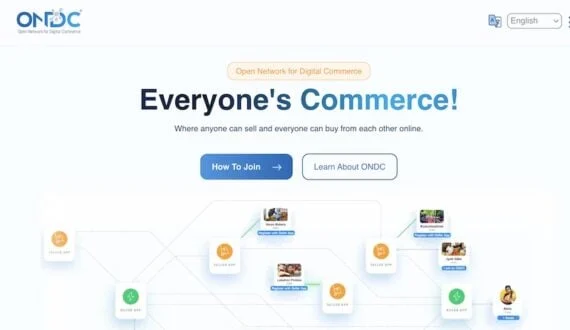
To navigate this transition, the Indian government has embarked on an ambitious regulatory and infrastructural journey. Policymakers face the complex task of fostering high-tech growth while simultaneously protecting the livelihoods of millions of traditional, small-scale merchants. These physical "mom-and-pop" stores, locally known as kiranas, are the backbone of the Indian economy, accounting for an estimated 75% to 90% of all national consumer goods sales. In response to the threat of digital displacement by global giants, the government has introduced the Open Network for Digital Commerce (ONDC), a non-profit initiative designed to unbundle the ecommerce ecosystem and level the playing field for domestic and international players alike.
The Genesis and Evolution of ONDC: A Chronology
The development of ONDC did not occur in a vacuum; it is the second major pillar of India’s public digital infrastructure, following the massive success of the Unified Payments Interface (UPI). To understand the current state of ONDC, it is essential to trace its rapid development since its inception.
The initiative was first conceptualized in 2021 by the Department for Promotion of Industry and Internal Trade (DPIIT), under the Ministry of Commerce and Industry. The goal was to create a set of open protocols that would allow any buyer app to connect with any seller app, effectively ending the era of "walled gardens" maintained by dominant marketplaces.
In April 2022, the government launched the pilot phase of ONDC in five cities: Delhi NCR, Bengaluru, Bhopal, Shillong, and Coimbatore. This initial phase focused on grocery and food delivery, testing the technical viability of the network’s interoperability. By September 2022, the network moved into a beta testing phase in Bengaluru, allowing the general public to place orders through various buyer applications.
Throughout 2023 and into 2024, the network expanded its reach exponentially. It moved beyond simple retail to include mobility services—most notably with the integration of "Namma Yatri," a ride-hailing app in Bengaluru that operates without commissions—as well as financial services, fashion, and electronics. Today, ONDC is active in hundreds of cities across India, facilitating tens of thousands of transactions daily and attracting some of the world’s largest consumer brands.
Understanding the ONDC Framework: Unbundling the Marketplace
The traditional ecommerce model, exemplified by platforms like Amazon India and Walmart-owned Flipkart, is a vertically integrated silo. In these marketplaces, the platform controls the customer relationship, the seller listing, the logistics, and the payment processing. While efficient, this model often leads to high commission fees and gives the platform owner immense power over search rankings and data.
ONDC operates on a fundamentally different philosophy known as "unbundling." It is not an application, a website, or a central intermediary, but rather an open-source commerce framework. By utilizing the Beckn Protocol—an open-source set of specifications—ONDC allows different entities to specialize in specific parts of the transaction.
Under this system, the ecosystem is divided into three primary roles:
Buyer Applications
These are the consumer-facing interfaces where shoppers browse products. Popular apps that have integrated with ONDC include Paytm, Magicpin, and Bajaj Finserv. Because the network is open, a user on the Paytm app can see products listed by a merchant who uses an entirely different seller app.
Seller Applications
These apps provide the tools for merchants to digitize their inventory, manage orders, and list their products on the network. For a kirana shop owner, using a seller app like Mystore, GoFrugal, or CostBo is the gateway to the digital economy. Once listed on a seller app, their products become visible to every buyer app on the entire ONDC network.
Logistics Service Providers
In a traditional marketplace, the platform usually dictates the delivery service. On ONDC, logistics is a decoupled service. When a purchase is made, the network can ping various logistics providers like Delhivery, Shiprocket, or even local hyper-local delivery partners to find the best rate and route for that specific order.
Economic Implications and Supporting Data
The most significant driver of ONDC adoption is the dramatic reduction in operational costs for sellers. In the traditional marketplace model, sellers often face commission fees ranging from 18% to 40% of the transaction value. These fees cover discovery, shipping, and the platform’s profit margin.
In contrast, ONDC’s decentralized nature allows for much leaner operations. Current data suggests that selling fees on ONDC range from as low as 3% to 10%. This cost reduction is achieved because the "platform tax" is eliminated, and competition between various logistics and seller apps keeps prices transparent.
Furthermore, ONDC addresses the issue of "platform neutrality." In traditional ecommerce, proprietary algorithms can favor certain sellers or the platform’s own private-label brands. ONDC utilizes a transparent, non-discriminatory sorting algorithm. This ensures that a small local merchant has a fair chance of appearing in search results alongside a major multinational brand, provided they meet the consumer’s criteria for price and proximity.
The potential for growth is supported by India’s broader digital statistics. With the cost of mobile data in India being among the lowest in the world, the "Next Billion" users are coming online via mobile devices. ONDC aims to increase ecommerce penetration from its current level of approximately 7-8% to 25% over the next two years, targeting a gross merchandise value (GMV) of $48 billion.
Strategic Integration of Global Brands
While ONDC was initially designed to protect and empower the kirana stores, it has quickly become a strategic channel for multinational corporations (MNCs). Global giants are recognizing that ONDC offers a way to bypass the high margins of traditional ecommerce while maintaining a direct-to-consumer (D2C) feel.
Major foreign brands already active on the network include:
- Unilever and Procter & Gamble: Using the network to reach consumers in Tier 2 and Tier 3 cities where traditional distribution might be less efficient.
- Nestle and PepsiCo: Leveraging ONDC for food and beverage delivery, often integrating with "quick commerce" logic to ensure products reach consumers within minutes.
- Red Bull and L’Oreal: Utilizing the network to maintain brand visibility across a multitude of buyer apps simultaneously.
For these brands, ONDC serves as an additional distribution channel that complements their existing presence on Amazon or Flipkart. It allows them to own more of the customer data and experiment with localized pricing and promotions without being restricted by a single platform’s rules.
Official Responses and Policy Analysis
The Indian government’s stance on ONDC is one of "digital public good." Commerce Minister Piyush Goyal has frequently described ONDC as a tool to "democratize" the internet, comparing its potential impact to that of the invention of the internet itself or the success of UPI in the payments sector.
Industry experts and regulatory bodies, such as the Quality Council of India (QCI), have lauded the initiative for its potential to foster innovation. By lowering the barrier to entry, ONDC allows startups to build specialized tools for niche markets—such as apps specifically for artisanal crafts or organic produce—without having to build a multi-billion dollar infrastructure from scratch.
However, the transition is not without its critics and challenges. Some industry analysts point out that while the technical framework is sound, the "user experience" on ONDC can currently be fragmented compared to the seamless, one-click experience of Amazon. There are also ongoing discussions regarding consumer dispute resolution; if a product is faulty, is the buyer app, the seller app, or the logistics provider responsible for the refund? The ONDC council is currently working on a unified grievance redressal mechanism to solve these "trust" issues.
Broader Impact and Future Implications
The implications of ONDC extend far beyond the borders of India. If successful, the ONDC model provides a blueprint for other nations—particularly in the European Union and Southeast Asia—that are looking for ways to curb the monopolistic tendencies of "Big Tech" while promoting local digital entrepreneurship.
For foreign sellers and brands looking to enter the Indian market, ONDC represents a streamlined path. Rather than navigating the complex and often restrictive rules governing foreign direct investment (FDI) in multi-brand retail—which have historically limited the operations of companies like Walmart and Amazon in India—foreign brands can partner with local seller apps to access the entire Indian consumer base legally and efficiently.
As the network continues to mature, we can expect to see the integration of more sophisticated services, including AI-driven personalized shopping assistants, decentralized credit facilities for small merchants, and a more robust cross-border trade protocol.
In conclusion, the Open Network for Digital Commerce is more than just a technological upgrade; it is a fundamental restructuring of how trade is conducted in one of the world’s most important economies. By unbundling the components of a transaction, India is attempting to create a more equitable, competitive, and transparent marketplace. For the 15 million kirana stores, it is a lifeline into the digital age. For global brands, it is a powerful new tool for market penetration. For the global economy, it is a bold experiment in the democratization of digital commerce.