A practical framework for connecting digital and physical channels through unified communications that drive measurable retention and revenue gains.

In the rapidly evolving landscape of modern commerce, retail customer experience (CX) stands as the ultimate differentiator, dictating not merely satisfaction but directly impacting customer loyalty, operational efficiency, and, crucially, a brand’s financial health. When a retailer’s digital storefront, physical outlets, and customer support channels operate as disparate entities on disconnected systems, the resulting fragmentation is immediately palpable to the consumer. Each point of friction in the customer journey not only inflates service costs but significantly diminishes the likelihood of repeat purchases and erodes customer lifetime value. Industry reports consistently highlight that businesses failing to deliver cohesive, personalized experiences across all touchpoints face substantial revenue losses and increased customer churn. Conversely, those that master omnichannel integration witness higher transaction values, increased purchase frequency, and reduced support overheads, underscoring the immediate and measurable financial impact of a unified CX strategy.
The imperative for a robust omnichannel customer engagement platform has never been more pronounced. Such a platform is the cornerstone for unifying teams and communication streams into a single, synchronized system, thereby unlocking substantial gains in customer retention and operational efficiency.
Defining Retail Customer Experience in the Digital Age
Retail customer experience encompasses the entire spectrum of interactions a customer has with a brand, from initial product discovery and research, through purchase, and extending to post-purchase support and engagement. In an ideal scenario, these interactions are seamless, consistent, and interconnected, fostering the trust and confidence essential for cultivating repeat purchases and enduring brand loyalty.
The costs of failing to achieve this consistency are manifold and accrue rapidly. Disconnected systems, which often treat each channel as a siloed business unit, introduce friction at virtually every customer touchpoint. For instance, when customers cannot readily find answers through a retailer’s digital channels (website FAQs, chatbots), they invariably resort to calling the contact center, driving up service costs. Similarly, store associates lacking real-time visibility into online orders or customer interaction history can inadvertently create in-store friction, leading to lost sales, unnecessary returns, and a surge in preventable complaints that consume valuable operational resources. This fragmentation not only frustrates customers but also strains internal teams.
A modern, unified communication infrastructure is the strategic solution, connecting contact centers, store teams, and digital channels through a common data layer. This foundational integration delivers the consistency and personalized context necessary to transform first-time buyers into loyal advocates who spend more and are less expensive to serve over time. According to recent surveys, customers are increasingly willing to pay more for a superior customer experience, with a significant percentage abandoning a brand after just one poor interaction.
Strategic Imperatives: Driving Measurable Outcomes Across Channels
Retailers who consistently outperform their competitors in CX do not merely view customer experience as a service philosophy; they treat it as an integral operational system. They meticulously connect internal operations with customer-facing touchpoints through structured, data-driven strategies designed to deliver quantifiable results. This shift from a reactive service model to a proactive, integrated operational framework is critical for sustained success.
1. Holistic Customer Journey Mapping and Friction Quantification
Before any meaningful improvements can be made, retailers must possess a precise understanding of where customer experience problems occur and, crucially, what these issues cost the business. Many retail businesses, unfortunately, operate on anecdotal assumptions about friction points rather than insights derived from robust data analysis, often leading to misdirected investments.
To effectively identify and quantify friction points in the customer journey, a comprehensive diagnostic phase is essential:
- Data Consolidation and Analysis: Aggregate customer interaction data from all sources—website analytics, call logs, chat transcripts, social media comments, in-store feedback, and CRM records. Utilize advanced analytics tools to identify common pain points, repetitive inquiries, and points of abandonment.
- Customer Journey Audits: Conduct detailed audits of typical customer paths, both online and offline, from discovery to post-purchase support. Mystery shopping, user testing, and direct customer interviews can provide invaluable qualitative insights.
- Quantifying Impact: Assign a monetary value to each identified friction point. This involves calculating metrics such as lost conversion rates due to complex checkout processes, increased average handle time in contact centers due to fragmented information, and the cost of processing preventable returns. For example, if a convoluted return process leads to 5% more customer service calls and 2% more product damage, the financial implications are significant.
This diagnostic phase is pivotal as it reveals which specific fixes will yield the greatest impact on retention and revenue, thereby building a compelling business case for targeted investments in CX improvements.

2. Delivering Omnichannel Consistency: A Non-Negotiable Standard
In today’s interconnected world, customer expectations for consistency remain constant, regardless of whether they are shopping online, calling a contact center, or visiting a physical store. Any deviation can be jarring and undermine trust.
To deliver on these elevated expectations, retailers must ensure:
- Unified Product Information and Pricing: Product details, availability, and pricing must be identical across all channels. A customer seeing one price online and another in-store creates immediate distrust.
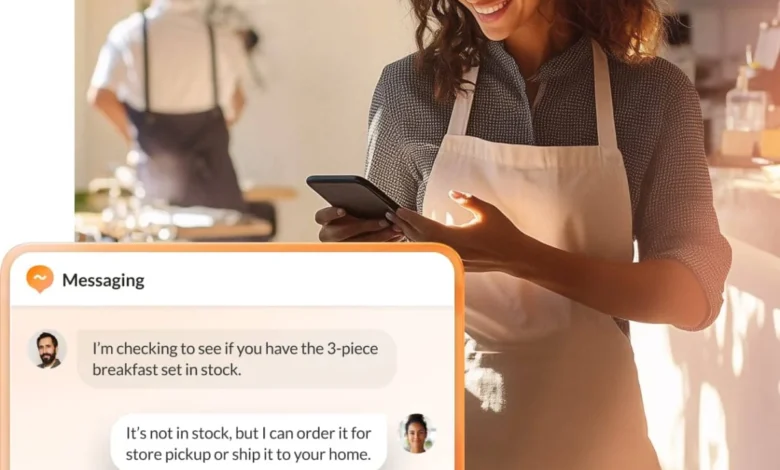
- Seamless Inventory Visibility: Customers and associates should have real-time access to inventory levels across all stores and warehouses. This enables services like "buy online, pick up in-store" (BOPIS) or "ship from store," enhancing convenience and preventing lost sales.
- Consistent Brand Voice and Messaging: The tone, style, and messaging of the brand should be uniform across all communication channels, reinforcing brand identity and professionalism.
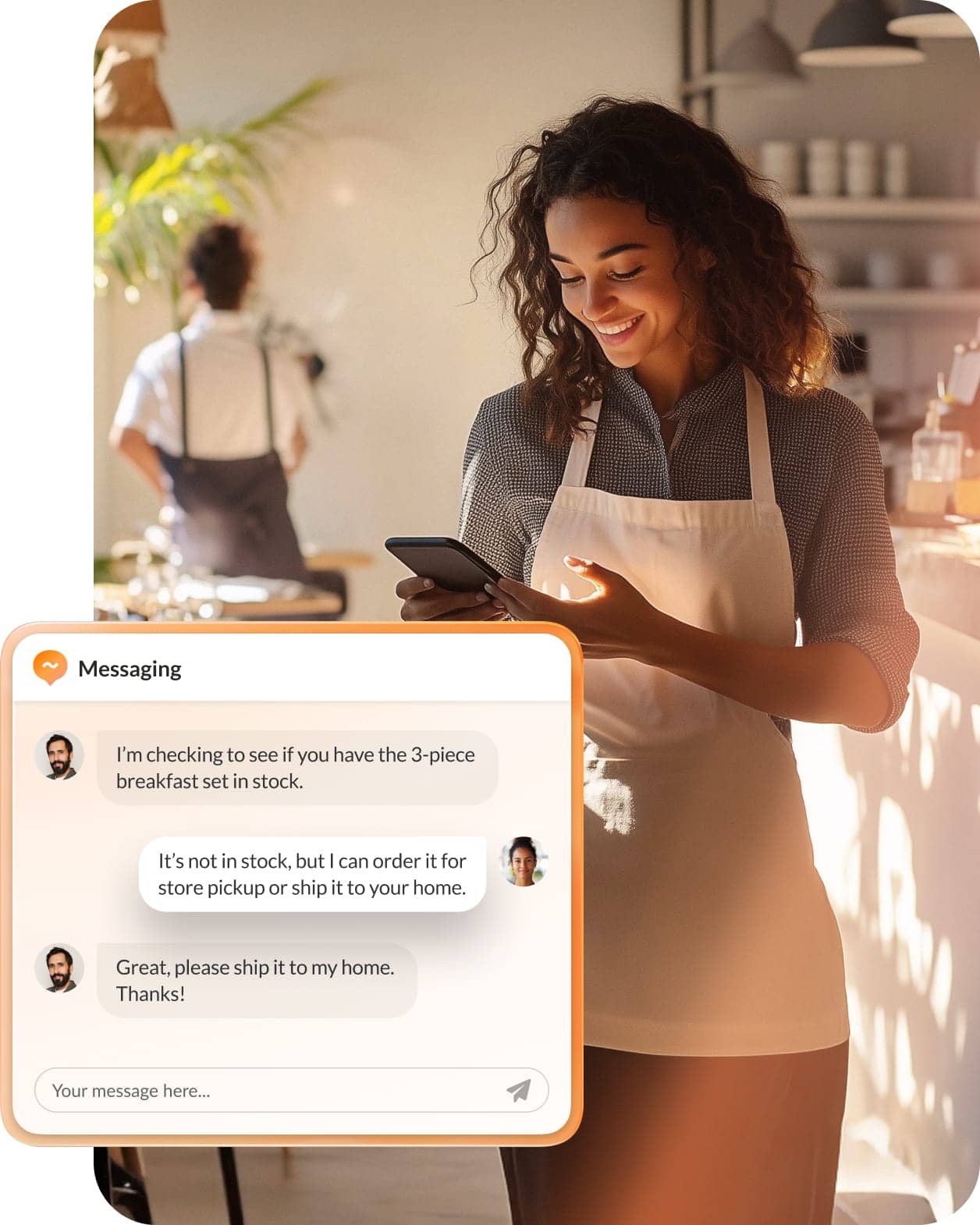
- Integrated Customer Service: A customer starting a conversation via chat should be able to seamlessly transition to a phone call or an in-store interaction without having to repeat their issue or provide the same information again.
This unwavering consistency is a powerful driver of higher conversion rates and customer retention, as it eliminates the frustration customers experience when navigating between fragmented channels. Research indicates that brands with strong omnichannel customer engagement strategies retain an average of 89% of their customers, compared to 33% for companies with weak omnichannel engagement.
3. Empowering Associates with Unified Customer Context
The frontline employees – retail store teams and contact center agents – are the direct ambassadors of a brand’s CX strategy. Equipping them with the right tools and information is paramount. This requires mobile-first platforms that deliver real-time customer history, inventory data, and advanced communication tools directly to their fingertips, whether on the sales floor or at service desks.
Unified customer context enables:
- Personalized Interactions: Associates can greet customers by name, reference past purchases, and understand their preferences, fostering a sense of individual recognition. Salesforce research highlights this shift, noting that the share of customers who feel businesses treat them as individuals jumped from 39% to 73% in just two years, significantly raising the bar for personalization.
- Efficient Problem Resolution: Agents can access a complete view of a customer’s previous interactions, purchase history, and outstanding issues, allowing for quicker and more accurate problem-solving without frustrating repetitions.
- Proactive Engagement: With real-time data, associates can proactively suggest relevant products, offer personalized recommendations, or address potential issues before they escalate, enhancing the overall shopping experience.
- Cross-Channel Collaboration: Store associates can easily communicate with contact center agents or warehouse staff to resolve complex issues, check inventory, or arrange special orders, ensuring a coordinated response to customer needs.
This empowerment transforms customer service from a cost center into a value driver, improving both customer satisfaction and employee engagement.
4. Seamless Backend Integration for Operational Excellence
True omnichannel CX is impossible without robust integration of backend systems. This involves creating integration layers that seamlessly connect inventory management, order fulfillment, enterprise resource planning (ERP), and customer service platforms, enabling real-time data flow without manual intervention.
This unified infrastructure allows retailers to:
- Maintain Accurate Inventory: Real-time synchronization of stock levels across all channels prevents overselling or underselling, ensuring customers receive what they ordered and minimizing stockouts.
- Streamline Order Fulfillment: Automate the routing of orders to the most efficient fulfillment location (e.g., nearest store, warehouse), optimizing delivery times and reducing shipping costs.
- Enhance Return Processing: Integrate returns data with inventory and customer records, allowing for quick processing, accurate refunds, and efficient restocking.
- Provide Real-time Order Status: Customers can track their orders with precision, reducing inquiries to customer service.
This deep integration eliminates the dreaded "let me check on that" moments that frustrate customers and consume valuable agent time, leading to a significant reduction in operational costs while simultaneously improving customer satisfaction scores.
5. Establishing Continuous Feedback Loops and AI-Powered Insights
Excellence in retail CX is not a one-time achievement but an ongoing process of refinement and optimization. Continuous feedback loops are fundamental to this process, starting with the immediate capture of customer feedback and sentiment after every interaction. This can be achieved through post-call surveys, SMS requests for ratings, in-app feedback forms, and web polls. Crucially, these insights must be routed directly to the relevant teams who can act upon them within hours, not weeks.

The advent of AI-powered conversation intelligence has revolutionized this process. Retailers can now analyze 100% of customer interactions—calls, chats, emails—to surface emerging issues, identify trending complaints, and pinpoint coaching opportunities for agents without the delays and limitations of manual review.
When satisfaction scores dip below predefined thresholds or specific issues spike in frequency, automated cross-functional response protocols can be activated. Regular, ideally weekly, review cadences ensure that operations, IT, marketing, and customer service leaders remain aligned on feedback trends and are committed to implementing specific, measurable improvements.
Tracking the right metrics is essential for continuous improvement:
- Net Promoter Score (NPS): Measures overall customer loyalty and willingness to recommend.
- Customer Satisfaction (CSAT): Captures satisfaction with specific interactions or purchases.
- Customer Effort Score (CES): Quantifies the ease of resolving an issue or completing a task.
- First Contact Resolution (FCR): Measures the percentage of issues resolved on the first interaction.
- Customer Lifetime Value (CLTV): The predicted revenue a customer will generate over their relationship with a brand.
- Churn Rate: The rate at which customers cease doing business with a company.
Replacing infrequent, quarterly reviews of stale data with real-time, actionable intelligence that enables rapid course correction significantly reduces customer churn and drives immediate, tangible results.
Technological Foundations: Enabling Modern Retail CX at Scale
According to Deloitte’s 2026 retail industry outlook, a substantial 46% of retailers are prioritizing omnichannel experience improvements, while 36% are focusing on strengthening loyalty programs. Technology-enabled personalization is consistently identified as the key differentiator in achieving these goals. However, this ambition is undermined by disconnected systems. Point-of-sale (POS) platforms that cannot share data with contact centers force customers to repeat information, while store associates without online order visibility are prone to losing sales and eroding customer trust.
The modern retail landscape demands a sophisticated yet integrated technology stack. Here are the five critical technology layers that work in concert to eliminate these silos:
- Unified Communications as a Service (UCaaS): This forms the central hub for all internal and external communications, integrating voice, video conferencing, team messaging, and collaboration tools. It ensures seamless communication between store associates, back-office staff, and contact center agents, regardless of their location.
- Customer Relationship Management (CRM) System: A robust CRM is the single source of truth for all customer data, housing interaction history, purchase records, preferences, and demographics. It provides a 360-degree view of the customer, accessible across all touchpoints.
- Contact Center as a Service (CCaaS): This cloud-based platform provides advanced capabilities for managing customer interactions across multiple channels (phone, email, chat, social media). It includes features like intelligent routing, IVR (Interactive Voice Response), call recording, and real-time analytics to optimize agent performance and customer satisfaction.
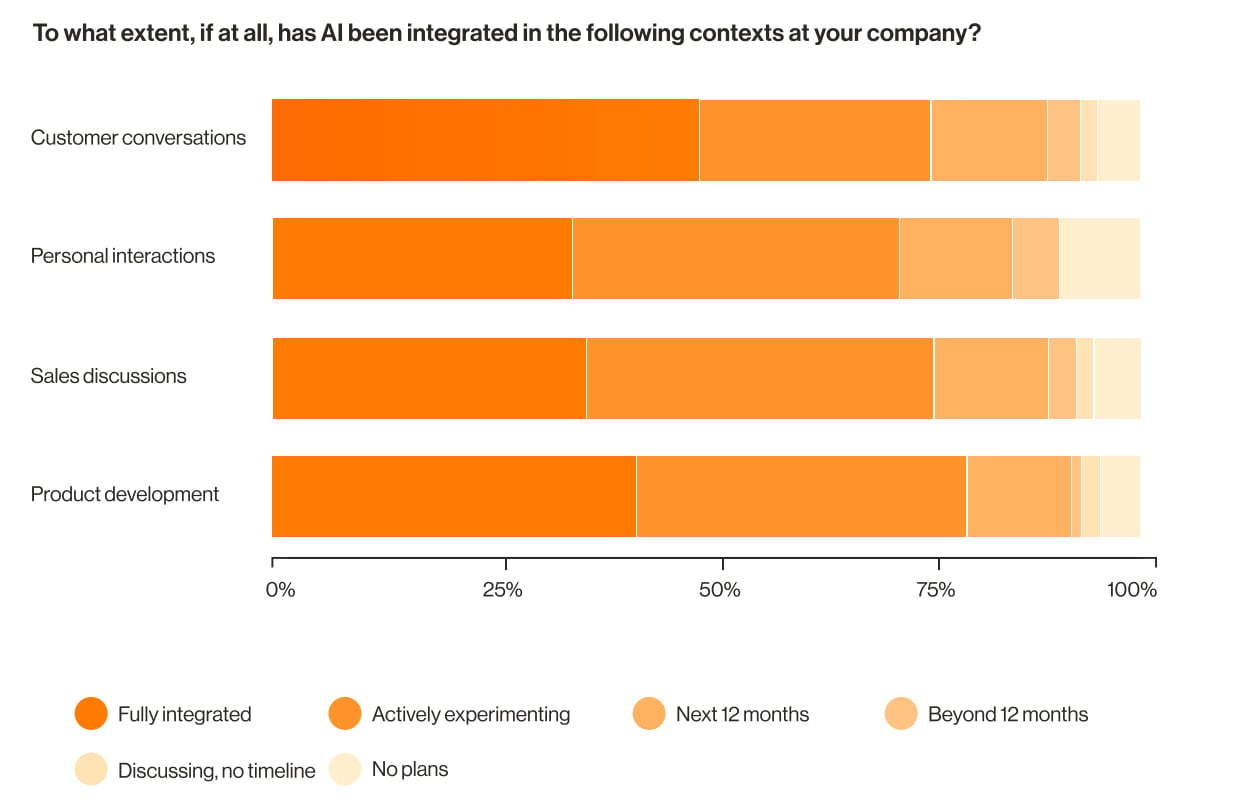
- AI and Automation Platforms: This layer encompasses chatbots for self-service, virtual assistants for routine inquiries, sentiment analysis tools for understanding customer emotion, and predictive analytics for anticipating customer needs. AI automates repetitive tasks, freeing human agents for more complex issues, and provides actionable insights from vast datasets. Notably, a recent RingCentral survey indicated that 71% to 80% of retail businesses are either currently utilizing or actively experimenting with AI in their operations.
- Enterprise Resource Planning (ERP) and Inventory Management Systems (IMS): These backend systems manage core business processes such as inventory, order processing, supply chain, and financials. Seamless integration with CX platforms ensures real-time accuracy in product availability, pricing, and order fulfillment.
Voice-first AI serves as the critical connective tissue between these diverse systems. It automates routine inquiries, intelligently routes customers based on their context and intent, and coordinates contact center agents with store associates. For example, when a customer calls about an online order, the system instantly presents your team with the order status, inventory availability, and their complete interaction history, enabling a swift and informed resolution.
Accelerated CX Improvement: A 90-180 Day Roadmap
Improving retail customer experience does not necessarily require a multi-year, complex transformation. By focusing on high-value improvements that strategically connect systems, teams, and customer touchpoints, retailers can deliver measurable impact within a focused 90-180 day timeframe. This approach builds momentum without disrupting daily operations.
1. Diagnose Journeys and Quantify Friction with Unified Data (Days 1-60)
The root cause of most retail CX breakdowns is fragmented data. Customer interactions are often scattered across point-of-sale systems, contact center applications, mobile apps, and isolated records held by in-store associates who lack visibility into previous touchpoints. Without a unified view of the customer journey, attempts to fix friction points become speculative rather than data-driven, hindering retention and revenue growth.
Action Plan:
- Consolidate Interaction Data: Begin by integrating interaction data from every available channel into a single analytics layer. Connect voice calls, SMS conversations, chat transcripts, email communications, and digital touchpoints (website clicks, app usage) to map actual customer paths comprehensively.
- Identify Friction Patterns: Analyze the consolidated data for recurring patterns that signal systemic issues. Look for:
- High rates of repeat calls for the same issue.
- Frequent abandoned carts linked to specific points in the checkout process.
- Consistent negative feedback regarding specific products, services, or delivery issues.
- Customers being transferred multiple times across departments or channels.
- Track Key Metrics: Focus on metrics that reveal both customer pain and business impact:
- Call deflection rate: How often customers find answers via self-service.
- Average wait times: A direct indicator of customer frustration.
- Repeat contact rate: How often customers need to contact you again for the same issue.
- Customer churn rate: The percentage of customers who stop doing business with you.
- Cart abandonment rate: Identifies friction in the purchase process.
Outcome: Quantify the business impact of each friction point—e.g., $X in lost conversions, $Y in increased service costs, Z% in customer defection rates—to build a compelling case for high-priority improvements that promise measurable ROI.
2. Prioritize and Deliver High-Impact Omnichannel Improvements (Days 61-150)
Once friction points are identified and quantified, the next step is to prioritize and implement targeted solutions. Score each friction point against two dimensions: its impact on the customer and its implementation complexity. High-impact, low-complexity improvements become your "quick wins." Examples include streamlining store associate communication during peak hours or enabling proactive SMS order updates that significantly reduce inbound calls.
Action Plan:
- Prioritize Quick Wins: Implement solutions that offer the biggest bang for the buck.
- Target Four Immediate-Result Areas:
- Associate Enablement: Deploy mobile-first communication and CRM tools to store associates and contact center agents, providing instant access to customer history, inventory, and collaboration capabilities.
- Proactive Customer Communication: Implement automated, personalized notifications for order status, delivery updates, and relevant promotions via SMS, email, or in-app messages.
- Intelligent Routing: Upgrade your contact center’s routing capabilities to direct customers to the most appropriate agent or self-service option based on their intent, history, and urgency.
- Enhanced Self-Service: Optimize website FAQs, knowledge bases, and chatbots to resolve common queries, deflecting calls and empowering customers.
Outcome: Modern unified communications platforms designed for retail can collapse implementation timelines from months to weeks. Deploy pre-integrated voice, SMS, and collaboration capabilities that seamlessly work across your existing systems while maintaining the reliability essential for retail operations. This phase should deliver tangible improvements in key CX metrics within the defined timeframe.
3. Operationalize Measurement and Continuous Optimization (Days 151-180 and Ongoing)
While high-impact improvements deliver initial results, sustained CX excellence requires structured measurement and optimization processes to prevent momentum loss as priorities inevitably shift.
Action Plan:
- Establish CX Governance Team: Form a cross-functional CX governance team comprising leaders from operations, IT, marketing, and store leadership. This team will meet monthly to review progress and strategic direction.
- Shared Dashboard: Develop and maintain a shared dashboard tracking critical CX metrics:
- NPS, CSAT, CES.
- Agent utilization and efficiency.
- Service costs per interaction.
- Revenue attribution from CX initiatives.
- Digital engagement rates (e.g., self-service adoption).
- Automated Alerts & AI Insights: Deploy automated alerts to trigger when key metrics breach acceptable thresholds. Leverage AI-powered conversation intelligence to continuously identify trending issues, customer sentiment shifts, and emerging pain points before they escalate into systemic problems.
- Embed Experimentation: Foster a culture of continuous experimentation. Regularly test new IVR flows, staffing models, self-service options, and personalized communication strategies. Scale what drives measurable results across all touchpoints.
Outcome: Omnichannel customer engagement platforms facilitate the consistent deployment of proven improvements across all channels, transforming isolated wins into enterprise-wide gains. This phase ensures that CX improvement is not a project, but an ongoing operational discipline, continually driving value and adapting to evolving customer expectations.
Transforming Retail CX with Unified Communications Infrastructure
The quality of retail customer experience is the ultimate determinant of whether customers remain loyal or defect to competitors. Retailers who are thriving in the current market are those who successfully connect their digital and in-store experiences through unified communications infrastructure. This strategic integration eliminates friction, significantly reduces service costs, and drives measurable gains in customer retention and lifetime value.
The journey begins with a meticulous diagnosis of friction points, underpinned by unified data analytics. This insight then informs the prioritization of high-impact improvements, such as empowering associates with comprehensive customer context, implementing proactive customer communication, and utilizing intelligent routing for efficient service. These targeted initiatives are designed to deliver tangible results within a 90-180 day window. The final, crucial step is to operationalize continuous optimization through robust cross-functional governance and real-time performance measurement.
Voice-first AI and advanced omnichannel platforms are the technological bedrock, connecting contact centers, store teams, and digital channels within a single, cohesive system. This integrated environment provides every associate with complete customer context, enabling the delivery of consistent, personalized experiences that seamlessly convert first-time buyers into deeply loyal, long-term customers.
Ready to eliminate channel silos and elevate your retail customer experience? Discover how modern omnichannel customer engagement platforms can power retention and operational efficiency across your enterprise retail operations.
Retail Customer Experience FAQ
How do you measure retail customer experience?
Measuring retail CX requires a multi-faceted approach, focusing on metrics that directly correlate with customer behavior and business outcomes. Beyond traditional metrics like Net Promoter Score (NPS) for loyalty, Customer Satisfaction (CSAT) for transaction feedback, and Customer Effort Score (CES) for friction points, it’s essential to:
- Analyze Operational Metrics: Track First Contact Resolution (FCR), Average Handle Time (AHT), call deflection rates (how many customers resolve issues via self-service), and repeat contact rates.
- Monitor Financial Indicators: Observe Customer Lifetime Value (CLTV), customer churn rate, average order value (AOV), and conversion rates across different channels.
- Gather Behavioral Data: Use website analytics to track bounce rates, time spent on pages, cart abandonment rates, and navigation paths. In-store, observe foot traffic, dwell times, and conversion to purchase.
- Leverage AI for Sentiment Analysis: Utilize AI-powered conversation analytics across all communication channels to gauge real-time customer sentiment, identify trending topics, and proactively detect dissatisfaction.
Unified communications platforms are crucial here, as they deliver real-time conversation analytics that surface sentiment trends instantly, eliminating the delays traditionally associated with gathering customer feedback.
What are examples of great retail customer experience?
Great retail CX is characterized by consistency, personalization, and seamlessness across every touchpoint. Examples include:
- Personalized Recommendations: An online shopper receives tailored product suggestions based on past purchases and browsing history, which are also accessible to an in-store associate when they visit.
- Seamless Returns and Exchanges: A customer purchases an item online and can effortlessly return or exchange it at any physical store, with their purchase history immediately available to the associate.
- Proactive Communication: A customer receives real-time SMS updates about their online order’s shipping status, potential delays, or even personalized offers for related products, reducing the need for them to contact support.
- Integrated Support: A customer starts a query via a website chatbot, but if the issue becomes complex, they are seamlessly handed off to a live agent (via chat or phone) who has full context of the prior conversation, avoiding repetition.
- Effortless BOPIS (Buy Online, Pick Up In-Store): Customers can easily check inventory online, purchase an item, and receive a prompt notification when it’s ready for pickup, with store staff quickly retrieving the item upon their arrival.
How can technology improve customer experience in retail?
Technology serves as the fundamental enabler for transforming retail CX by eliminating channel silos and fostering consistent, personalized, and efficient customer support across every touchpoint:
- Unified Communications (UCaaS): Integrates voice, video, chat, and email into a single platform, allowing customers to switch channels seamlessly and enabling internal teams to collaborate effortlessly.
- Artificial Intelligence (AI) and Automation: Powers chatbots for instant self-service, intelligently routes customer inquiries, analyzes sentiment from interactions, and provides predictive insights to personalize experiences and prevent issues proactively.
- Customer Relationship Management (CRM) Systems: Centralizes all customer data—purchase history, preferences, past interactions—providing a 360-degree view to every associate, enabling personalized and informed service.
- Backend System Integration: Connects inventory management, order fulfillment, and POS systems, ensuring real-time accuracy in product availability, order status, and returns processing, eliminating friction caused by disparate data.
- Mobile-First Tools: Equips store associates with tablets or mobile devices that provide instant access to customer profiles, product information, and inventory levels, empowering them to offer expert assistance on the sales floor.
Originally published Mar 24, 2026