The Squeeze on Household Savings: Navigating Financial Resilience in an Era of Persistent Economic Volatility


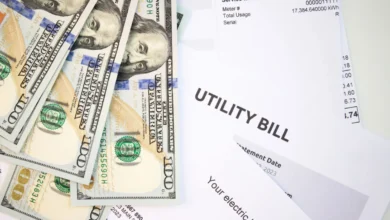
The contemporary landscape of personal finance is increasingly defined by a dual pressure: the tightening grip of persistent inflation and the volatile nature of global market interest rates. As households grapple with the compounding effects of high living costs, the traditional safety net—the personal savings account—is under unprecedented strain. This financial constriction, often visually represented by the metaphor of a fiscal vice, reflects a broader systemic shift where middle-income earners are finding it harder to maintain liquidity, leading to a precarious reliance on credit and a reduction in long-term wealth accumulation.
The Macroeconomic Context: Why Savings Are Under Pressure
To understand the current state of personal savings, one must look at the macro-level indicators that dictate household behavior. Since the post-pandemic inflationary spike of 2021 and 2022, central banks globally have maintained restrictive monetary policies. By keeping interest rates elevated to curb consumer demand and temper price growth, the cost of borrowing—for mortgages, auto loans, and revolving credit lines—has surged.
Simultaneously, the "excess savings" accumulated by many households during the pandemic lockdowns—driven by government stimulus checks and suppressed spending—have largely been exhausted. Data from the Federal Reserve and the Bureau of Economic Analysis (BEA) indicates that the personal saving rate has hovered at historic lows compared to pre-2020 levels. When the cost of essential goods, such as food, energy, and housing, consumes a larger percentage of a household’s monthly income, the discretionary income available for savings or investment inevitably evaporates.
Chronology of the Savings Erosion
The trajectory of this financial squeeze can be mapped across the last four years:
- 2020-2021 (The Accumulation Phase): Forced lockdowns and government intervention led to a historic surge in savings rates, peaking at over 30% in some months as consumption plummeted.
- 2022 (The Inflationary Inflection): As economies reopened, supply chain bottlenecks and energy shocks triggered rapid inflation. The savings rate began a steep decline as consumers dipped into reserves to cover the rising cost of living.
- 2023 (The Debt Shift): With high-yield savings accounts offering modest returns but inflation remaining "sticky," many households began shifting from being net savers to net borrowers. Consumer credit card debt hit record highs, surpassing $1 trillion in the United States.
- 2024-2025 (The Current Stabilization/Squeeze): Households are currently navigating a "new normal" characterized by high-interest rates. The focus has shifted from wealth growth to debt management and liquidity preservation, creating the metaphorical "vice" currently suppressing traditional savings.
Data-Driven Insights into Financial Fragility
Financial stability is frequently measured by a household’s ability to withstand a $1,000 emergency expense without incurring debt. Recent surveys from major financial institutions suggest that nearly 40% of Americans would struggle to cover such a cost using existing cash reserves.
Furthermore, the gap between income growth and inflation-adjusted spending power has widened. While nominal wages have increased, the "real" wage growth—adjusted for inflation—has remained stagnant or negative for significant portions of the workforce. This phenomenon is often described as "bracket creep," where cost-of-living adjustments fail to keep pace with the actual market basket of goods, forcing families to choose between funding retirement accounts and meeting immediate household obligations.

Official Perspectives and Market Responses
Financial analysts and central bankers have expressed varying levels of concern regarding the dwindling savings rate. Jerome Powell, Chair of the Federal Reserve, has noted in multiple testimonies that while the labor market remains resilient, the "long and variable lags" of monetary policy are putting significant pressure on the household balance sheet.
"The objective of our current policy is to restore price stability," noted one senior analyst at a major investment firm. "However, the unintended consequence is that the very tools used to cool the economy—higher rates—increase the debt-servicing burden on the average consumer. We are seeing a structural shift where the capacity to save is no longer a standard outcome of employment, but a luxury reserved for the top income quintiles."
Conversely, some market observers argue that the reduction in savings is a rational response to a robust labor market where employees feel confident enough to spend rather than hoard cash. However, this optimism is tempered by the rise in delinquency rates for credit cards and auto loans, which suggest that for many, the spending is not discretionary, but rather a necessity fueled by credit.
Implications for Long-Term Financial Planning
The "vice" gripping household savings has profound implications for long-term financial health. The reduction in retirement contributions—such as 401(k) or IRA deposits—creates a compounding deficit that will be difficult to recover in the future. Financial planners are increasingly emphasizing the "three-pillar strategy" to survive this environment:
- Strict Liquidity Audits: Households are being advised to categorize spending into "essential" versus "aspirational" to identify small, incremental savings opportunities that can be redirected toward high-interest debt repayment.
- Debt Refinancing: With interest rates fluctuating, leveraging balance transfer cards or personal loans to consolidate high-interest debt can effectively reduce the monthly "squeeze" on household cash flow.
- Inflation-Hedged Investing: Rather than relying solely on traditional cash savings accounts, individuals are being encouraged to explore low-risk, inflation-protected securities to ensure that the purchasing power of their saved capital does not erode further.
The Broader Economic Outlook
Looking ahead, the recovery of household savings will likely depend on two primary factors: the stabilization of inflation toward the 2% target and the potential for central banks to begin an easing cycle. If interest rates are lowered, the cost of credit will decrease, potentially freeing up monthly income for savings. However, until such a shift occurs, the "vice" will continue to restrict the financial maneuverability of the average consumer.
The current economic environment serves as a stark reminder of the importance of financial literacy and adaptability. While the macroeconomic factors remain largely outside the control of the individual, the tactical management of debt and the rigorous prioritization of emergency savings remain the most effective tools for weathering the storm. As we progress through the remainder of the decade, the ability of households to rebuild their savings buffers will be the ultimate indicator of the economy’s underlying health and its capacity for sustained growth.
Financial experts remain cautious, advising that while the immediate pressure is high, the development of a resilient financial habit—centered on automated saving and disciplined spending—remains the most viable path to regaining control over one’s financial future, regardless of the broader economic volatility.