The Rise of Gig Economy Last Mile Delivery and the Growing Challenges of E-commerce Consistency and Security

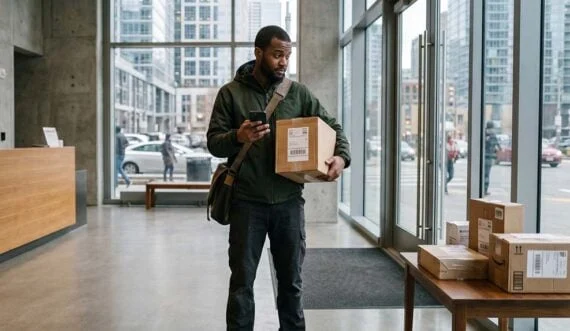
The landscape of American retail is undergoing a fundamental shift as major corporations move away from traditional logistics providers in favor of decentralized, gig-economy-driven delivery networks. While local carriers and independent contractors promise the holy grail of e-commerce—speed and low cost—this evolution has introduced a new set of complexities regarding service consistency, package security, and the long-term integrity of brand reputation. As the "last mile" becomes the primary battleground for customer loyalty, the industry is grappling with the trade-offs between the efficiency of a flexible workforce and the reliability of professionalized courier services.
The Shift Toward Hyper-Local Fulfillment
The modern e-commerce model is increasingly moving fulfillment closer to the end consumer. Historically, a package might travel hundreds of miles through several sorting facilities before reaching a local hub for delivery. Today, retailers are transforming their brick-and-mortar locations into mini-distribution centers. Target Corporation has emerged as a leader in this "stores-as-hubs" strategy, recently announcing a significant expansion of its Shipt-powered delivery model. By 2026, Target plans to integrate this rapid fulfillment system into more than 100 additional U.S. stores, further cementing its reliance on gig-economy labor to bridge the gap between the shelf and the doorstep.
Target’s acquisition of Shipt in 2017 for $550 million was a definitive moment in this transition. What began as a service primarily focused on same-day grocery delivery has matured into a sophisticated last-mile network capable of handling a broad spectrum of general merchandise. By leveraging its existing footprint of nearly 2,000 stores, Target effectively eliminates the need for expensive, long-haul shipping routes. Drivers pick up orders directly from local aisles or dedicated backroom fulfillment zones and deliver them in their personal vehicles, often within hours of the order being placed.
This model is not unique to Target. Walmart has scaled its "Spark" delivery platform to similar effect, and Amazon continues to expand "Amazon Flex," a program that allows independent contractors to deliver packages using their own transport. Even traditional ride-sharing entities like Uber and DoorDash have entered the fray, offering "white-label" delivery services for retailers who lack their own proprietary gig networks.
Economic Drivers: Why Retailers are Bypassing National Carriers
The primary motivation for this shift is financial. Logistics experts estimate that the "last mile" accounts for approximately 53% of the total cost of shipping. For high-volume retailers, reducing this expense is critical to maintaining margins in an era of "free" shipping expectations. Internal reports suggest that Target can reduce its delivery costs by roughly $2.50 per package when utilizing Shipt instead of national carriers like UPS or FedEx.
These savings are realized through the elimination of several logistical layers. Traditional carriers operate on a "hub-and-spoke" system, where packages are picked up, moved to a regional sortation center, and then sent to a local delivery station. Each handoff adds cost and time. In contrast, the gig-economy model is a "point-to-point" system. The driver picks up the item at the store and drives directly to the customer. By bypassing the national infrastructure, retailers avoid the fuel surcharges, residential delivery fees, and annual rate increases that have become staples of the legacy shipping industry.
Furthermore, the gig model offers unparalleled scalability. During peak seasons, such as the winter holidays or major sales events, retailers can onboard thousands of temporary drivers without the long-term capital investment of purchasing additional delivery vans or hiring full-time staff with benefits.
The Reliability Gap: Security and Consistency Concerns
Despite the clear economic advantages, the transition to gig-driven delivery is not without friction. The most significant concern for both merchants and consumers is the lack of standardization. Traditional carriers like UPS and the United States Postal Service (USPS) employ professional drivers who undergo rigorous training, wear uniforms, and often cover the same routes for years, building a level of geographic familiarity and accountability.
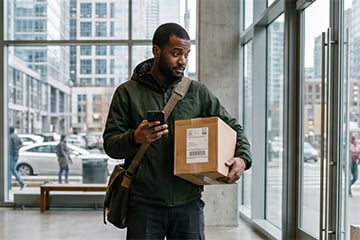
Gig workers, by contrast, are often part-time contractors using personal, unmarked vehicles. This lack of professional infrastructure can lead to what industry analysts call "delivery fails." In urban environments, this frequently manifests as confusion regarding building access. Many high-rise apartments utilize one-time passcodes or secure package rooms. While professional couriers are accustomed to these protocols, a gig driver—who may be making their first delivery to a specific building—may find the process cumbersome.
In many documented cases, drivers frustrated by complex entry systems or time constraints leave packages in unsecured lobbies or hallways. This creates a prime opportunity for "porch piracy," a growing epidemic that affects millions of Americans annually. According to recent industry data, nearly one in four e-commerce consumers has reported a stolen package in the last year. When a delivery is left in an improper location due to a driver’s lack of training or haste, the merchant often bears the financial burden of replacing the item, regardless of who was at fault.
A Chronology of the Last-Mile Evolution
The path to the current gig-dominated landscape has been marked by several key milestones:
- 2013-2015: The Inception. Amazon launches Amazon Flex, signaling to the market that personal vehicles could be a viable component of a global supply chain.
- 2017: The Acquisition Phase. Target acquires Shipt, and Walmart begins testing various crowdsourced delivery pilots, realizing that their physical stores are their greatest logistical asset.
- 2020-2021: The Pandemic Catalyst. Global lockdowns cause a 33% surge in e-commerce demand. Retailers are forced to accelerate their last-mile initiatives as traditional carriers reach over-capacity.
- 2023: Optimization. Retailers begin using AI and machine learning to better predict store-level inventory, ensuring that items are in stock at the location closest to the customer to facilitate gig delivery.
- 2026 (Projected): Mass Integration. Target’s planned expansion to over 100 more stores represents the final stage of moving same-day, gig-powered delivery from a "premium service" to a standard operational procedure.
Supporting Data and Market Impact
The shift toward local, gig-based delivery is reflected in broader market statistics. The global last-mile delivery market was valued at approximately $151 billion in 2022 and is projected to reach over $288 billion by 2030. This growth is driven largely by the "Same-Day Delivery" segment, which is expected to see a compound annual growth rate (CAGR) of over 20%.
However, the "human cost" of this efficiency is reflected in consumer sentiment. Surveys indicate that while 80% of consumers want same-day delivery, 65% say that a single poor delivery experience would discourage them from shopping with a brand again. For small and midsize merchants (SMBs), this creates a precarious situation. Unlike Target or Amazon, an SMB may not have the customer service infrastructure to handle a high volume of delivery disputes. If a gig-platform partner fails to deliver a package securely, the negative review is often directed at the merchant, not the delivery service.
Implications for the Future of Retail
As we move toward 2026, the industry is at a crossroads. The integration of gig labor into the supply chain has successfully lowered the "cost-to-serve," but it has also "de-skilled" a critical touchpoint in the customer journey. For many consumers, the delivery driver is the only physical interaction they have with a brand. When that interaction is characterized by a lack of professionalism or a security lapse, the brand equity built through marketing and product quality can be instantly eroded.
To mitigate these risks, experts suggest that the next phase of last-mile delivery will focus on "verification technology." This includes the wider adoption of smart lockers, real-time photo verification of every drop-off, and enhanced communication tools that allow customers to provide specific instructions directly to gig drivers.
The "Target model" of using stores as fulfillment hubs is undoubtedly the future of omnichannel retail. It solves the problem of distance and cost. However, the industry has yet to fully solve the problem of the "human element." As gig-economy delivery becomes the standard, the winners in the retail space will be those who can find a way to marry the low cost of contract labor with the high-trust environment of professional logistics. In this new era, delivery is no longer just a backend function—it is a core component of the product itself.