The Department of Labor clarifies wage and hour exemptions for seasonal concession workers at fairgrounds and concert venues

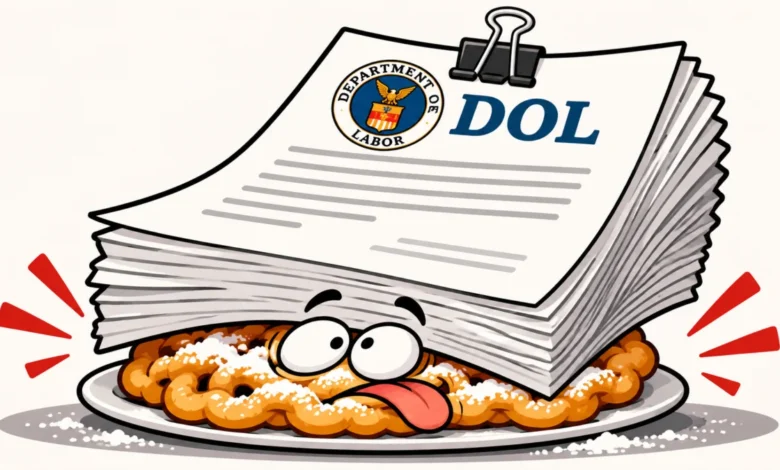
The United States Department of Labor (DOL) has issued a significant interpretive guidance via Opinion Letter FLSA2026-14, clarifying the application of the Fair Labor Standards Act (FLSA) to employees of independent concession companies operating within seasonal amusement or recreational environments. The guidance addresses a long-standing ambiguity regarding whether workers employed by third-party vendors—such as those selling food and beverages at state fairs, outdoor festivals, and concert venues—are eligible for the "seasonal amusement" exemption from federal minimum wage and overtime requirements.
Chronology and Legal Background
The inquiry prompting this opinion letter stemmed from a concessions operator seeking clarity on its obligations under Section 13(a)(3) of the FLSA. This section provides a specific exemption for employees of amusement or recreational establishments that satisfy either of two criteria: (1) the establishment does not operate for more than seven months in any calendar year, or (2) the average receipts for any six months of the preceding calendar year were not more than 33.3 percent of its average receipts for the other six months of that year.
The concessionaire in question operates across a diverse portfolio of temporary settings, including state fairs that run for approximately three months and concert series that may span only two weeks. Historically, employers have struggled to classify these operations because the food service industry is generally excluded from the "amusement or recreational" definition. The DOL’s latest letter provides a framework for how these temporary food stands can be considered part of a larger, exempt entity.
The Integration Test: Establishing a Unified Operation
The core of the DOL’s analysis rests on the concept of "establishment integration." The agency determined that when a concession stand operates physically within the premises of an amusement or recreational facility and provides services exclusively to the attendees of that facility, the concessionaire’s operations may be considered an integral part of the host entity.
This distinction is critical. By treating the concession stand and the host venue as a single, combined establishment, the concessionaire can potentially avail itself of the host’s seasonal status. If the fair or amusement park meets the seven-month test, the employees of the third-party funnel cake or lemonade stand may also be exempt from the FLSA’s overtime and minimum wage mandates. However, the DOL emphasized that this is not a blanket rule. The exemption applies to the "establishment," which requires a functional and physical nexus between the vendor and the recreational host.
Supporting Data and Industry Context
The economic stakes of this ruling are substantial. According to data from the International Association of Amusement Parks and Attractions (IAAPA), the seasonal amusement industry generates billions of dollars annually, relying heavily on a temporary workforce that fluctuates drastically based on weather patterns and event schedules.
Labor experts note that the "seasonal exemption" is one of the most litigated areas of the FLSA because it creates a direct conflict between employer operational costs and worker protections. In 2023, the Bureau of Labor Statistics reported that employment in the arts, entertainment, and recreation sector increases by over 30 percent during peak summer months, highlighting the massive scale of the workforce affected by these regulatory nuances.
Conflict with the Second Circuit
The issuance of FLSA2026-14 serves as a formal rebuttal to the precedent set by the United States Court of Appeals for the Second Circuit in Hill v. Delaware North Companies Sportservice (2016). In that landmark case, the court ruled that a concessionaire operating within a professional sports stadium could qualify as its own independent amusement establishment, regardless of the host venue’s operating schedule.
The DOL, however, maintains a more restrictive view. The agency’s current position requires the concessionaire to be effectively tethered to the host’s seasonal nature. This creates a fragmented regulatory landscape: in jurisdictions governed by the Second Circuit (New York, Connecticut, and Vermont), employers may continue to rely on the broader Hill interpretation, while in other circuits, employers must adhere to the more stringent "integrated establishment" test outlined in the new letter. This divergence creates significant compliance hurdles for national concession chains that operate across multiple state lines.
Implications for Seasonal Employers
For business owners, the practical implications are twofold. First, the DOL has clarified that the "receipts test" for seasonality remains a high bar. A company cannot simply declare itself seasonal; it must provide granular financial evidence that its revenue is concentrated in specific windows of the year. If a concert venue hosts events year-round, even if the individual concerts are short-lived, the concessionaire may find it impossible to satisfy the seven-month rule.
Second, the burden of proof rests entirely on the employer. The DOL’s letter suggests that companies seeking to utilize the exemption must maintain meticulous records not only of their own hours and revenue but also of the operational structure of the events they service. Failure to prove that the concession stand is truly "integrated" with the host’s amusement purpose could result in significant back-pay liability, including liquidated damages for failure to pay overtime.
Official Responses and Industry Reaction
While industry trade groups have generally welcomed the clarification, labor advocates have expressed concern. Critics argue that the "seasonal exemption" is an antiquated provision of the 1938 Act that no longer reflects the realities of the modern gig-based economy. By allowing third-party contractors to adopt the exemptions of their host venues, critics suggest that thousands of workers are being denied protections intended for the broader workforce.
Conversely, concession operators argue that the administrative burden of complying with federal overtime laws for employees who only work for a few weeks a year would effectively put many small, independent vendors out of business. Without the exemption, they argue, the cost of staffing events would force price increases that would ultimately exclude lower-income families from participating in state fairs and local entertainment.
Future Regulatory Outlook
As the DOL continues to issue opinion letters, legal counsel is advising firms to conduct a "nexus audit" of their operations. This involves evaluating every contract to determine if the host venue qualifies as an "amusement or recreational establishment" under the specific, narrow definitions maintained by the Department of Labor.
The 2026 guidance underscores a broader trend in labor law: the federal government is increasingly focusing on the vertical relationship between primary businesses and their subcontractors. Whether the concessionaire is legally part of the fair or merely a tenant is no longer just a contract question; it is a fundamental wage-and-hour compliance issue that carries significant financial risk.
Moving forward, employers should not assume that the seasonal nature of their work automatically grants them an exemption. Instead, they must map their financial cycles against the federal requirements and prepare for the possibility that the DOL may challenge the "integration" of their services if the host facility does not clearly meet the statutory definition of an amusement or recreational establishment. As this legal landscape evolves, the intersection of federal law and the carnival midway will remain a complex, high-stakes environment for human resources and legal departments alike.