Informatica and Microsoft deepen strategic partnership at Ignite 2026 to integrate enterprise data intelligence into the Microsoft AI ecosystem

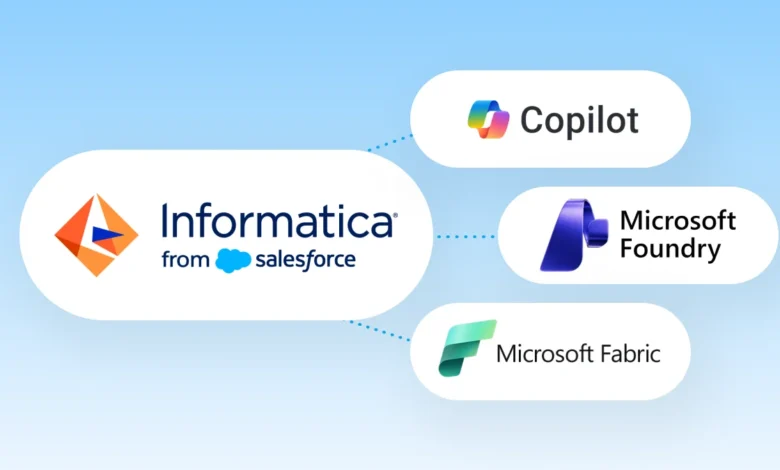
The rapid evolution of generative AI has brought the enterprise to a critical juncture: the transition from experimental AI chatbots to autonomous, business-critical agents. Recognizing that this shift requires more than just raw computing power, Informatica and Microsoft have unveiled a significant expansion of their strategic collaboration at Microsoft Ignite 2026. This partnership aims to weave Informatica’s enterprise-grade data intelligence directly into the fabric of the Microsoft AI stack, specifically targeting Microsoft Copilot, Microsoft Foundry, and Microsoft Fabric. By bridging the gap between sophisticated AI models and the complex, governed data environments of modern corporations, the two companies are positioning themselves to solve the "trust deficit" that currently hinders widespread enterprise AI adoption.
The Context of the Partnership: Moving Beyond AI Experiments
Since the mainstream emergence of generative AI in 2023, organizations have faced a persistent challenge. While Large Language Models (LLMs) excel at processing human language, they often lack the specific, nuanced context of an individual company’s internal data. Without this context, AI models are prone to "hallucinations" or, more dangerously, the surfacing of sensitive, non-compliant information.
According to the 2026 State of AI in the Enterprise report from Deloitte, while 85% of organizations are actively planning to customize AI agents to handle specific business workflows, only 21% report having the necessary governance frameworks in place to manage these agents effectively. This disconnect between ambition and operational readiness creates a significant risk profile for Chief Information Officers (CIOs). Informatica’s integration seeks to address this by injecting its "AI-ready Data Platform"—encompassing business glossaries, metadata lineage, and data quality indicators—directly into the Microsoft environment.
Chronology of the Informatica-Microsoft Alliance
The collaboration announced at Ignite 2026 is the culmination of a multi-year effort to align cloud-native data management with the Microsoft Azure ecosystem.
- Early 2024: Initial integrations focused on standardizing data ingestion pipelines between Informatica’s Intelligent Data Management Cloud (IDMC) and Azure, establishing the foundational plumbing for the partnership.
- Informatica World 2026 (Mid-2026): The companies announced the general availability of Informatica Headless Model Context Protocol (MCP) servers within Microsoft Foundry, marking the first time developers could programmatically access governed metadata for agentic AI design.
- Microsoft Ignite 2026 (Current): The scope of the partnership expanded to include deep integration with Microsoft Copilot, enhanced scanning capabilities for Microsoft Fabric, and a geographic expansion of service delivery to include a new U.S. East Coast point of delivery.
Integrating Intelligence into the Copilot Workflow
The most consumer-facing aspect of this announcement is the integration of Informatica’s intelligence directly into Microsoft Copilot. By utilizing Informatica’s "Headless" capabilities, Copilot is no longer just a generic interface; it becomes an enterprise-aware assistant.
Consider a marketing manager tasking Copilot with creating a customer segmentation campaign. Without this integration, the AI might pull from obsolete or unverified datasets. With the new Informatica integration, the Copilot experience is enriched with metadata, lineage, and data quality scores in real-time. The system can inform the user exactly where the data originated, whether it contains PII (Personally Identifiable Information), and whether the data is considered "authoritative" by the enterprise’s internal data stewards. This shifts the role of the AI from a mere content generator to a governance-compliant business partner.
Strengthening Microsoft Foundry and Fabric
While Copilot serves the general business user, Microsoft Foundry provides the developer environment for creating bespoke AI agents. The latest enhancements allow developers to utilize standardized MCP interfaces to build "agentic" workflows that are grounded in governed data by design. Developers can now programmatically verify the identity, lineage, and policy-adherence of data before it is ingested by an agent, significantly reducing the "debug" cycle during the deployment phase.
Simultaneously, the integration with Microsoft Fabric—Microsoft’s end-to-end analytics platform—has been deepened. Previously, governance visibility was largely restricted to data "at rest." Informatica’s new, enhanced scanners now extend this visibility to data "in motion." This includes monitoring the orchestration of notebooks and data pipelines. By capturing the metadata of multistep transformations, Informatica provides a comprehensive view of the entire data journey, from raw ingestion to the final output consumed by an AI agent.
Official Perspectives and Industry Implications
The partnership has garnered significant attention from industry leaders. Yitzhak Kessleman, Corporate Vice President of Microsoft IQ, highlighted the importance of the "shared intelligence layer" that this collaboration creates. According to Kessleman, the synergy between Microsoft’s AI innovation and Informatica’s data management is designed to make AI "more relevant, more trustworthy, and easier to scale."
From the user perspective, early adopters are already seeing tangible results. Desigan Reddi, Vice President of Enterprise Architecture and Innovation at Wescom Financial, noted that the integration helps close the gap between raw data and "real AI readiness," emphasizing that the contextual, trusted data layer is critical for accelerating the time-to-insight.
From a market perspective, this move signals a broader industry shift. Enterprise software providers are moving away from "black box" AI solutions toward "glass box" architectures where data lineage and governance are treated as first-class citizens. By embedding these capabilities directly into the tools developers and business users already employ, Informatica is effectively commoditizing high-level data governance, making it accessible to a much broader range of stakeholders than traditional, siloed data management tools.
Strategic Infrastructure and Economic Benefits
Beyond the software integration, the announcement included a practical expansion of infrastructure. The new U.S. East Coast point of delivery on Azure addresses the growing demand for data residency and proximity, particularly for highly regulated industries such as finance and healthcare.
Furthermore, the integration with the Microsoft Azure Consumption Commitment (MACC) program offers a financial incentive for enterprise adoption. By allowing customers to apply 100% of their Informatica purchases made through the Microsoft Marketplace toward their MACC, Microsoft and Informatica are lowering the barrier to entry, enabling firms to consolidate their cloud spending while simultaneously upgrading their data governance infrastructure.
The Future of the Agentic Enterprise
The implications of this expanded collaboration are clear: the next phase of the enterprise AI revolution will not be defined by the model size or the complexity of the neural networks involved, but by the quality of the data grounding those systems.
As organizations move toward "Agentic Enterprises"—where automated agents perform complex tasks—the need for a unified, governed, and highly accessible data foundation becomes paramount. By merging the conversational utility of Copilot, the development agility of Foundry, and the analytical power of Fabric with the deep metadata intelligence of the Informatica platform, the companies are creating a blueprint for how large-scale organizations can deploy AI without sacrificing security, compliance, or accuracy.
In summary, the Informatica-Microsoft Ignite 2026 announcement is a strategic milestone in the maturation of enterprise AI. It effectively moves the industry past the "hype cycle" and into the "execution cycle," where the primary metric for success is the ability to connect, govern, and trust data at an unprecedented scale. As these integrations roll out, the market can expect to see a surge in AI deployments that are not just faster or smarter, but demonstrably more reliable for business-critical decision-making.