The Evolution of B2B Commerce: Transforming Static Product Catalogs into Dynamic Sales Engines

Six weeks is the industry-standard lead time for producing a traditional product catalog, a reality that has long been accepted as a necessary evil in the B2B sector. For merchandising managers, sales operations leads, and in-house designers, the production cycle is often characterized by fragmented workflows, version control nightmares, and the pervasive anxiety of distributing documents that may be obsolete before they even reach the client. As the B2B landscape shifts toward digital-first procurement, this manual approach is increasingly proving to be a liability rather than an asset. Recent data indicates that the traditional catalog production model is being fundamentally disrupted by automation, enabling businesses to pivot from static PDFs to real-time, data-driven sales channels.
The Anatomy of a Legacy Workflow
The conventional process for catalog creation is notoriously inefficient. Teams often spend weeks painstakingly placing product images, descriptions, and pricing information onto pages one by one. This labor-intensive process creates a secondary, more systemic issue: data silos. Because product information is frequently spread across disjointed systems—such as legacy ERPs, standalone spreadsheets, and ad-hoc email communications—maintaining a "single source of truth" is nearly impossible.
When a price adjustment occurs or a new SKU is introduced, the ripple effect is disastrous. Designers must manually update every instance of that product across multiple marketing assets, including spec sheets and price lists. Because these assets are not interconnected, a change in one document rarely propagates to others, leading to a state where 15 different customers might hold 15 different versions of the same catalog. This fragmentation creates significant operational friction: buyers receive outdated pricing, sales reps lose time clarifying current figures, and the business loses the ability to track engagement or trace orders back to specific catalog versions.
The Shift Toward Automated Data Syncing
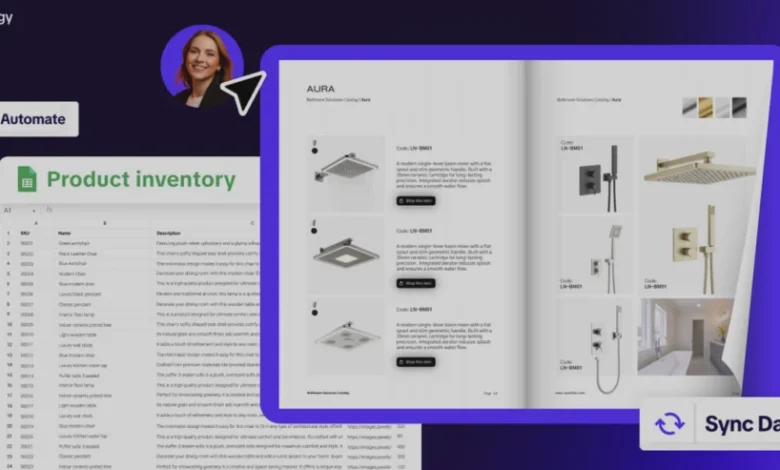
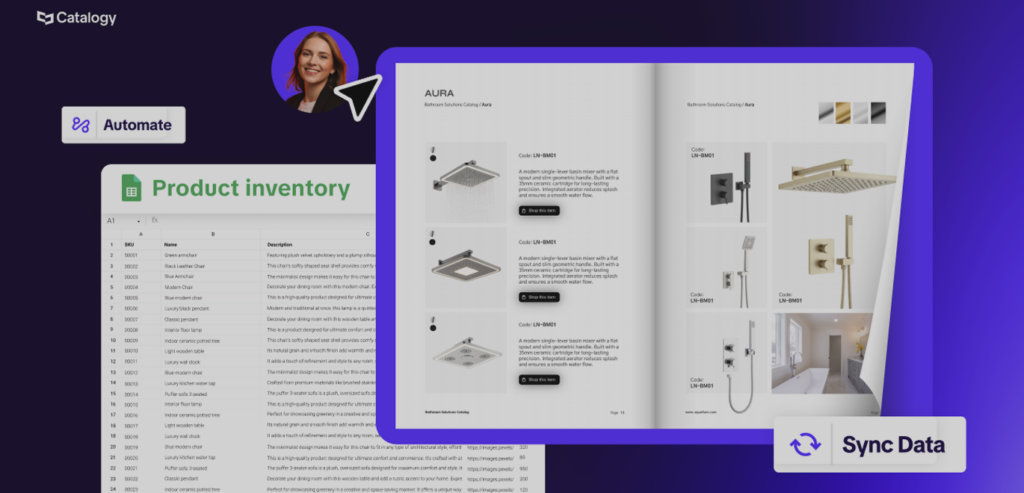
The transition to a modern, automated catalog architecture begins with the move away from static document creation toward a template-based system. Rather than designing a document from scratch, organizations are increasingly adopting design frameworks that feature predefined "slots" for product data. These slots are mapped directly to a master product feed—such as an ERP system, a product information management (PIM) tool, or a centralized database.
By establishing this connection, the catalog becomes a dynamic output of the company’s core data rather than a fixed artifact. When a price is modified in the master feed, the change is automatically reflected across every instance of the catalog. This architecture allows companies to maintain a constant state of accuracy, ensuring that whether a buyer accesses the catalog via a link or a digital portal, the information remains current.
Industry Benchmarks and Operational Gains
Recent analysis of enterprise catalog programs, as tracked by platforms like Catalogy and Flipsnack, reveals a stark contrast between manual and automated workflows. On average, companies relying on manual design processes take six weeks to produce a single edition and typically manage only three to four releases annually. Conversely, organizations that have implemented automated, data-linked workflows are now shipping new editions in under one week, with many increasing their output to between 12 and 16 catalogs per year.
The following case studies illustrate the tangible impact of this transition:
- Hardware and Tools Distribution (Latin America): Faced with the burden of managing over 10,000 SKUs, this distributor previously relied on a designer to build a 181-page catalog entirely by hand. By transitioning to an automated system, the company now manages 48 distinct, up-to-date catalogs covering nearly 4,000 SKUs, significantly reducing production time while boosting revenue through accurate, real-time pricing.
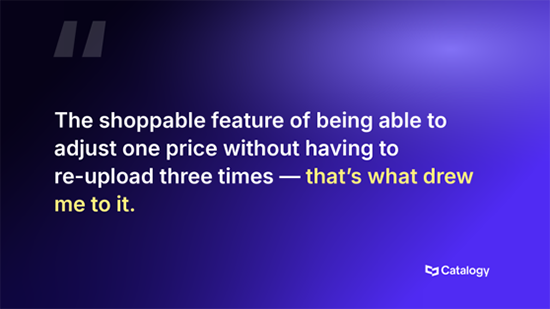
- Wholesale Home Goods (Minnesota, U.S.): For this five-person importer, the high frequency of price volatility—occurring every few weeks—made manual catalog management unsustainable. The shift to a "shoppable" catalog feature allowed the business to update specific price points instantly without the need for a full document rebuild.
- Pottery Wholesaling (Australia): By automating the ingestion of supplier data, this company reduced the production cycle for a 900-product catalog from weeks to less than 24 hours. The removal of manual page editing has allowed the team to focus on merchandising strategy rather than administrative data entry.
- Global Distribution (20 Countries): An international distributor previously lacked a formalized catalog presence in one of its primary markets, despite carrying thousands of products across 19 brands. Following the adoption of automated digital catalog software, the firm now publishes 32 localized catalogs on a monthly basis without requiring manual intervention from its e-merchandising staff.
The Strategic Value of Personalization
Perhaps the most significant advancement in this space is the move toward hyper-personalized catalogs. Historically, businesses sent a "one-size-fits-all" catalog to their entire customer base. Today, sales representatives can leverage the master product feed to filter content based on individual customer buying history and preferences.
This enables the rapid creation of branded, curated catalogs that only display relevant products, complete with the customer’s logo. These personalized assets can be generated in minutes and distributed via a single link. Because these catalogs remain connected to the master data feed, they stay updated even after they have been sent. If a price changes or an item goes out of stock, the customer’s specific catalog reflects that update in real-time. This level of service enhances the customer experience, reduces the likelihood of ordering errors, and keeps the purchasing process focused on the specific needs of the account.
Analyzing the Broader Economic Implications
The economic implications of this transition are twofold. First, there is the immediate reduction in operational overhead. By eliminating the six-week production cycle, marketing and sales teams can reallocate hundreds of man-hours toward revenue-generating activities, such as demand generation or relationship management.
Second, the shift represents a fundamental change in the B2B sales funnel. When a catalog is static, it serves only as a reference tool. When it is dynamic and shoppable, it acts as an active sales channel. By integrating ordering capabilities directly into the catalog interface, businesses can capture data on buyer behavior—who is looking at what, when they are looking, and which products are most frequently added to the cart. This intelligence provides a level of visibility that was previously non-existent in traditional B2B catalog distribution.
Overcoming Internal Resistance to Change
Despite the clear advantages, many organizations struggle to abandon the manual "six-week" model because it is deeply embedded in their corporate culture. For many, the manual process is viewed as a necessary quality-control step. However, experts argue that the most successful firms are those that treat their product data as a strategic asset.
The successful implementation of automated cataloging requires a shift in mindset: moving from viewing the catalog as a design project to viewing it as a data-delivery project. As Bogdan Mile, Chief Product Officer at Flipsnack, notes, the objective is no longer to measure how long it takes to build a catalog, but rather to evaluate how effectively the catalog converts interest into orders. The organizations currently succeeding in this space are those that have stopped asking their designers to be data entry clerks and have instead empowered them to curate experiences that drive digital commerce.
Future Outlook for B2B Procurement
The trajectory of B2B commerce is clear: the era of the static, printed, or static PDF catalog is drawing to a close. The future belongs to integrated, automated ecosystems where product information flows seamlessly from the back-office ERP to the front-end sales interface. As the market continues to demand faster, more accurate, and more personalized buying experiences, the "six-week" production cycle will likely become an artifact of the past. Companies that fail to modernize their catalog infrastructure risk not only losing time and money but also losing their competitive edge in an increasingly digital and data-driven marketplace.
For the modern B2B enterprise, the goal is simple: ensure that the right buyer sees the right price for the right product at the exact moment they are ready to purchase. By leveraging automation, businesses can finally close the gap between their inventory systems and their customers, turning a legacy document into a high-performance sales asset.
Related posts: