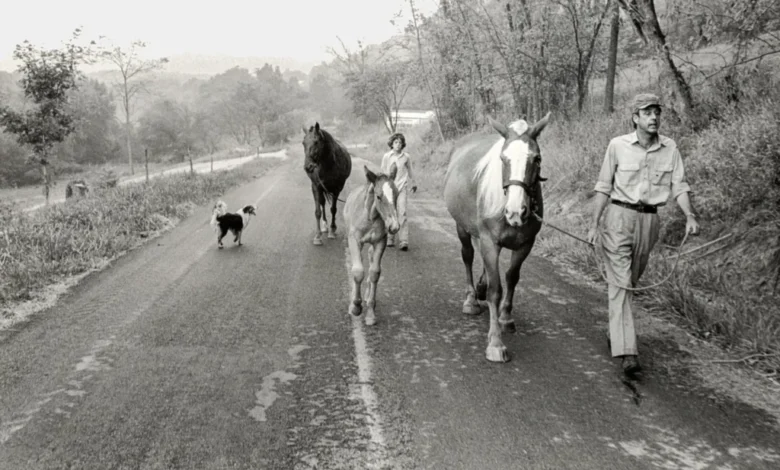
The passing of Wendell Berry at his lifelong homestead in Port Royal, Kentucky, at the age of 92 marks the conclusion of a singular American literary and agrarian voice. Over a career spanning more than six decades, Berry established himself as a fierce critic of industrial modernity, a champion of sustainable land stewardship, and an unwavering advocate for the integrity of family farming and rural community life. While his physical sanctuary—a Kentucky cabin devoid of electricity where he composed his manuscripts by hand using pencil and paper—represented an extreme rejection of modern conveniences, his philosophical legacy offers a compelling framework for contemporary society. Beyond the specificities of agricultural policy and rural geography, Berry’s life and work pose a fundamental question for a digital age defined by detachment: What does it mean to live a life of deliberate purpose?
Chronology of a Literary and Agrarian Journey
To understand the radical nature of Berry’s mature life, one must examine the conventional path he initially pursued. Born in 1935 in Henry County, Kentucky, Berry was deeply rooted in the soil of his ancestors, whose lineages had farmed the region for generations. Yet, his early intellectual trajectory pointed toward the summits of American academia.
After completing his undergraduate studies and earning a Master’s degree in English from the University of Kentucky, Berry ventured westward to Stanford University, where he enrolled in the prestigious creative writing program under the tutelage of Wallace Stegner. His early promise was further recognized through the awarding of a Guggenheim Fellowship, which enabled him to travel and write in Europe, soaking in the cultural capitals of Italy and France. By the early 1960s, Berry appeared poised for a standard, highly successful trajectory within the American literary establishment. He secured a faculty appointment as an assistant professor of English at New York University’s Heights campus in the Bronx. By all conventional metrics of the era, Berry had arrived: he was a published author, a New York academic, a husband, and a father.
However, the metropolitan academic environment catalyzed a profound crisis of conscience. In 1964, at the age of 29, Berry made a decision that baffled his academic peers and literary mentors: he resigned from New York University, packed up his young family, and returned permanently to Henry County, Kentucky.
The weight of this departure was underscored by his departmental superiors. Upon submitting his resignation, Berry was summoned by a senior faculty member who attempted to dissuade the young writer from what the establishment viewed as professional suicide. Invoking Thomas Wolfe’s famous dictum that "you can’t go home again," the supervisor warned Berry that he was trading international cultural relevance for permanent obscurity, effectively cutting himself off from the intellectual arteries of the metropolis. Unmoved by the appeal, Berry returned to the banks of the Kentucky River, beginning a lifetime of agrarian labor and literary production that would eventually yield dozens of volumes of poetry, fiction, and incisive cultural criticism.
The Philosophy of Place and Resistance to Abstraction
Berry’s return to Kentucky was not merely a sentimental retreat, but a deliberate philosophical choice grounded in the concept of ecological and communal fidelity. In subsequent interviews, including a notable retrospective with the New York Times in 2018, Berry articulated the core motivation behind his geographical relocation: the necessity of accountability to a specific landscape and community.
"The landscape was there to check me if I was wrong," Berry explained. "I could never go away and make up stuff at cocktail parties about the backwoods of Kentucky. I worked with people here in all walks of life and learned from them. It’s been a very rich experience."
This methodology—grounding intellectual work in physical reality and mutual obligation—formed the bedrock of his critiques of industrial agriculture. Throughout seminal works such as The Unsettling of America: Culture and Agriculture (1977), Berry argued that the industrialization of farming severed the vital bond between human communities and the earth. He warned that the replacement of local stewardship with corporate efficiency would lead not only to environmental degradation, but to the psychological and social erosion of rural America.
While industrial agriculture was his primary target, Berry’s polemics extended to the broader technological shifts of the late 20th century. Long before the advent of ubiquitous smartphones, algorithmic content delivery, and generative artificial intelligence, Berry diagnosed the danger of what he termed "abstraction"—the growing distance between human action and its ecological consequences.
Contemporary Implications in a Digital Era
In the wake of his passing, cultural analysts and readers have increasingly turned to Berry’s corpus to make sense of the modern condition. The twenty-first-century workspace and social landscape present challenges that mirror the alienation Berry warned against, albeit manifested through digital infrastructure rather than industrial machinery.
Today’s knowledge economy is frequently characterized by pervasive digital connectivity that yields a subtle, chronic numbness. Modern office labor has largely shifted from tangible production to what commentators describe as administrative theater: a ceaseless cycle of electronic messaging, virtual conferences, automated transcriptions, and corporate presentations designed primarily to document activity rather than achieve substance. Simultaneously, leisure has been colonized by digital algorithms engineered to capture human attention, offering immediate, frictionless dopamine hits that insulate individuals from cognitive strain, boredom, and quiet contemplation. In the political sphere, public discourse has increasingly devolved into digital performance, where citizens are encouraged to adopt rigid, simplified ideological stances from the safety of social media platforms, divorced from the messy realities of local civic engagement.
Berry’s life offers a counter-narrative to this digital enclosure. He did not advocate for a romanticized, nostalgic return to the past for its own sake; rather, he demonstrated the necessity of voluntary constraint. By limiting his reliance on fossil-fuel-driven conveniences, refusing to adopt modern communication technologies, and binding his daily labor to the seasonal rhythms of his farm, Berry constructed a life capable of withstanding external turbulence.
Reactions and Cultural Legacy
Following the news of his death, tributes poured in from literary figures, environmentalists, agricultural advocates, and readers across the political spectrum. Colleagues and admirers noted that Berry’s appeal transcended standard political alignments. While environmentalists praised his pioneering defense of ecological balance, traditionalists lauded his defense of local communities, family structures, and regional identity.
Environmental historian and author Donald Worster noted in a commemorative essay that Berry "provided the most coherent moral vocabulary for the American environmental movement, precisely because he refused to separate the preservation of nature from the preservation of human culture and community."
Meanwhile, agricultural organizations highlighted how Berry’s advocacy laid the intellectual groundwork for the modern local-food movement, organic farming standards, and community-supported agriculture (CSA) models that have proliferated across the United States over the past three decades.
The Broader Impact: The Promise of the Deep Life
As society grapples with the psychological tolls of hyper-connectivity, attention fragmentation, and ecological anxiety, Wendell Berry’s legacy extends far beyond the borders of Henry County, Kentucky.
For the vast majority of citizens who lack the capacity or inclination to abandon urban centers and take up horse-drawn farming, Berry’s ultimate lesson is not strictly geographical, but existential. His life demonstrates the profound satisfactions available to those who choose to live deliberately—to anchor their daily routines in commitments that require physical or cognitive investment, to resist the frictionless convenience of digital escapism, and to cultivate deep, accountable relationships with their immediate physical and social surroundings.
Wendell Berry’s 92 years stand as a monumental, living argument against the shallow currents of modern life. In an era marked by digital transience and abstraction, his stubborn fidelity to land, word, and community remains a luminous blueprint for the deep life.
Related posts: