Stop Kicking Off Every AI Task by Hand: Transitioning from Manual Prompter to Systems Architect

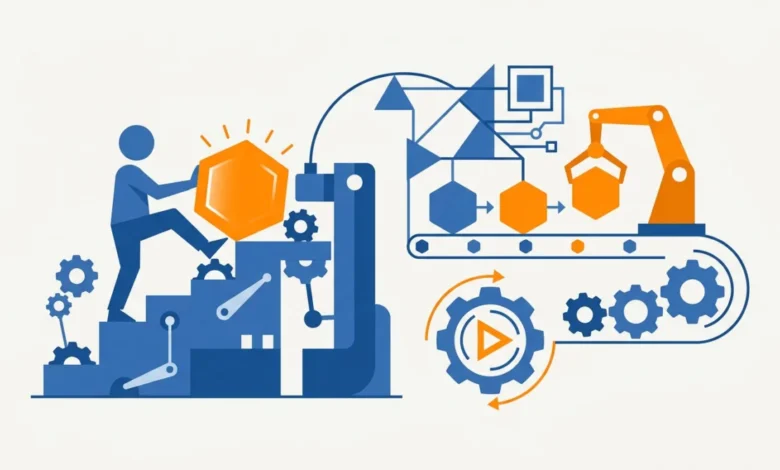
The integration of artificial intelligence into professional workflows has reached a critical juncture where the novelty of "chatting" with a model is being superseded by the necessity for systemic automation. As of September 17, 2026, industry experts are observing a shift in how high-performance teams handle AI interactions. The prevailing consensus is that relying on manual, ad-hoc prompts for individual tasks—such as drafting slides or generating images—is an unsustainable practice that limits scalability and invites human error. Instead, the focus is moving toward the development of a "Software Factory," a model where AI executes tasks autonomously based on established routines, predefined skills, and contextual data.
The Evolution of AI Interaction: From Kickoff Vibe to Factory Workflow
For many professionals, the initial experience with generative AI is characterized by what is colloquially known as the "kickoff vibe." This is a reactive process: the user initiates a request, waits for the output, reviews it, and then proceeds to the next task. While this manual "human-in-the-loop" approach is effective for learning the capabilities of a model, it fails to meet the demands of high-output environments.
The risk of this manual approach is exemplified by recent workflow errors, such as the mislabeling of project timelines—specifically, the confusion between June and July data points. When such errors occur, the common inclination is to perform a "human fix," manually correcting the date before shipping the output. However, this addresses the symptom rather than the systemic deficiency. Industry analysts suggest that when an AI produces an error, the response should not be a singular correction, but an update to the underlying skill, prompt, or workflow logic. By treating errors as systemic failures, professionals can implement the "One Tweak a Week" principle, transforming their review process into a continuous improvement loop that eliminates recurring manual interventions.
The Five Layers of AI Integration
To move away from manual task execution, organizations are increasingly adopting a tiered framework for AI integration. This model categorizes workflows into five distinct layers: Capture, Triage, Planning, Execution, and Review. The primary objective is not to automate all five layers simultaneously, as this often leads to system failure and cognitive overload. Rather, the strategy is to identify the specific bottleneck causing the most friction and implement an automated solution at that point.
1. Capture: The Foundation of Contextual Accuracy
The Capture layer is widely regarded by productivity experts as the highest return-on-investment (ROI) starting point. If an AI system is not granted access to the raw data—such as Slack messages, email threads, and meeting transcripts—the subsequent layers of Planning and Execution are forced to operate on assumptions or incomplete information.
Automating the Capture layer involves integrating AI tools directly into communication platforms. For instance, instead of copying and pasting text from a chat thread into a separate AI interface, modern workflows utilize workspace applications that allow the AI to ingest context in the background. By utilizing browser-based versions of collaboration software like Microsoft Teams, users can enable AI models to take necessary screenshots and monitor project commitments in real time, effectively closing the loop on tasks that might otherwise be forgotten.
2. Triage: Replacing Deterministic Rules with Adaptive Logic
Once information is captured, it requires organization. Historically, this has been managed through rigid, rule-based systems—such as Hazel for macOS—which rely on static criteria to move or rename files. However, the current trend involves delegating this task to AI agents. By pointing an AI model at a "scan inbox," users can automate the naming and filing of documents, invoices, and screenshots. While this approach may not achieve the 100% precision of deterministic code, it offers "good-enough" accuracy that scales across large volumes of data. Organizations are advised to reserve deterministic coding for high-stakes, error-intolerant files, while allowing AI to handle the bulk of digital clutter.
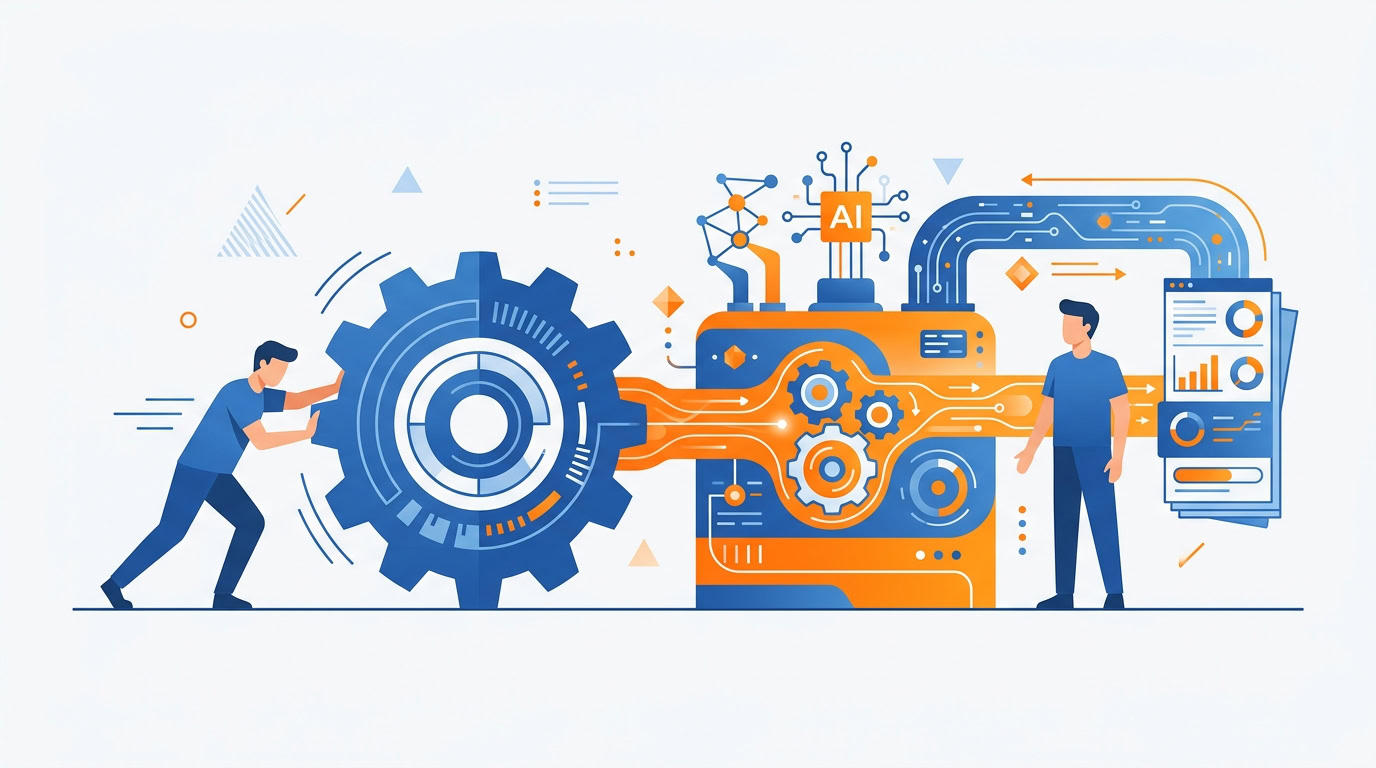
3. Execution: Infusing Personal Standards
The "robotic" feel of AI-generated content is a frequent critique, often stemming from a lack of personalization in the training phase. To mitigate this, experts suggest moving away from editing AI output in external documents. Instead, users are encouraged to utilize "Canvas" modes or real-time interactive editing environments. By engaging in iterative feedback cycles—where the user corrects the AI’s voice in real time—the model begins to learn the specific nuances of the user’s communication style.
Furthermore, the implementation of a "Taste.md" file has emerged as a best practice. This is a single, centralized document containing an individual’s design preferences, aesthetic guidelines, and tone-of-voice rules. By attaching this file to every project, the AI can perform a self-check against these standards before presenting its first draft, significantly reducing the frequency of repetitive feedback loops.
4. Review: The Mechanism of Systematic Improvement
The Review layer is where the "Software Factory" truly differentiates itself from manual workflows. In the context of the June vs. July error, a mature system uses the incident to trigger an update to the system’s logic. This is essentially a professional application of Kaizen—the philosophy of continuous improvement. By auditing the workflow for recurring errors and modifying the system to prevent them, the professional shifts their role from a "writer" or "operator" to a "tuner" or "architect."
Broader Implications and Market Impact
The shift toward AI-integrated factories carries significant implications for professional productivity. Data suggests that companies utilizing integrated AI systems rather than ad-hoc prompts see a reduction in task-switching costs, which can account for up to 40% of a knowledge worker’s time.
The move toward systemic automation also addresses the "context gap." In decentralized, remote, or hybrid work environments, information silos often prevent team members from having the full picture. By automating the Capture and Triage layers, firms ensure that the AI—and by extension, the team—has access to the most recent updates, meeting resolutions, and project commitments.
However, this transition requires a fundamental change in workforce skill sets. Employees must be trained not just in prompt engineering, but in systems thinking. The ability to identify bottlenecks, design feedback loops, and maintain the "machine" is becoming a premium skill.
As of late 2026, the adoption of these frameworks is still in its relative infancy. However, the movement toward continuous, automated workflows is accelerating. Those who continue to rely on manual, single-task prompt execution will likely find themselves at a competitive disadvantage against firms that have built resilient, self-improving AI factories. By starting with the most painful layer of the current workflow and systematically automating it, professionals can gradually transition their daily operations toward a more scalable, accurate, and autonomous model.
Related posts: