Mastering Sales Prospecting: Transforming Lead Management into a Predictable Growth Engine

The modern business-to-business (B2B) marketplace is experiencing a profound shift in how organizations identify, cultivate, and convert prospective buyers. Prospecting—the systematic process of locating and engaging potential clients who match an ideal customer profile (ICP)—has transitioned from an intuitive, ad-hoc sales chore into a data-driven science. Industry analysts note that front-end lead management serves as the bedrock of sustainable revenue generation.
Without a structured framework, organizations routinely lose valuable prospects to administrative friction, delayed response times, and uncoordinated handoffs between marketing and sales departments.
Background and Context of Modern Lead Management

Historically, sales prospecting relied heavily on cold calling, broad-stroke email blasts, and intuition-based qualification. Sales representatives frequently treated every inbound form submission or referral with identical urgency, creating severe operational inefficiencies. By the time a high-value prospect was manually reviewed, competing firms often had already closed the deal.
As digital transformation accelerated over the past decade, the sheer volume of generated data overwhelmed traditional sales pipelines. Organizations began adopting Customer Relationship Management (CRM) platforms to store contact information, yet a database full of names rarely translated into predictable revenue. The fundamental disconnect lay between lead generation—the act of creating initial interest—and lead management, which governs the complete lifecycle of a contact from first touch to closed-won deal.
Today, enterprises recognize that prospecting bridges this gap. It shifts the primary objective from mere database accumulation to strategic engagement. By establishing rigorous definitions for what constitutes a raw lead, a prospect, a sales-qualified lead (SQL), and an active opportunity, modern revenue teams have streamlined their workflows to focus exclusively on high-potential buyers.
Chronology and Evolution of the Prospecting Workflow

The evolution of sales workflows over the past five years has established a standardized, multi-step progression that successful B2B organizations now implement universally.
Phase One: Defining the Ideal Customer Profile (ICP)
Revenue operations teams begin by analyzing historical win-loss data to construct a precise ICP. Rather than targeting broad industries, modern criteria isolate specific company sizes, technological stacks, geographic regions, and organizational growth stages. This prevents sales personnel from wasting finite time on low-fit accounts.
Phase Two: Capture and Data Enrichment
Once the target parameters are established, incoming data from digital channels, inbound forms, and outbound research are consolidated into a centralized CRM. Automated data enrichment tools append firmographic and demographic details to raw contact records, ensuring that sales representatives possess actionable context before initiating contact.
Phase Three: Multi-Signal Prioritization
Rather than relying solely on engagement metrics, contemporary sales organizations evaluate prospects using a triad of fit, intent, and behavior. A marketing download from a low-fit contact triggers an automated nurturing sequence, whereas an executive-level inquiry from a high-fit account immediately routes to a dedicated sales cadence.

Phase Four: Multichannel Outreach and Cadencing
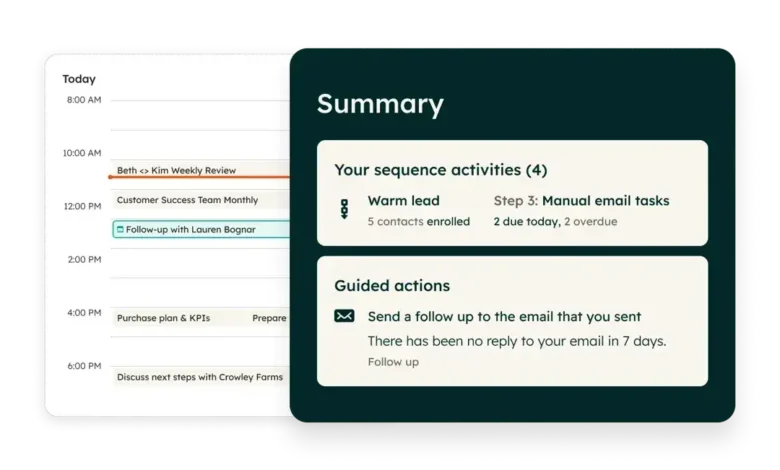
Sales development representatives (SDRs) deploy structured communication sequences combining email, phone calls, social selling networks like LinkedIn, and targeted direct mail. Each touchpoint is designed to add specific value—such as industry insights or peer benchmarks—rather than functioning as a generic check-in.
Phase Five: Seamless Handoffs to Account Executives
Upon verifying critical discovery criteria, the record transitions into an SQL and subsequently an active opportunity. Clear service-level agreements (SLAs) dictate how and when marketing hands off leads to SDRs, and how SDRs escalate qualified buyers to account executives.
Supporting Data and Industry Metrics
Recent studies within the sales technology sector underscore the financial impact of structured prospecting and data hygiene. According to aggregate industry benchmarks, companies that enforce strict lead qualification criteria and unified CRM workflows experience a significant reduction in sales cycle lengths. Specifically, organizations utilizing automated data enrichment report up to a 30% decrease in research time per lead, allowing sales representatives to increase their daily customer-facing interactions.

Furthermore, research indicates that response times remain a primary determinant of conversion success. Inbound leads contacted within the first five minutes of inquiry are exponentially more likely to enter an active sales evaluation compared to those addressed after 24 hours. Despite these findings, a vast percentage of B2B companies still fail to route high-intent leads instantly, resulting in millions of dollars in unrealized pipeline revenue.
Official Responses and Industry Perspectives
Sales operations leaders and revenue architects emphasize that the integration of artificial intelligence (AI) has fundamentally altered the prospecting landscape.
"The era of spraying and praying is officially over," explains Sarah Jenkins, Senior Vice President of Revenue Operations at Enterprise Growth Solutions. "Buyers are more informed, and their tolerance for generic outreach is zero. The mandate for modern sales teams is contextual relevance at scale. AI and advanced CRM workflows do not replace human judgment; rather, they strip away the administrative drag that has historically burned out sales talent."

Similarly, technology analysts point out that the implementation of AI-driven prospecting agents has introduced a new paradigm for outbound sales. These tools monitor buying signals across the web, draft personalized messaging tailored to specific corporate triggers, and allow human sales professionals to focus entirely on consultative relationship-building. However, industry experts caution that guardrails are mandatory to ensure that automated outreach adheres to compliance standards and maintains an authentic brand voice.
Implications and Broader Business Impact
The widespread adoption of advanced lead management and AI-supported prospecting carries profound implications for corporate structures, sales compensation models, and technological investments.
First, the alignment between marketing and sales has transitioned from a theoretical ideal into a hard operational requirement. Because modern prospecting relies on shared definitions of lead readiness, finger-pointing between departments regarding lead quality has diminished. Marketing teams are evaluated on the pipeline value they generate, while sales teams are held accountable for rigorous follow-up and CRM data hygiene.

Second, the role of the sales representative is evolving. Administrative tasks—such as manual data entry, lead scoring adjustments, and basic outreach sequencing—are increasingly handled by automated CRM workflows and AI agents. Consequently, successful sales professionals must develop advanced financial acumen, strategic problem-solving capabilities, and deep industry expertise to guide enterprise buyers through complex evaluation cycles.
Finally, organizations that fail to modernize their prospecting processes risk severe competitive disadvantage. As competitors leverage real-time intent data and automated enrichment to engage buyers at the exact moment of need, manual, fragmented prospecting operations will struggle to maintain win rates. By centralizing customer context within a unified CRM platform and pairing automated efficiency with human expertise, businesses can transform prospecting from an unpredictable chore into a reliable, scalable engine for long-term revenue growth.