The State of Call Intelligence in 2026: Transforming Conversational Data into Actionable Enterprise Insights

The modern business landscape is witnessing a fundamental shift in how organizations handle customer interactions. According to HubSpot’s 2026 Sales Trends Report, 79% of sales professionals report that artificial intelligence is critical for extracting actionable insights from their daily workflows. Despite this high reliance on advanced technology, a persistent operational bottleneck remains: sales, support, and success teams routinely lose vital call context inside scattered notes, unorganized documents, and secondhand summaries.
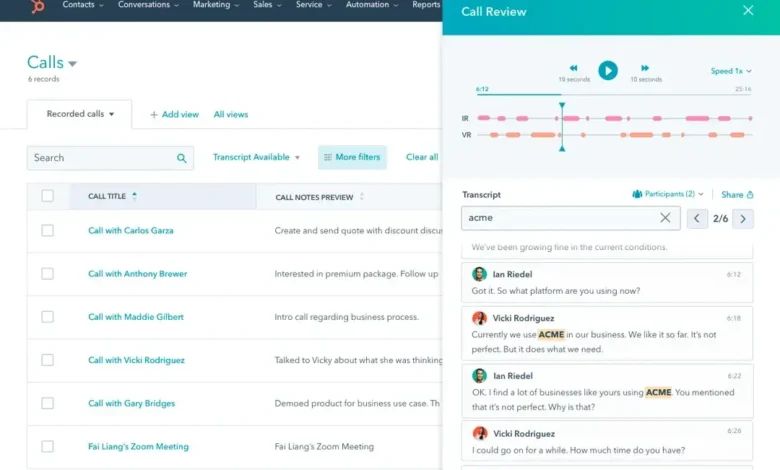
As enterprises increasingly recognize conversation as a primary source of business intelligence, the adoption of specialized software has accelerated. Call intelligence platforms—often categorized interchangeably with conversation intelligence and conversation analytics software—are designed to bridge this gap. By recording, transcribing, and analyzing business calls automatically, these systems convert live voice audio into searchable transcripts, structured summaries, and concrete action items. Organizations are leveraging these capabilities not only to coach sales representatives and identify deal risks but also to uncover recurring customer pain points and streamline post-call workflows.
Understanding the Mechanics of Call Intelligence Software
The operational framework of modern call intelligence platforms relies on a sophisticated, multi-stage pipeline designed to transform unstructured human speech into structured, database-ready insights. The architecture of these systems generally follows seven distinct steps, beginning with audio capture.
Platforms ingest audio from various channels, including legacy call recording systems, sales dialers, Voice over Internet Protocol (VoIP) networks, and modern virtual meeting applications such as Zoom and Google Meet. Native integrations allow these tools to begin recording automatically, provided organizational consent parameters are met. Once the audio is secured, advanced speech-to-text transcription engines convert the spoken words into written text. High-performing transcription engines must navigate complex linguistic challenges, including multiple speakers, industry-specific jargon, regional accents, and natural conversational crosstalk.
Following transcription, the software deploys natural language processing and artificial intelligence algorithms to scan the text for tracked keywords, specific topics, questions, objections, and competitor mentions. Many modern platforms also incorporate sentiment analysis to gauge emotional shifts and tone variations throughout the exchange. The platform then generates a concise summary highlighting the customer’s core needs, objections, and agreed-upon commitments, alongside extracting actionable next steps—such as scheduling a follow-up or sending a requested whitepaper—and assigning them directly to team members with specific deadlines.
Finally, the system syncs these transcripts, recordings, summaries, and tasks directly to customer relationship management (CRM) platforms, help desks, or ticketing systems. This synchronization ensures that customer context remains immediately accessible alongside historical records, triggering automated follow-up workflows and supplying leadership with macro-level trend reports on objection frequencies and talk-to-listen ratios.
Key Features and Core Capabilities for Enterprise Evaluation
When evaluating conversation intelligence solutions, organizations must prioritize software that seamlessly merges reliable artificial intelligence analysis with practical coaching frameworks and deep system integrations.

Core artificial intelligence capabilities form the bedrock of any deployment. Transcription accuracy, speaker diarization, automated summarization, and robust keyword tracking are non-negotiable requirements. If a platform struggles with industry terminology or heavy accents, downstream analytics will inevitably falter. Furthermore, while sentiment and emotion labels provide useful operational signals, enterprise leaders are advised to treat them as supplementary metrics rather than absolute facts, periodically auditing the underlying transcript evidence.
Coaching and quality assurance (QA) workflows represent another critical dimension. The most effective systems empower managers to move beyond random call sampling by utilizing configurable scorecards, timestamped commentary, call libraries, and calibration tools. These features allow supervisors to measure whether representative performance genuinely improves following targeted feedback.
Integration depth, however, often dictates the ultimate utility of the platform. Industry analysts consistently emphasize that CRM integration matters significantly more than an extensive list of peripheral features. When call data, transcripts, and action items remain trapped in an isolated workspace, adoption rates plummet because representatives are forced to manually copy information into their primary systems of record.
Divergent Use Cases: Sales Optimization Versus Customer Support
While sales and service departments often utilize the same underlying conversation data, their strategic objectives diverge sharply.

Sales teams primarily deploy conversation intelligence to dissect prospect objections, refine talk tracks, and evaluate pipeline health through empirical data rather than subjective rep reporting. By analyzing recorded interactions, sales leadership can track how top performers handle pricing pushback or navigate competitor mentions, applying those insights to accelerate the onboarding of new hires. Furthermore, modern sales organizations integrating AI-driven cold-calling tools use conversation intelligence to compare openers and follow-up cadence across thousands of automated and manual dials.
Conversely, customer support and service organizations utilize call intelligence to automate quality assurance protocols, monitor customer sentiment shifts at scale, and uncover the root causes behind escalating ticket volumes. By evaluating 100% of support interactions rather than a nominal percentage, quality leaders can rapidly identify compliance deviations, agent burnout indicators, and systemic product flaws that drive repeat inbound requests.
Compliance, Data Privacy, and Regulatory Considerations
The deployment of call intelligence software introduces complex legal, privacy, and security obligations. Organizations must involve legal counsel prior to rollout to ensure compliance with jurisdictional recording statutes and data protection frameworks.
In the United States, federal law establishes a baseline of one-party consent, but numerous state-level statutes require all-party consent under specific conditions. Interstate communications frequently complicate these requirements, meaning organizations cannot rely on a generic, automated recording announcement to satisfy every regulatory standard. Enterprises must establish documented workflows that explicitly disclose recording, secure active consent where mandated, and instantly terminate recording if a participant declines.

Data privacy regulations, such as the European Union’s General Data Protection Regulation (GDPR) and the California Consumer Privacy Act (CCPA), grant individuals explicit rights regarding data access, erasure, and transparency. Consequently, organizations must select software capable of locating recordings by individual identifier, executing data deletions, enforcing strict access controls, and maintaining comprehensive audit logs. In highly regulated sectors like healthcare, finance, and insurance, platforms must also comply with industry-specific mandates, such as executing Business Associate Agreements (BAAs) under HIPAA or meeting rigorous SOC 2 Type 2 and ISO/IEC 27001 security standards.
Comparative Analysis of Leading Call Intelligence Platforms in 2026
The market for conversation intelligence offers diverse solutions tailored to specific organizational structures, budgets, and technical requirements.
Sales Hub (featuring HubSpot’s conversation intelligence tool) is purpose-built for sales and service organizations seeking tight integration with a centralized CRM. By recording and analyzing calls directly within HubSpot Smart CRM, the platform eliminates data silos, allowing teams to review customer context, leave timestamped coaching notes, and trigger automated follow-up workflows without switching applications. Pricing for Sales Hub Professional starts at $90 per seat per month with annual billing, alongside required onboarding fees, making it an ideal solution for growing teams seeking unified data architecture.
Gong targets enterprise revenue organizations through its comprehensive Revenue Graph, which correlates conversational insights with people, accounts, and deal pipelines across calls, video meetings, and email. Gong provides custom enterprise pricing based on user volume and platform fees, making it a powerful choice for large corporations requiring advanced deal forecasting alongside conversation analytics.

Chorus by ZoomInfo pairs robust conversation intelligence with ZoomInfo’s extensive B2B contact and company database. This integration allows representatives to evaluate historical sales interactions alongside verified firmographic data, reducing the need to toggle between disparate tools. Like Gong, Chorus operates on a custom-quote pricing model tailored to enterprise requirements.
Observe.AI specializes in contact-center environments, offering automated post-interaction quality assurance alongside real-time agent assistance. By evaluating 100% of interactions against compliance frameworks and providing live prompts during calls, Observe.AI caters directly to high-volume support centers and customer service operations. Pricing details are available upon request through enterprise demo submissions.
Fireflies.ai addresses the needs of smaller teams and organizations seeking affordable meeting transcription and search capabilities without the complexity of enterprise revenue suites. Supporting over 100 languages across multiple meeting platforms, Fireflies.ai offers tiered pricing, including a free plan and a Business tier starting at $19 per seat per month with annual billing, delivering robust AI summaries and conversation analytics at an accessible price point.
Strategic Implications and the Future of Customer Conversations
As artificial intelligence continues to mature, call intelligence software has evolved from a niche coaching accessory into an indispensable enterprise asset. By systematically converting unstructured human dialogue into structured, searchable intelligence, organizations can eliminate operational blind spots, enforce rigorous compliance standards, and drive data-backed decision-making across every customer-facing department.

Whether an enterprise prioritizes deep CRM integration, automated contact-center quality assurance, or cost-effective meeting transcription, the strategic imperative remains clear: organizations that systematically capture and analyze the voice of the customer will consistently outperform those that leave conversational insights locked in unreviewed recordings.
Related posts: