The Shift from Calendar Maximization to Energy-Aware Productivity: A New Framework for Professional Performance

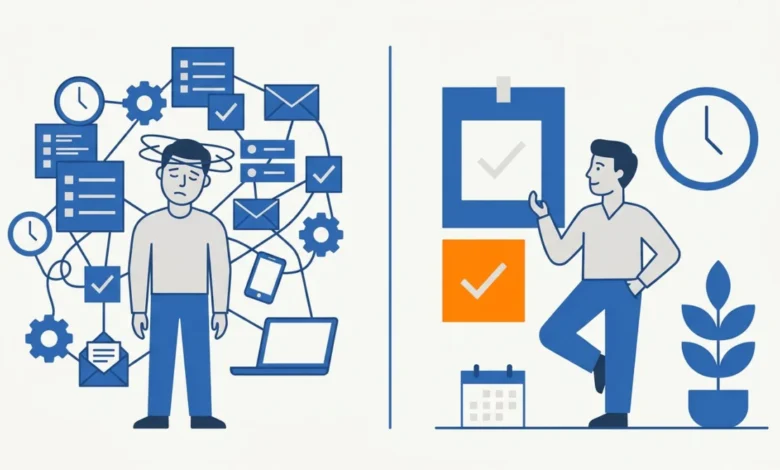
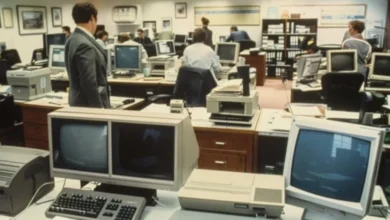
In the professional landscape of the early 2010s, the prevailing philosophy of productivity was rooted in the concept of "calendar optimization." The goal was straightforward: maximize the density of the workday by filling every available minute with tasks. If a gap existed in a calendar, it was viewed as a failure of organization. However, as the digital workspace has evolved over the past decade, a growing body of research suggests that this approach—often described as "time-cramming"—leads to diminished returns, burnout, and a decline in cognitive output. Modern organizational psychology has begun to favor a transition toward energy-aware planning, a methodology that prioritizes mental state and cognitive availability over the mere occupation of time.
The Evolution of Workplace Efficiency
For years, the standard metric for a productive employee was the volume of completed tasks per eight-hour window. This period saw the rise of time-blocking software and rigid project management tools designed to eliminate downtime. Yet, by 2021, the publication of Oliver Burkeman’s Four Thousand Weeks sparked a critical conversation regarding the limits of human capacity. The book challenged the assumption that time management was simply a matter of finding better tools; rather, it argued that true efficiency requires acknowledging the finitude of human energy.
Data from the American Psychological Association (APA) supports this shift in perspective. Recent studies indicate that "attention residue"—a term coined by University of Minnesota professor Sophie Leroy—negatively impacts professional performance. When an employee switches from one task to another, their focus does not immediately transition. Instead, a portion of their cognitive resources remains tethered to the previous task, creating a state of mental fragmentation that significantly reduces the quality of output during the subsequent hour.
Chronology of the Productivity Shift
The transition toward energy-based planning can be traced through several key phases over the last fifteen years:
- 2010–2014: The Era of Optimization. The proliferation of smartphone technology and early cloud-based productivity apps encouraged the "always-on" culture. Productivity was defined by the removal of idle time.
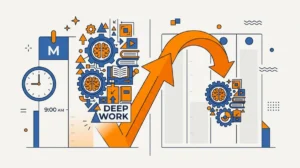
- 2015–2019: The Recognition of Cognitive Load. As remote work began to gain traction, businesses noted that high-volume task management was failing to solve the problem of declining creative output. Focus shifted toward "Deep Work," a concept popularized by Cal Newport, emphasizing long periods of uninterrupted concentration.
- 2020–Present: The Energy-Aware Mandate. The global shift to hybrid and remote work models necessitated a new approach. With blurred boundaries between personal and professional life, experts began advocating for "seasonal" scheduling, which acknowledges that human capacity fluctuates based on stress, rest, and environmental factors.
The Science of Attention-Aware Planning
The core premise of modern productivity is that an open calendar slot and a mind capable of performing complex work are not equivalent. Research into cognitive science reveals that the human brain operates in "ultradian rhythms"—cycles of high-frequency brain activity lasting roughly 90 to 120 minutes.
Experts in organizational behavior now recommend an "energy audit" of the typical workday. By categorizing tasks based on the cognitive demand they place on the individual, professionals can align their most taxing assignments with their peak mental windows. For many, these windows occur in the early morning; for others, they may align with late-afternoon shifts. The failure to align tasks with these natural peaks often results in "administrative bloat," where high-value, creative hours are wasted on low-value, repetitive tasks simply because those tasks are easier to initiate.
Managing Seasonal Capacity and Recovery
A significant challenge in modern corporate environments is the tendency to treat every day as a "full-capacity day." Organizational consultants note that this approach creates a unsustainable cycle of scheduling that looks efficient on a screen but is physically and mentally taxing to execute.
"The most effective teams are those that acknowledge the season they are in," says Dr. Elena Rossi, an organizational psychologist. "There are times for intense, high-output sprints and times for maintenance and strategic planning. When leadership fails to differentiate between these seasons, the result is a systemic degradation of morale and quality."
Furthermore, the integration of recovery periods—specifically sleep hygiene, intentional exercise, and mindfulness—has moved from the category of "personal wellness" to "performance optimization." Longitudinal data suggests that employees who treat recovery as a non-negotiable, scheduled component of their week demonstrate higher resilience during periods of high organizational pressure.
Strategies for Implementation
To transition from traditional time-filling to energy-aware productivity, experts suggest a four-pillar framework:
- Prioritizing Peak Mental Windows: Identifying the two-hour block of the day where cognitive clarity is highest and reserving this time exclusively for high-stakes, strategic work.
- Seasonal Adjustment: Adjusting the intensity of the workload based on current life and work demands. During high-stress or transition periods, reducing complexity is not a sign of failure but a strategic decision to maintain long-term momentum.
- Eliminating Attention Residue: Implementing a "preparation routine" before meetings or project transitions. By reviewing the status of upcoming tasks and documenting open loops in a reliable external system, individuals can "offload" the cognitive burden, allowing them to be fully present for the task at hand.
- Strategic Recovery: Scheduling rest periods as firmly as meetings. Leftover time is rarely sufficient for genuine recovery; therefore, restorative activities must be allocated space in the calendar before additional work is considered.
Broader Implications and Future Outlook
The implications of this shift are profound for both employers and employees. For organizations, the adoption of energy-aware planning can lead to higher retention rates and a marked increase in the quality of creative output. When staff members are not perpetually operating in a state of cognitive fatigue, the frequency of errors in complex decision-making decreases.
For the individual, the transition marks a move away from the anxiety of "empty time." By treating the day as an experiment—assigning specific tasks to specific mental states and measuring the resulting output—professionals can move beyond the false dichotomy of "busy" versus "productive."
As the workplace continues to integrate AI and automated tools to handle routine administrative work, the human element of productivity will increasingly rely on the ability to manage focus. The future of work will likely not be determined by who can pack the most tasks into a 24-hour cycle, but by who can most effectively steward their limited, high-value attention toward the goals that generate the most significant impact. By shifting the focus from the calendar to the person, professionals can achieve a more sustainable and meaningful trajectory in their careers, ensuring that their work remains a source of value rather than a source of depletion.