The Science of Focused Execution: A Comprehensive Roadmap for Eliminating Distractions and Optimizing Productivity

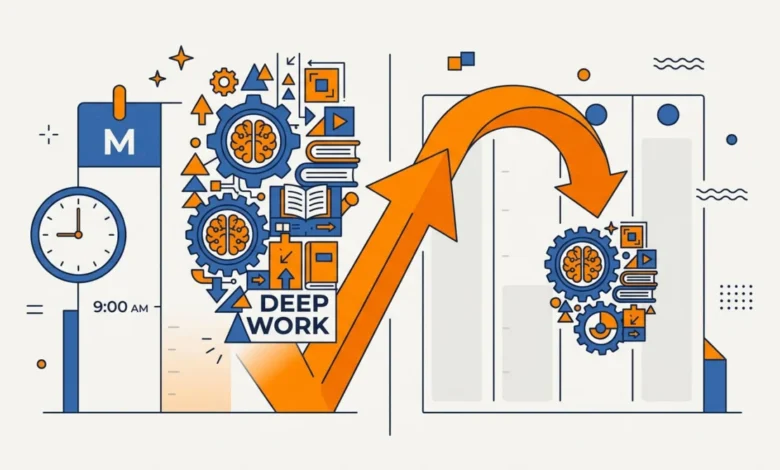
The modern professional environment is increasingly characterized by a state of continuous partial attention. For many, the erosion of deep work capability is not a result of a lack of ambition, but a consequence of failing to architect one’s environment against predictable external stressors. The case of Brooks, a professional who found his Monday morning deep-work sessions repeatedly compromised by the scheduled noise of a lawn mower, serves as a quintessential example of the "traffic jam" phenomenon in productivity. When an individual attempts to engage in high-cognitive-load tasks in an environment prone to recurring, predictable interruptions, the effort required to maintain focus increases exponentially—a state often compared to attempting to run a marathon while carrying a significant physical burden.
The Anatomy of the Traffic Jam Rule
The "traffic jam rule" posits that cognitive focus should be treated with the same strategic routing as vehicular traffic. If a specific time or physical location is historically associated with interruption—such as a high-traffic office corridor, a noisy residential neighborhood, or a period of peak digital activity—the most effective intervention is not to attempt to "power through" the distraction, but to relocate the activity entirely.
Data from workplace psychology studies indicate that once a person is interrupted, it takes an average of 23 minutes and 15 seconds to return to the original level of cognitive focus. When these interruptions occur in a predictable cycle, the cumulative loss of productive hours becomes significant. By mapping these "distraction zones," individuals can proactively shift their high-priority tasks to "smoother routes"—alternative rooms, quiet libraries, or different hours of the day where the probability of environmental interference is minimized.
Hierarchical Frameworks for Cognitive Optimization
The methodology for improving focus is structured, according to productivity experts, as a hierarchy analogous to Maslow’s pyramid. The foundational level is the tactical elimination of external distractions. Without sealing these "leaks," attempts to build higher-level habits are often futile. The middle tier of the hierarchy involves the establishment of structural habits, such as time blocking and the Pomodoro technique. The pinnacle of the pyramid is biological optimization, encompassing sleep hygiene, nutritional intake, and physical exercise.
Attempting to implement high-level focus strategies—such as deep-work meditation or complex workflow management—while ignoring foundational distractions is a primary cause of failure in productivity systems. A professional cannot effectively engage in deep work while their primary communication channels remain un-muted or their immediate environment remains chaotic.
Defining the Focused Professional
A truly focused individual is characterized by three core capabilities. First, the ability to engage in "grinding" or sustained cognitive effort for at least one hour without the reliance on external productivity "hacks." Second, the discipline to decline incoming interruptions, including non-urgent emails and instant messages, by deferring them to designated administrative windows. Third, the capacity for rigorous prioritization.
The concept of prioritization in this context is frequently misunderstood. It is not merely the act of selecting a task, but the act of committing to a single primary goal, which subsequently provides the clarity required to reject secondary or tertiary requests. Similar to an athlete who prioritizes a specific training goal by declining social invitations that conflict with their recovery and performance schedule, the focused professional must "name their yes" before populating their calendar. This commitment makes the subsequent "no" to interruptions—whether they are meetings, emails, or impromptu discussions—a logical necessity rather than a social burden.
A 60-Day Strategic Roadmap
While many professional development programs focus on a 30-day cycle, empirical evidence suggests that a 60-day window is more effective for deep-seated habit transformation. This timeline is divided into four distinct phases, each designed to address a specific level of the focus hierarchy.
Weeks 1-2: The Tactical Elimination Phase
The initial phase is dedicated to a "dopamine reset" and the aggressive reduction of digital noise. During this period, professionals are tasked with conducting a comprehensive notification audit. Every non-essential alert is disabled, and screen time usage is ideally reduced by 50%. The objective is to transition from a reactive state—where one responds to incoming pings—to a proactive state, where one meets communication at pre-selected, fixed intervals. Case studies indicate that reducing daily screen time from five hours to two hours acts as a critical inflection point in recovering lost focus.

Weeks 3-4: Habitual Integration
Once the external environment is stabilized, the focus shifts to the calendar. Empty gaps are identified as "high-risk" areas that invite distraction. Professionals are encouraged to schedule specific appointments with themselves, attaching a concrete intention to every block of time (e.g., "Drafting Q3 Financial Report"). This creates a psychological commitment that differs significantly from an open-ended block of time, which is prone to procrastination and task-switching.
Weeks 5-6: Physiological Optimization
In the fifth and sixth weeks, the focus moves to the top of the pyramid: biological maintenance. This includes 3 to 4 sessions of exercise per week, the protection of sleep cycles, and specific hydration protocols. Research has shown that a simple, disciplined act, such as consuming 16 ounces (approximately 500ml) of water immediately upon waking, significantly improves alertness and energy levels throughout the morning. This stage is intentionally delayed until the environment is secure and the habits are formed, ensuring that biological efforts are not undermined by structural failures.
Weeks 7-8: Reflection and Maintenance
The final phase is dedicated to the assessment of the previous six weeks. Professionals review whether the "distraction zones" remain neutralized, whether the 90-minute deep-work blocks have been consistently achieved, and whether the biological protocols have been successfully integrated into their daily routine.
The 90-Minute Benchmark
The gold standard for high-performance deep work is a single, uninterrupted 90-minute block per day. For the average professional, this is an ambitious yet achievable goal. While most individuals struggle to maintain focus for even 60 minutes, the 90-minute threshold aligns with the body’s ultradian rhythms, which typically cycle in 90-to-120-minute periods of high-intensity focus followed by the need for rest.
Two hours of daily deep work is considered the "high-performance" level of productivity. Achieving this consistently requires not only the elimination of distractions but also a high degree of organizational maturity. It requires the professional to understand that their time is a finite resource that must be guarded with the same intensity as financial capital.
Broader Implications and Analysis
The shift toward a focus-centric work culture has profound implications for organizational efficiency. When individuals within an organization prioritize their own deep-work windows, the aggregate output of the company increases. However, this shift often requires a fundamental change in corporate culture, moving away from the expectation of "instant availability" toward a model of "asynchronous responsiveness."
Fact-based analysis suggests that organizations which incentivize deep work—by establishing "quiet hours" or reducing the frequency of mandatory, non-essential meetings—report higher levels of employee engagement and lower rates of burnout. Conversely, companies that prioritize constant connectivity often find themselves dealing with "cognitive clutter," where employees spend the majority of their time managing the medium of communication rather than producing the work itself.
Conclusion
The path to improved focus is not found in the acquisition of new digital tools or more sophisticated task-management software, but in the rigorous removal of obstacles. By treating focus as a limited, valuable resource that requires a protected environment, professionals can reclaim their Monday mornings and every other hour of their workday.
The strategy is clear: map the distraction, route the focus to a smoother path, and protect the commitment with a decisive "no" to anything that does not align with the primary objective. As the 60-day roadmap demonstrates, the transformation is a logical process of clearing the base, building the habits, and optimizing the biology. For those seeking to achieve professional excellence, the question remains: what is the one objective you are committing to, and have you built the necessary "route" to ensure you can reach it?