How AI-Powered Voice Technology is Transforming Professional Productivity and Communication

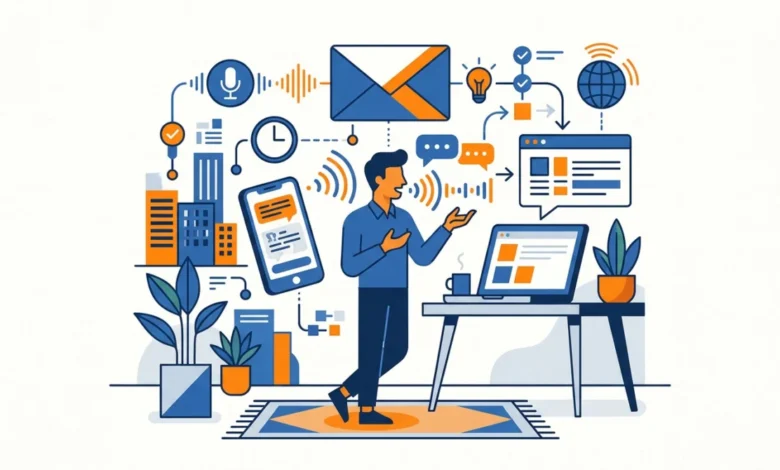
The evolution of professional communication is undergoing a fundamental shift as artificial intelligence (AI) bridges the significant gap between human speech and digital output. Historically, the "bottleneck of productivity" has been defined by the physical limitations of typing. While the average professional can type approximately 40 words per minute, natural human speech typically ranges between 100 and 130 words per minute. For decades, voice-to-text technology was relegated to rudimentary tasks like setting calendar reminders or executing simple smart-home commands, largely due to the inability of early software to parse nuance, filler words, or non-linear thought patterns.
The emergence of Large Language Models (LLMs) and advanced natural language processing (NLP) has effectively dismantled these technical barriers. Today, tools such as Wispr Flow, AudioPen, and ChatGPT’s advanced voice modes are enabling professionals to dictate complex emails, structure chaotic thoughts, and conduct iterative coaching sessions with a degree of precision that was previously unattainable. This transition from manual input to voice-enabled workflow is not merely a convenience upgrade; it represents a fundamental change in how individuals process information and execute tasks in high-stakes environments.
A Chronological Evolution of Voice Integration
The integration of voice into the professional toolkit has followed a clear, four-stage progression, often described by productivity experts as a "ladder of adoption."
- The Foundational Stage: Historically, voice utility was restricted to command-based interactions. Users would trigger simple, binary tasks, such as setting alarms or adjusting environmental controls. This period established the basic infrastructure for voice recognition, though it failed to address complex cognitive tasks.
- The Dictation and Prompting Era: The advent of AI-augmented dictation tools, such as Wispr Flow, marked a departure from verbatim transcription. Unlike older tools that required precise enunciation and lacked context, these platforms utilize AI to perform "cleanup" functions. This includes the removal of filler words (ums, ahs), the elimination of false starts, and the automatic formatting of messages into professional prose.
- The Conversational Coaching Phase: The most significant shift has occurred with the deployment of real-time, interactive AI agents. Professionals are now utilizing platforms like ChatGPT’s voice mode to conduct "weekly reviews"—a structured process of reflection and planning. By engaging in a back-and-forth dialogue, the AI functions as a neutral coach, asking targeted questions and summarizing insights, which the user then integrates into their workflow.
- The Emergence of Autonomous Agents: Currently, the industry is witnessing the pilot phase of voice-based email agents, such as those prototyped in environments like Lindy. In this stage, users can interact with an AI through a dedicated interface to have correspondence read aloud, archive messages, and dictate complex replies while in motion, effectively operating as a mobile administrative assistant.
Empirical Productivity Gains and Cognitive Advantages
The shift toward voice-first workflows is supported by a growing body of evidence regarding cognitive efficiency. Psychological research has long suggested that speaking can engage different neural pathways than typing, often helping individuals bypass the "blank page syndrome" or the paralysis associated with perfectionism. By dictating a "messy" first draft, a user can articulate complex ideas without the immediate friction of visual editing. The subsequent AI cleanup pass serves as an editorial layer, refining the content into a structured format.
Supporting data from the technology sector indicates that for tasks requiring high volumes of context—such as briefing an AI on a competitive analysis or a project strategy—voice input is objectively superior. A typed prompt requires the user to condense and structure information manually. Conversely, natural speech allows the user to layer background information, constraints, and objectives in a fluid, comprehensive manner. Comparative trials—where users run a typed prompt against a voice-dictated one—consistently show that the voice-originated prompts yield more contextually relevant and detailed AI responses.

Safety and Context in Professional Environments
As voice-to-text tools become more pervasive, the issue of professional safety and etiquette has come to the forefront. Experts advise that hands-free voice technology should be treated as a tool for safety, particularly in environments like motor vehicles. Features that allow for the reading and sending of messages via in-car interfaces are designed to minimize the visual and cognitive load on the driver.
However, professional norms are evolving to accommodate these tools. It is becoming common practice for AI-assisted messages to carry an automated or manual disclaimer, signaling to the recipient that the correspondence was generated via voice assistance. This transparency provides necessary context for potential variations in tone or syntax, maintaining professional standards while acknowledging the medium of transmission.
Standardizing Protocols for Modern Communication
Despite the efficiency gains, the adoption of voice technology requires clear organizational protocols. The shift from text to audio can sometimes inadvertently increase the workload of the recipient, who may find it more time-consuming to listen to an audio file than to scan a text document. Consequently, industry best practices now emphasize the following rules for voice-based professional communication:
- Prioritize Transcription: Whenever a voice note is sent, it should ideally be accompanied by a transcription or a brief summary to ensure the recipient can digest the information quickly.
- Define Expectations: Before transitioning a team to voice-based workflows, clear expectations must be set regarding when a response is required and what the expected turnaround time is.
- Strategic Use: Voice should be employed for tasks where it adds value, such as brainstorming or complex context-setting, rather than for simple, transactional updates that could be handled more efficiently by other means.
Broader Implications and Future Outlook
The broader implication of this technological shift is the total decoupling of information creation from the keyboard. For the first time, the speed of human thought is becoming the primary driver of digital productivity. As these tools move from the experimental stage to enterprise-grade integration, the focus is shifting toward "agentic" workflows—where the AI does not just transcribe or format, but actively manages, prioritizes, and executes tasks on behalf of the user.
The trajectory of this technology suggests that within the next decade, the "keyboard-only" worker may become an anomaly in many professional sectors. By leveraging specialized tools for specific jobs—such as Otter for live transcription, AudioPen for capturing unstructured thought, and ChatGPT for reflective coaching—professionals are creating a "stack" of voice tools that act as a multiplier for their existing capabilities.
As the technology matures, the success of these tools will depend not on the software itself, but on the user’s ability to integrate these systems into a coherent daily routine. For the individual professional, the objective is to match the tool to the specific requirement: using voice for high-level synthesis and interactive thinking, while maintaining text for precise, collaborative documentation. By climbing the "ladder of adoption"—from simple reminders to complex, agent-led workflows—professionals can significantly reduce the friction inherent in modern, information-heavy work environments. The ultimate goal remains constant: to spend less time managing the medium of communication and more time engaging with the substance of the work itself.