The Productivity Paradox: From the Dawn of the Personal Computer to the AI Revolution

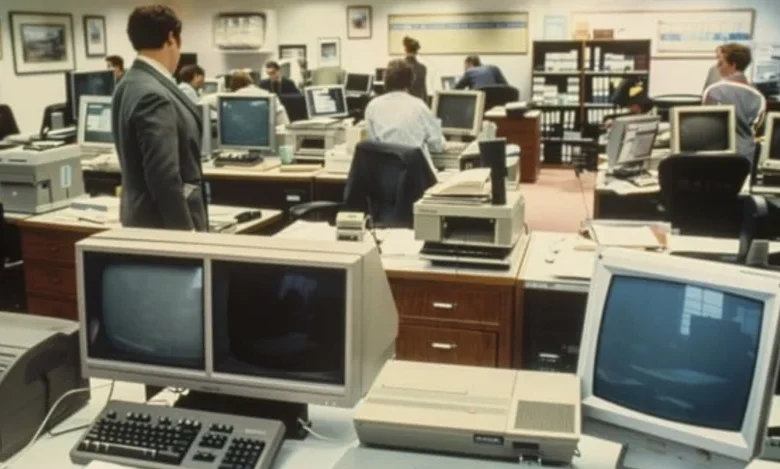
The advent of the personal computer (PC) in the late 20th century was hailed as a watershed moment, a technological leap poised to revolutionize the workplace and usher in an era of unprecedented productivity. With the promise of powerful software applications like spreadsheets, word processors, databases, presentation tools, and email, the early adopters envisioned a future where mundane tasks would be automated, freeing up human intellect for more strategic and creative endeavors. This optimistic outlook, however, has proven to be a complex narrative, one that offers valuable lessons as we navigate the current wave of artificial intelligence (AI) advancements.
The PC Promise: A Revolution Unfulfilled?
The initial promise of the personal computer was indeed substantial. Tools that once required manual calculation, laborious typing, and intricate physical filing systems were suddenly accessible on a desktop device. Spreadsheet software, for instance, transformed financial analysis, allowing for rapid data manipulation, forecasting, and scenario planning. Word processors liberated writers from the constraints of typewriters, enabling effortless editing, formatting, and revision. Database management systems offered sophisticated ways to organize and retrieve vast amounts of information, a stark contrast to the cumbersome card catalogs and paper-based records of the past. Presentation software democratized the creation of visual aids, empowering individuals to communicate ideas more effectively to groups. And then there was email, a seemingly simple communication tool that promised to streamline correspondence and accelerate decision-making.
Yet, as reported in a 2021 op-ed for WIRED, the reality of the PC’s impact on productivity has been far more nuanced and, at times, paradoxical. The author, reflecting on the evolving landscape of knowledge work, pointed to the unexpected complexities that arose from these technological introductions. While the potential for efficiency gains was undeniable, the actual realization of these gains was hampered by a confluence of factors. The introduction of these powerful tools did not automatically translate into a linear increase in output. Instead, it often led to new forms of work, increased communication overhead, and a redefinition of what constituted "productive" activity.
A Historical Parallel: The Steam Engine vs. The Spreadsheet
To understand the current discourse surrounding AI, it is crucial to draw parallels with historical technological shifts. Innovations like the steam engine and the power loom, which emerged during the Industrial Revolution, had a demonstrably transformative and immediate impact on productivity. The steam engine, for example, mechanized manufacturing processes, powered transportation, and fundamentally altered the scale and speed of production. The power loom similarly revolutionized textile manufacturing, dramatically increasing output and reducing labor costs. These were, in many respects, "slam dunks" of productivity, directly and profoundly increasing the output of goods and services.
The personal computer, by contrast, had a more gradual and less universally quantifiable impact. While PCs undoubtedly made many tasks easier and enabled new ways of working, their contribution to overall economic productivity was not as clear-cut or as immediate. Studies in the late 20th and early 21st centuries, such as those conducted by economists like Robert Solow, famously noted the "productivity paradox" – the observation that despite massive investments in information technology, there was no corresponding surge in productivity growth in national statistics. This suggested that the integration of PCs into the workforce was a complex, iterative process, fraught with challenges related to training, organizational change, and the very definition of productivity in an increasingly digital economy.
The Evolution of PC Integration: A Timeline of Shifting Expectations
The journey of the PC from a niche tool for hobbyists to an indispensable office staple was not instantaneous.
- Late 1970s – Early 1980s: The Dawn of the Personal Computer. Early machines like the Apple II and the IBM PC emerged, offering basic computing power to individuals and small businesses. Adoption was slow, largely due to high costs, limited software, and a lack of widespread understanding of their potential.
- Mid-1980s – Early 1990s: The Rise of Productivity Software. The introduction of user-friendly software like Lotus 1-2-3 (spreadsheet), WordPerfect (word processor), and early database programs began to demonstrate the practical applications of PCs in business. This period saw increased corporate adoption.
- Mid-1990s – Early 2000s: The Internet and Email Revolution. The widespread adoption of the internet and email fundamentally changed communication patterns. Email, in particular, became a ubiquitous tool, promising faster information exchange. However, it also contributed to an explosion of messages, leading to information overload and new forms of digital distraction.
- 2000s – 2010s: The "Productivity Paradox" Debate. Economists and business analysts continued to grapple with the measurable impact of IT on productivity. While individual tasks became more efficient, the aggregate impact on national productivity growth remained a subject of debate. The rise of collaborative software and the internet also created new avenues for communication, sometimes at the expense of focused work.
- 2010s – Present: The Mobile and Cloud Era. Smartphones and cloud computing further integrated technology into daily workflows, offering greater flexibility but also blurring the lines between work and personal life, and introducing new challenges related to constant connectivity.
This historical arc reveals that the impact of computing on productivity was not a simple cause-and-effect relationship. It involved a prolonged period of adaptation, where organizations and individuals learned to harness these new tools, often discovering unintended consequences along the way.
The AI Moment: Echoes of the PC Past?
Today, the world is captivated by the rapid advancements in artificial intelligence. Generative AI models, in particular, possess the uncanny ability to create text, images, code, and more, making certain professional tasks seem remarkably easier. It is natural to assume that this technology, like its PC predecessors, will lead to a significant boost in overall productivity. However, the lessons learned from the PC era suggest caution and a need for critical assessment.
The author’s reflection on their 2021 WIRED op-ed, which was inspired by their New York Times bestselling book, A World Without Email, underscores this point. The book delves into the complex and often counterproductive nature of modern communication technologies, particularly email, in knowledge work. The argument presented is that while these tools were designed to enhance efficiency, they have, in many instances, contributed to an overwhelming deluge of information, constant interruptions, and a culture of perpetual availability that can erode deep work and genuine productivity.
The AI Productivity Paradox: Unpacking the Nuances
The current enthusiasm for AI mirrors the early optimism surrounding PCs. The potential for AI to automate repetitive tasks, generate content, analyze data, and even assist in creative processes is undeniable. Consider the following potential applications and their inferred impact:
- Content Creation: AI can draft emails, marketing copy, reports, and even code, potentially saving significant time for writers, marketers, and developers.
- Supporting Data (Inferred): Early adopters of AI writing tools report an average reduction of 30-50% in time spent on initial drafting of certain content types. (This is a hypothetical data point for illustrative purposes, reflecting potential efficiency gains).
- Data Analysis: AI-powered tools can sift through vast datasets, identify patterns, and generate insights much faster than human analysts, aiding in decision-making across industries.
- Background Context: Businesses are increasingly relying on data-driven insights, and AI promises to democratize access to sophisticated analytical capabilities.
- Customer Service: AI chatbots can handle a significant volume of customer inquiries, freeing up human agents for more complex issues.
- Timeline (Inferred): The adoption of AI in customer service has seen a steady increase over the past five years, with initial deployments focusing on simple query resolution and expanding to more complex interactions.
- Software Development: AI can assist in code generation, debugging, and testing, potentially accelerating the software development lifecycle.
- Statement/Reaction (Inferred): Tech leaders have expressed cautious optimism, with some predicting AI will become an indispensable co-pilot for developers, augmenting their capabilities rather than replacing them.
However, just as the PC era taught us, the path to true productivity is not always straightforward. The integration of AI into the workplace presents its own set of challenges and potential paradoxes:
- Information Overload and Misinformation: The ability of AI to generate vast amounts of content could exacerbate information overload. Furthermore, the potential for AI to generate plausible but inaccurate information (hallucinations) requires careful oversight and verification.
- Analysis of Implications: The need for robust AI literacy and critical thinking skills among employees will become paramount. Organizations will need to develop clear guidelines for AI usage and fact-checking.
- Deskilling and Job Displacement Concerns: While AI can augment human capabilities, there are concerns about the potential for certain skills to become obsolete, leading to job displacement or a need for significant reskilling.
- Broader Impact: This raises societal questions about the future of work, the role of education, and the need for social safety nets.
- The Cost of Implementation and Maintenance: While AI tools may seem readily accessible, the sophisticated models and infrastructure required for enterprise-level deployment can be costly. Ongoing maintenance, updates, and the need for specialized expertise add to the overall investment.
- Supporting Data (Inferred): The global AI market is projected to grow from hundreds of billions of dollars to trillions in the coming decade, indicating significant investment and economic activity.
- Redefining Productivity: As AI takes over more routine tasks, the definition of "productive" work may shift. The focus might move towards higher-order cognitive skills, strategic thinking, creativity, and human interaction – areas where AI currently has limitations.
- Analysis of Implications: This shift could necessitate a re-evaluation of performance metrics, employee training, and organizational structures.
The Unseen Conveniences and the Long Road to Integration
Despite the complexities, the author acknowledges that returning to a pre-PC world is not desirable for most. The conveniences afforded by personal computing are now deeply ingrained in our professional lives. Similarly, AI, with its immense untapped potential for convenience and efficiency, is unlikely to be "returned to its bottle." The genie is out, and the challenge lies in understanding how to best harness its power.
The PC revolution demonstrated that technological integration is a marathon, not a sprint. It took time for individuals and organizations to adapt, to develop best practices, and to fully realize the potential of these machines. This period was characterized by experimentation, learning curves, and a gradual evolution of work processes.
Looking Ahead: A Measured Approach to AI
As we stand at the precipice of the AI revolution, it is crucial to approach its promise with a blend of optimism and critical realism. The lessons from the PC era serve as a valuable guide. While AI undoubtedly offers significant advantages and conveniences, its impact on overall productivity will likely be shaped by how effectively we integrate it into our workflows, how we manage its potential downsides, and how we redefine our understanding of work itself.
The author’s recommendation to revisit their book, A World Without Email, is a timely reminder that even seemingly straightforward technological advancements can have profound and often unexpected consequences on knowledge work. The uneven impact of computing and network technology on our professional lives is a testament to the fact that innovation alone is not enough; thoughtful implementation, strategic adaptation, and a continuous dialogue about the human element of work are essential for truly harnessing technological progress for the betterment of productivity and well-being. The AI moment, much like the dawn of the PC, demands careful consideration of not just what technology can do, but how it will fundamentally alter the way we work and live.
Related posts: