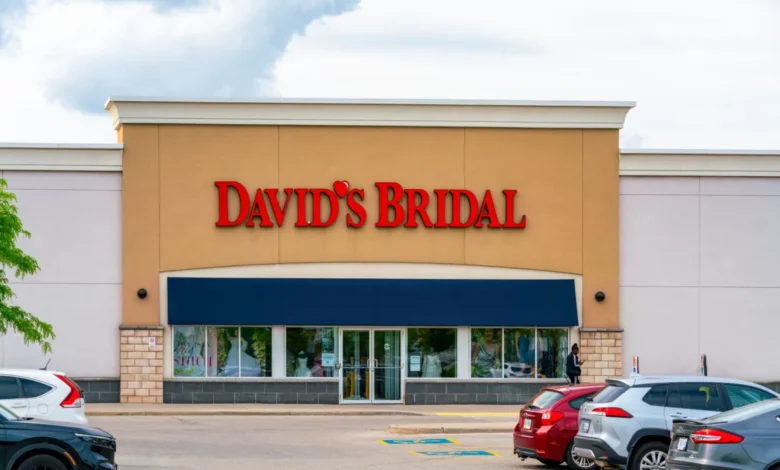
In a transformative move that underscores the rapid convergence of traditional retail and cutting-edge artificial intelligence, David’s Bridal has announced a nonbinding letter of intent to spin off its proprietary Pearl wedding planning platform into a standalone public entity. The proposed transaction, facilitated through a partnership with the special purpose acquisition company (SPAC) K&F Growth Acquisition Corp. II, represents a significant evolution for the 75-year-old bridal retailer. By carving out the technology-heavy Pearl division, David’s Bridal aims to unlock value by separating its asset-heavy retail operations from a high-growth, software-as-a-service (SaaS) business model.
The deal, which values the newly independent Pearl at approximately $350 million, is expected to include a $75 million private investment. Notably, $25 million of this capital is committed by CION Investment Corporation, which currently serves as the largest shareholder of David’s Bridal. If finalized, the transaction would see Pearl assume ownership of the broader David’s Bridal brand and its intellectual property, effectively pivoting the company’s corporate identity from a legacy retailer toward a technology-first service provider.
A Chronology of Technological Transformation
The path to this spinoff began in earnest in 2025, following a strategic migration of David’s Bridal’s digital infrastructure to the Shopify platform. This transition provided the necessary agility for the company to integrate sophisticated agentic AI into its Pearl wedding planner tool. Unlike traditional planning software that functions as a passive repository of information, the agentic version of Pearl is designed to take proactive, autonomous actions on behalf of the user—such as managing vendor outreach, coordinating schedules, and optimizing budget allocations.
The evolution of the platform accelerated throughout 2025 and 2026, as the company moved beyond simple planning tools to integrate a robust retail media network. This capability was significantly bolstered by David’s Bridal’s acquisition of Love Stories TV, a move that integrated high-quality video content into the planning experience and created new monetization streams through advertising and vendor partnerships. By mid-2026, the company had established Pearl Connect, a proprietary engine designed to bridge the gap between initial consumer interest and final service conversion, further refining the platform’s utility as a lead-generation powerhouse for wedding vendors.
Strategic Rationale and Executive Leadership
The decision to separate the entities is grounded in the distinct operational requirements of retail versus software. Kelly Cook, the current CEO of David’s Bridal, is slated to transition into the role of CEO at Pearl, with Elina Vilk, currently the president and chief business officer at David’s Bridal, stepping in as president of the new entity. This leadership continuity ensures that the strategic vision fostered during the initial development of the AI-driven tools remains the primary driver of the new public company.
In justifying the separation, leadership has emphasized the "asset-light" nature of the Pearl business model. While traditional retail is subject to the fluctuations of physical inventory, supply chain logistics, and real estate overhead, the Pearl platform leverages digital network effects. By scaling its user base, Pearl can generate recurring revenue through its media network and service-booking commissions without the linear growth in costs typically associated with retail expansion.
Edward King and Dan Fetters, the co-CEOs of K&F Growth Acquisition Corp. II, highlighted the "compelling trifecta" that attracted them to the deal: established profitability, significant growth potential, and a clean balance sheet. The goal for the SPAC is to leverage its capital markets expertise to accelerate Pearl’s expansion, potentially integrating further AI capabilities that could disrupt the broader $70 billion-plus U.S. wedding industry.
Market Position and Financial Projections
David’s Bridal currently holds a prominent position in the North American retail landscape, ranking at No. 460 in the Digital Commerce 360 Top 1000 database. Its commitment to integrating AI into its core business has also earned it a spot at No. 178 in the AI Commerce Rankings. These metrics suggest that the company’s transition is not merely a reactionary measure but a deliberate effort to leverage its massive consumer reach—currently estimated at 90% of all U.S. brides engaging with the Pearl ecosystem in some capacity.
Financial forecasts provided by the companies suggest a bullish outlook for the standalone entity. Pearl is projected to achieve operating margins exceeding 30% by 2026, a figure that highlights the efficiency of its software-driven revenue model compared to traditional retail. Looking toward 2027, the company anticipates a revenue surge of over 100% year-over-year, with total revenues expected to surpass $85 million. These figures, while subject to market conditions and the completion of the merger, suggest that the transition from a traditional brick-and-mortar retailer to a tech-enabled platform is yielding significant fiscal results.
Operational Stability and Future Outlook
For the thousands of customers and employees associated with David’s Bridal, the proposed transaction comes with a commitment to stability. Official communications from both companies have clarified that the retail arm of David’s Bridal will remain largely untouched. The physical storefronts are expected to operate without disruption, and existing appointments, product availability, and service standards will be maintained as the corporate structure undergoes its transition.
The "business as usual" messaging is a critical component of the strategy, as the value of the Pearl platform is intrinsically tied to the brand equity and customer trust that the David’s Bridal name commands. By maintaining the retail presence as a "showroom" or "experience center" for the technology platform, the new entity hopes to capture both the high-touch engagement of physical retail and the high-margin scalability of digital services.
Implications for the Wedding Industry
The move to spin off Pearl represents a broader trend of retail digital transformation. Many legacy retailers are currently struggling to justify their brick-and-mortar footprints in an increasingly digital-first economy. David’s Bridal’s approach—to build a tech platform within the retail business and then liberate it once it reaches maturity—could serve as a blueprint for other companies in the consumer goods space.
The "agentic" nature of the Pearl platform is particularly notable. In the context of wedding planning, where the coordination of dozens of independent vendors (photographers, caterers, florists) is notoriously complex, an AI that can perform tasks rather than just provide information creates a unique value proposition. If Pearl can successfully commoditize this coordination through its media network, it could effectively monopolize the middle-man position in the wedding industry, connecting millions of consumers with service providers in a highly efficient, data-rich environment.
However, the success of this endeavor will depend on several factors, including the ability of the new Pearl entity to scale its platform without the immediate support of the parent company’s operational infrastructure. Furthermore, as the company enters the public markets, it will face intense scrutiny regarding its AI ethics, data privacy, and the sustainability of its lead-generation model.
As of late 2025, the market awaits a definitive agreement. While the letter of intent signals strong interest and alignment between the parties, the final terms—including valuation adjustments and governance structures—will determine how this experiment in AI-driven retail spinoffs will unfold. For now, the move represents one of the most ambitious attempts in recent retail history to pivot a legacy brand toward a future dominated by intelligent automation and data-monetization strategies. The industry will be watching closely to see if Pearl can effectively translate its 90% bride-engagement rate into a lasting and profitable public enterprise.