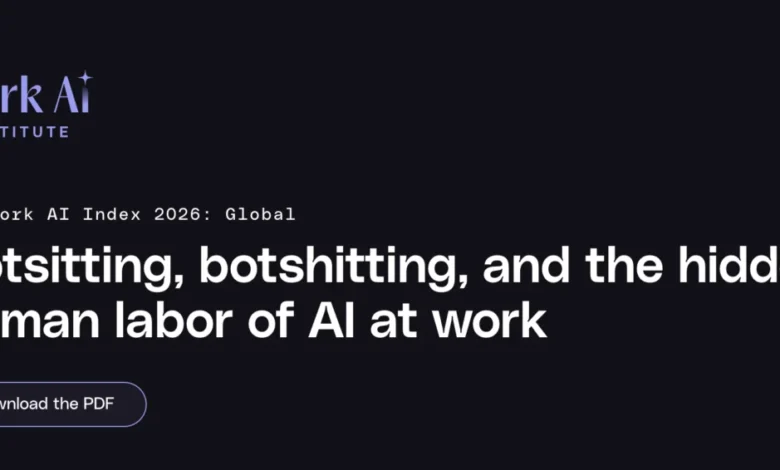
A recent survey of 6,000 digital workers has illuminated a striking paradox in the adoption of artificial intelligence in the workplace: while employees report that AI tools are saving them an average of 11 hours per week, a mere 13% of these individuals believe these same tools have led to any discernible improvement in overall company performance. This finding, emerging from an interview with Rebecca Hinds, head of the Work AI Institute, as reported by the Financial Times, suggests that the current wave of AI integration may not be the transformative solution many anticipate, but rather an exacerbation of pre-existing inefficiencies within the modern digital work environment.
The implications of this survey, conducted amidst significant anticipation and investment in AI technologies from major players like OpenAI and Anthropic, are substantial. With both companies reportedly eyeing initial public offerings (IPOs) in the near future, this data challenges the narrative of AI as an immediate and universal performance enhancer. Instead, it points towards a more complex reality where the perceived time savings might be masking deeper systemic issues that AI, in its current application, is failing to address or even amplifying.
The Paradox of AI Productivity: Time Saved, Performance Unchanged
Rebecca Hinds, in her discussion with the Financial Times, outlined three key reasons for this disconnect between individual time savings and organizational performance. While the specifics of these three reasons are not detailed in the initial report, their essence likely revolves around the nature of digital work itself and how AI is being deployed within it.
One plausible explanation for this phenomenon is the concept of "workplace theater," a term that describes activities and behaviors that create an illusion of productivity without contributing to actual output. In the context of AI, this could manifest as employees spending time learning new AI tools, prompting them effectively, or integrating their outputs into existing workflows, all of which might feel like progress but don’t necessarily translate to tangible business outcomes. This "pseudo-productivity," as it has been termed in earlier analyses of digital tools, could be amplified by AI.
Another contributing factor might be the focus on task automation rather than strategic enhancement. AI tools are often adept at automating repetitive or time-consuming tasks, such as data entry, summarizing documents, or drafting routine communications. While this undeniably frees up employee time, if these freed-up hours are not then reinvested in higher-value activities, strategic thinking, or innovation, the overall impact on company performance will be minimal. The saved time might simply be absorbed into more of the same, or into the very inefficiencies that plague modern work.
Furthermore, the integration of AI tools can introduce its own set of complexities. Employees might find themselves managing multiple AI platforms, troubleshooting their outputs, or adapting their communication and collaboration styles to accommodate AI-generated content. This can lead to a fragmentation of attention and an increase in context-switching, which, while seemingly addressed by AI, can paradoxically lead to a net decrease in deep work and focused productivity.
Echoes of the Past: AI as an Amplifier, Not a Revolution
The insights from the Work AI Institute survey resonate deeply with observations made by Cal Newport, author of the book Slow Productivity: The Accomplishment Without Burnout. Newport argues that the problems highlighted by the AI survey are not entirely new. He posits that earlier generations of digital tools – including email, Slack, video conferencing, and mobile computing – also created an illusion of efficiency while contributing to a fragmented and overwhelming work environment.
Newport’s thesis suggests that these tools, despite their promise of enhanced connectivity and speed, led to workers underestimating the cumulative time lost to managing diverse devices, applications, and the constant barrage of notifications and task-switching. The modern digital worker often finds themselves toggling between numerous communication channels, applications, and projects, a phenomenon that AI, in its current implementation, may be inadvertently intensifying.
The "workplace theater" or "pseudo-productivity" that Newport identified in his earlier work appears to be a persistent feature of the digital age. AI, rather than fundamentally breaking this pattern, seems to be amplifying it. Employees may be diligently using AI to automate aspects of their work, but if the underlying structures and demands of their roles remain unchanged, the saved time might be absorbed into more superficial tasks or simply lead to an increased expectation of output without a corresponding increase in meaningful accomplishment.
The Silver Lining: AI’s Spotlight on Pre-existing Flaws
Despite the seemingly disheartening findings, Newport identifies a potential silver lining in this situation. The novelty and perceived power of AI are capturing the attention of business leaders and the broader public in a way that previous digital tools may not have. This heightened focus on AI’s impact on the workplace could serve as an unexpected catalyst for recognizing and addressing the long-standing inefficiencies that have plagued digital work for years.
As organizations grapple with making AI effective and demonstrably beneficial, they are being forced to scrutinize their workflows, communication strategies, and performance metrics more closely. This introspection, spurred by the AI revolution, might finally lead to a deeper understanding of what has been "broken" in the digital work environment for some time. The challenges of integrating AI effectively might push companies to move beyond superficial automation and towards a more fundamental reevaluation of how work is organized, prioritized, and measured.
Broader Implications and Future Outlook
The findings from the Work AI Institute survey and Newport’s analysis carry significant implications for the future of work and the trajectory of AI development and adoption.
For Businesses: Companies investing heavily in AI may need to shift their focus from simply deploying tools to strategically integrating them into reformed workflows. This requires a deeper understanding of organizational processes and a commitment to fostering environments where freed-up time can be channeled into high-value, strategic activities. A failure to do so risks continued investment in technologies that yield little tangible return in terms of performance.
For AI Developers: Companies like OpenAI and Anthropic, as they prepare for potential IPOs, face pressure to demonstrate not just technological prowess but also a clear path to delivering measurable business value. This survey suggests that the current market narrative might be overstating AI’s immediate impact on organizational performance. Future AI development may need to prioritize features that facilitate deeper strategic thinking, collaboration, and a more holistic improvement of work processes, rather than solely focusing on task automation.
For Employees: The survey highlights a potential disconnect between perceived individual gains and collective organizational success. Employees may need to be more critical of how they are utilizing AI tools, ensuring that saved time is directed towards meaningful contributions rather than simply filling the void of existing inefficiencies. Furthermore, advocating for systemic changes that allow for the productive use of AI-generated efficiencies will be crucial.
For the Future of Work: The current situation underscores that technology alone is rarely the sole determinant of productivity. The effectiveness of AI, like previous digital tools, is heavily dependent on the organizational structures, management practices, and cultural norms within which it operates. The current AI boom offers a critical opportunity to address the systemic issues that have long hindered true productivity in the digital age. By shining a harsh light on these pre-existing flaws, AI may ultimately be the catalyst for a more profound and sustainable transformation of how we work, moving beyond the illusion of busyness towards genuine accomplishment. The coming years will reveal whether businesses can leverage this moment of intense AI scrutiny to fundamentally repair the broken systems of digital work, or if they will merely apply a new layer of technology to an already flawed foundation.
Related posts: