The Dangers of the Holiday Slump and the Strategic Imperative for Sales Professionals


The period between late November and the first week of January represents one of the most volatile stretches in the annual business cycle for sales organizations. While many sectors view the holiday season as a time for operational wind-downs, data suggests that the lack of engagement during this window creates a systemic risk to first-quarter revenue. The phenomenon, often referred to by sales leadership as the holiday slump, is characterized by a significant decline in prospecting activity, the stagnation of late-stage pipeline deals, and a delayed realization of performance deficits that frequently do not manifest until the end of the first quarter.
Historical data on sales cycles indicates that the average B2B sales cycle ranges between 60 and 90 days. Consequently, the activities performed during the final quarter of the calendar year serve as the foundational pipeline for the subsequent year’s first quarter. When sales professionals reduce their activity levels in December, they inadvertently compromise their performance metrics for March and April. The correlation between reduced contact volume in December and lower conversion rates in the following spring has been documented by various sales performance research firms, noting that a three-week decline in prospecting often leads to a measurable decrease in qualified lead generation for the entire first quarter.
The Chronology of the Decline
The decline typically follows a predictable trajectory. During the week of Thanksgiving in the United States, there is an immediate shift in focus as corporate procurement cycles often experience a freeze or a significant slowdown due to staff leave. As December progresses, the influx of holiday-related corporate events and family obligations creates a distraction-heavy environment.
By the second week of December, the "ghosting" phase begins. Prospects who were previously engaged in late-stage negotiations frequently utilize the holiday season as a justification to defer contractual decisions until the new fiscal year. For the sales professional, this creates a false sense of security—a belief that these deals are merely "delayed" rather than at risk. By the third and fourth weeks of December, when office occupancy drops significantly, the lack of outbound prospecting activity results in a void in the pipeline. By the time business operations return to full capacity in January, the lack of new opportunities creates a "pipeline cliff," where the lack of late-stage deals leaves the salesperson with no revenue to close.
The Risk of Stalling Active Deals
A primary danger during the holiday season is the erosion of existing, active deals. Sales operations experts emphasize that when a deal remains in an idle state for more than 30 days, the probability of closure decreases significantly. During the holidays, the variables surrounding a deal are rarely static. Stakeholders may leave the organization, budgetary priorities are often reallocated during year-end financial audits, and competitor activity may increase as rivals attempt to capture market share from companies that have become complacent.
Market analysis shows that "locked-up" deals are particularly susceptible to shifting internal priorities. If a champion within a prospect organization becomes distracted or if the decision-making committee is decentralized during the holiday break, the momentum required to drive a signature often dissipates. Experts suggest that treating any deal scheduled to close in the new year as a "deferred" rather than "lost" opportunity is a common cognitive bias that leads to poor forecasting and missed targets.
Professional Standards for Maintaining Momentum
To mitigate these risks, high-performing sales organizations are increasingly adopting strict, non-negotiable activity frameworks that govern the holiday period. The transition from reactive to proactive management requires a disciplined approach to time-blocking and activity-based goal setting.
An audit of the pipeline is the first essential step in this framework. This process involves a critical reassessment of every opportunity currently in the funnel. Each deal must be evaluated based on its current stage, the primary decision-maker’s availability, and the specific hurdles that could arise during the holiday lull. By creating a granular action plan for these opportunities, sales professionals can distinguish between deals that are genuinely viable and those that are likely to stall, allowing for a more accurate assessment of the upcoming quarter’s potential revenue.
The Importance of Strategic Calendar Management
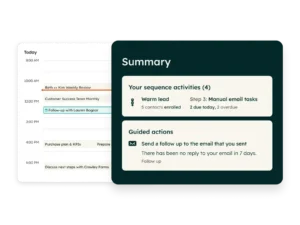
Effective calendar management during the final month of the year serves as a buffer against seasonal distractions. Many organizations advocate for "front-loading" the month of December. This strategy involves increasing the volume of outreach and follow-up activities during the first two weeks of the month, ensuring that the pipeline remains active even if the latter half of the month experiences a downturn in responsiveness.
Integrating both professional responsibilities and personal obligations into a unified calendar is critical to maintaining productivity. By delineating specific hours for high-value activities—such as prospect outreach, contract negotiation, and follow-up—sales professionals can ensure that their core duties are not neglected in favor of temporary distractions. This discipline is not synonymous with working excessive hours, but rather with optimizing the available time to ensure that no day passes without progress toward revenue targets.
Institutional Implications and Long-Term Performance
The broader implication of failing to maintain holiday discipline is the long-term impact on career trajectory. Data suggests that the primary driver for turnover in the sales profession during the first quarter is the lack of pipeline development from the preceding November and December. When a salesperson enters January without a robust pipeline, they are forced into a state of "reactive selling," where they prioritize low-quality, quick-fix opportunities to compensate for the lack of a healthy funnel. This often leads to a cycle of underperformance that can take an entire year to rectify.
Management and leadership teams often look at the holiday period as a stress test for individual contributor discipline. Reactions from sales leadership across various sectors suggest that the most successful professionals are those who operate with the assumption that the market does not close for the holidays. Even when decision-makers are unavailable, the preparation, research, and outreach conducted during this time serve as the engine for the first quarter.
Strategic Planning for the First Quarter
The most effective approach to the upcoming year involves finalizing the first-quarter strategy well before the end of the calendar year. This includes setting specific revenue targets, identifying the necessary lead volume to achieve those targets, and establishing a clear timeline for outreach. By finalizing these plans in November, high-performing individuals eliminate the need for administrative "ramp-up" time during the first week of January.
The "one more call" philosophy remains a cornerstone of successful sales discipline. In an environment where peers are scaling back, the marginal gain of additional, persistent activity creates a competitive advantage. This approach is not merely about volume; it is about the mental fortitude required to maintain professional standards when the external environment encourages passivity.
The conclusion drawn by industry analysts is clear: the holiday season is not a dormant period, but rather a unique window of opportunity for those willing to maintain their focus. The distinction between those who begin the year with a significant pipeline and those who begin the year in a deficit is almost entirely determined by the choices made during the final weeks of the year. By conducting thorough audits, blocking time for high-value tasks, and maintaining a commitment to activity-based targets, sales professionals can insulate themselves from the seasonal slump and ensure that their momentum carries seamlessly into the new year.