Informatica and Microsoft deepen strategic partnership at Ignite 2026 to integrate enterprise data intelligence into the Microsoft AI ecosystem

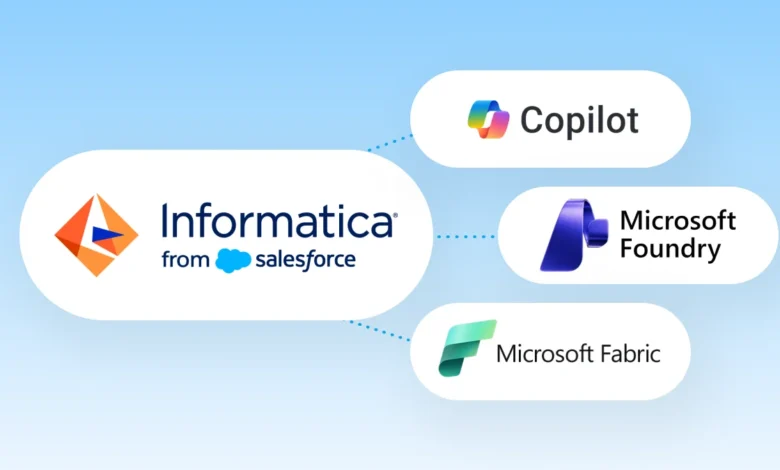
The rapid maturation of artificial intelligence within the corporate sector has shifted the industry narrative from the mere deployment of Large Language Models (LLMs) to the functional necessity of agentic AI—systems capable of performing complex, multi-step business tasks. At the Microsoft Ignite 2026 conference, Informatica, a global leader in AI-powered enterprise cloud data management, announced a significant expansion of its collaboration with Microsoft. This initiative aims to bridge the critical gap between raw data availability and AI readiness by embedding Informatica’s enterprise data intelligence directly into Microsoft Copilot, Microsoft Foundry, and Microsoft Fabric.
The Strategic Imperative: Bridging the Governance Gap
The impetus for this deepened integration stems from a sobering reality identified in the Deloitte 2026 State of AI in the Enterprise report. While 85% of surveyed organizations are actively moving to customize AI agents to address specific business needs, only 21% possess the mature governance models required to ensure those agents act on accurate, compliant, and trustworthy data.
In an enterprise environment, an AI agent is only as effective as the context it is provided. Without an understanding of business glossaries, data lineage, quality indicators, and access policies, agents risk generating hallucinations or making decisions based on outdated or sensitive information. Informatica’s integration serves as a “context layer,” providing the necessary metadata and governance guardrails that transform AI from a conversational assistant into an authoritative business partner.
Chronology of the Informatica-Microsoft Alliance
The relationship between Informatica and Microsoft has evolved through several critical milestones over the past three years, reflecting the broader transition from cloud migration to AI-first architectures:
- 2024: Foundational Integration: The initial partnership focused on accelerating data migration to the Azure cloud, utilizing Informatica’s Intelligent Data Management Cloud (IDMC) to simplify the move to Microsoft Fabric.
- Early 2026: Informatica World Breakthrough: Informatica introduced “Headless” Model Context Protocol (MCP) servers within the Microsoft Foundry environment, enabling developers to integrate governance services directly into their agent-building workflows.
- November 2026: Ignite Expansion: The current announcement marks the integration of these capabilities into the end-user Microsoft Copilot experience, alongside enhanced scanning capabilities for Microsoft Fabric pipelines.
Empowering the Business User via Microsoft Copilot
A primary focus of this expansion is the democratization of data intelligence. Historically, governance and data lineage tools were the domain of specialized data engineers and stewards. By integrating Informatica’s capabilities into Microsoft Copilot, business professionals—such as marketing managers, financial analysts, and supply chain leads—can now interact with data context using natural language.
For example, when a marketing manager utilizes Copilot to design a customer retention campaign, the integration allows the system to pull in real-time metadata. The manager can instantly ascertain whether a customer dataset is authoritative, view its provenance, check for PII (Personally Identifiable Information) compliance, and verify current data quality scores. This capability effectively removes the "black box" nature of AI, allowing users to move from querying information to understanding the validity and reliability of that information before deploying it in live business workflows.
Extending Technical Depth in Microsoft Foundry and Fabric
For the developer ecosystem, the integration provides a robust framework for building reliable AI agents. Microsoft Foundry serves as the orchestration layer for these agents, and by incorporating Informatica’s MCP servers, developers can standardize how agents fetch and process enterprise data.
The enhancements to Microsoft Fabric are equally significant. As organizations move toward unified analytics environments, the complexity of data movement and transformation increases. Informatica’s new scanning capabilities provide end-to-end visibility across notebooks and multi-step data pipelines. By capturing the lineage of data as it moves through Fabric, Informatica ensures that the intelligence fueling AI models is fully traceable, satisfying the stringent audit and compliance requirements of highly regulated industries such as finance and healthcare.
Global Expansion and Infrastructure Alignment
To support the increased demand for these integrated services, Informatica is expanding its geographic footprint on the Azure platform with a new U.S. East Coast point of delivery. This deployment is specifically designed to address the stringent data residency and cloud architecture requirements of large-scale enterprises.
By offering the full spectrum of its cloud data management portfolio—including master data management, quality services, and governance—on a regionalized Azure pod, Informatica allows organizations to align their AI deployments with local regulatory frameworks. Furthermore, the ability to apply 100% of the pre-tax amount of these purchases toward a Microsoft Azure Consumption Commitment (MACC) incentivizes enterprises to consolidate their AI and data management investments within the Microsoft ecosystem.
Industry Perspectives and Practical Applications
Early adopters of this integrated framework are already reporting tangible improvements in operational efficiency. Wescom Financial, a firm focused on streamlining the path from data to insight, has utilized the Informatica-Microsoft stack to resolve the friction between raw information and AI readiness. According to Desigan Reddi, Vice President of Enterprise Architecture and Innovation at Wescom, the ability to build an "AI-ready data layer" has allowed their teams to deploy autonomous systems with a significantly higher degree of confidence.
From the perspective of Microsoft leadership, the collaboration is viewed as a vital component of the “Microsoft IQ” vision—a shared intelligence layer that connects organizational data with operational context. Yitzhak Kessleman, Corporate Vice President of Microsoft IQ, emphasized that the synergy between Microsoft’s AI innovation and Informatica’s data management is essential for scalability. "By combining these capabilities, we are moving beyond the hype of AI toward a model where intelligence is grounded in the reality of the business," Kessleman noted.
Analysis: The Implications for Enterprise AI
The integration of Informatica’s data management into the Microsoft ecosystem highlights a broader trend: the "commoditization" of models and the "premiumization" of data. As LLMs become more widely available, the competitive advantage for enterprises will not stem from the underlying model architecture, but from the quality, accessibility, and governance of the data fed into those models.
- Trust as a Competitive Differentiator: Companies that adopt integrated governance will likely see faster AI adoption rates, as business stakeholders are more inclined to trust agents that provide transparent lineage and quality scores.
- Reduction in "Shadow AI": By providing a governed, enterprise-grade path for AI development within existing Microsoft tools, organizations can reduce the proliferation of "shadow AI"—unsanctioned or unmonitored AI projects that pose significant security and data privacy risks.
- Cross-Functional Alignment: The convergence of data management and AI tools breaks down the historical silos between the IT department and the business lines. When developers and marketers use the same "source of truth" provided by Informatica, the potential for misinterpretation of data metrics drops significantly.
Conclusion: The Future of the Agentic Enterprise
The partnership between Informatica and Microsoft signals a maturing phase in the AI lifecycle. The industry is moving away from experimental, siloed AI applications toward a unified, agentic enterprise where humans and machines work in concert. By grounding AI in the complexities of the business—through authoritative glossaries, lineage, and governance—this collaboration ensures that as organizations scale their AI initiatives, they do so with a foundation of trust.
As enterprises look toward 2027 and beyond, the success of their AI strategies will be determined by their ability to harmonize these technologies. With these latest innovations, Informatica and Microsoft have established a framework that not only supports current AI ambitions but also provides the infrastructure for the next generation of intelligent, automated, and—most importantly—governed business systems.
Related posts: