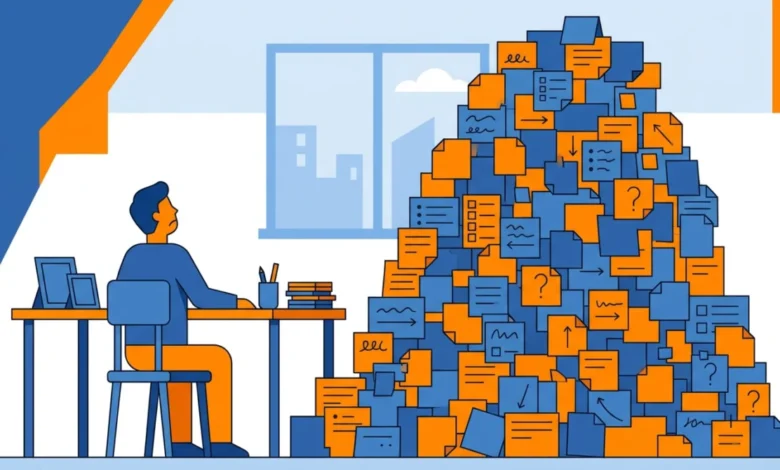
Digital information management has emerged as a significant bottleneck in modern professional productivity, as individuals and organizations grapple with an exponential increase in data intake. Recent observations from knowledge management experts suggest that the prevailing tendency to save documents without immediate categorization is creating a systemic "debt" of deferred decisions. This practice, while appearing to facilitate efficiency, frequently results in digital clutter that hinders retrieval, reduces organizational agility, and diminishes the utility of artificial intelligence tools in the workplace.
The challenge of information fragmentation is not merely a matter of personal organization; it is a structural issue. Industry data suggests that the average knowledge worker spends approximately 20% of their workweek searching for internal information or tracking down colleagues for help with tasks. This figure highlights the economic impact of poor digital hygiene. When information is scattered across disparate applications—ranging from messaging platforms and email clients to cloud-based document repositories—the cognitive load required to locate specific data points increases significantly, often leading to decision paralysis.
The Anatomy of Digital Clutter
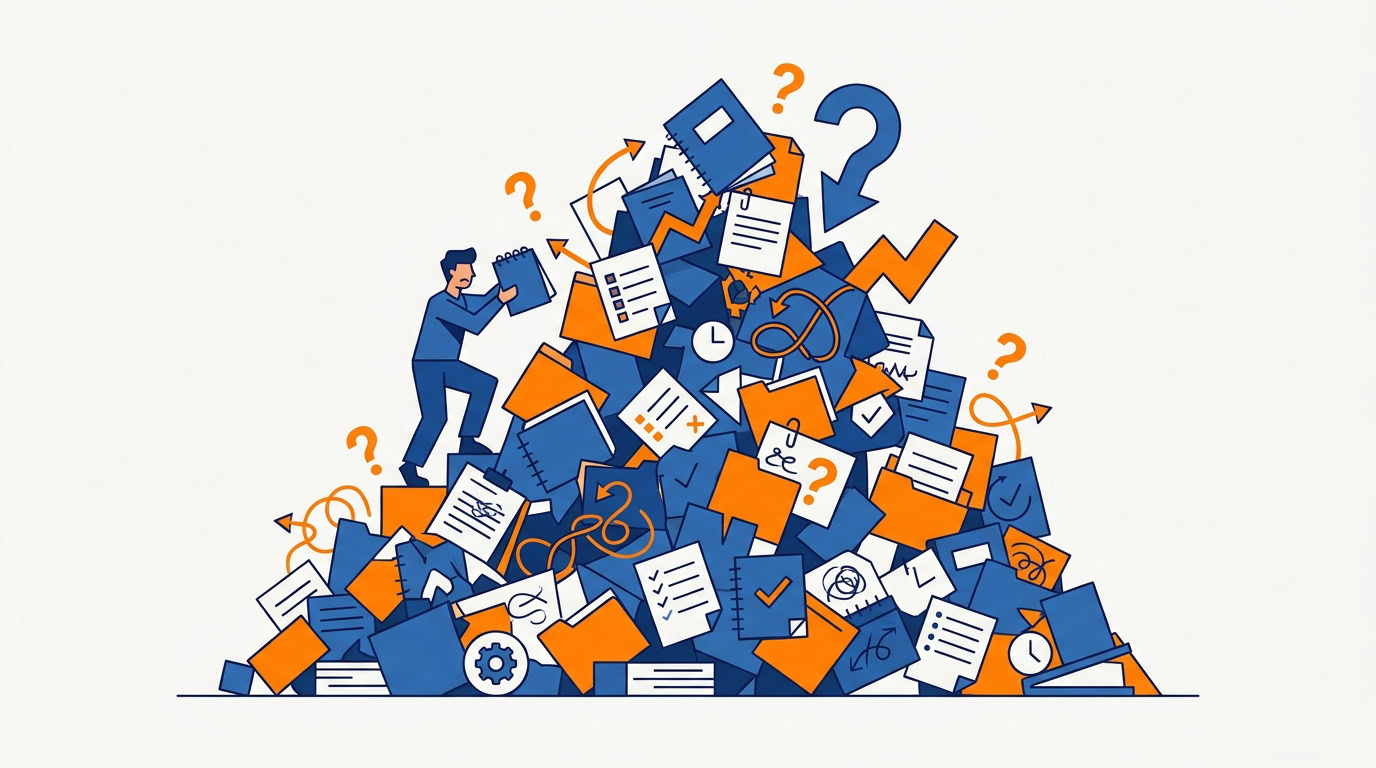
The phenomenon of digital hoarding is frequently rooted in a misunderstanding of what constitutes a "completed" task. Many professionals conflate the act of saving a file or screenshot with the act of processing information. In reality, saving is merely the first step in a workflow that requires systematic categorization to remain effective.
Experts in organizational behavior distinguish between "capture," "storage," and "retrieval." A common failure point occurs when individuals prioritize convenience during the capture phase—such as dumping a screenshot into a convenient folder or chat window—without establishing a standardized protocol for where that information should reside long-term. This creates a reliance on search functions, which, while powerful, are not a substitute for a structured knowledge base. As organizations move toward AI-integrated workflows, the quality of these answers depends entirely on the underlying architecture of the stored data. If the data is poorly categorized, AI assistants tasked with synthesizing information will struggle to produce accurate or actionable insights.
Chronology of a Failed Workflow
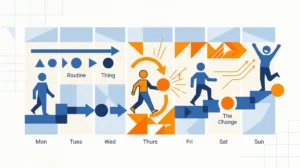
The lifecycle of an average piece of professional data—such as a meeting transcript or an email thread—often follows a predictable, inefficient trajectory. Initially, the information is generated during a collaborative session. In a disorganized system, this data is captured in a fragmented manner: a voice note on one device, a transcript in a third-party app, and follow-up action items in an email client.
One week later, a professional attempts to retrieve this information to inform a decision. Because the data was never moved to a centralized, "trusted" location, the user is forced to engage in a guessing game, navigating multiple platforms to locate a single fact. This search process is not only time-consuming but also prone to error, as the user may retrieve outdated versions of the document or miss critical context stored in a different application.
A Minimalist Framework for Information Management
To mitigate these inefficiencies, some management consultants advocate for a simplified, four-folder structural model designed to clarify the purpose of stored information. By segregating data into "Inbox," "Now," "Library," and "Done," users can eliminate ambiguity regarding the status of any given file.
- Inbox: This serves as the universal repository for all incoming information. It acts as a temporary holding area that prevents the immediate dispersion of data across multiple platforms.
- Now: This folder contains active projects. It is reserved for information currently requiring daily attention and immediate action.
- Library: This acts as the long-term reference system. Items move here once they are no longer part of an active project but retain future value.
- Done: This is the archival layer for completed work. Separating "Done" from "Library" allows for better data ranking, as completed projects often serve as the most relevant blueprints for future tasks.
This structure does not demand complex taxonomy or advanced software. Instead, it relies on the discipline of the weekly review. By scheduling a recurring, dedicated block of time to sort the "Inbox" and redistribute items into the other three categories, professionals can ensure that their digital environment remains a functional asset rather than a growing liability.
Technological Implications and AI Integration
The integration of artificial intelligence into personal knowledge management has fundamentally changed the requirements for data storage. Previously, manual filing was the only way to ensure retrieval. Today, AI can assist in the retrieval process, but it requires a clean, structured dataset to function optimally.
A significant finding in current productivity research is that AI-assisted workflows are most effective when the AI is granted access to a "trusted" repository. When a team utilizes a shared knowledge base—where sources are connected and unified—an AI assistant can effectively synthesize information across multiple touchpoints. However, this relies on the fundamental premise that the information was properly captured and categorized in the first place.
If an organization attempts to layer AI on top of a fragmented, disorganized data pool, the results are often unreliable. This is often referred to as "garbage in, garbage out." Organizations are increasingly recognizing that before they can leverage generative AI for decision support, they must first implement rigorous data governance protocols at the individual level.
Broader Impact on Team Performance
The implications of these organizational strategies extend beyond individual performance to team-wide operations. In environments where team members use competing systems, collaborative efforts often suffer from "information siloing." For example, if one team member uses a specific app for meeting notes while another uses a different platform for project management, the team lacks a "single source of truth."
To resolve this, teams are advised to pilot shared retrieval workflows centered around specific, recurring questions. Rather than attempting a complete organizational overhaul, which can be disruptive and met with resistance, teams should identify one common point of friction—such as the need to frequently reference historical project data—and build a centralized, shared repository for that specific category. This demonstrates the value of the system in real-time and provides a scalable model for broader implementation.
Analytical Assessment: The Cost of Inaction
The costs associated with failing to organize digital information are twofold: direct and indirect. The direct costs include the hours lost to information retrieval and the duplication of work. The indirect costs are harder to quantify but arguably more damaging: the decline in team morale when workflows are constantly interrupted, and the lost opportunity to use data as a competitive advantage.
Analysis of productivity workflows indicates that the most successful systems are those that separate the act of "capture" from the act of "organization." When a user tries to file, tag, and organize every piece of information the moment it arrives, they are frequently interrupted, leading to a loss of focus. By decoupling these two activities—designating a single, "easy" capture point for immediate use and a separate, intentional session for organization—individuals can achieve a higher degree of consistency.
Strategic Recommendations
For organizations and individuals seeking to improve their information management, the path forward is not found in the acquisition of new, more complex software. Instead, it is found in the refinement of existing processes.
- Define the "Trusted Destination": Establish a single location where all important information must eventually land. Ensure that multiple entry points (email, voice, screenshots) feed into this central location.
- Implement the Weekly Review: Adopt a non-negotiable weekly habit of processing the "Inbox." This prevents the accumulation of digital clutter and ensures that files are placed into the appropriate category.
- Focus on the "Three Jobs": If the system feels unmanageable, isolate which of the three jobs—capture, store, or ask—is currently failing. Fix that specific component rather than abandoning the entire system.
- Prioritize Action over Archival: The goal of a knowledge base is not merely to store information, but to facilitate action. Regularly test the system by attempting to answer a real work question using stored data. If the answer cannot be retrieved, the organization of that data is insufficient.
Ultimately, the digital landscape is moving toward a model where the ability to manage information is as critical as the ability to generate it. By viewing digital notes as a series of pending decisions, professionals can transform their chaotic data piles into a structured, responsive, and highly effective knowledge engine. The transition from a passive collector of information to an active manager of knowledge is a necessary evolution for success in an increasingly data-saturated economy.