The Strategic Dichotomy: Mastering the Front Stage and Backstage Framework for Organizational Scalability


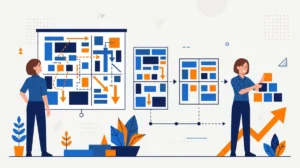
The modern professional landscape is increasingly defined by a critical distinction between high-visibility performance and the foundational operations that sustain it. This operational model, often referred to as the Front Stage versus Backstage framework, serves as a structural blueprint for professionals and enterprises attempting to transition from individual contributor roles to scalable, growth-oriented entities. While the "front stage" represents the client-facing, high-value output that generates revenue and reputation, the "backstage" encompasses the administrative, technical, and logistical support required to maintain that performance.
The Origins of the Front Stage and Backstage Framework
The conceptualization of work as a theatrical production dates back to sociological studies by Erving Goffman in the 1950s, though its application in modern business productivity has evolved significantly. In the current context, the front stage is defined by its visibility to the audience—the client, the reader, or the dinner party guest. It is the moment of interaction where value is delivered. Conversely, the backstage includes the granular, often invisible tasks: research, data architecture, logistical scheduling, and administrative upkeep.
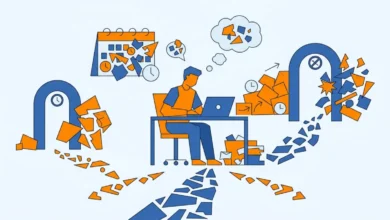
The fundamental premise of this framework is that front-stage excellence is entirely dependent on backstage stability. However, the two domains require disparate skill sets and cognitive focuses. Empirical evidence in organizational behavior suggests that individuals who attempt to oscillate between these roles simultaneously often face "context switching" costs, which research from the American Psychological Association indicates can reduce productivity by as much as 40%.
Chronology of Operational Evolution
For many entrepreneurs and high-output professionals, the journey begins in a state of total integration. In the early stages of a project or business venture, an individual often acts as the "entire staff." This involves a sequential timeline:
- The Inception Phase: The individual is responsible for client acquisition (front stage) and technical execution (backstage).
- The Friction Phase: As volume increases, the cognitive load of balancing high-level relationship management with granular technical execution leads to diminishing returns in quality.
- The Delegation Threshold: This is the critical juncture where the professional must identify their "Natural Split." By delegating or automating the backstage functions, the professional reallocates their limited bandwidth to the front stage, where their specific strengths—such as scoping, strategy, or relationship building—are most impactful.
This transition is rarely instantaneous. It requires a systematic audit of daily tasks to determine which functions are "core" (revenue-generating performance) and which are "support" (foundational maintenance).
Data-Driven Implications for Professional Performance
The transition from a generalist model to a specialized, split-focus model has clear implications for organizational output. According to productivity studies regarding labor specialization, the transition from managing both front and back stages to focusing exclusively on the front stage can increase output efficiency by approximately 20% to 30%.
The role of technology, particularly Artificial Intelligence, has fundamentally altered this landscape. Historically, backstage work was handled by human assistants or junior employees. Today, AI agents are increasingly assuming responsibility for technical, repetitive tasks. Data indicates that AI-driven automation in administrative workflows can reduce the time spent on backstage operations by an average of 15 to 20 hours per week for high-level executives. This shift allows the human worker to occupy the role of the "orchestrator" or "generalist"—someone who directs the specialized tools to achieve a front-stage result.
The Role of Coaching and External Feedback
One of the most overlooked aspects of the backstage environment is the "blind spot" phenomenon. Professionals often operate within their own processes, making it difficult to assess the quality of their own preparation. This is where external feedback mechanisms, such as professional coaching, provide measurable value.

In the context of writing and content creation, for example, authors who utilize an editorial coach report a faster trajectory toward stylistic improvement compared to those who rely solely on self-review. The coach functions as an external observer who can "read the label" of the process while the author remains "inside the jar." This relationship mirrors the structure found in elite athletics, where the performance on the field is the culmination of thousands of hours of backstage technical instruction.
The Emergence of the "Generalist-Orchestrator"
As AI assumes more of the specialized technical tasks, the labor market is witnessing a shift in the value proposition of the generalist. The generalist is no longer defined by a lack of specialization, but by their capacity to bridge the gap between human-centric vision and machine-centric execution.
Industry experts observe that individuals who can connect high-level strategy to complex backend operations hold a distinct competitive advantage. For instance, an operations expert with a background in digital marketing is uniquely positioned to understand both the customer-facing performance and the underlying analytics infrastructure. This hybrid capability ensures that the vision set by the front-stage strategist is technically feasible and properly executed by the backstage infrastructure.
Practical Implementation: The Two-List Method
To initiate the transition toward a more efficient operational structure, professionals are encouraged to perform a "split-audit" of their current responsibilities. This method involves a straightforward procedural step:
- The Task Audit: Document every task performed over a standard 48-hour period.
- The Bifurcation: Draw a line down the middle of the list. On the left, place tasks that directly affect the end-user or client experience (front stage). On the right, place tasks that support the infrastructure (backstage).
- The Strategic Selection: Identify one high-volume, low-leverage task on the right side of the list.
- The Resolution: Apply one of three actions:
- Automate: Use software or AI to handle the process.
- Delegate: Transfer the responsibility to a human team member or contractor.
- Outsource: Engage a specialist whose primary focus is that specific backend function.
By moving one task at a time, the professional mitigates the risk of operational disruption while incrementally increasing the time available for high-value performance.
Analysis of Organizational Scalability
The implications of this framework extend beyond personal productivity and into the core of corporate strategy. Organizations that fail to distinguish between front-stage and backstage work often fall into the "implementation trap," where leadership becomes so entangled in the technical details of execution that they lose sight of the client relationship and strategic direction.
A study by the Harvard Business Review on executive time management found that leaders who successfully offloaded operational tasks to competent systems or staff reported higher levels of innovation and organizational growth. The "natural split" allows for a feedback loop where the front-stage professional receives immediate, high-quality output from the backstage, which in turn informs the next iteration of the strategy.
Conclusion
The distinction between the performance and the prep is not merely an exercise in time management; it is a fundamental shift in how value is created. By identifying the core strengths that define one’s front-stage performance and aggressively delegating or automating the supporting backstage work, professionals can achieve a higher level of output. As AI tools continue to mature, the capacity for individuals to act as bridge-builders between technical systems and human outcomes will become the definitive skill of the modern era. The process of scaling, therefore, is not about working harder, but about creating the structural clarity required to excel in the lane that matters most.