The initial narrative surrounding Artificial Intelligence and its impact on the workforce was one of stark automation. Leading figures in the AI industry frequently drew parallels to the Industrial Revolution, positing that just as machines mechanized manual labor, AI would inevitably render jobs requiring cognitive skills obsolete. Dario Amodei, CEO of Anthropic, a prominent AI safety and research company, was a vocal proponent of this perspective, suggesting on multiple occasions that AI-powered tools would automate a significant portion of entry-level white-collar positions. He famously predicted that Anthropic’s AI could "automate half of entry-level white-collar jobs." Similarly, Mustafa Suleyman, CEO of Microsoft AI, echoed this sentiment in February, forecasting that AI would achieve "human-level performance on most if not all professional tasks" within the ensuing twelve to eighteen months. These pronouncements painted a picture of an impending "jobs apocalypse" for a substantial segment of the professional class.
However, a noticeable shift in rhetoric has begun to emerge from these same industry leaders. The once-confident predictions of widespread job displacement are being tempered, replaced by more nuanced discussions about AI’s role in augmenting rather than replacing human workers. This evolution in discourse suggests a growing recognition of the complexities involved in integrating advanced AI into the existing economic and social fabric.
A Shift in the Narrative: From Apocalypse to Augmentation
This recalibration of the AI job market narrative was recently highlighted during a conference in Australia, where Sam Altman, CEO of OpenAI, expressed a willingness to be proven wrong about the extent of AI’s disruptive impact on employment. Altman stated he was "delighted" to be incorrect about AI leading to a "jobs apocalypse." This statement marks a significant departure from earlier, more alarmist forecasts.
Concurrent with Altman’s remarks, Dario Amodei has also begun to refine his earlier predictions. He is now articulating a more intricate understanding of AI’s integration into the workplace, suggesting that AI will not necessarily replace entire jobs but rather automate substantial portions of existing roles. This implies a transformation of job responsibilities rather than outright elimination, where employees will leverage AI as a tool to enhance their productivity and modify their daily tasks.
This pivot from a purely automation-centric view to one of augmentation and transformation suggests a more sophisticated understanding of how AI is being adopted and its practical implications for the workforce. It acknowledges that the reality of AI’s impact may be more complex and less universally destructive than initially feared.
The "Hacking Together" Analogy: A High School Summer Job Perspective
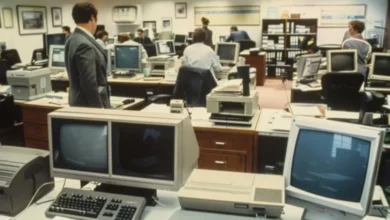
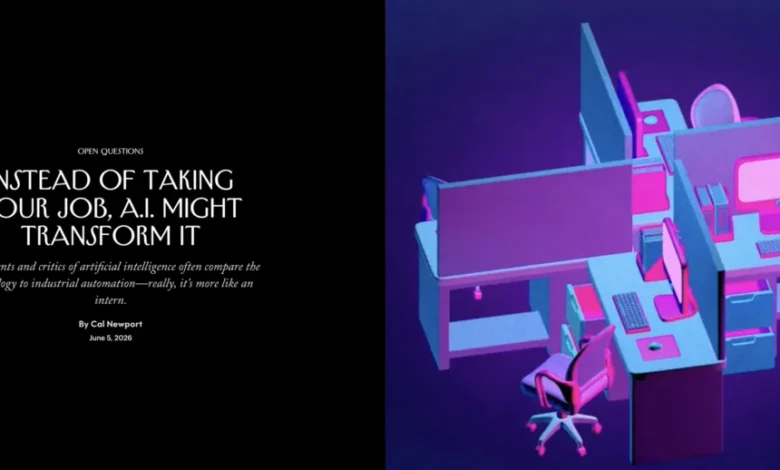
To understand this evolving perspective, it is insightful to consider an alternative analogy to industrial automation. In a recent article for The New Yorker, titled "Instead of Taking Your Job, A.I. Might Transform It," the author, Cal Newport, delves into this very question. Newport opens his exploration by recounting a personal experience from his high school years: a summer job programming custom web-based applications for internal use at a management consulting firm. These applications, while not polished software products, were functional solutions designed to address specific, albeit often tedious, problems within the company. Examples included a system for managing timesheets and another for tracking IT department inventory.
Newport’s high school role was characterized by its pragmatic, "hack-it-together" approach. The goal was not to build robust, scalable software, but to quickly devise functional tools that solved immediate pain points. This personal anecdote serves as a foundational metaphor for understanding how AI is currently being deployed in many real-world scenarios, particularly within small businesses.
AI in Small Businesses: A Modern-Day "Hacking" Approach
Further illuminating this theme, Newport describes interviews he conducted with several small business owners who were actively integrating AI into their operations. He sought to understand the precise ways they were leveraging this technology. His findings revealed a striking parallel to his high school experience. These business owners were not using AI for grand-scale automation of entire job functions; instead, they were employing AI to "hack together" quick, often bespoke, tools to streamline various aspects of their businesses.
This observed deployment pattern suggests that AI is being utilized in a manner akin to a highly advanced toolkit, enabling individuals and small teams to rapidly develop custom solutions for specific operational challenges. This approach contrasts sharply with the industrial automation model, where a single machine could replace numerous workers performing a repetitive task.
As Newport articulated in his New Yorker piece: "These examples were not the digital equivalent of a power loom, making large numbers of human jobs superfluous. Turns out, A.I. was assisting these small businesses in roughly the same way that my teen-age self had helped that consulting company—by hacking together whatever was useful."
The "Freestyle Work" Phenomenon and Broader Implications
This notion of AI as a powerful, yet adaptable, tool aligns with the emergence of what some are beginning to term "freestyle work." This concept describes a work environment where individuals, empowered by AI tools, have greater autonomy to define their tasks, manage their workflows, and pursue projects that leverage their unique skills and interests. Instead of being rigidly assigned tasks, employees can utilize AI to identify opportunities, generate initial drafts, conduct research, and perform complex analyses, freeing them to focus on higher-level strategic thinking, creative problem-solving, and interpersonal collaboration.
The implications of this shift are significant. Rather than a widespread elimination of jobs, the current trajectory suggests a recalibration of the labor market. This could lead to:
- Increased Productivity: By offloading repetitive or time-consuming tasks to AI, professionals can dedicate more time to complex problem-solving, innovation, and strategic initiatives, potentially leading to significant productivity gains across industries.
- Job Evolution, Not Elimination: Many roles may not disappear but will fundamentally change. Employees will need to adapt by learning to effectively utilize AI tools, developing new skill sets focused on prompt engineering, AI oversight, and critical evaluation of AI-generated outputs.
- Emergence of New Roles: As AI becomes more integrated, new job categories will likely emerge. These could include AI trainers, AI ethicists, AI integration specialists, and roles focused on managing human-AI collaboration.
- Potential for Greater Job Satisfaction: By automating mundane tasks, AI could free up workers to engage in more fulfilling and intellectually stimulating aspects of their jobs, potentially leading to increased job satisfaction and reduced burnout.
- The "Jevons Paradox" Consideration: While not explicitly a job displacement scenario, there’s a potential for increased efficiency to lead to increased demand, a phenomenon known as the Jevons Paradox. If AI makes certain tasks so efficient that the cost of performing them drops dramatically, it could spur greater use of these services, potentially creating new demand and, consequently, new types of work, rather than simply reducing existing work. Dario Amodei himself has begun to discuss this paradox in relation to AI’s economic impact.
A Hopeful Outlook: Deeper Efforts, Not Hollowed-Out Workforces
Newport concludes his New Yorker piece on a cautiously optimistic note. He suggests that the current trajectory does not necessarily portend a dystopian future of a workforce decimated by AI. Reflecting on his own high school job, he posits that his contributions, while simple, did not render the consultants redundant. Instead, he believes his work likely enhanced their efforts, allowing them to concentrate on more impactful aspects of their consulting roles.
This perspective offers a counter-narrative to the widespread anxieties surrounding AI’s potential to destabilize the job market. It suggests that, at least in its current phase of adoption, AI is acting more as a sophisticated assistant, a powerful amplifier of human capability, rather than a wholesale replacement. The focus is shifting from the fear of AI taking jobs to the prospect of AI transforming them, leading to potentially deeper, more impactful work for human professionals.
For a comprehensive understanding of the practical applications of AI in contemporary businesses, including the emerging strategy of "freestyle work" and its implications, readers are encouraged to consult Cal Newport’s full article in The New Yorker. While the discourse around AI and employment continues to evolve, the current trend indicates that the impact on the knowledge sector is proving to be both more complex and less dire than the initial, stark predictions of automation might have suggested. The ongoing integration of AI promises not a workforce hollowed out by technology, but one potentially augmented, reshaped, and perhaps even invigorated by its capabilities.
Related posts: