Strategies for Navigating the Record-Breaking Black Friday and Cyber Monday 2026 Shopping Season

Black Friday and Cyber Monday, colloquially known as BFCM, have evolved from traditional post-Thanksgiving retail events into a global digital phenomenon that serves as the cornerstone of the annual fiscal year for thousands of businesses. As consumer expectations for deep discounting become the industry standard, brands face the dual challenge of cutting through the noise of a hyper-competitive market while maintaining profitability. With total online spending during the 2025 holiday season reaching an unprecedented $257.8 billion—and the National Retail Federation (NRF) projecting total 2026 holiday sales to exceed $1 trillion for the first time—the pressure on marketers to execute a high-performing strategy has never been greater. Black Friday 2026 is scheduled for November 27, followed by Cyber Monday on November 30.
The Shift Toward Early Holiday Shopping
Data from the 2026 NRF holiday survey indicates a fundamental shift in consumer behavior: approximately 43% of shoppers begin their holiday procurement before the month of November. This trend is driven by two primary factors: the desire to spread out household budgets over a longer period and the prevalence of early-bird promotions that retailers use to capture market share ahead of the traditional "doorbuster" frenzy.

However, despite the shift toward early spending, the Thanksgiving weekend remains the epicenter of retail activity, with 64% of consumers planning to conduct the bulk of their shopping during that four-day window. Retailers are consequently adopting a "staggered" approach, utilizing early October and November sales to prime the pump, while reserving their most aggressive offers for the final week of November.
Leveraging Media Partnerships and Affiliate Marketing
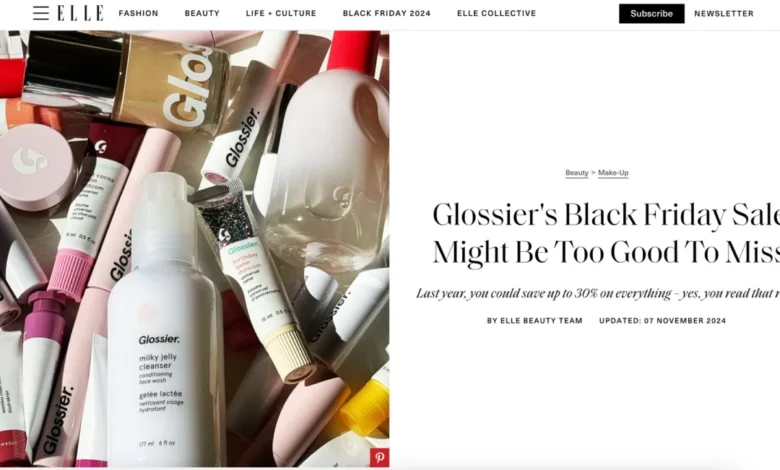
For modern brands, the visibility provided by lifestyle publications and niche news outlets is critical. Major digital media houses, including Women’s Health, Cosmopolitan, and Good Housekeeping, have institutionalized the "deal round-up" format. These outlets maintain dedicated editorial teams that spend weeks preparing affiliate-driven content designed to guide consumer purchasing decisions.
For businesses, engaging with these outlets is a strategic imperative. Securing a feature in a high-authority publication offers more than immediate sales; it provides high-quality backlinks that significantly enhance Search Engine Optimization (SEO) performance. By offering competitive commission rates through affiliate programs, brands can incentivize journalists to prioritize their products in highly visible holiday gift guides. This relationship-building process is long-term, ensuring that a brand remains on the radar for editorial staff when future opportunities for inclusion arise.

Brand Values as a Competitive Differentiator
While the majority of the market competes on price, a growing segment of brands is leveraging Black Friday to reinforce their core identity, often by taking a contrarian stance. This strategy acknowledges the "consumer fatigue" felt by many shoppers regarding the environmental and social impacts of over-consumption.
The REI "OptOutside" movement remains the gold standard for this approach. By closing its physical locations and encouraging employees to spend the day outdoors, the company successfully fostered deep brand loyalty, proving that a firm commitment to values can be more profitable than a standard 20% discount. Similarly, Patagonia’s iconic "Don’t Buy This Jacket" campaign, launched in the New York Times, challenged the very nature of Black Friday consumption, ultimately reinforcing their position as a leader in sustainable fashion.
Other brands, such as Lush and Allbirds, have successfully pivoted by using the day to support charitable causes. By donating 100% of proceeds from specific items to environmental or social organizations, these companies offer their customers a sense of purpose that transcends the transaction. These campaigns effectively turn Black Friday into a moral alignment event rather than a purely commercial one.

The Rise of Exclusivity and Invite-Only Sales
As the digital marketplace becomes saturated, some brands are opting for a strategy of exclusivity. By limiting access to sales via invite-only mechanisms or early-access codes for loyal subscribers, companies can cultivate a sense of scarcity and reward their most engaged customer segments. This approach mirrors the success of Amazon’s invite-only Prime Day deals.
From a logistical standpoint, this allows brands to manage inventory better and reduce the strain on fulfillment centers, which often face bottlenecks during the peak of Black Friday. By segmenting their mailing lists, companies can provide a more personalized experience, which typically results in higher conversion rates and stronger customer lifetime value (CLV).
The Efficacy of "Anti-Marketing" and Humorous Tactics
The "anti-Black Friday" approach, popularized by Cards Against Humanity, demonstrates the power of a distinct brand voice. By raising prices or selling "nothing" for a profit, the company successfully subverted the expectations of the holiday, generating massive earned media coverage. This strategy relies heavily on a pre-existing, cult-like following that appreciates irony.

Other brands have utilized "strategic mistakes"—such as seemingly accidental social media posts or leaked emails—to create buzz. While risky, these tactics can generate significant organic engagement. The key to the success of such campaigns is the follow-up; when handled with humor and transparency, they humanize the brand and create a relatable narrative that traditional, polished advertisements often lack.
The Power of User-Generated Content (UGC)
Social media platforms, particularly TikTok and Instagram, have become the primary battlegrounds for Black Friday visibility. Gen Z and Millennial shoppers favor authenticity over polished studio advertisements. Consequently, brands like BPerfect Cosmetics and Gymshark have seen high returns by prioritizing UGC.
By incentivizing followers to share content—through giveaways or featured spotlights—brands can amplify their reach without incurring the high costs of traditional production. TikTok’s algorithm, which favors genuine, engaging content, makes it an ideal platform for these campaigns. Partnering with influencers who provide "in-the-moment" product hauls allows brands to tap into established communities, converting casual viewers into buyers through social proof.

Live Shopping: The New Frontier of Conversion
Live streaming has emerged as a high-conversion sales channel. The MeUndies "Drawer Buster" event, which featured a live DJ and real-time deal reveals, demonstrated that interactive, live-streamed events can achieve conversion rates significantly higher than traditional static sales.
Modern live shopping on platforms like TikTok and Instagram Live allows brands to answer questions, show product details in real-time, and create a sense of urgency that static web pages cannot replicate. As we approach 2026, the integration of live shopping features into standard BFCM plans is becoming a necessity for brands targeting younger demographics.
Strategic Implications and Future Outlook
The retail landscape for 2026 suggests that while discounts remain the primary driver of traffic, the "how" of the execution is shifting. The most successful brands are those that treat the holiday season as an integrated marketing campaign that begins long before the traditional dates and extends well into the festive season.

With 62% of shoppers expecting to continue their holiday purchasing well into December, marketers should view Black Friday and Cyber Monday not as a conclusion, but as a critical starting point. By balancing aggressive promotional tactics with brand-building, value-driven initiatives, and social-first content strategies, businesses can secure their position in an increasingly crowded and competitive global marketplace. Whether through the lens of radical transparency, influencer partnerships, or exclusive loyalty events, the winners of the 2026 season will be those who adapt their tactics to match the evolving values and behaviors of the modern consumer.