Macy’s celebrates a century of tradition by shifting the spotlight from global icons to the architects of its own holiday legacy

For one hundred years, the Macy’s Thanksgiving Day Parade has served as the unofficial commencement of the American holiday season, a sprawling display of cultural synthesis that transforms the streets of New York City into a kinetic museum of popular imagination. As the retailer prepares for its centennial celebration, the organization is pivoting its narrative strategy. While the parade has historically prioritized the giant helium-filled avatars of third-party intellectual properties—ranging from cartoon protagonists to global pop-culture titans—the 100th anniversary marks a deliberate effort by Macy’s to reclaim the spotlight, anchoring the festivities in the institutional history and the human labor that have sustained the spectacle for a century.
A Century of Spectacle: Historical Chronology
The evolution of the Macy’s Thanksgiving Day Parade is a study in American cultural adaptation. The inaugural event took place in 1924, though it was originally branded as the "Macy’s Christmas Parade." Organized primarily by Macy’s employees, many of whom were first-generation immigrants, the parade was designed to mirror the festive celebrations of their home countries. The original procession featured live animals from the Central Park Zoo, including bears, elephants, and monkeys, accompanied by professional bands and store staff in ornate costumes.
The transition to the iconic balloon format began in 1927, necessitated by the logistical challenges and safety concerns posed by live animals. Tony Sarg, a puppeteer and marionette enthusiast, was commissioned to design the first inflatable characters, starting with a giant Felix the Cat. This innovation fundamentally altered the scale of the parade, allowing it to become a vertically oriented spectacle that could be viewed by the hundreds of thousands of spectators lining the New York City thoroughfares.
Throughout the mid-20th century, the parade solidified its role as a national broadcast staple. Following the advent of television, the event transcended its local New York origins, becoming a fixture of American domestic life. By the 1950s, the parade was synonymous with the Macy’s brand, reinforcing the department store’s status as a holiday destination. In the decades that followed, the parade transitioned into a sophisticated marketing machine, integrating licensed characters that reflected the dominant media trends of the era, from Snoopy and Bullwinkle to modern digital-native characters.
The 2025 Milestone and Strategic Rebranding
As the parade enters its second century, Macy’s is attempting to bridge the gap between its role as a commercial retailer and its identity as a cultural institution. The 2025 iteration of the parade is slated to feature 100 distinct inflatables, a record-breaking volume that signifies the sheer magnitude of the operation. However, the most significant change lies in the marketing collateral surrounding the event.
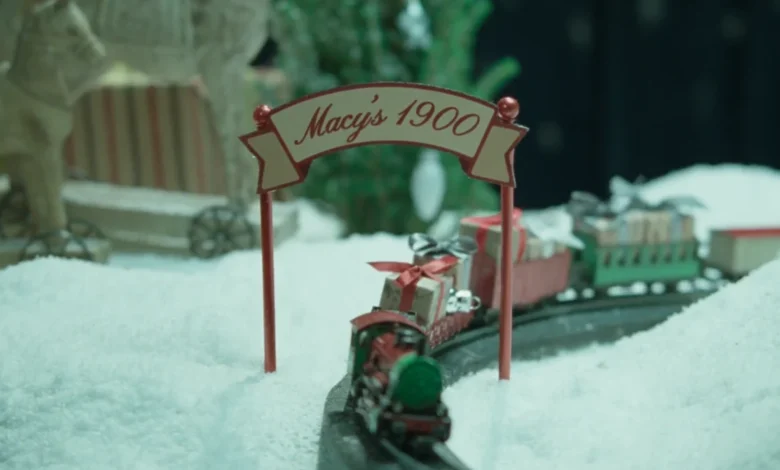
The centerpiece of this effort is a 90-second advertisement titled "What If," developed in partnership with the creative agency BBH USA. Unlike traditional promotional spots that focus on holiday retail sales or specific product lines, this campaign is a retrospective on the craftsmanship behind the parade. The film utilizes a blend of archival footage and modern cinematography to document the journey from the original 1920s puppet workshops to the high-tech design studios of the present day. By highlighting the employees—the artisans, the engineers, and the logistics managers—Macy’s is framing the parade not merely as a corporate marketing tool, but as a labor of love that represents the company’s internal culture.
Supporting Data and Audience Metrics
The scale of the Macy’s Thanksgiving Day Parade remains unparalleled in the landscape of American entertainment. Data from 2025 indicates that 35.7 million viewers tuned in for the live broadcast, securing its position as the most-watched entertainment program in the United States. This viewership figure highlights the resilience of linear television in an era of fragmented streaming audiences.
The economic footprint of the event is similarly vast. While Macy’s does not disclose the specific costs associated with parade production, industry analysts estimate that the annual staging of the event involves thousands of participants, including approximately 8,000 volunteers, balloon handlers, and performers. The logistical complexity involves coordination with the New York Police Department, the Department of Transportation, and various municipal agencies to manage a route that spans 2.5 miles. The parade’s ability to attract millions of viewers provides a unique advertising platform that the retailer has historically utilized to drive holiday retail performance, though the shift toward brand-centric storytelling suggests a move toward long-term brand equity over immediate transactional impact.
Professional Analysis: The Institutional Pivot
Industry experts suggest that Macy’s decision to emphasize its own history is a strategic response to the changing retail environment. As traditional brick-and-mortar department stores face increased pressure from e-commerce competitors, the necessity of cultivating a "brand moat"—an intangible set of values and history that competitors cannot replicate—has become paramount.
"Macy’s is moving away from the ‘rented attention’ model," notes an analyst specializing in retail marketing. "By focusing on the human stories behind the balloons, they are trying to cement their role as a custodian of American tradition rather than just a place to buy goods. In a digital world where loyalty is increasingly transient, heritage is one of the few defensible advantages left for a legacy retailer."
The focus on the "What If" campaign serves to humanize the massive, often faceless corporate entity. By highlighting the continuity of labor—the idea that the same spirit of curiosity and craft that existed in 1924 persists in the workshops of 2025—Macy’s is effectively attempting to insulate its brand identity against the volatility of the modern retail market.
Broader Impact and Industry Implications
The success of this strategy rests on the company’s ability to maintain the balance between nostalgia and innovation. The inclusion of 100 inflatables demonstrates that Macy’s is not abandoning the spectacles that drive modern viewership. Instead, it is using those spectacles as a backdrop for a more sophisticated corporate narrative.
From an industry perspective, the parade serves as a masterclass in experiential marketing. Other large-scale event holders, such as sports leagues or theme park operators, often struggle to translate the scale of their events into a narrative that resonates on a personal level. Macy’s appears to be successfully navigating this by focusing on the "maker" culture. By framing the parade as an engineering and artistic feat, they elevate the event from a parade of corporate mascots to an exhibition of human achievement.
Looking Toward the Next Century
As the 2025 parade concludes, the data gathered from the centennial broadcast will likely dictate the company’s marketing trajectory for the next decade. If the "What If" campaign succeeds in deepening audience connection, it is probable that Macy’s will continue to invest in this storytelling model, prioritizing its own historical narrative alongside the commercial obligations of its parade partners.
The challenge for Macy’s will be to remain relevant to younger demographics who may not share the same historical attachment to the parade as previous generations. The integration of modern technology in the balloon-making process, alongside the traditional emphasis on craftsmanship, suggests that the retailer is cognizant of this demographic shift. By positioning the parade as a living, evolving entity, Macy’s is attempting to ensure that the event remains as central to the American experience in its second century as it was in its first.
Ultimately, the 100th anniversary of the Macy’s Thanksgiving Day Parade is more than a milestone; it is a recalibration. By shifting the focus from the characters floating above the streets to the individuals on the ground, Macy’s is asserting its identity not as a landlord for other brands, but as the primary author of a holiday tradition that has shaped the cultural fabric of a nation. As the parade winds its way through Manhattan, the story being told is no longer just about the balloons—it is about the legacy of a company that, for better or worse, has spent a century defining the rhythm of the American holiday season.