Navigating the Transatlantic Divide: A Comprehensive Analysis of E-commerce Return Policies in the European Union and the United States

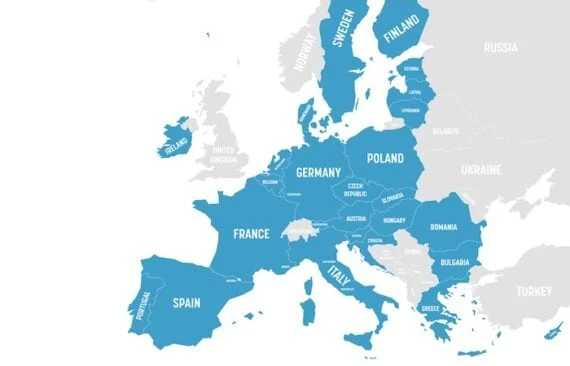
The landscape of global e-commerce is defined by a profound regulatory and operational schism between the European Union and the United States, particularly regarding how consumer returns are managed. As digital storefronts continue to transcend national borders, understanding the nuances between the E.U.’s statutory mandates and the U.S.’s market-driven flexibility has become a cornerstone of successful international retail strategy. While the E.U. prioritizes consumer protection through a harmonized legal framework, the U.S. relies on the invisible hand of competition, creating a complex environment for merchants who must navigate these disparate systems to maintain profitability and compliance.
The Statutory Foundation of European Consumer Rights
In the European Union, the "right of withdrawal" is not merely a courtesy extended by retailers but a fundamental legal entitlement. Governed primarily by the Consumer Rights Directive (2011/83/EU), which was adopted to harmonize consumer protection across member states, the law ensures that distance buying—including online, mail-order, and telephone sales—is subject to a mandatory 14-day "cooling-off" period.
Under this directive, consumers have the right to cancel their purchase for any reason within 14 days of receiving the goods. This window is designed to compensate for the fact that a buyer cannot physically inspect a product before the transaction is finalized. Once a consumer notifies a merchant of their intent to withdraw, the merchant is legally obligated to issue a refund within 14 days. However, the law provides a safeguard for businesses: merchants may withhold the refund until they have received the returned goods or have been provided with definitive proof of dispatch.
There are, however, specific exclusions to this right. Perishable goods, such as food or flowers, personalized items tailored to the consumer’s specifications, and unsealed software or hygiene-sensitive products (like earrings or certain garments) are typically exempt. Furthermore, if a merchant fails to adequately inform a customer of their right to withdrawal before the sale is completed, the withdrawal period can be extended by up to 12 months, creating a significant liability risk for non-compliant retailers.
The American Landscape: Market Competition Over Mandate
In stark contrast, the United States operates without a federal mandate governing return policies for e-commerce. The Federal Trade Commission (FTC) focuses primarily on preventing "unfair or deceptive acts or practices," but it does not require retailers to offer a right of return unless the product is defective or the merchant has breached a contract.
Consequently, the U.S. market is a patchwork of individual merchant policies. While some states, such as California and New York, have laws requiring retailers to clearly post their return policies—and in some cases, default to a 30-day return window if no policy is disclosed—the power remains largely in the hands of the business. This lack of federal oversight has fostered an environment where return policies are used as a competitive weapon.
The "Amazon Effect" has significantly influenced this landscape. By offering frictionless, often free, returns, Amazon has set a high bar for consumer expectations. To remain competitive, many U.S. retailers have adopted generous return windows, sometimes extending to 90 days or even a full year. However, because these policies are voluntary, U.S. merchants retain the right to impose restocking fees, refuse returns on "final sale" items, or issue store credit instead of cash refunds—options that are largely unavailable to E.U. merchants within the initial 14-day statutory window.
A Chronology of Regulatory Evolution
The divergence between these two regions is rooted in their respective histories of consumer protection. The E.U. began harmonizing its rules in the late 1990s with the Distance Selling Directive (97/7/EC), which laid the groundwork for the 2011 Consumer Rights Directive. The goal was to boost cross-border trade by ensuring that a consumer in France felt as protected buying from a German merchant as they did from a local one. In 2019, the E.U. further strengthened these protections with the "Omnibus Directive" (2019/2161), which increased transparency requirements for online marketplaces and introduced stiffer penalties for non-compliance.
In the U.S., the evolution has been driven by technology and logistics rather than legislation. The rise of Zappos in the early 2000s, which built its entire brand around free shipping and returns, shifted the paradigm. By 2015, "bracketing"—the practice of buying multiple sizes or colors of the same item with the intent of returning most of them—became a standard consumer behavior. Retailers have spent the last decade trying to manage the costs associated with this behavior, leading to the recent 2023-2024 trend of "returnless refunds" for low-value items and the introduction of "return fees" by major brands like Zara and H&M to curb logistics costs.
Statistical Analysis of Return Volumes and Economic Impact
The economic impact of returns is staggering and varies significantly by geography. According to the National Retail Federation (NRF), U.S. online return rates were estimated to hit 19.3% in 2025. This represents hundreds of billions of dollars in merchandise that must be processed through reverse logistics chains. In specific categories like apparel, the return rate in the U.S. can soar as high as 30% to 40%.

In the E.U., the data presents a more fragmented picture. Statista reports that approximately 7% of overall e-commerce revenue was returned in 2024. However, national cultures play a major role. Germany is often cited as the "return capital" of Europe, with 55% of online buyers returning at least one product annually. This is attributed to a long-standing tradition of "invoice-based" payments, where consumers only pay for what they keep after trying it on at home.
The financial burden extends beyond the lost sale. For E.U. merchants, the law requires the reimbursement of the original delivery cost (the standard shipping fee) if the entire order is returned. In the U.S., merchants are not required to refund original shipping costs unless the item was damaged, allowing them to retain a small portion of the transaction value to offset administrative costs.
Reverse Logistics and the Cost of "Diminished Value"
Across both regions, the hidden costs of returns are a major drain on profitability. Reverse logistics—the process of moving goods from the consumer back to the warehouse—is often two to three times more expensive than the original outbound delivery. This includes costs for inspection, cleaning, repackaging, and restocking.
In the E.U., merchants are permitted to reduce the refund amount if the returned product shows signs of "diminished value" resulting from handling beyond what is necessary to establish the nature and characteristics of the goods. However, enforcing this is notoriously difficult and often leads to disputes.
In the U.S., merchants have more flexibility to use "restocking fees" to cover these costs. A growing number of U.S. retailers have also begun utilizing third-party return hubs (such as Happy Returns or Kohl’s drop-off points for Amazon) to consolidate shipments and reduce the environmental and financial costs of individual parcel returns.
Strategic Implications for Global Expansion
For merchants looking to scale across both the E.U. and the U.S., a "one-size-fits-all" return policy is often a recipe for failure. Industry analysts suggest that businesses must bifurcate their strategies to align with local realities.
In the European Union, the priority is Compliance and Disclosure. Merchants must ensure that their terms and conditions are crystal clear regarding the 14-day window and who bears the cost of return shipping. Failure to disclose these details can result in the merchant being forced to pay for return shipping by default and facing extended withdrawal windows. Furthermore, E.U. merchants must integrate their payment gateways with their return workflows to ensure the 14-day refund deadline is met, as delays can lead to negative reviews and regulatory scrutiny.
In the United States, the priority is Optimization and Competitive Benchmarking. Since there is no legal floor, merchants must decide where they want to sit on the spectrum of "generosity." A high-end luxury brand might offer "white-glove" free returns to maintain a premium image, while a discount electronics retailer might implement a strict 15% restocking fee to protect thin margins. U.S. merchants are also increasingly using AI to predict return behavior at the point of sale, sometimes offering incentives to customers who choose "slower" shipping or "returnless" options.
Broader Impact: Sustainability and the Future of Returns
As the environmental cost of e-commerce comes under the microscope, the divergence in return policies is expected to widen further. The E.U. is currently moving toward a "Circular Economy Action Plan," which may eventually introduce regulations aimed at reducing the carbon footprint of returns. This could include mandates for more durable packaging or even restrictions on the destruction of unsold returned goods—a practice that has already been banned in France.
In the U.S., the push for sustainability is largely driven by corporate social responsibility (CSR) goals and consumer pressure rather than legislation. However, both regions are seeing a rise in the "secondary market" or "re-commerce." Companies are increasingly partnering with liquidation platforms to ensure that returned items are resold or recycled rather than sent to landfills.
Ultimately, while the legal frameworks of the E.U. and U.S. remain distinct, the operational challenges are converging. Rising fuel costs, labor shortages in warehouses, and a growing consumer awareness of the environmental impact of shipping are forcing retailers on both sides of the Atlantic to rethink the "free and easy" return model. Those who can balance the E.U.’s rigid legal requirements with the U.S.’s competitive demands—while maintaining a lean and sustainable reverse logistics operation—will be the ones who thrive in the next era of global e-commerce.