The Power of Words in Leadership Why Context-Driven Communication is Essential for Employee Well-being and Organizational Retention

The interpersonal dynamics between a manager and their direct reports have long been recognized as a cornerstone of organizational health, but recent research suggests the weight of this relationship is more profound than previously understood. According to a comprehensive study conducted by UKG, nearly 70% of employees report that their managers have as much of an impact on their mental well-being as their spouses or partners. This statistic underscores a critical reality in the modern workplace: the words a leader chooses can either fortify an employee’s sense of security or precipitate a cycle of anxiety, disengagement, and burnout.
When managers utilize ambiguous or "unnerving" language—whether intentionally or through a lack of communication training—they inadvertently trigger physiological stress responses in their staff. This lack of clarity often leads to "catastrophizing," a cognitive distortion where employees assume the worst possible outcome in the absence of information. To maintain high levels of productivity, morale, and engagement, leadership experts emphasize the necessity of replacing vague, anxiety-inducing phrases with context-rich, transparent dialogue.
The Evolution of Workplace Communication and Psychological Safety
The transition from the traditional command-and-control management style to a more empathetic, leadership-oriented approach has been decades in the making. In the mid-20th century, workplace communication was largely top-down and transactional. However, the shift toward a knowledge-based economy and the subsequent rise of remote and hybrid work models have necessitated a more nuanced understanding of "psychological safety"—a term coined by Harvard Business School professor Amy Edmondson.
Psychological safety refers to the belief that one will not be punished or humiliated for speaking up with ideas, questions, concerns, or mistakes. When a manager uses unnerving phrases, they erode this safety, causing employees to retreat into defensive postures. Annie Rosencrans, People and Culture Director at HiBob, notes that failing to provide context in initial messages causes unneeded stress to pile on, contributing significantly to miscommunication and a fractured workplace culture.
In the current labor market, where retention is a primary concern for HR departments globally, the cost of poor communication is high. Gallup’s 2023 "State of the Global Workplace" report indicates that low engagement costs the global economy approximately $8.8 trillion, or 9% of global GDP. Much of this disengagement stems from the quality of the manager-employee relationship.
Analysis of Nine Unnerving Phrases and Their Psychological Impact
To understand why certain common phrases are so detrimental, it is necessary to examine the psychological reactions they elicit and the strategic alternatives that can preserve trust.
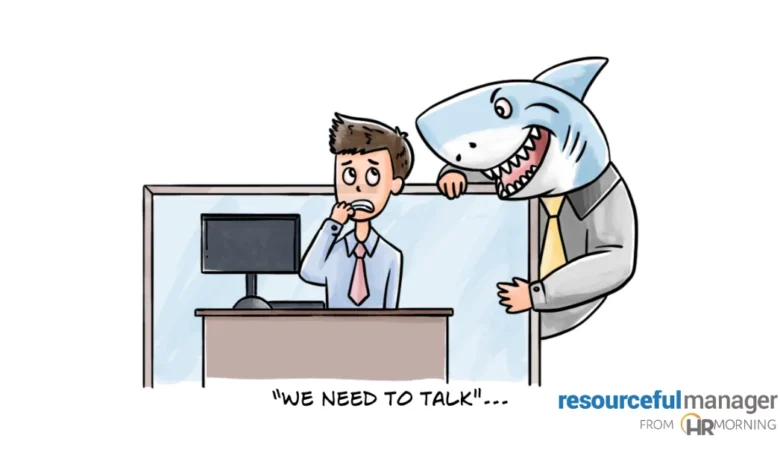
1. The Vague Ultimatum: "We Have to Talk"
Often cited as four of the most stressful words in the English language, this phrase lacks any indication of the conversation’s nature. Without context, the human brain’s "negativity bias" defaults to a survival mechanism, assuming that a reprimand or termination is imminent.
- The Reframing: Managers should always provide a subject and a timeframe. For example: "I’d like to discuss the progress of the Q3 report for 20 minutes this afternoon. Are you available at 2:00 PM?" This sets clear expectations and removes the element of surprise.
2. The Digital "Hey Hanger": "Hey…"
In the era of Slack, Microsoft Teams, and instant messaging, the "Hey" or "Hi" followed by a long silence—known as "Hey Hanging"—has become a major source of workplace anxiety. Rosencrans explains that sending a greeting without an immediate follow-up triggers a heightened feeling of anxiety as the employee waits for the "other shoe to drop."
- The Reframing: Complete the thought in the first message. "Hey Robert, I’m looking at the Simpson account and have a few questions about the timeline. Let’s sync up briefly when you have a moment."
3. The Time Miscalculation: "Got a Minute?"
This phrase is problematic because "a minute" is rarely 60 seconds. It is often a precursor to an unplanned task or a difficult conversation that disrupts the employee’s workflow and focus.
- The Reframing: Be realistic about the time commitment. "Vernon, I need about 15 minutes of your time to review the Anderson project. Can we meet now, or would later this morning work better for you?"
4. The Sudden Seclusion: "Can We Step into a Meeting Real Quick?"
Asking an employee to move to a private room without prior notice creates a "spectacle" in front of the team and suggests that the topic is too sensitive for the general workspace, often leading the employee to "sweat bullets" in anticipation.
- The Reframing: Use professional scheduling and provide a reason. "Dominique, I’ve received some feedback from the client that I’d like to review with you privately at 2:00 PM."
5. The Unprepared Spotlight: "Would You Be Able to Say a Few Words?"
Public speaking is a significant phobia for many. Putting an employee on the spot without preparation can lead to embarrassment and poor performance, as not everyone is comfortable speaking "off the cuff."
- The Reframing: Provide advance notice to allow for preparation. "Jean, for next week’s meeting, I’d love for you to give a 10-minute overview of how you’ve been using the new AI tools. Does that work for you?"
6. The Responsibility Dump: "You’re in Charge of…"
Sudden delegations without a discussion regarding resources, training, or bandwidth can lead to immediate panic and "imposter syndrome." Employees worry they lack the tools to succeed.
- The Reframing: Frame the new responsibility as a collaborative opportunity. "Based on your performance, I believe you’re ready to lead the X initiative. Is this a role you’re interested in taking on, and what support would you need from me?"
7. The Accusatory Inquiry: "What Were You Thinking?"
Even if a manager is genuinely curious about a thought process, this phrasing is inherently confrontational. It forces the employee into a defensive stance, making productive problem-solving nearly impossible.
- The Reframing: Focus on the process rather than the person. "I’d like to better understand the steps taken during this project. Can we walk through the workflow you followed to reach this conclusion?"
8. The Linguistic Negator: "That’s a Great Idea, But…"
The word "but" effectively erases everything said before it. When a manager uses this structure, the employee only hears the rejection of their idea, which stifles future creativity and contribution.
- The Reframing: Use the "Yes, And" approach. "That’s a great idea, and I’d like to see how we can integrate it into our existing budget constraints."
9. The Credibility Killer: "Let Me Be Honest"
Qualifying a statement with "to be honest" implies that previous communications may not have been entirely truthful. It creates a "trust deficit" that can be difficult to repair.
- The Reframing: Practice radical transparency consistently so that "honesty" is the default. "My observation of this situation is X, and my concern is Y. I’d like to hear your perspective on this."
Data-Driven Implications for Organizational Health
The impact of these communication shifts extends beyond individual well-being into measurable corporate metrics. According to a report by the American Psychological Association (APA), 71% of workers believe their employer is more concerned about the mental health of employees now than in the past. However, there remains a significant gap between corporate policy and daily managerial interaction.
When managers fail to communicate effectively:
- Retention Drops: Employees are 3.5 times more likely to leave a job if they feel their manager does not support their well-being.
- Healthcare Costs Rise: Workplace stress is estimated to contribute to more than $190 billion in annual healthcare costs in the United States alone.
- Innovation Stagnates: In environments where employees fear "what’s next," they are less likely to take the risks necessary for innovation.
Conclusion: Setting the Standard for Transparency
Effective leadership is not merely about the execution of strategy; it is about the stewardship of human capital. As the UKG study highlights, the manager’s role is as much about emotional intelligence as it is about operational oversight. By eliminating unnerving, context-free language, leaders can foster an environment of clarity and trust.
Clear communication is the bedrock of a positive work culture. It sets a standard for transparency and ensures that feedback is viewed as a tool for growth rather than a source of dread. As organizations continue to navigate the complexities of the modern labor market, those who prioritize the psychological impact of their words will likely see higher engagement, lower turnover, and a more resilient workforce. The mandate for managers is clear: provide context, respect time, and communicate with intentionality.
Related posts: