AI Steps Out of the Chat and Into the Physical World: Forrester Identifies Top 10 Emerging Technologies for 2026

The year 2026 marks a pivotal moment for artificial intelligence, transitioning from its pervasive digital presence within screens and workflows to a tangible impact on the physical world. This evolution is reflected in a surge of AI integration into robots, vehicles, and ambient experiences that transcend traditional apps and websites. Forrester’s annual analysis of emerging technologies underscores this significant shift, introducing a novel framework for understanding how these interconnected innovations will shape our future. The consultancy’s latest report, "Top 10 Emerging Technologies 2026," positions AI not just as a conversational tool, but as a fundamental force driving innovation across multiple sectors.
A New Framework for Understanding Technological Convergence
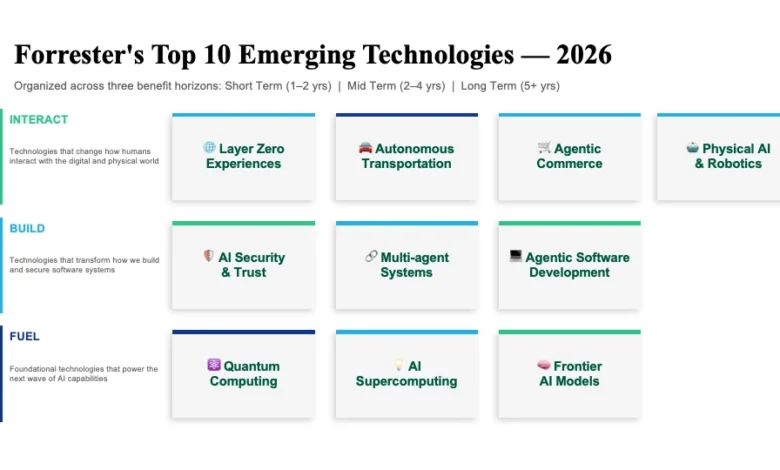
Forrester is urging its clients to reframe their understanding of these groundbreaking technologies through a tripartite lens: Interact, Build, and Fuel. This conceptual model provides a structured approach to grasping the complex interplay of emerging tech.
-
Interact encompasses technologies that directly engage with users and the environment, creating more intuitive and responsive experiences. This category includes advancements in human-computer interaction, augmented reality, and personalized digital assistants that move beyond reactive commands to proactive assistance. The focus here is on how users will experience and directly engage with AI-powered systems in their daily lives and professional settings.
-
Build refers to the foundational technologies that enable the creation and deployment of these new interactive experiences. This includes advancements in AI development platforms, low-code/no-code solutions, and sophisticated data management systems that allow for rapid prototyping and scaling of AI applications. It addresses the infrastructure and tools necessary to bring these innovations to life.
-
Fuel represents the underlying technological enablers that power the accelerating pace of innovation. This category is crucial, encompassing areas like advanced computing, sustainable energy solutions for data centers, and the ethical frameworks required to govern the responsible deployment of powerful AI systems. Without robust and ethical fueling mechanisms, the potential of interactive and build technologies remains constrained.
This structured approach is designed to help businesses and individuals anticipate and strategically leverage the coming wave of technological advancements, moving beyond a siloed view of individual technologies to a holistic understanding of their synergistic potential.
Key Technologies Shaping the 2026 Landscape
Forrester’s report highlights four key emerging technologies that encapsulate the transformative narrative of 2026. These technologies illustrate the tangible shift of AI from abstract algorithms to concrete applications that directly impact human interaction and the built environment.
1. Generative AI-Powered Physical Products: This represents a significant leap from text- or image-generation to the creation of physical objects. Imagine AI systems designing and even fabricating custom-fit prosthetics, personalized medical devices, or on-demand replacement parts for machinery. This technology leverages advanced simulation and material science, allowing for rapid iteration and customization at a scale previously unimaginable. The implications extend to manufacturing, healthcare, and even consumer goods, promising a future where products are not just manufactured, but intelligently designed and produced to meet specific needs. Early adoption is likely to be seen in specialized industrial applications and high-value medical devices, with potential for broader consumer applications as costs decrease and manufacturing processes become more streamlined.
2. Ambient AI Experiences: Moving beyond the confines of a screen, ambient AI aims to embed intelligence seamlessly into our surroundings. This could manifest as smart environments that anticipate needs, adjust lighting and temperature based on occupant presence and preferences, or provide contextual information without explicit requests. Think of meeting rooms that automatically configure for optimal audio and visual presentation, or retail spaces that offer personalized product recommendations as shoppers browse. This requires sophisticated sensor networks, advanced natural language understanding, and robust integration with existing infrastructure. The development of ambient AI is a testament to AI’s evolution from a tool to a pervasive environmental intelligence. Privacy concerns and the need for transparent data usage will be critical considerations as these experiences become more widespread.
3. AI-Augmented Robotics: The fusion of AI with robotics is accelerating the development of more intelligent, adaptable, and autonomous machines. Robots are no longer confined to repetitive tasks in controlled environments. With AI, they can perceive their surroundings, make complex decisions, and perform tasks in dynamic and unpredictable settings. This includes advancements in autonomous logistics, collaborative robots working alongside humans on assembly lines, and even robots capable of performing intricate surgical procedures. The increasing sophistication of AI algorithms for computer vision, reinforcement learning, and motion planning is driving this evolution. The impact on industries like warehousing, healthcare, and agriculture is expected to be profound, addressing labor shortages and enhancing efficiency.
4. Advanced Autonomous Systems: While self-driving cars are a prominent example, advanced autonomous systems extend far beyond transportation. This category encompasses AI-powered drones for infrastructure inspection, autonomous navigation systems for complex industrial environments, and intelligent agents capable of managing entire supply chains. The key lies in their ability to operate with minimal human intervention, leveraging sophisticated sensor fusion, predictive modeling, and real-time decision-making. The development of robust safety protocols and regulatory frameworks will be crucial for the widespread adoption of these systems, particularly in safety-critical applications. The economic implications are vast, promising increased productivity and new service models.
The Broader Arc: From Experience to Foundation
The entire spectrum of Forrester’s top 10 emerging technologies for 2026 tells a cohesive story. It moves from the immediate experiences users will encounter, through the systems that are built to deliver these experiences, and finally to the underlying foundations that fuel this accelerating future. This holistic view emphasizes that technological advancement is not a series of isolated breakthroughs but a deeply interconnected ecosystem.
In 2026, AI is not merely stepping further onto the main stage of information technology; it is fundamentally redefining it. Its migration from chat interfaces to every knowledge task signifies a paradigm shift in how we interact with information and technology. Furthermore, AI’s transition from the purely digital realm into tangible, physical manifestations – things we can see and touch – marks a new era of innovation. This transition is not without its challenges. Ethical considerations surrounding data privacy, algorithmic bias, and the societal impact of automation will require careful navigation. The development of robust governance frameworks and a commitment to responsible innovation will be paramount to harnessing the full potential of these technologies for the benefit of society.
Background and Context
Forrester’s annual emerging technologies list is a highly anticipated report within the technology and business strategy sectors. For years, the consultancy has been at the forefront of identifying and analyzing trends that will shape the future of business and consumer life. The 2026 report arrives at a time when generative AI has captured global attention, demonstrating remarkable capabilities in creative content generation and complex problem-solving. This surge in AI’s perceived utility has naturally led to speculation and investment in its broader applications.
The shift from "chat" to "physical world" integration is a logical progression. Early AI applications focused on processing and generating information within digital environments. As AI models become more sophisticated and computational power increases, the ability to interact with and influence the physical world becomes increasingly feasible. This is driven by advancements in areas such as robotics, computer vision, and sensor technology, all of which are becoming more affordable and accessible.
The timeline for this evolution has been accelerated by significant investments in AI research and development from both private companies and governments. The pandemic also played a role, highlighting the need for greater automation and resilience in supply chains and critical infrastructure, further spurring interest in AI-powered robotics and autonomous systems.
Supporting Data and Implications
While specific quantitative data for technologies in their nascent stages of physical integration is still emerging, industry forecasts offer compelling insights. The global robotics market, for instance, is projected to grow significantly. According to Statista, the market size for industrial and service robots is expected to reach hundreds of billions of dollars in the coming years. Similarly, the augmented reality market is also on a rapid growth trajectory, with projections indicating a substantial increase in adoption across various industries.
The implications of these emerging technologies are far-reaching:
- Economic Transformation: The automation of tasks, from manufacturing to customer service, will reshape labor markets. New jobs will emerge in areas like AI development, maintenance, and ethical oversight, while others may be displaced. Businesses that strategically adopt these technologies will likely gain a competitive advantage.
- Enhanced Quality of Life: In healthcare, AI-powered diagnostics and personalized treatments could lead to improved patient outcomes. In urban environments, ambient AI could create more efficient and comfortable living spaces. Autonomous systems could improve safety and accessibility in transportation.
- Ethical and Societal Challenges: The increased autonomy of AI systems raises critical questions about accountability, bias, and the potential for misuse. Ensuring equitable access to these technologies and mitigating their negative impacts will require proactive policy-making and public discourse.
- Environmental Sustainability: While AI can drive efficiency, its computational demands can be significant. The "Fuel" aspect of Forrester’s framework underscores the importance of developing sustainable computing infrastructure and energy-efficient AI models to minimize the environmental footprint of these advancements.
Reactions and Perspectives
While Forrester’s report is forward-looking, industry leaders and analysts are already discussing the implications. A hypothetical statement from a chief technology officer of a major manufacturing firm might read: "Forrester’s identification of AI-augmented robotics and generative AI for physical products aligns perfectly with our strategic roadmap. We are actively exploring how these technologies can revolutionize our production lines, enabling greater customization and efficiency. The key will be in integrating these advanced systems seamlessly with our existing infrastructure and ensuring our workforce is equipped with the necessary skills."
Conversely, a consumer advocacy group might voice concerns: "As AI becomes more embedded in our physical environment, the need for robust data privacy regulations and transparency becomes even more critical. We must ensure that ambient AI experiences do not lead to pervasive surveillance, and that generative AI for physical products is developed with safety and ethical considerations at its core."
Conclusion: Navigating the Future of Intelligence
The year 2026 promises a tangible manifestation of artificial intelligence, moving beyond the digital realm to reshape our physical world. Forrester’s "Top 10 Emerging Technologies 2026" report, with its framework of Interact, Build, and Fuel, provides a crucial lens through which to understand this complex evolution. As AI-powered robots navigate our factories, ambient intelligence enhances our environments, and generative AI designs the products of tomorrow, the integration of intelligence into the fabric of our lives will accelerate. Navigating this future successfully will require not only technological innovation but also a commitment to ethical development, responsible deployment, and thoughtful consideration of the societal impacts. The coming years will be defined by how effectively we harness this profound shift, ensuring that AI serves as a force for progress and human betterment.