Consumer sentiment has plunged to levels not seen in decades, with recent surveys painting a grim picture of widespread despair and media narratives consistently highlighting economic fragility. Yet, paradoxically, consumers are continuing to open their wallets, and corporate profits are robust. This divergence is not a temporary anomaly but the defining characteristic of what researchers are now calling the "pessimism economy."
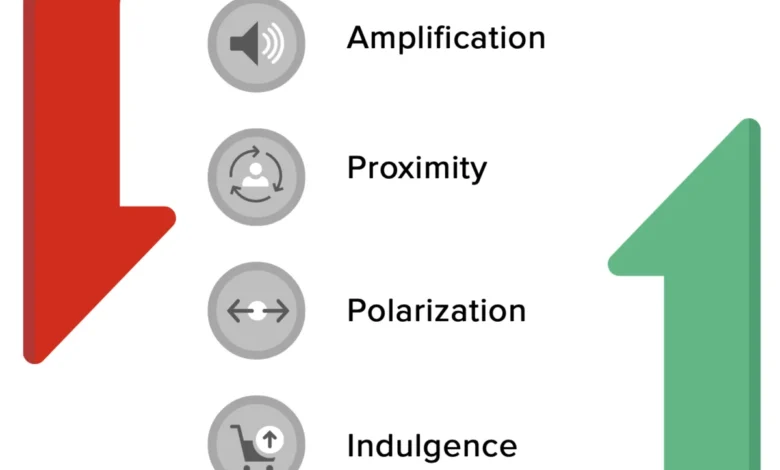
New research released by Forrester, titled "Down But Not Out: Growth Strategies For The Pessimism Economy," delves into the complex interplay of factors that sustain this uneasy equilibrium. The report identifies four key forces that, despite a prevailing mood of negativity, are propping up consumer spending and corporate success. This phenomenon challenges traditional economic assumptions where consumer confidence is seen as a direct predictor of spending behavior.
The Amplification of Bad News
One of the most significant drivers of the pessimism economy is the amplified dissemination of negative economic news. Economic downturns, inflation fears, and geopolitical instability now travel faster, farther, and with greater certainty than positive economic developments. This effect has been particularly supercharged in the post-pandemic era, a period marked by unprecedented volatility. Consumers are inundated with a constant stream of alarming headlines, from persistent inflation concerns and recession warnings to international conflicts. This barrage of negativity often leads to a disconnect between consumer sentiment and the underlying economic fundamentals.
For instance, data from the University of Michigan’s Consumer Sentiment Index has shown significant drops throughout 2022 and 2023, often dipping below levels seen during past recessions. While wage growth has remained a persistent positive for many, the narrative overwhelmingly focuses on the threats, creating a sense of unease that is not always matched by tangible personal financial deterioration for a significant portion of the population. This "sentiment untethered from fundamentals" creates a psychological environment where anxiety, rather than objective financial reality, dictates perceived risk.
Proximity: The Personal Reality of Macroeconomics
While macroeconomics dominates news cycles, it is microeconomics – the personal financial reality of individuals and households – that ultimately governs their spending decisions. Consumers do not typically consult broad economic forecasts when making everyday purchasing choices. Instead, they ask themselves more immediate and personal questions: "Do I still have a job?", "Can I manage this monthly payment?", or "Are the prices for the things I need acceptable?".
For a considerable number of households, particularly in recent years, the answers to these personal questions have been sufficiently positive to maintain or even increase spending, irrespective of the bleak national outlook. This is a crucial distinction: the national mood might be one of apprehension, but individual circumstances, such as stable employment, manageable debt, and accessible credit, enable continued consumption. This resilience in personal finances, even amidst widespread pessimism, is a cornerstone of the current economic paradox. For example, despite headlines about rising interest rates, many consumers who secured mortgages or auto loans at lower rates prior to recent hikes continue to feel financially secure in their ability to meet those obligations.
Polarization: The Uneven Distribution of Economic Fortunes
The current economic landscape is characterized by a growing polarization in consumption, with a relatively small, affluent segment of the population accounting for a disproportionately large share of total spending. This top-tier spending is buoyed by several factors, including strong performance in housing markets, sustained growth in equity markets, and faster income growth among higher earners. This phenomenon, often referred to as a "K-shaped recovery," means that economic growth is being powered from the top down, while anxiety and financial precariousness spread from the bottom up.
However, this is not a simplistic binary split between the rich and the poor. The middle class, though potentially facing its own set of challenges, still represents a significant consumer base. For brands and businesses, the critical question becomes not whether the "average" consumer is spending, but whether their specific customer base, regardless of their income bracket, is demonstrating spending power. This nuanced understanding of consumer segments is vital for strategic planning. For instance, luxury goods retailers might be experiencing record sales driven by the top 10% of earners, while brands targeting the middle market need to carefully assess the spending capacity of their core demographic, which may be more sensitive to inflation and interest rate hikes.
Indulgence: Buying Relief in Uncertain Times
When the future feels uncertain or compromised, the present often becomes more precious. Consumers are responding to chronic uncertainty not by retreating entirely from spending, but by reallocating their budgets toward purchases that offer immediate emotional payoff. This manifests as an increased spending on small luxuries, enriching experiences, and moments of escape.
This trend is particularly pronounced among younger cohorts, who face delayed milestones and perceive dimmer paths to achieving traditional markers of wealth such as homeownership or early retirement. In response, they are making a rational trade-off: saving less for a distant, uncertain tomorrow and spending more on immediate gratification and well-being. This "buying relief" strategy can include anything from investing in at-home entertainment and dining experiences to prioritizing travel and personal wellness. This behavior, while seemingly counterintuitive to a pessimistic outlook, is a psychological coping mechanism that fuels significant sectors of the economy. A recent study by Deloitte indicated that Gen Z and Millennial consumers are increasingly prioritizing experiences and mental well-being, even at the expense of traditional savings goals.
The Pessimism Paradox Explained
Taken together, these four forces – amplification of bad news, personal financial realities overriding macro narratives, polarized spending power, and the drive for present-day indulgence – offer a comprehensive explanation for why prevailing pessimism no longer reliably predicts a significant pullback in consumer spending. Consumers may feel battered by the global economic environment, but many remain financially capable and, in some cases, even determined to spend.
The core lesson for businesses is stark: the primary danger is not an inevitable recessionary collapse, but a strategic miscalculation. Relying solely on sentiment indicators to predict market behavior can lead to flawed strategies. The "pessimism economy" is characterized by a loud and pervasive mood of gloom, uneven and polarized growth, and opportunities that are hidden in plain sight for those who can analyze the precise drivers of spending rather than just the headlines.
Implications for Businesses and Policymakers
The existence of the pessimism economy has profound implications for both businesses and economic policymakers. For businesses, it underscores the need for granular market segmentation and a deep understanding of customer behavior at a micro-level. Strategies that focus solely on broad economic trends risk missing opportunities or misallocating resources. Companies that can identify and cater to the specific needs and desires of their core customer segments, particularly those that are financially resilient or driven by the pursuit of immediate gratification, are likely to fare best. This might involve developing value-driven offerings for price-sensitive consumers, premium experiences for affluent segments, or products that directly address the desire for comfort and escape.
For policymakers, the pessimism economy presents a challenge in communication and policy design. While addressing legitimate economic concerns is crucial, narratives that consistently amplify negativity without acknowledging pockets of resilience can exacerbate consumer anxiety without necessarily reflecting the full economic picture. Policies designed to support broad-based economic recovery need to be sensitive to the uneven distribution of economic fortunes and the specific needs of different demographic groups. Understanding that consumer spending is not a monolith, but rather a complex interplay of personal circumstances, psychological drivers, and economic realities, is key to effective economic management.
Navigating the "Pessimism Economy"
The research from Forrester provides a framework for understanding and navigating this complex economic environment. The report, "Down But Not Out: Growth Strategies For The Pessimism Economy," offers detailed data and analysis, including insights into consumer sentiment trends, retail growth and profitability, K-shaped economic curves, and demographic breakdowns. This comprehensive research aims to equip businesses with the knowledge needed to identify growth opportunities amidst widespread economic apprehension.
By moving beyond a simplistic correlation between public mood and economic activity, businesses and analysts can gain a more accurate picture of the current economic landscape. The "pessimism economy" is not a sign of impending doom for all sectors, but rather a call for more sophisticated analysis and agile strategic responses. The ability to discern genuine economic headwinds from amplified sentiment will be the hallmark of successful enterprises in the years to come.
For those seeking a deeper dive into the data and methodologies behind these findings, the full report is available. The research highlights the critical need for businesses to adapt their strategies to this new reality, where emotional drivers and personal financial realities often take precedence over generalized economic forecasts. The future of growth, it suggests, lies not in predicting the end of pessimism, but in understanding and leveraging its unique dynamics.