Revolutionizing Research: How Strategic AI Agent Orchestration Eliminates Five Hours of Weekly Labor


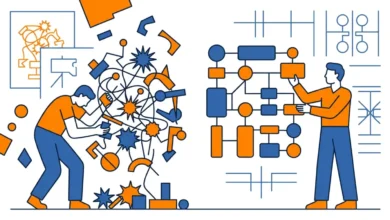
The traditional model of content curation and research, often a time-intensive endeavor for professionals, is undergoing a significant transformation thanks to the intelligent deployment of artificial intelligence. A recent case study highlights how a sophisticated, multi-agent AI system has successfully automated a substantial portion of weekly research, reclaiming approximately five hours previously dedicated to manual information gathering and synthesis. This innovative approach underscores a critical paradigm shift in AI utilization: moving away from monolithic solutions towards a specialized, task-oriented architecture.
For years, a common practice involved dedicating significant portions of the work week, often an entire afternoon every Friday, to a painstaking process of research. This typically entailed navigating platforms like YouTube, meticulously reviewing numerous subscribed channels, and conducting broad keyword searches across the internet. The subsequent phase involved skimming through a multitude of articles, extracting relevant information, and compiling it into a document, often flagging specific points for inclusion in newsletters or other published content. This ritual, while considered a necessary component of the job, was neither engaging nor efficient, consuming an average of four to five hours weekly.
The breakthrough came with the development of a two-agent AI setup, designed to systematically address the inefficiencies of the manual research workflow. This system operates on a clear division of labor, leveraging the distinct strengths of specialized AI tools.
The Dual-Agent Architecture: A Symphony of Automation
The implemented workflow is characterized by its elegant simplicity and potent effectiveness, relying on two distinct AI agents to perform complementary functions.
Agent 1: The Continuous Content Monitor
The first agent is tasked with the continuous monitoring of a curated list of twenty YouTube channels deemed relevant to the user’s interests. Upon the release of any new video content on these channels, Agent 1 is triggered to automatically summarize the video. These summaries are then promptly delivered to a designated Slack channel. This process operates autonomously throughout the week, requiring no manual intervention and ensuring that the user is consistently updated with key information without the need to actively watch any videos. This capability directly addresses the challenge of information overload from subscribed content, a prevalent issue in today’s digital landscape. Studies indicate that the average professional spends upwards of 1.5 hours per day managing email and digital communications, a figure that often includes sifting through vast amounts of content. By automating this initial filtering stage, Agent 1 significantly reduces this burden.
Agent 2: The Intelligent Synthesizer and Drafter
The second agent acts as a hybrid researcher and writer. On a weekly cadence, typically by Thursday, this agent aggregates all the summaries received from Agent 1 in the Slack channel. It then employs advanced natural language processing capabilities to identify the most pertinent and interesting pieces of information. Following this identification, Agent 2 proceeds to draft the research-intensive section of the user’s newsletter. This automation means that by the time Thursday arrives, the foundational research is effectively completed. The user’s involvement is then reduced to a brief review and editing session, estimated to take only fifteen to twenty minutes. This represents a dramatic reduction from the previous five-hour commitment, a saving of over 80% of the time previously allocated to this task.
The Critical Distinction: Specialized Tools Over Universal Solutions
The efficacy of this dual-agent system, and indeed the broader trend in AI adoption, hinges on understanding the specialized capabilities of different AI models. A common pitfall, as identified in discussions with professionals like Ilias, a structural engineer and newsletter publisher, is the inclination to force a single AI model to perform tasks for which it is not optimally designed.
When the question arose whether a powerful language model like Claude could entirely replace a specialized search tool for the research component, the answer illuminated a fundamental misunderstanding of AI architecture. Large Language Models (LLMs) such as Claude, ChatGPT, and Gemini excel at synthesizing and interpreting information. They are adept at taking existing bodies of text and transforming them into coherent, clear, and actionable outputs.
However, their core design does not prioritize real-time internet searching or information discovery. Tools like Perplexity or even traditional search engines like Google are engineered specifically for finding and surfacing information that exists on the internet at any given moment. LLMs, conversely, are primarily interpretation tools. They are built to process and derive meaning from information that is already provided to them.
Attempting to use an LLM as a primary research engine often leads to suboptimal results. The AI may miss crucial, up-to-the-minute information, or its synthesized output may feel incomplete or misaligned with current realities. This is not a failure of the AI itself, but rather a misapplication of its capabilities. The error lies in asking the wrong tool to perform a specific job, leading to frustration and a perception of AI inadequacy.
This concept has been termed "Multi-Tool Native" by proponents of this approach. The most effective AI users do not become beholden to a single platform, attempting to bend it to every conceivable need. Instead, they treat various AI tools as specialists, routing each task to the tool best equipped to handle it. This strategic allocation of tasks ensures optimal performance and efficiency.
A simplified breakdown of this specialized approach might look like this:
- Search and Discovery: Tools like Perplexity, Google Search, or specialized web scrapers are ideal for finding raw information.
- Information Synthesis and Summarization: LLMs like Claude, ChatGPT, or Gemini are excellent for condensing large volumes of text into digestible summaries.
- Data Analysis and Pattern Recognition: Specialized AI models designed for statistical analysis or anomaly detection can process numerical data.
- Task Automation and Workflow Management: Platforms like Lindy, Zapier, or custom scripting can orchestrate the interaction between different AI agents and other software.
These tools are not interchangeable. Their distinct functionalities, when combined strategically, unlock unprecedented levels of automation and productivity.
The 80-20 Rule: Prioritizing Automation for Maximum Impact
When considering where to begin with AI automation, a consistent recommendation is to start with the most repetitive tasks. This principle, often referred to as the 80-20 rule of automation, emphasizes tackling the activities that consume the most time and occur with the highest frequency. The focus should not be on the most technologically impressive AI application, but on the processes that offer the greatest potential for compounding time savings.
Daily or weekly recurring tasks are prime candidates for automation. The newsletter research, as described, perfectly fits this criterion. Its consistent weekly occurrence, demanding five hours of labor each time, translates into over 200 hours saved annually. This exemplifies the power of identifying and automating high-frequency, high-impact activities.
The impact of such automation can be substantial. Some users report achieving peak weekly time savings exceeding 80 hours, with email management frequently cited as the largest contributor. However, the research automation case study proved particularly surprising to the individual involved. The sheer volume of time previously lost to this task only became apparent once it was successfully reclaimed. This highlights how ingrained, albeit inefficient, workflows can mask significant productivity drains.
Building Your Own AI Automation Pipeline: A Step-by-Step Approach
Implementing a sophisticated AI automation system does not necessitate starting with an intricate setup involving numerous channels and complex multi-agent pipelines. The process can be initiated with a single, repetitive information-gathering task. This could involve anything from tracking industry news and competitor updates to compiling client-specific research.
The foundational steps for building such a system involve a two-pronged approach:
- Identify the "Find" Component: This stage focuses on locating and retrieving the necessary raw information. It requires selecting the appropriate tool for discovering the data, whether it’s a search engine, an RSS feed aggregator, or a specialized scraping tool. This is where the distinction between a search tool and an interpretation tool becomes paramount.
- Identify the "Interpret" Component: Once the information is found, this stage involves processing and synthesizing it. This is the domain where LLMs excel, transforming raw data into meaningful insights.
Many attempts at AI automation falter at this juncture, either by skipping the crucial "find" step or by misapplying the "interpret" tool. For instance, expecting an LLM to autonomously scour the web for the latest stock market trends without a dedicated search mechanism is a common error. The successful routing of information to the correct tool is, therefore, estimated to be around 80% of the battle. Once this routing logic is established, the actual construction of the AI agents becomes a more straightforward, technical undertaking.
Broader Implications for the Future of Work
The successful implementation of this multi-agent AI research system has profound implications for the modern workplace. It moves beyond theoretical discussions of AI’s potential and demonstrates tangible, real-world applications that deliver significant productivity gains. The case study reinforces the idea that the most effective AI strategies are not about finding a single "magic bullet" tool, but about architecting intelligent workflows that leverage the unique strengths of various specialized AI technologies.
The principle of "Multi-Tool Native" adoption signifies a maturing understanding of AI’s capabilities. As professionals become more adept at identifying the optimal tool for each specific task, the potential for widespread automation and efficiency improvements across industries will continue to grow. This strategic orchestration of AI agents promises to liberate human capital from mundane, time-consuming tasks, allowing for a greater focus on creativity, strategic thinking, and complex problem-solving.
The future of work is increasingly defined by this collaborative relationship between human intelligence and artificial intelligence, where specialized AI agents act as extensions of human capabilities, amplifying productivity and innovation. The continued exploration and implementation of such sophisticated AI architectures will undoubtedly shape how we approach tasks, manage information, and ultimately, how we define productivity in the digital age.
The takeaway is clear: the elimination of five hours of weekly research was not achieved through a single, all-encompassing AI solution. Instead, it was the result of a deliberate strategy to stop forcing one tool to perform multiple, disparate functions. By understanding that Perplexity excels at finding, Claude at interpreting, and Lindy at automating, and by assigning each task to its most suitable agent, significant time savings and enhanced efficiency were realized. For individuals or organizations whose AI implementations are yielding disappointing results, the critical question to ask is whether the routing of tasks is optimized for the right tools, or if a single tool is being overburdened with an inappropriate workload. Applying this principle to the next repetitive research task, by separating the "find" and "interpret" stages into distinct functions, offers a promising path toward unlocking similar productivity gains.
Related posts: