The digital landscape for brand discovery is undergoing a profound transformation, with generative engine optimization (GEO) emerging as a critical discipline for marketers seeking to maintain visibility and relevance. This strategic shift moves beyond traditional search engine optimization (SEO) to prioritize how content is understood, cited, and recommended by artificial intelligence (AI) platforms like ChatGPT, Google AI Overviews, Perplexity, and Gemini. As buyer journeys increasingly involve conversational AI, brands face a binary outcome: either they are prominently featured in AI-generated answers, or they become virtually invisible.
The Paradigm Shift: From Blue Links to Conversational Answers
For decades, the internet operated on a model where users navigated through lists of "blue links" in search engine results pages (SERPs) to find information. Marketing strategies, particularly SEO, were meticulously crafted to secure top rankings within these lists, driving organic traffic and brand awareness. However, the advent of sophisticated large language models (LLMs) and conversational AI platforms in recent years has ushered in a new era. Users are now turning to these generative engines for direct, synthesized answers, often bypassing traditional SERPs entirely. This fundamental change in user behavior, particularly evident since the widespread adoption of tools like ChatGPT in late 2022, has necessitated a new approach to digital presence.
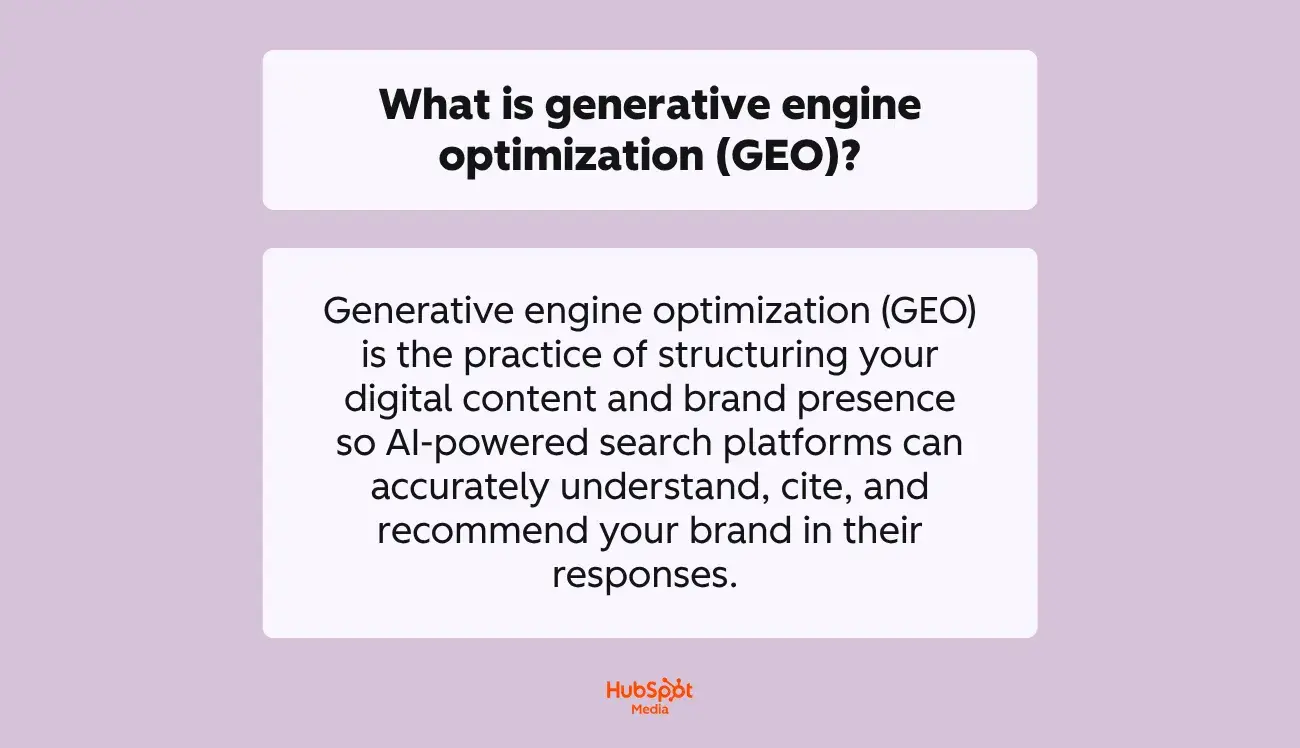
Generative Engine Optimization (GEO) is the practice of structuring a brand’s digital content and overall online presence to ensure AI platforms can accurately comprehend, reference, and recommend it within their responses. Unlike traditional SEO, which often focuses on keywords, backlinks, and technical elements to influence algorithmic rankings, GEO emphasizes structured data, entity recognition, and machine-friendly content. It’s not a replacement for existing SEO investments but rather an amplification, enabling brands to tap into a layer of visibility that traditional methods alone can no longer guarantee.
Data underscores the urgency of this shift. According to HubSpot’s 2026 State of Marketing Report, nearly half of marketers (49%) acknowledge a decrease in web traffic from traditional search due to the rise of AI answers. This decline reflects a direct diversion of user queries from traditional search interfaces to AI chatbots and generative overviews. Conversely, a significant 58% of marketers report that AI referral traffic exhibits much higher intent than conventional search traffic, highlighting a qualitative improvement in audience engagement. This suggests that while overall traffic volume may shift, the value of AI-driven interactions—characterized by more informed and ready-to-convert users—is considerably higher.
The Complementary Nature of GEO and SEO
Industry experts emphasize that GEO and SEO are not competing strategies but rather complementary pillars of a comprehensive digital marketing framework. SEO continues to be vital for establishing foundational authority, technical health, and broad organic reach. It builds the credibility and discoverability that AI systems can then leverage. GEO, however, specifically optimizes this foundation to ensure that brand information is digestible, trustworthy, and directly quotable for AI systems. Marketers who integrate both strategies stand to gain increased AI search visibility, improved lead quality, and stronger brand inclusion in AI-generated summaries.
The distinction lies in their primary focus and outcome:
- Traditional SEO: Aims to rank websites in search engine results, driving clicks to a brand’s domain. It prioritizes elements like keywords, backlinks, site speed, and mobile-friendliness, influencing where a link appears.
- Generative Engine Optimization: Aims to have brands cited and recommended within AI-generated answers, influencing user perception and decision-making before a click even occurs. It prioritizes structured data, entity understanding, factual accuracy, and contextual relevance, influencing what is said about a brand.
Despite the clear benefits, GEO adoption is not without its hurdles. Recent data from SEO Sandwitch indicates that 67% of digital marketers find GEO tracking more complex than traditional SEO. This complexity stems from the need for new measurement frameworks, as traditional metrics like rankings and click-through rates (CTR) do not fully capture brand representation within AI responses. Instead, GEO demands focus on metrics such as citation frequency, sentiment of AI mentions, and share of voice within conversational answers, requiring a re-evaluation of current analytics strategies.
Key Benefits of Embracing Generative Engine Optimization
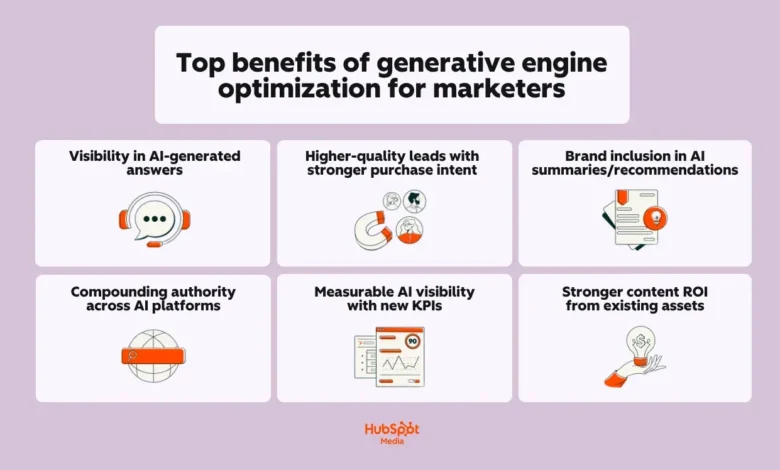
The strategic advantages of a well-executed GEO strategy are multifaceted, offering immediate and compounding returns for brands willing to adapt to this evolving digital landscape.
-
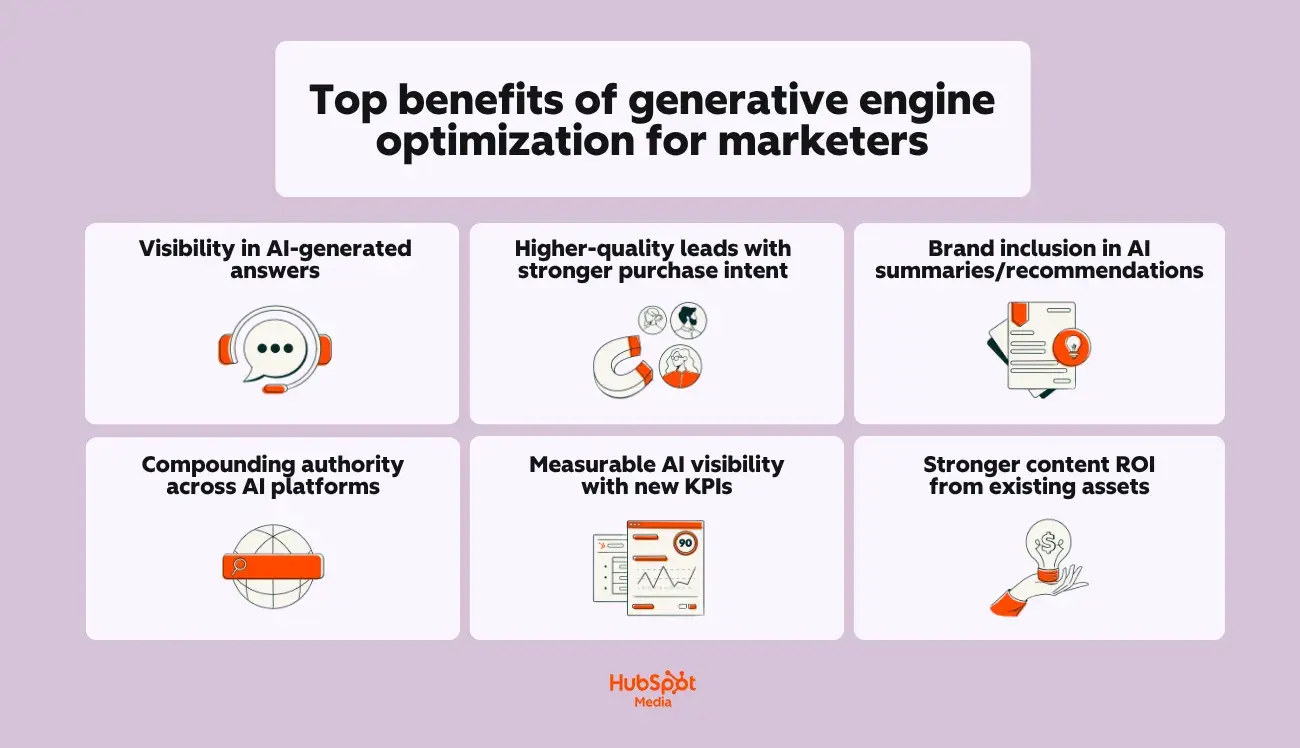
Enhanced Visibility in AI-Generated Answers: The most direct benefit of GEO is the ability to appear directly within AI responses. When a prospective customer queries an AI platform for recommendations (e.g., "What’s the best CRM for remote teams?"), a brand’s inclusion in that answer represents a high-intent touchpoint. This bypasses the competitive landscape of traditional blue links, placing the brand directly in the user’s consideration set at a critical decision-making juncture. Semrush data corroborates this, showing that marketers investing in GEO are capturing higher-intent traffic that converts at 4.4 times the rate of traditional organic search. This demonstrates GEO’s immediate, measurable revenue advantage, proving it is a pragmatic investment rather than a speculative future bet.
-
Higher-Quality Leads with Stronger Purchase Intent: AI-referred traffic isn’t just about volume; it’s profoundly about quality. Users who engage with AI-generated answers often arrive at a brand’s website with a deeper understanding of its offerings, having already absorbed context, compared alternatives, and formed an initial opinion. This pre-qualification compresses the buyer’s journey significantly. Internal data from leading marketing platforms suggests that AI-referred leads often exhibit higher engagement metrics, including lower bounce rates, longer session durations, and increased progression through the sales funnel, contributing to more efficient sales cycles and improved pipeline targets for marketing strategists.
-
Stronger Brand Inclusion in AI Summaries and Recommendations: Generative engines synthesize information from multiple sources rather than merely listing websites. When a brand is consistently included and positively cited in these syntheses, it builds significant authority and trust. This inclusion signals to the user that the brand is a recognized expert or leading provider in its domain, often appearing alongside or even ahead of direct competitors. However, this inclusion is not automatic. Brands must proactively supply clear, factual information, structured data, and consistent entity signals across their digital footprint to be deemed reliable and authoritative sources by AI models.
-
Compounding Authority Across AI Platforms: A significant, often underappreciated, benefit of GEO is the compounding nature of citation authority. Similar to how domain authority accrues in traditional SEO, citations earned on one AI platform (e.g., ChatGPT) can strengthen a brand’s presence and credibility on others (e.g., Perplexity, Gemini, Google AI Overviews). This occurs because many AI models draw from overlapping training data and real-time retrieval sources. By building robust entity authority through consistent schema markup, factual content, and external validation (e.g., industry awards, expert reviews), brands can create a self-reinforcing "citation flywheel" across the entire AI ecosystem, making their presence ubiquitous and authoritative.

-
Measurable AI Visibility with New KPIs: While measurement uncertainty is a noted challenge, dedicated frameworks and tools are rapidly emerging to track GEO performance. Traditional metrics like impressions and CTR are insufficient, necessitating new Key Performance Indicators (KPIs) focused on direct AI interactions. These include "Answer Box Presence" (frequency of brand appearance in AI summaries), "Sentiment Score" (the emotional tone and context of AI mentions), "Share of Voice in AI Answers" (brand mentions relative to competitors for specific queries), and "Citation Frequency" (how often a brand’s content is sourced). The development of tools like HubSpot’s AEO Grader underscores the industry’s move towards standardized, actionable GEO measurement.
-
Stronger Content ROI from Existing Assets: GEO doesn’t demand a complete overhaul of existing content strategy or an immediate investment in entirely new content streams. In fact, some of the highest-ROI GEO moves involve optimizing existing, high-performing content. Pages that already rank well in traditional search are often prime candidates for GEO enhancement because AI engines tend to favor authoritative, well-established sources. By restructuring existing blog posts, guides, and product pages with direct answers, clearly defined FAQs, specific statistics, and structured data, brands can unlock new layers of AI visibility from content assets they have already invested in, maximizing their return on content creation.
Navigating the Challenges of GEO Implementation
While the benefits are compelling, marketers must also contend with a unique set of challenges inherent to generative engine optimization. These obstacles are often fundamentally different from those encountered in traditional SEO, primarily revolving around machine comprehension, data integrity, and ethical considerations rather than solely keyword density or link profiles.
-
Data Fragmentation Across Platforms and Tools: For AI models to accurately understand a brand, its information must be consistent and machine-readable across all digital surfaces it might encounter—websites, social media profiles, knowledge panels, business listings, and third-party review sites. Most marketing teams manage these diverse platforms using disparate tools, leading to fragmented "entity signals" that can confuse AI engines. Conflicting information across sources lowers the AI model’s "entity confidence"—its internal certainty about the brand’s identity and offerings—increasing the risk of misrepresentation or total invisibility. The fix involves consolidating information management, implementing a single source of truth for brand data (e.g., a centralized digital asset management system), and leveraging tools that synchronize entity information across all relevant platforms.
-
Entity Clarity and Disambiguation: AI engines "resolve entities" rather than merely matching keywords. Brands with generic names (e.g., "Summit," "Atlas") or those sharing names with other companies face a significant challenge in ensuring AI models correctly identify and differentiate them. Without distinct entity signals, AI can conflate brands, attribute information incorrectly, or fail to recognize the brand as a unique entity altogether. This is a critical distinction from traditional SEO, where domain authority usually handles disambiguation. Solutions include unique branding elements, consistent use of official names and identifiers, and explicit entity definitions within structured data, often leveraging Knowledge Graph integration.
-
AI Hallucination and Brand Misrepresentation: A major concern is the propensity of large language models to "hallucinate"—generating confident, yet entirely fabricated, responses when encountering gaps in their training data or ambiguous signals. For brands, this can lead to AI inventing product features, misstating company history, or attributing false claims, potentially damaging reputation and trust. This risk necessitates proactive monitoring and robust content strategies that provide clear, unambiguous, and verifiable information. Implementing schema for fact-checking and official statements, alongside real-time monitoring of AI mentions and swift corrective actions, becomes crucial for risk mitigation.
-
Schema Markup Complexity and Implementation Barriers: Structured data, particularly schema markup, serves as the critical translation layer between human-readable content and AI systems. Despite its importance, many marketing teams find schema implementation technically daunting. Incorrectly implemented schema—such as mismatched types, stale data that contradicts visible page content, or missing entity connections—can render it ineffective, leaving AI models to guess or ignore it. Overcoming this requires accessible tools for schema generation and validation, alongside a focus on core schema types (Organization, Product, FAQPage, HowTo) that deliver the most immediate GEO value and are widely recognized by AI models.
-
Measurement Gaps and KPI Uncertainty: The lack of established metrics for AI visibility is a significant barrier to demonstrating ROI. Traditional SEO metrics like impressions and CTR don’t capture how a brand is represented within an AI-generated answer. A brand might rank #1 for a keyword but be entirely absent from the AI Overview presented above the traditional results. This necessitates new KPIs and dedicated measurement frameworks that track brand presence, sentiment, and citation frequency within AI responses, requiring investment in specialized monitoring tools or custom analytics setups.
-
Privacy, Compliance, and Data Governance: Lastly, GEO introduces new privacy and compliance considerations that traditional SEO largely avoided. AI models train on vast datasets, including publicly available brand information, employee details, product specifications, and customer testimonials. This raises questions about data accuracy obligations, potential liability for AI-generated claims, and compliance with evolving AI transparency regulations, especially for businesses in regulated industries (e.g., healthcare, finance). A robust data governance strategy, combined with clear policies on content ingestion and usage, and a legal review of AI output concerning the brand, is essential to mitigate these risks.
Strategic Implementation: A Practical Roadmap for GEO Adoption
Operationalizing GEO doesn’t require a complete technological overhaul or an entirely new team. The most effective strategies build upon existing SEO foundations, integrating GEO practices into current content workflows to maximize efficiency and impact.
Step 1: Establish Your AI Visibility Baseline. Before any optimization, understanding current brand representation in AI is paramount. Most marketing teams have no clear picture of how AI engines portray their brand. Tools like HubSpot’s AEO Grader can provide a scored baseline across key dimensions (sentiment, presence quality, brand recognition, share of voice, market position). Supplementing this with manual testing—querying AI platforms with 10-15 prompts representing common buyer questions—helps reveal urgent content gaps and current brand characterization by AI. For a comprehensive overview, exploring broader answer engine optimization tools is advisable.
Step 2: Restructure Your Highest-Value Content for AI Extraction. AI engines process content differently than humans. They scan for direct, extractable answers, often within the first 40-60 words of a section, prioritizing content structured with question-based headings, factual claims, and cited statistics. Focusing on the five highest-traffic blog posts or landing pages first can yield quick, measurable impact by adding direct answer sections, clearly defined FAQs, specific statistics, and temporal markers (e.g., "as of 2023"). This aligns content with the extractive nature of AI.
Step 3: Implement Core Schema Markup on Priority Pages. Structured data is the AI’s language, providing explicit cues about content. Many sites either lack schema entirely or have implemented it incorrectly. Start with essential schema types like Organization, Product, and FAQPage on high-priority pages, as these drive the most immediate GEO value. Use JSON-LD in the document head for all implementations, as it’s Google’s recommended format and cleanest for AI parsing. Validate every page using Google’s Rich Results Test before publishing to ensure accuracy.
Step 4: Set Up AI Referral Traffic Tracking in Google Analytics 4 (GA4). Measurement is crucial for justifying investment. The fix for tracking AI-referred traffic takes about 10 minutes. Create custom channel groups in GA4 to segment traffic from known AI referral sources (e.g., perplexity.ai, chatgpt.com). This allows marketers to isolate AI-referred sessions, measure conversion rates separately from traditional organic, and build a reporting infrastructure that links GEO efforts to pipeline outcomes. Track two parallel metric streams: AI visibility (e.g., citation frequency) and AI-referred traffic performance (e.g., conversion rates). Both are vital, as highlighted by HubSpot’s 2026 State of Marketing Report, which confirms SEO’s continued high ROI.
Step 5: Build Entity Authority Beyond Your Own Domain. AI platforms often trust third-party sources more than brand-owned content when assembling responses. Therefore, a brand’s website alone (no matter how well-optimized) is insufficient for earning citations if AI engines cannot find independent validation. Prioritize external authority signals such as consistent information on Google Business Profile, creation or optimization of Wikipedia pages, presence in authoritative industry directories, and securing mentions in reputable news outlets. This builds a robust, cross-platform entity understanding for AI agents.
Step 6: Integrate GEO into Your Existing Content Workflow. The perception that GEO requires a parallel workstream is a major barrier. In reality, GEO practices can be embedded directly into current content production processes without adding significant overhead. This involves incorporating "AI-first content briefs" (e.g., mandating direct answer sections), training content creators on GEO principles, adding schema implementation to publishing checklists, and including GEO performance in regular content audits. Tools like HubSpot’s Marketing Hub and Content Hub, with their AEO Product, can streamline this integration by unifying data and content automation.
Step 7: Monitor, Iterate, and Scale. GEO is not a one-time project. AI models update their knowledge bases regularly, competitors are continuously optimizing, and the answer engine optimization trends shaping this space are evolving rapidly. Establish a monthly review cadence to monitor AI visibility, identify new citation opportunities, refine schema, and update content based on performance data. The compounding nature of citation authority means each month of consistent effort builds on the last, creating structural advantages for early movers that late adopters will struggle to close.
Choosing the Right Tools for Your GEO Stack
You don’t need an enterprise budget to operationalize GEO. Many foundational GEO actions—content restructuring, schema implementation, FAQ creation, and manual prompt testing—cost nothing beyond your team’s time. However, where budget helps most is in monitoring and automation. Dedicated generative engine optimization tools can automate citation tracking, competitive benchmarking, and content audit recommendations at a scale that manual testing can’t match. Evaluate tools based on which generative engine optimization challenges your team faces most acutely, whether that’s schema generation, AI content analysis, or performance tracking.
Conclusion: GEO as the Future of Content Marketing
Generative engine optimization is not merely a transient trend; it is the present and future of content marketing. It represents a fundamental shift in how brands achieve visibility, engage with prospects, and build authority in an increasingly AI-driven digital world. The benefits—higher-intent leads, stronger brand inclusion in critical buyer decision points, and a compounding visibility advantage—are measurable and significant, particularly for early adopters.
While challenges like measurement complexity, hallucination risk, and schema implementation are real, they are also solvable with a systematic approach and the right tools. The brands that are proactively addressing these obstacles, rather than waiting, are building structural advantages that late adopters will struggle to overcome. By embracing GEO as a complement to traditional SEO, integrating it into existing workflows, and committing to continuous monitoring and iteration, marketers can secure their brand’s place in the conversational future of search. The era of direct, AI-
Related posts: