The Subtle Art of Influence: How Marketers Leverage Social Proof and Autonomy


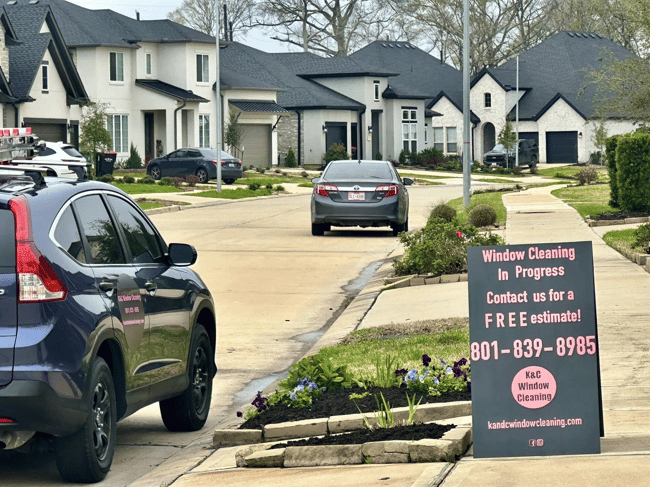
A casual stroll down a suburban street often reveals a common sight: makeshift signs advertising local services. These often feature haphazard formatting, inconsistent fonts, and a generally unpolished aesthetic. However, within this visual clutter, a particular sign observed in Houston, advertising K&C Window Cleaning, presents a masterclass in subtle, effective marketing. Its simple message, "Window cleaning in progress," bypasses aggressive sales tactics, instead employing a sophisticated understanding of human psychology to foster an organic sense of demand and trust. This approach highlights a crucial lesson often overlooked by marketers: genuine influence stems not from overt persuasion but from demonstrating the actions of others while preserving individual autonomy.
The power of this seemingly innocuous sign lies in its deployment of "social proof," a psychological phenomenon wherein people assume the actions of others in an attempt to reflect correct behavior for a given situation. Coined and extensively researched by Dr. Robert Cialdini in his seminal work Influence: The Psychology of Persuasion, social proof is particularly potent in situations of uncertainty. When individuals are unsure how to act, they look to those around them for cues. The K&C sign, by merely stating that work is underway, implies that others in the vicinity have already engaged their services, thereby suggesting competence, reliability, and desirability without explicitly claiming them. It shifts the internal dialogue from "Should I trust this company?" to "Others are using this service, perhaps it’s time for my windows too."
The Foundational Research: Cialdini’s Hotel Towel Study

The scientific underpinnings of social proof are compellingly illustrated by a landmark study conducted by Cialdini and his colleagues in 2008. Spanning 80 days across 190 rooms in a mid-priced hotel in the American Southwest, the research aimed to increase towel reuse among guests. This initiative, driven by environmental concerns and cost-saving opportunities, provided a perfect laboratory for testing different persuasive messages on over 1,058 guests.
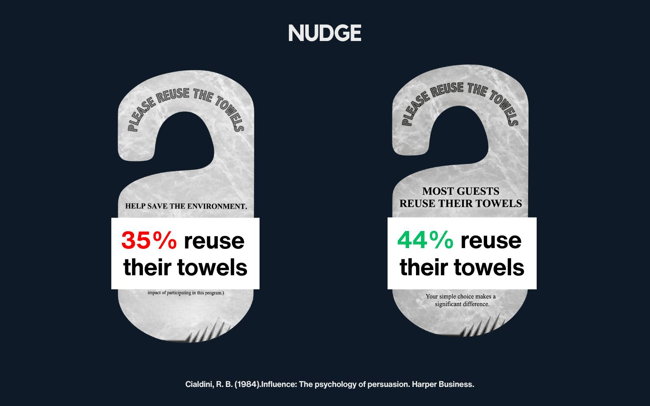
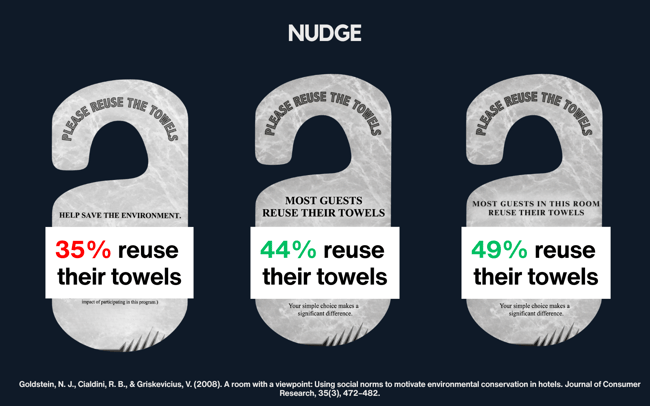
Initially, researchers tested a standard environmental appeal: "Help save the environment." While guests predicted this message would be most persuasive, its actual impact was moderate, leading to approximately 35% towel reuse. The study then introduced a message leveraging social proof: "Most guests reuse their towels." This simple statement, indicating prevalent behavior, significantly boosted reuse rates to 44%, demonstrating the powerful influence of peer actions.
The researchers took this a step further, refining the social proof message to be more specific and localized: "Most guests in this room reuse their towels." The results were even more striking, with nearly 50% of guests opting to reuse their towels. This progression underscored a critical nuance of social proof: its effectiveness is often amplified when the "others" are perceived as similar, relevant, or in close proximity to the decision-maker. The takeaway was unequivocal: human behavior is profoundly shaped by the perceived actions of peers. When neighbors are seen engaging a service, an individual is more likely to consider it, driven by an unconscious desire to conform or a belief in the wisdom of the crowd.
The Autonomy Imperative: Why We Resist Being Forced
While the principle of social proof is robust, its application is nuanced. Marketers often err by transforming social proof into overt boasts, such as "We’re the most popular!" or "Number one in our field!" While such claims can yield results, they often trigger psychological reactance, a phenomenon where individuals resist perceived attempts to limit their freedom or autonomy. People inherently dislike feeling manipulated or coerced into decisions. This resistance can undermine even well-intentioned marketing efforts.
The importance of preserving autonomy was meticulously demonstrated by Nicolas Guéguen’s research in 2000, focusing on the "but you are free to refuse" (BYAFR) technique. Guéguen’s study involved French commuters being asked for spare coins for a bus ticket. Two distinct messages were tested, yielding surprisingly different outcomes:
- Direct Request: "Could you spare some coins for a bus ticket?" This straightforward appeal garnered a certain level of compliance.
- BYAFR Technique: "Could you spare some coins for a bus ticket? But you are free to refuse." The addition of the autonomy-affirming clause dramatically increased the rate of compliance.
Subsequent meta-analyses, including a comprehensive review in 2013 across 42 different domains, have consistently affirmed the efficacy of the BYAFR technique. This robust finding suggests that when individuals feel their freedom to choose is acknowledged and respected, they are paradoxically more likely to comply with a request. The K&C Window Cleaning sign masterfully integrates this principle. By merely stating "Window cleaning in progress," it offers social proof without imposing a direct command or making an explicit sales pitch. It allows passersby to arrive at their own conclusion about the service’s desirability, fostering a sense of self-driven decision-making rather than external pressure.
Real-World Manifestations: From Local Services to Global Brands

The principles of subtle social proof and autonomy preservation are not confined to academic studies or local service advertisements; they are pervasive in successful marketing strategies across various industries.
Consider the thriving ecosystem of online reviews and ratings platforms like Yelp, Amazon, and Google Reviews. These platforms are essentially vast repositories of social proof. A product with thousands of five-star reviews doesn’t need to declare itself "the best"; the collective endorsement of its users speaks volumes. Similarly, the "bestseller" tag on a book or a product on an e-commerce site leverages this principle, indicating widespread acceptance and perceived quality. The implicit message is: "Many people have chosen this, and you might benefit from it too."
Influencer marketing is another contemporary application. When a trusted figure or peer endorses a product, it acts as a powerful form of social proof, particularly for their followers who identify with them. The authenticity of the endorsement, rather than a blatant sales pitch, is what drives its effectiveness. If an influencer merely uses a product in their daily life, showing it in action, it often resonates more powerfully than a scripted advertisement.
Many websites now employ real-time social proof notifications, such as "X people are viewing this product now" or "Y items sold in the last 24 hours." These subtle prompts create a sense of urgency and demand, implying that others are actively engaging with the product, thus influencing potential buyers without directly instructing them.
Sam Tatam, in his insightful book Evolutionary Ideas, provides a charming example from a Sydney cafe. Instead of proclaiming its popularity, the cafe owners display a wall covered with the loyalty cards of their regular customers. This visual tapestry of repeat business serves as a compelling, undeniable form of social proof. It conveys a strong sense of community, customer loyalty, and consistent patronage, far more effectively than any "we’re popular" slogan ever could. Customers see tangible evidence that many others frequent the establishment, creating a powerful, unspoken endorsement that fosters trust and encourages new patrons.
Strategic Application: Crafting Authentic Social Proof
For businesses aiming to enhance their marketing effectiveness, the lesson is clear: don’t just say you’re good; show it. The most persuasive strategies make the customer feel like they are making an independent, informed decision, backed by the collective wisdom and positive experiences of their peers.
- Harness User-Generated Content: Encourage and display customer reviews, testimonials, and photos. This content is inherently more trustworthy than company-generated claims.
- Show, Don’t Tell: Instead of claiming market leadership, showcase numbers of satisfied customers, successful projects, or units sold. Visual representations, like the cafe’s loyalty card wall, can be incredibly effective.
- Localize Social Proof: As Cialdini’s towel study showed, social proof is more potent when it comes from individuals similar to the target audience or from within their immediate community. Highlight local success stories or endorsements.
- Embrace Transparency: Be genuine in your presentation of social proof. Falsifying reviews or statistics can severely damage credibility.
- Preserve Autonomy: Frame your marketing messages in a way that respects the customer’s decision-making freedom. Avoid overly aggressive or manipulative language. The goal is to inform and suggest, not to dictate.
- Highlight Activity, Not Just Outcomes: The "Window cleaning in progress" sign is effective because it shows activity. Similarly, showing a "busy" store, a "full" restaurant, or a growing online community can be a powerful form of social proof.
Ethical Considerations and Future Trends
While social proof is a powerful tool, its ethical application is paramount. Misleading customers with fake reviews or inflated statistics not only erodes trust but can also lead to legal repercussions. The future of marketing will likely see an even greater emphasis on authentic, transparent social proof, as consumers become more discerning and capable of detecting inauthenticity. The rise of decentralized platforms and independent content creators further underscores the demand for genuine endorsements and community validation.
In conclusion, the humble window cleaning sign in Houston offers a profound insight into effective persuasion. By subtly indicating activity and implicitly showcasing the choices of others, K&C Window Cleaning taps into deep-seated psychological tendencies without resorting to overt sales pressure. The most effective marketers understand that true influence is not about forcing a decision, but about guiding customers to a natural conclusion, making them feel like the idea was their own, supported by the observable actions and positive experiences of their peers. This approach, rooted in the principles of social proof and autonomy, stands as a testament to the enduring power of subtle, psychologically informed marketing strategies.
Related posts: