Strategic Content Bridging: Expert Insights from MarketingProfs on Navigating B2B Gaps, New Market Entry, and Personal Branding

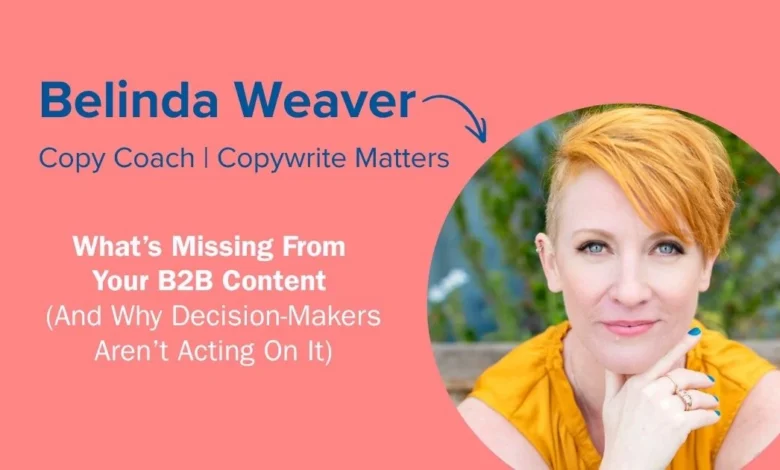
The May 2026 Content Marketing Friday Forum, a cornerstone event for industry professionals hosted by MarketingProfs, delved into critical strategies for enhancing content efficacy. Part 2 of a compelling Q&A segment featured Belinda Weaver, a distinguished conversion copywriter and copy coach, known for her expertise in crafting compelling narratives that resonate with target audiences and drive measurable results. This session, building upon insights from Part 1, addressed pressing questions from the MarketingProfs community, offering actionable frameworks to improve content strategy for demonstrable business outcomes. The forum, a monthly, free mini-conference, consistently provides a platform for deep dives into specific marketing topics, fostering a vibrant community exchange of cutting-edge tips, tricks, and frameworks.
The Strategic Imperative of Bridging Content Gaps in B2B Manufacturing
A significant challenge frequently encountered in the B2B sector, particularly within manufacturing and supplier companies, involves internal resistance to "in-between" content. Many organizations exhibit a predisposition to jump directly from initial awareness to product-level information, often overlooking the crucial decision-guided content that nurtures prospects through the middle and lower stages of the sales funnel. This inclination, as highlighted by a forum attendee from a B2B manufacturing supplier, represents a common hurdle for marketing professionals striving to implement a comprehensive content strategy.
Belinda Weaver underscored the necessity of reframing this internal dialogue not as a "content conversation," but as a "pipeline conversation." The core issue, she explained, is that an abundance of top-of-funnel (awareness) content without adequate conversion-focused material leads to a "leaky bucket" scenario. While initial engagement metrics like likes, shares, and downloads might appear robust, the absence of trust-building and proof-oriented content in later stages results in significant lead attrition. Research indicates that B2B buyers now conduct 60-70% of their research independently before engaging with sales, emphasizing the need for comprehensive digital content at every stage. A 2023 study by the Content Marketing Institute revealed that 89% of B2B marketers use content marketing, yet only 43% consider their efforts "very effective," often due to a disconnect between awareness content and conversion pathways.
Weaver advised that marketing teams should pose pointed questions to their leadership: "Where are we losing people in the sales process? Where are deals faltering?" Sales teams, she noted, are invaluable repositories of information, often keenly aware of recurring objections, competitor advantages, and the specific questions buyers ask before disengaging. This intelligence precisely pinpoints content gaps—areas where potential customers lack the information, trust, or proof needed to advance. These gaps are not merely content deficiencies; they are direct drains on potential revenue. The average B2B sales cycle can range from 3-12 months, and inadequate mid-funnel content can significantly prolong this cycle or lead to outright loss of prospects. Effectively bridging these gaps with targeted, decision-support content is akin to providing essential milestones on a map; without them, prospects are left to navigate complex purchasing decisions independently, often leading them away from the offering. Couching content needs in terms of pipeline efficiency and revenue impact makes the conversation far more compelling than simply advocating for "more nurture content," shifting the focus from an abstract marketing expense to a tangible business investment.
Establishing Credibility: Navigating Stages Three and Four for New Companies
A prevalent challenge for nascent companies, particularly those without a substantial track record, is the absence of established proof points, such as customer testimonials or case studies. This void can significantly hinder progress through stages three and four of the content framework, which typically focus on solution evaluation and decision-making. Weaver acknowledged that this scenario is far from unique, affecting numerous startups and emerging businesses.
Her counsel centered on proactive market research and leveraging existing industry knowledge. Even without direct client testimonials, new companies can gather "voice of customer" insights by researching individuals within their target vertical. The objective is to understand how these potential customers make decisions, what their pain points are, and what criteria they use to evaluate solutions. Conducting interviews with prospective clients, even if they haven’t yet engaged with the company, can yield invaluable qualitative data. A 2022 survey found that companies leveraging customer insights saw a 2.5 times higher revenue growth rate. This research helps companies anticipate buyer concerns and craft content that preemptively addresses them.
Beyond traditional testimonials, Weaver emphasized the importance of "implementation content" for stage four. This category includes content that demystifies the customer journey: "What does onboarding look like? What is the process of working with us?" Such content, often overlooked, provides a critical layer of security and transparency for prospective clients. In the absence of direct client proof, new businesses can lean heavily on demonstrating a clear, supportive, and predictable process. This could involve detailed walkthroughs of service delivery, explanations of typical project timelines, or introductions to key team members involved in client success. For instance, a software startup lacking user reviews could publish a comprehensive "Getting Started Guide" that not only explains features but illustrates the seamless integration and support experience. While testimonials and case studies are undeniably powerful, a "black hole" experience regarding implementation or ongoing partnership can erode trust, regardless of initial product appeal. By focusing on process transparency and outlining the client experience, new companies can proactively build trust and mitigate perceived risks.
Mastering Voice of Customer Research on a Lean Budget
The constraints of budget and direct customer access often present formidable barriers to conducting thorough voice of customer (VoC) research. Belinda Weaver provided a tiered approach, democratizing VoC for organizations with varying resources. She categorized research methods by their "gold tier" value, emphasizing that effective VoC doesn’t inherently demand a large financial outlay.
The "platinum level" of VoC, according to Weaver, is direct customer interviews. While these require time and access, they are unparalleled for gathering deep, nuanced insights into customer motivations, challenges, and perceptions. She stressed that securing these calls doesn’t necessarily require money, but rather strategic outreach and a clear value proposition for participants. However, acknowledging that direct access isn’t always feasible, Weaver outlined alternative, highly effective methods.

The "gold tier" involves leveraging internal resources. Sales calls are a treasure trove of information, as sales teams are on the front lines, constantly engaging with prospects, addressing objections, and understanding their evolving needs. Accessing recordings (with appropriate consent) or collaborating closely with sales professionals to debrief on common themes can provide rich data. Similarly, customer service departments hold invaluable insights into post-purchase experiences, common pain points, and areas for improvement. Data from CRM systems, customer feedback forms, and support ticket analyses can reveal patterns in customer sentiment.
For the "silver tier," when internal access is limited, Weaver suggested looking externally at competitor analysis and adjacent markets. This involves scrutinizing reviews and testimonials for direct competitors, understanding what customers praise or criticize about alternative solutions. Crucially, she expanded the definition of "competitor" beyond direct rivals to include any solution that addresses the same fundamental problem. For example, a company selling productivity software might look at reviews for physical planners or time management books on platforms like Amazon. People openly discussing their experiences and needs in these diverse contexts provide unfiltered insights into the underlying problem and desired outcomes, even if the solution category is entirely different. This "lateral thinking" approach encourages marketers to cast a wider net, identifying where target audiences are actively articulating their problems and evaluating solutions. The goal is to uncover the language, pain points, and aspirations of the target audience, regardless of whether they are discussing a company’s direct offering or a tangential solution. This comprehensive approach ensures that even with a lean budget, businesses can gather critical VoC data to inform their content strategy. A Forrester study indicated that companies using VoC programs outperform competitors by 48% in customer satisfaction and 10x in year-over-year revenue growth.
Applying Content Frameworks to Personal Branding and Job Seeking
One of the most insightful questions from the forum community explored the applicability of content frameworks to personal branding and career advancement, particularly when seeking employment. Belinda Weaver lauded this as a "smart" question, affirming that the principles of content strategy are directly transferable to individual professional development. Her core premise: "what you are selling is you."
When an individual is looking for work, the hiring process mirrors a complex B2B sales cycle. Potential employers, much like customers, go through stages of problem identification, solution evaluation, and decision-making. Initially, an organization recognizes a need or "problem" within its structure and determines if it warrants a new hire. While an individual cannot directly influence this internal problem identification, they can strategically position themselves once the "solution evaluation" stage begins.
Weaver emphasized that platforms like LinkedIn become critical "content distribution channels" for personal branding. As employers move into stages three and four of their hiring process – evaluating different candidates and making a final decision – an individual’s LinkedIn profile and the content they share must effectively answer the implicit questions of the hiring committee. This means demonstrating an understanding of the challenges the potential employer faces, articulating how one’s skills and experience provide a unique solution, and showcasing a clear "implementation process" – i.e., what it would be like to work with that individual.
For example, a job seeker should tailor their LinkedIn content to reflect an understanding of industry-specific pain points, discuss various approaches to solving common professional challenges (thus showing solution evaluation), and provide "proof" of their capabilities. This proof can manifest as recommendations, endorsements, shared project successes, thought leadership articles, or even concise case studies of past work. A 2023 LinkedIn survey revealed that 92% of recruiters use LinkedIn for sourcing candidates, and 87% use it to screen candidates, highlighting the platform’s indispensable role. Furthermore, profiles with strong personal branding are 10-20 times more likely to be viewed by recruiters.
The "top-end content" for personal branding will convince employers that the individual is the right person for the role. This involves not just listing qualifications but showcasing a deep understanding of the employer’s objectives and demonstrating how past achievements align with future needs. By applying a content framework, individuals can strategically craft their online presence to address the employer’s journey from problem recognition to hiring decision, ultimately distinguishing themselves in a competitive job market.
The Broader Impact of Content Strategy in 2026 and Beyond
The insights shared by Belinda Weaver at the MarketingProfs May 2026 Content Marketing Friday Forum collectively underscore a crucial evolution in the field of content marketing. The discussions moved beyond rudimentary content creation to emphasize a holistic, buyer-centric, and strategically aligned approach. The recurring themes across all questions—the importance of trust, tangible proof, deep understanding of the buyer’s journey, and the strategic deployment of content across the entire sales funnel—reflect the increasing maturity and sophistication demanded of modern marketing teams.
In 2026, content marketing is no longer solely about generating awareness; it is a critical driver of conversion and retention. The focus on pipeline conversations in B2B, the imperative for new companies to build credibility through process transparency, the innovative approaches to voice of customer research with limited resources, and the application of these principles to personal branding all highlight a shift towards measurable impact and demonstrable ROI. The traditional silos between sales and marketing continue to erode, replaced by integrated strategies where content serves as a connective tissue, guiding prospects and clients at every interaction point. The forum itself, through its consistent delivery of free, expert-led sessions, plays a vital role in disseminating these evolving best practices, ensuring that the MarketingProfs community remains at the forefront of content innovation. As businesses navigate increasingly complex digital landscapes, the ability to strategically bridge content gaps, cultivate trust, and leverage insights efficiently will be paramount for sustained success.
For those seeking to further enhance their content marketing prowess, MarketingProfs offers a wealth of resources, including "What’s Missing From Your B2B Content: Q&A with Belinda Weaver (Part 1)," "Three Attention-Grabbing Story Structures (That Aren’t the Hero’s Journey)," "6 Steps to Kill 80% of Your Content," and "The Marketing God Complex: How to Use Narrative Responsibly in B2B Marketing." These articles, like the May 2026 Friday Forum, contribute to a comprehensive understanding of effective content strategy in today’s dynamic market.