Data-Driven SEO Strategies: Implementing A/B Testing Frameworks to Navigate Evolving Search Algorithms and AI Overviews


The landscape of digital marketing has shifted toward a rigorous, data-centric methodology where the most compelling narratives are derived from empirical evidence rather than speculative intuition. For business owners and marketing executives, the cost of strategic errors has escalated; a single test predicated on a "hunch" can result in the loss of thousands, or even millions, of dollars in potential revenue. Conversely, a single successful optimization supported by robust data can serve as a definitive game-changer for a brand’s digital footprint. In an era defined by rapid algorithmic shifts and the integration of generative artificial intelligence into search results, the implementation of SEO A/B testing has emerged as a critical requirement for maintaining organic visibility and competitive advantage.
The Strategic Framework of SEO A/B Testing
SEO A/B testing is defined as the systematic process of testing modifications to specific page elements—such as title tags, meta descriptions, and content structure—in isolation to measure their specific impact on organic search traffic. Unlike traditional conversion rate optimization (CRO) A/B testing, which focuses on user behavior once they arrive on a site, SEO A/B testing prioritizes how search engine algorithms perceive and rank those pages.
The primary objective is to clarify which strategic adjustments yield positive results and which do not. Because Google’s algorithm remains a proprietary "black box" that undergoes hundreds of minor and major updates annually, SEO testing can be a complex proposition. Results are rarely instantaneous, often requiring several weeks to manifest. However, within a structured framework that utilizes precise tracking and statistical controls, these tests provide a substantial boon to top-line traffic, lead generation, and overall revenue.

Background Context: The Evolution of Search and AI Integration
To understand the necessity of modern A/B testing, one must consider the historical context of search engine evolution. In the early 2010s, SEO was largely a matter of keyword density and backlink volume. However, the introduction of updates like Panda, Penguin, and more recently, the Helpful Content Update, shifted the focus toward user intent and content quality.
The most significant recent disruption is the introduction of Google’s AI Overviews (formerly Search Generative Experience). This feature utilizes generative AI to provide synthesized answers at the top of the Search Engine Results Page (SERP). For many queries, this means the traditional "ten blue links" are pushed further down the page. Industry data suggests that while AI Overviews can reduce clicks for simple informational queries, they offer a massive exposure opportunity for sites that are properly optimized to serve as the AI’s primary source material. This environment necessitates a shift from broad keyword targeting to structured, authoritative content testing.
A Chronology of a Standard SEO A/B Test
The execution of a professional SEO A/B test follows a specific chronological order to ensure data integrity:
- Hypothesis Formation: Marketers identify a specific variable (e.g., "Adding ‘2024 Guide’ to titles will increase CTR") based on current performance gaps.
- Group Selection: A set of semantically similar pages—such as product categories or blog posts—is identified. These are split into a "control" group (no changes) and a "variant" group (modified pages).
- Implementation: Changes are applied strictly to the variant group. To maintain the integrity of the test, no other major site changes (like site-wide CSS updates) should occur during this period.
- Observation Period: The test runs for a duration of two to four weeks, allowing search engine crawlers to index the changes and for enough user data to accumulate.
- Analysis and Iteration: Data from tools like Google Search Console (GSC) and Google Analytics 4 (GA4) are compared. If the variant group outperforms the control group with statistical significance, the change is rolled out site-wide.
Supporting Data: The Five Critical A/B Tests for Modern SEO
Industry analysts have identified five primary areas where A/B testing yields the highest return on investment. These tests move beyond theoretical best practices to provide site-specific insights.
1. Title Tag Variation and Click-Through Rate (CTR)
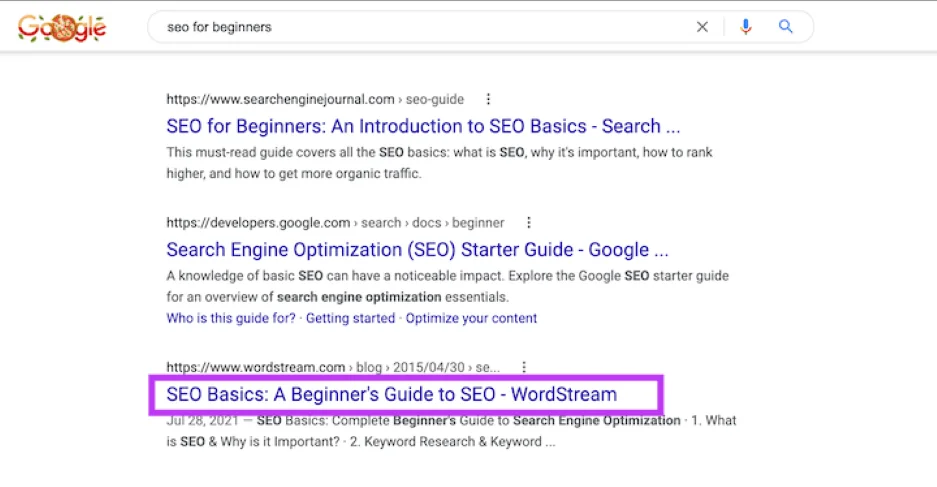
Title tags remain one of the most influential ranking factors. A comprehensive study by Backlinko, which analyzed over 4 million Google search results, highlighted the precipitous drop in CTR as one moves down the SERP. The top organic result averages a CTR of approximately 27.6%, while the tenth result drops to roughly 2.4%.
However, the data also indicates that a compelling, well-optimized title can allow a lower-ranking page to "punch above its weight class." By testing variations—such as including price points, dates, or "power words"—marketers can determine which specific phrasing resonates with their unique audience. It is important to note that Google occasionally rewrites title tags in the SERP, a factor that must be accounted for during data analysis.
2. AI Overview Content Optimization
As AI Overviews become more prevalent, businesses risk losing visibility if they do not adapt. Testing for AI Overviews involves adding structured elements to the variant group, such as:
- Direct Answer Summaries: Placing a 40–60 word summary at the beginning of an article.
- Structured Headings: Using H2 and H3 tags to clearly define the hierarchy of information.
- Bulleted Lists: Organizing complex data into digestible formats that AI models can easily parse.
Early data from digital agencies suggests that pages optimized with clear, succinct "summary" sections are significantly more likely to be cited within the AI-generated response.
3. Internal Link Placement and Topical Authority
While external backlinks often receive the most attention, internal linking is essential for establishing "topical authority." A test in this category involves selecting a group of pages and adding three to five internal links from high-authority sections of the site. By using keyword-rich, natural anchor text and placing links higher up in the body content, businesses can signal to Google which pages are the most important within a specific topic cluster.
4. Content Depth and Quality Signals
The "longer is better" myth has been largely debunked in favor of "relevance and completeness." However, data generally shows a correlation between robust, in-depth content and higher rankings. A content depth test involves taking "thin" pages (typically those under 1,000 words) and expanding them with FAQs, expert quotes, and original visuals. The goal is to improve E-E-A-T (Experience, Expertise, Authoritativeness, and Trustworthiness) signals, which Google increasingly prioritizes.
5. Schema Markup and Rich Results
Schema markup is a technical optimization that helps search engines understand the context of a page. Testing the implementation of "Review," "Product," or "FAQ" schema can lead to "Rich Results"—search listings that include star ratings, prices, or dropdown questions. These visual enhancements have been shown to spike CTR significantly, even without a change in the actual ranking position.
Professional Analysis of Market Implications
The move toward rigorous SEO A/B testing reflects a broader maturation of the digital marketing industry. In previous years, SEO was often viewed as a "set and forget" technical task. Today, it is treated as a continuous experimental science.

Economic Impact: For large-scale e-commerce platforms, a 1% increase in organic CTR across thousands of product pages can equate to millions of dollars in incremental annual revenue. For small to medium-sized businesses (SMBs), these tests provide a way to compete with larger brands by identifying niche opportunities that a "one-size-fits-all" strategy might miss.
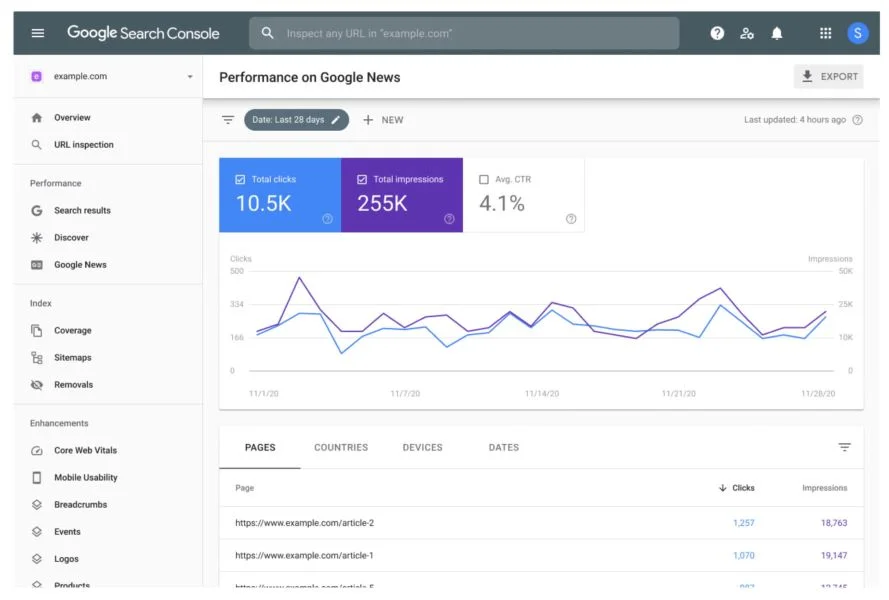
The Role of Tooling: The transition from Universal Analytics to GA4 has provided marketers with more granular event-tracking capabilities, which are essential for post-click analysis in A/B testing. Furthermore, the increased sophistication of Google Search Console allows for a more detailed look at "impressions" versus "clicks," providing the necessary data points to calculate the success of title and meta-description tests.
Industry Responses and Future Outlook
Marketing experts generally agree that the future of SEO lies in the intersection of technical precision and content quality. "The days of guessing what Google wants are over," states one senior SEO strategist at a leading global agency. "We are now in an era where every change must be justified by the data. If you can’t prove it through a split test, you shouldn’t be doing it at scale."
As Google continues to integrate more AI-driven features, the complexity of these tests will likely increase. Marketers will need to monitor not just where they rank, but how they are represented in AI summaries and voice search results. The consensus among industry leaders is that those who invest in a culture of testing and data-driven iteration will be the ones to survive the next decade of search volatility.
Conclusion: Data as the Definitive Competitive Edge
SEO A/B testing is no longer a luxury reserved for enterprise-level organizations with massive budgets. It has become a fundamental practice for any business seeking to grow its organic traffic with confidence. By running controlled experiments—optimizing title tags, refining internal link structures, beefing up content depth, and implementing technical schema—businesses can move past theory and into the realm of definitive results.
In a marketplace where algorithms change daily and consumer behavior is in constant flux, data provides the only stable foundation for decision-making. Through disciplined testing and iteration, brands can ensure that their digital strategy is not based on a hunch, but on the proven preferences of both the search engine and the end-user. The transition to a data-first SEO model is not merely a technical upgrade; it is a strategic imperative for the modern digital era.