From Executive Assistant to C-Suite: How Jeanna Shapiro is Redefining People and Culture at Grant Thornton

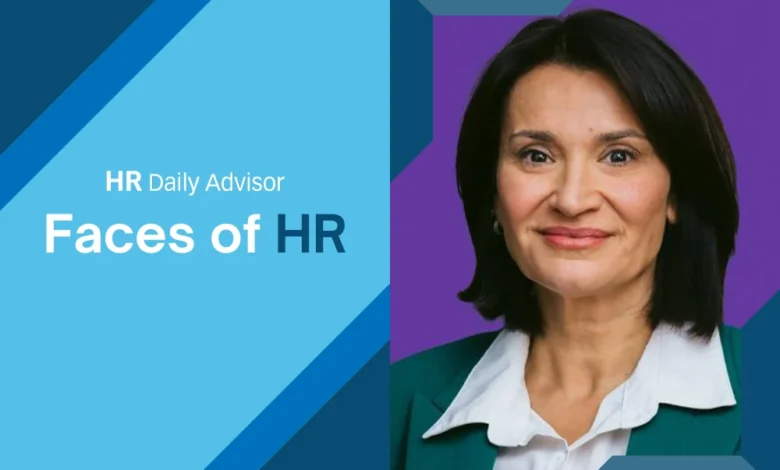
In the competitive landscape of global professional services, the role of human resources has transitioned from a back-office administrative function to a frontline strategic engine. At the forefront of this evolution is Jeanna Shapiro, the Chief People & Culture Officer for Grant Thornton and a member of the Executive Committee at Grant Thornton Advisors LLC. With a career spanning nearly three decades, Shapiro represents a new breed of executive leadership—one that bridges the gap between operational efficiency and human-centric organizational design. Her journey from an entry-level support role to the highest echelons of corporate leadership provides a blueprint for the modern "business-first" approach to talent management.
The Strategic Importance of Human Capital in Professional Services
To understand the magnitude of Shapiro’s role, one must first look at the industry context of Grant Thornton. As a global powerhouse in audit, tax, and advisory services, the firm’s primary "product" is the intellectual capital and specialized expertise of its workforce. Unlike manufacturing or retail, where value is derived from physical goods or supply chains, professional services firms rely entirely on the recruitment, retention, and performance of high-level professionals.
In this environment, the Chief People & Culture Officer is essentially the Chief Product Officer. Shapiro’s mandate involves aligning the firm’s people strategy with its overarching business objectives. This requires navigating a complex global market where the "war for talent" has intensified due to shifting demographic trends, the rise of remote work, and the increasing demand for specialized technical skills in areas like cybersecurity and ESG (Environmental, Social, and Governance) reporting.
A Chronology of Leadership: From the Ground Up
Shapiro’s ascent to the C-suite is characterized by a "bottom-up" understanding of organizational mechanics. Her career began at Booz Allen Hamilton, where she initially served in an entry-level capacity supporting a consulting team. This early exposure to the "trenches" of professional services proved foundational.
She eventually transitioned into an executive assistant role for several partners, a position that allowed her to observe high-level decision-making and leadership dynamics from an internal vantage point. Rather than remaining within the traditional boundaries of her role, Shapiro leaned into recruiting and talent initiatives. By supporting project teams directly, she mastered the technical building blocks of human resources, including resource management, compensation planning, and performance metrics.
Her trajectory continued at Oliver Wyman, a leading global management consulting firm. There, she honed her operational expertise, eventually serving as the Chief Operating Officer (COO) of the Americas. This transition from talent leadership to operational leadership is a rare and significant pivot in the corporate world. It equipped her with a fluency in the "language of business"—P&L management, market strategy, and operational discipline—which she now applies to her role at Grant Thornton.
The "Best Mistake": Recalibrating Leadership Style
A defining moment in Shapiro’s career occurred during her transition to the COO role at Oliver Wyman. Despite having deep, long-standing relationships within the firm, she discovered that a change in title fundamentally alters how a leader is perceived by their peers and subordinates.
"I assumed those relationships would carry over unchanged," Shapiro noted during a recent industry profile. "What I didn’t fully appreciate was that my new title and scope fundamentally altered how people experienced me, even though my intent hadn’t changed."
This realization led to a period of tension and difficult feedback from senior leadership. However, Shapiro views this as her "best mistake," as it taught her the necessity of intentionality in leadership. As executives move into higher-stakes roles, they must recalibrate their presence, invest differently in relationships, and allow space for those connections to evolve alongside their responsibilities. This experience reinforced her belief in the importance of active listening and the ability to adapt one’s leadership style to meet the demands of a changing environment.
Data-Driven Culture: The RISE and GT Shape Initiatives
Under Shapiro’s leadership, Grant Thornton has moved away from traditional, rigid HR models toward more dynamic, data-driven systems. Two primary examples of this are the "RISE" performance management system and the "GT Shape" annual survey.
The RISE System: Competency-Based Growth
The traditional annual performance review is increasingly seen as obsolete in fast-paced industries. In response, Shapiro helped oversee the redesign of Grant Thornton’s performance management into the RISE system. This model is competency-based and feedback-driven, encouraging real-time conversations between coaches, managers, and employees. By aligning compensation models more closely with performance and contribution, the firm ensures a transparent and fair connection between individual growth and corporate rewards.
GT Shape: The Pulse of the Workforce
To maintain a high-performing culture, Shapiro emphasizes the importance of "listening at scale." The GT Shape annual survey and regular pulse checks provide the firm with empirical data on employee sentiment, engagement levels, and areas for improvement. This data allows the leadership team to move beyond assumptions and implement programs that address the actual needs of the workforce, such as mental health support, professional development, and workplace flexibility.
Industry Trends: The Hybrid Future of HR
As Shapiro looks toward the next five years, she identifies several key trends that will reshape the profession. The integration of Artificial Intelligence (AI) and automation is at the top of the agenda. Shapiro argues that HR must move past its apprehension regarding technology and embrace it as a tool to enhance impact.
- AI-Enabled Support: AI is expected to take over routine administrative tasks, allowing HR professionals to focus on high-value activities like strategic workforce planning and organizational culture.
- Digital Learning: The traditional model of in-person training is evolving into a hybrid approach. Learning and development (L&D) will become more digital, self-directed, and embedded into the daily workflow through tools like digital badging.
- Operational Discipline: The "soft-skills" reputation of HR is being replaced by a demand for "hybrid" professionals who possess both empathy and analytical rigor. Future HR leaders will be expected to demonstrate the Return on Investment (ROI) of people programs through clear KPIs and data analytics.
Analysis: The Implications of Business-First HR
Shapiro’s philosophy—that HR is not a standalone function but a strategic partner—has significant implications for the broader corporate world. When HR leaders speak the language of finance and operations, they earn a seat at the executive table, ensuring that people-related risks and opportunities are considered in every major business decision.
Furthermore, her concept of "support to stretch" addresses a critical challenge in the modern workplace: how to maintain high performance without causing burnout. By providing a safety net of development programs, coaching, and clear career milestones, Grant Thornton allows its employees to take on challenging assignments that drive both personal growth and firm-wide innovation.
Conclusion: The New Standard for HR Leadership
Jeanna Shapiro’s journey from an entry-level assistant to the Chief People & Culture Officer at Grant Thornton serves as a testament to the power of persistence and the value of a multidisciplinary background. Her leadership style—characterized by a blend of human insight, operational discipline, and a commitment to transparency—reflects the changing nature of the global workforce.
For those entering the profession, Shapiro’s advice is clear: empathy is essential, but it must be paired with business savvy and technological literacy. As the industry moves toward an increasingly automated and data-driven future, the most effective HR leaders will be those who can bridge the gap between the "human" and the "resource," ensuring that culture remains a competitive advantage in an ever-evolving global economy.
Through her work at Grant Thornton, Shapiro is not just managing a workforce; she is architecting a culture where strategy and humanity coexist, proving that when people feel safe, supported, and challenged, they are capable of delivering world-class results.
Related posts: