Navigating the New Frontier: A Comprehensive Guide to AEO Rank Trackers and Measuring AI Visibility

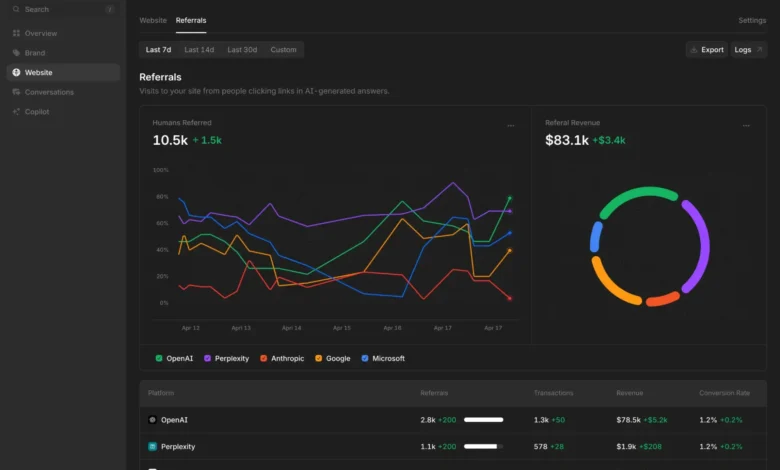
The digital marketing landscape is undergoing a profound transformation, driven by the rapid evolution of artificial intelligence and its integration into search and information retrieval. In this shifting paradigm, the traditional metrics of search engine optimization (SEO) are proving insufficient, necessitating the emergence of Answer Engine Optimization (AEO) and specialized AEO rank trackers. These innovative tools are designed to gauge a brand’s visibility within AI-generated answers, moving beyond mere website rankings to assess critical metrics such as citations, direct mentions, share of voice, and even sentiment within synthesized responses. As generative AI platforms like ChatGPT, Gemini, and Perplexity become primary conduits for information, understanding and optimizing for their outputs is no longer an option but a strategic imperative for any brand seeking sustained digital presence.
The Rise of Answer Engines: A New Paradigm in Information Retrieval
The advent of large language models (LLMs) and their integration into mainstream search has fundamentally altered how users interact with information online. Historically, a search query returned a ranked list of "blue links" directing users to individual webpages. Success in this environment was measured by a website’s position on the Search Engine Results Page (SERP), driven by keyword optimization, backlinks, and technical SEO. However, the landscape began to shift dramatically with the public release of advanced generative AI models in late 2022 and early 2023. These AI models do not simply list sources; they synthesize information from diverse web sources to construct coherent, narrative responses.
This shift presents both challenges and opportunities for brands. While the ultimate goal remains brand visibility and authority, the pathway to achieving it has diversified. AI answer engines prioritize context, comprehensiveness, and the ability to directly answer a user’s query, often drawing from multiple sources without explicitly directing the user to a specific website for the full answer. This evolution necessitates a new set of measurement tools and optimization strategies, giving rise to AEO. Industry experts and marketing professionals are increasingly emphasizing that brands failing to adapt to this new reality risk significant erosion of their digital footprint and competitive disadvantage.
Distinguishing AEO from Traditional SEO: Metrics and Methodologies
The core distinction between AEO and traditional SEO lies in what they measure and how they interpret visibility. Traditional SEO rank trackers meticulously chart a website’s position in a ranked list of search results, focusing on keyword rankings, organic clicks, and impressions. These metrics are inherently tied to the structural output of traditional search engines, which present discrete links for users to click.
AEO tracking, by contrast, operates within a fundamentally different framework. When a user asks an AI engine a question—for instance, "What are the best customer relationship management (CRM) systems for small businesses?"—the AI doesn’t return a list of ten websites. Instead, it compiles a single, often detailed, narrative response. This response is a synthesis of information drawn from various online sources, evaluating their authority, relevance, and factual accuracy. Within this synthesized answer, a brand’s presence can manifest in two primary ways:
- Citations: These are explicit references to a specific source, often accompanied by a direct link back to the originating webpage or content. A citation signifies that the AI engine deemed the content from that source particularly credible and authoritative for a specific piece of information.
- Mentions: These occur when the AI names a brand, product, or service within its response without providing a direct link. While not a direct traffic driver in the same way a citation is, a mention still signals significant brand presence within the broader information ecosystem that the AI draws upon. It indicates that the brand is sufficiently prominent or relevant to be included in the AI’s synthesis.
AEO rank trackers are engineered to capture both citations and mentions, and crucially, to differentiate between them. This capability is vital because while both contribute to brand visibility, their implications for content strategy and perceived authority differ. A citation suggests the content is a primary, trusted source, whereas a mention might indicate broad industry recognition or frequent association with a particular topic.
Beyond simple presence, AEO tracking delves into a richer set of signals:
- Share of Voice: This metric quantifies how often a brand is cited or mentioned relative to its competitors for a given set of prompts. It provides a macro-level view of a brand’s overall authority and prominence within AI-generated content.
- Sentiment Analysis: AEO tools can analyze the tone and context in which a brand is mentioned. Is the brand being portrayed positively, negatively, or neutrally? This is crucial for reputation management and understanding the qualitative impact of AI mentions.
- Average Position (within AI responses): Similar to traditional SEO’s position tracking, some AEO tools track where a brand’s citation or mention typically appears within the narrative of an AI-generated answer (e.g., early in the response, towards the end, or as a primary recommendation). This indicates the perceived importance or relevance of the brand in the AI’s synthesis.
These metrics provide a holistic view of a brand’s performance in the AI answer engine landscape, offering insights that traditional SEO tools, focused on keyword rankings and clicks, simply cannot deliver. Relying solely on SEO metrics in the age of AI means operating with a partial, and increasingly outdated, understanding of overall digital visibility.
Key Capabilities of Advanced AEO Rank Trackers

As the AEO category matures, sophisticated rank trackers are distinguishing themselves through a robust suite of features designed to provide actionable intelligence. The most effective tools combine multi-engine coverage with granular, citation-level analytics. When evaluating these platforms, several "must-have" features become apparent:
- Multi-Engine Coverage: Given the proliferation of AI answer engines (ChatGPT, Gemini, Perplexity, Claude, Copilot, Grok, etc.), a comprehensive tracker must monitor visibility across multiple platforms. Different engines may prioritize different sources or synthesize information in unique ways, making broad coverage essential for a complete picture.
- Real-time Data and Historical Tracking: The AI landscape is dynamic. Trackers must provide near real-time updates on citations and mentions, allowing brands to quickly identify shifts. Historical data is equally important for trend analysis and measuring the long-term impact of AEO strategies.
- Citation vs. Mention Differentiation: As discussed, the ability to distinguish between an explicit citation (with a link) and a simple mention is fundamental for understanding the nature of brand presence and refining content strategy.
- Sentiment Analysis: Automated sentiment analysis helps brands understand the qualitative aspect of their AI mentions, providing immediate feedback on brand perception within AI-generated narratives.
- Competitive Benchmarking: A critical feature is the ability to compare a brand’s AEO performance against key competitors. This includes comparing citation rates, share of voice, and even sentiment, revealing where rivals are winning and identifying strategic gaps.
- Actionable Insights and Reporting: Beyond raw data, the best AEO tools translate findings into actionable recommendations. This might include identifying content gaps, suggesting optimization opportunities, or highlighting influential sources. Customizable dashboards and reports are crucial for communicating performance to stakeholders.
- Query and Prompt Management: The ability to easily add, modify, and manage a diverse set of prompts relevant to a brand’s target audience and business objectives is vital. This includes supporting geo-specific or persona-segmented prompts.
- Source Attribution and Content Analysis: Advanced trackers can identify the specific URLs or content types that AI engines are citing or drawing from. This allows brands to reverse-engineer success and understand what kind of content resonates most with AI models.
These features aren’t abstract; they directly translate into practical workflows. For instance, multi-engine coverage ensures a brand isn’t blindsided by a competitor’s strong performance on a less-monitored AI platform. Real-time alerts allow for swift response to negative sentiment. Competitive benchmarking helps pinpoint strategic content opportunities. When evaluating tools, running the same set of prompts through free trials or demos of various platforms often reveals stark differences in data depth and accuracy, offering a practical assessment beyond feature lists.
Translating AEO Insights into Content Strategy
Collecting AEO data is merely the first step; the true value lies in transforming these insights into tangible content wins. A highly productive starting point involves a rigorous analysis of competitor visibility, particularly in instances where a brand is absent from AI answers while rivals are prominent.
Reverse-Engineering Competitor Visibility:
Most AEO trackers facilitate direct comparisons of citation rates and mention frequency for specific prompts across multiple brands. This comparative analysis forms the bedrock of editorial strategy. The process involves:
- Identifying Gaps: Pinpoint prompts where competitors consistently receive citations or mentions, while your brand does not.
- Deep Dive into Cited Content: For these specific prompts, investigate what content is being cited. This includes identifying the exact URLs, content formats (e.g., blog posts, research papers, product pages, comparison guides), and the types of sources (e.g., authoritative industry publications, niche blogs, academic studies, company websites). Tools like competitive analysis platforms, when used in conjunction with AEO trackers, can provide deeper context on the rivals’ broader content strategy.
- Pattern Recognition: Look for recurring themes or factors contributing to competitor success. Common patterns often emerge:
- Uniqueness of Data/Research: Competitors might be cited for original research, proprietary data, or unique industry insights that aren’t widely available elsewhere.
- Comprehensive Guides: AI engines often favor content that provides exhaustive, balanced, and well-structured answers to complex queries.
- Authoritative Sources: The AI might prioritize content from domains with high authority, established expertise, or specific industry certifications.
- Specific Content Formats: Certain prompt categories might see AI engines favoring particular formats, such as comparison tables for product choices, detailed how-to guides for instructional queries, or expert interviews for opinion-based questions.
- Regular Content Updates: AI models appreciate up-to-date information. Content that is frequently refreshed with the latest data or trends tends to perform better.
Turning Analysis into an Action Plan:
Once these patterns are identified, each gap can be mapped to a specific, actionable content initiative:
- Content Creation: Develop new content assets that directly address the identified gaps, focusing on the formats and depths favored by AI engines. This could mean creating a new comparison page, publishing original research, or developing an ultimate guide on a particular topic.
- Content Optimization & Refresh: Update existing content with more comprehensive data, new insights, or improved structure to make it more appealing to AI models. This is particularly effective for outdated but fundamentally strong pieces.
- Authority Building: Strategically pitch for inclusion in third-party roundups, expert interviews, or industry reports to bolster overall brand authority and increase the likelihood of mentions.
- Diversifying Content Formats: If AI engines favor certain content types for specific queries, adapt the content strategy to produce more of those formats.
- Building a Knowledge Graph: Ensure that all brand information, including product specifications, company details, and FAQs, is consistently structured and easily crawlable across the web, facilitating accurate AI synthesis.
The objective is not to merely imitate competitors but to understand the underlying value signals that AI answer engines prioritize for each query category. By leveraging internal expertise and proprietary data, brands can then create superior content that strategically positions them for optimal AI visibility.
Navigating the AEO Tool Landscape: Choosing the Right Solution
Selecting the appropriate AEO rank tracker is a strategic decision that depends as much on a team’s operational workflow and existing tech stack as it does on a tool’s feature list. Before diving into specific platforms, teams should conduct an internal assessment to narrow down the field:
- Budgetary Constraints: What is the allocated budget for AEO tools? Pricing structures vary significantly, from entry-level subscriptions to enterprise-grade solutions.
- Team Size and Expertise: Is the team new to AEO, or does it possess advanced analytical capabilities? Some tools offer more guided workflows, while others require deeper technical understanding.
- Integration Needs: Does the AEO tracker need to integrate with existing marketing platforms (e.g., CRM, CMS, SEO tools)? Seamless integration can streamline workflows and provide a unified view of performance.
- Number of Prompts/Keywords: How many prompts or queries does the team anticipate tracking? Tools often scale pricing based on prompt volume and the number of AI engines monitored.
- Reporting and Collaboration Requirements: How frequently will reports be needed, and how many team members require access to the data? Look for robust reporting capabilities and user management features.
A weighted scorecard approach can be invaluable for an objective comparison. Assign a priority weight to five to seven key criteria based on the above questions, then rate each tool on a 1-5 scale against these criteria. This quantitative approach helps mitigate bias and ensures the chosen tool aligns with specific organizational needs.
Leading AEO Rank Tracker Solutions: A Comparative Overview
The market for AEO rank trackers is dynamic and rapidly evolving, with new players and features constantly emerging. The following examples represent prominent solutions, each with distinct strengths:
-
HubSpot AEO:
- Best for: Teams seeking integrated visibility tracking and content execution within a unified marketing platform.
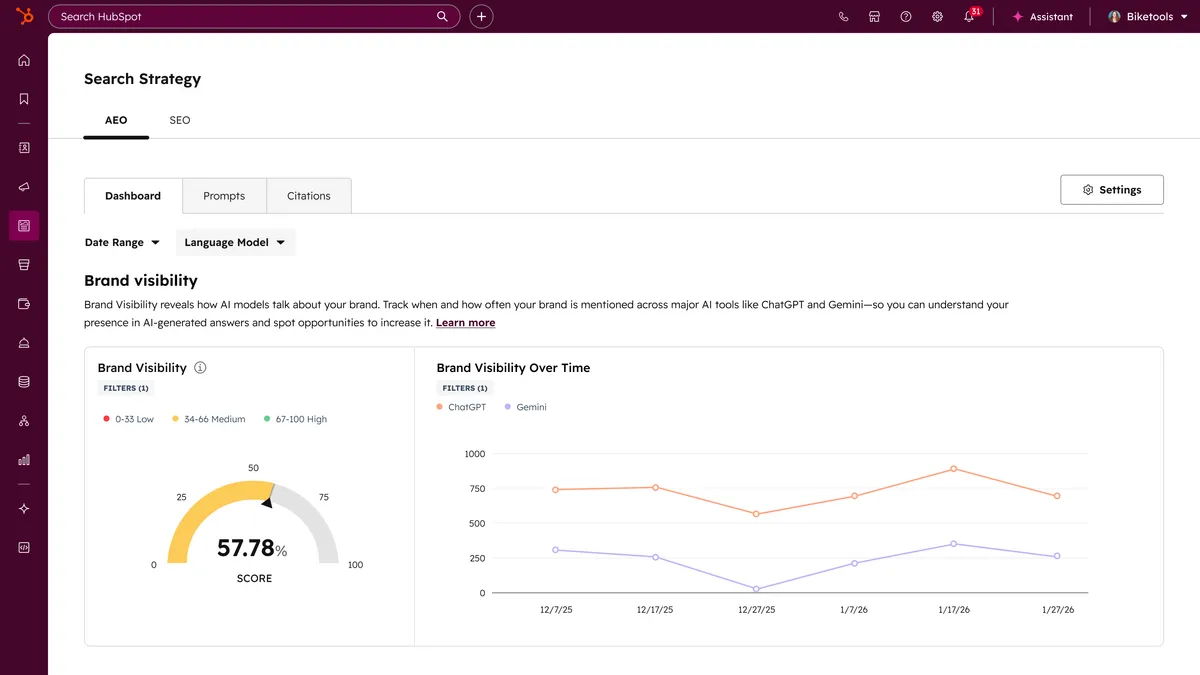
- HubSpot AEO offers robust tracking of brand visibility, citations, share of voice, and sentiment across major AI engines like ChatGPT, Perplexity, and Gemini. Its strength lies in its deep integration with the HubSpot ecosystem. For Marketing Hub Professional and Enterprise customers, CRM data can inform prompt suggestions, ensuring that tracking is tailored to specific business objectives and buyer personas. This allows for a more strategic approach, linking AI visibility directly to customer journey stages. The platform provides detailed citation analysis, identifying which domains and content types are most influential in AI answers. HubSpot offers a free 28-day trial, allowing users to track up to 10 prompts on ChatGPT, providing a low-barrier entry point for evaluation.
-
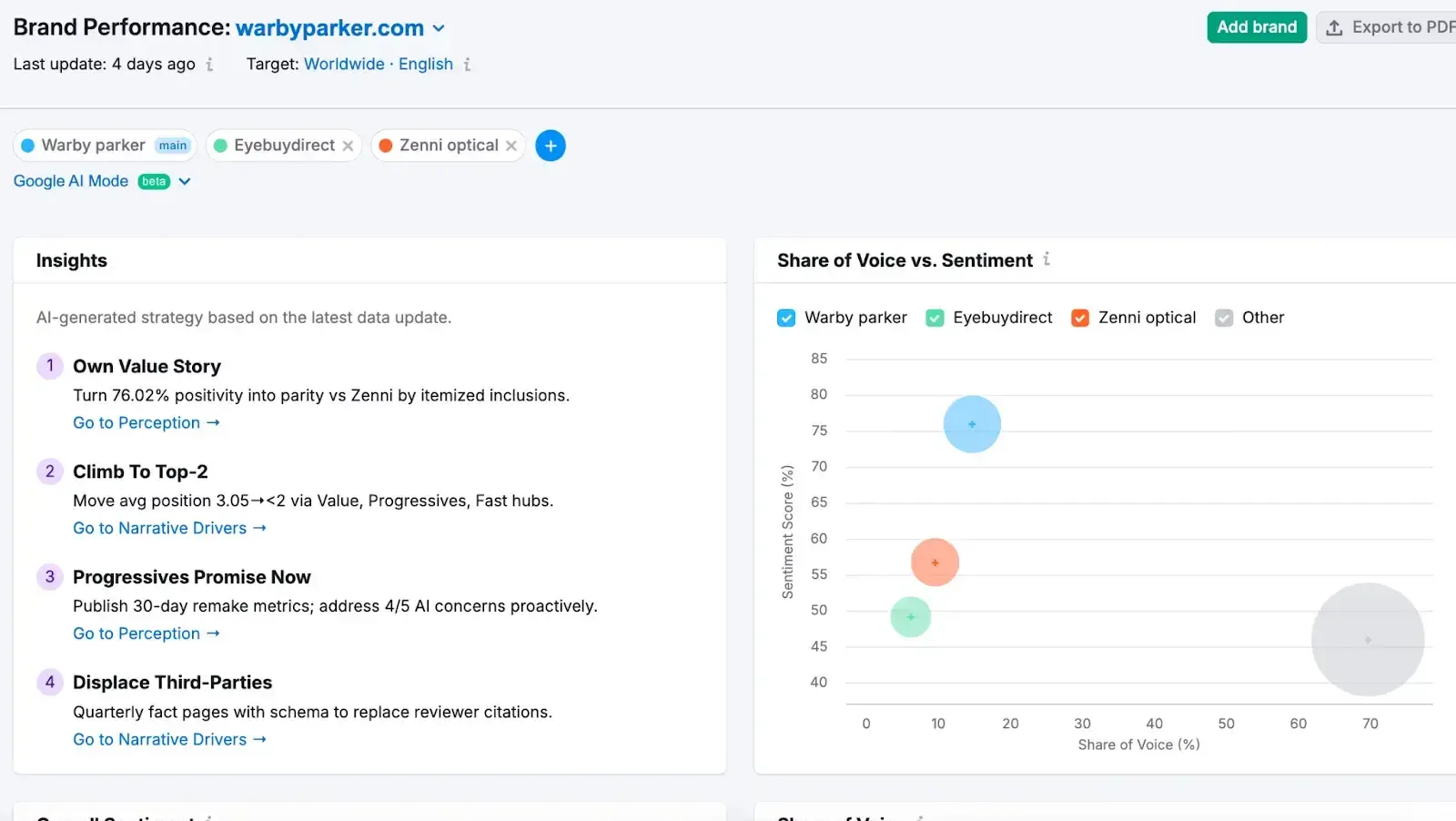
Semrush AI Visibility Toolkit:
- Best for: SEO teams looking to seamlessly incorporate AEO tracking into an existing Semrush workflow.
- Semrush, a well-established leader in SEO tools, has extended its capabilities with the AI Visibility Toolkit. It tracks brand mentions and sentiment across a broad spectrum of AI platforms, including ChatGPT, Google AI Mode, AI Overviews, Gemini, and Perplexity. A key feature is "Average Position" tracking, which indicates where a brand’s citation typically appears within the AI-generated responses for user-defined prompts. This allows for a comparative understanding of a brand’s prominence within AI answers. For existing Semrush users, this toolkit offers the advantage of consolidating digital marketing efforts within a single, familiar interface, reducing tool sprawl and leveraging existing data. The standalone toolkit is priced at $99/month, with Semrush One starting at $199/month.
-
Profound:
- Best for: Enterprise teams requiring deep analytics and comprehensive multi-engine coverage with advanced features.
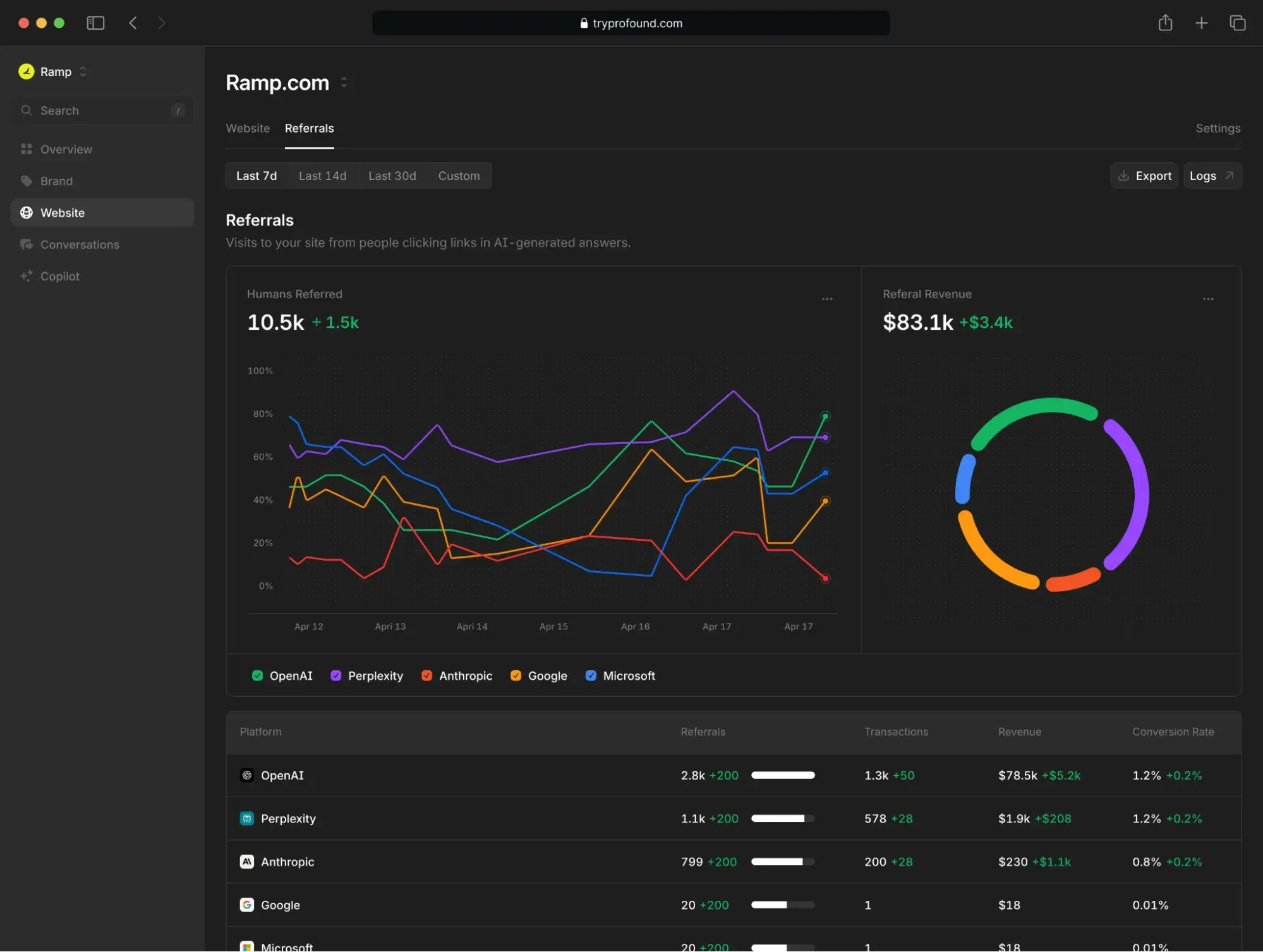
- Profound distinguishes itself with extensive coverage, monitoring up to 10 different AI answer engines, including ChatGPT, Gemini, Claude, Perplexity, Copilot, Grok, and DeepSeek. It offers advanced features such as "query fanout" (understanding how a single query expands into multiple sub-queries by the AI) and "prompt volumes" (analyzing the frequency and popularity of specific prompts). Like Semrush, Profound also tracks "Average Position" within AI responses. Its pricing structure is tiered, starting at $99/month for ChatGPT-only tracking (50 prompts), with multi-engine coverage beginning at a higher-tier Growth plan of $399/month, reflecting its focus on enterprise-grade analytics and broader platform integration.
-
Otterly:
- Best for: Lean teams and startups initiating AEO tracking without requiring enterprise-level complexity or budget.
- Otterly provides a streamlined yet effective solution for AEO, covering six primary answer engines: ChatGPT, Perplexity, Google AI Overviews, and Copilot, with Google AI Mode and Gemini available as paid add-ons. It offers essential metrics like average brand position in AI answers, sentiment tracking, and a unique "generative engine optimization audit" that evaluates over 25 factors influencing AI visibility. Otterly’s pricing is highly scalable, starting at an accessible $29/month for 15 prompts, making it an attractive option for smaller teams or those with limited budgets who need to establish a foundational AEO strategy.
The Future of Brand Visibility in the Age of AI
The landscape of AEO is still in its nascent stages, but its trajectory is clear: it will become an indispensable component of digital marketing strategy. As AI models continue to evolve, becoming more sophisticated in their understanding, synthesis, and presentation of information, the importance of optimizing for these "answer engines" will only grow. Challenges remain, including the black-box nature of some AI algorithms and the dynamic updates to their underlying models. However, the opportunity for brands to establish unparalleled authority and direct visibility within the AI-driven information ecosystem is immense.
Teams must adopt a mindset of continuous learning and adaptation. Regular review of prompt performance (weekly) and refresh of prompt lists (monthly) are crucial to stay abreast of market shifts and evolving buyer questions. Furthermore, the ability to measure persona-level visibility, through geo-targeting or audience segmentation controls, will become increasingly vital for brands targeting diverse customer segments or operating in varied regional markets.
While AEO rank trackers will not replace traditional SEO tools—as they measure fundamentally different aspects of digital presence—they will undoubtedly complement them, providing a more complete and nuanced picture of a brand’s overall search visibility. For those embarking on this journey, starting with a free tool like HubSpot’s AEO Grader can offer an initial baseline AI visibility score, providing a foundational understanding before committing to a comprehensive tracking solution. The age of AI is here, and with it, a new era of optimizing for answers, not just links.