Slack Unveils Comprehensive AI Agent Platform, Integrating Intelligent Automation Directly into the Flow of Work

San Francisco, CA – Slack, the ubiquitous collaboration platform, has announced a significant expansion of its AI capabilities, introducing a robust platform designed to empower organizations to build, deploy, and manage AI agents directly within the conversational interface where teams already operate. This strategic move aims to dismantle the silos that often plague enterprise AI adoption, ensuring that intelligent agents are not isolated tools but integrated teammates, deeply embedded in the real-time context of organizational communication and workflows.
The announcement comes amidst a global surge in enterprise investment in artificial intelligence, yet many companies continue to grapple with the practical challenges of integrating AI solutions into daily operations effectively. A recent report by McKinsey & Company indicated that while 70% of companies are experimenting with AI, only a fraction have successfully integrated it at scale across their business functions. The primary hurdles often cited include a lack of clear strategy, integration complexities, and the challenge of proving tangible return on investment (ROI). Slack’s new platform directly addresses these issues by grounding AI agents in the shared conversational context of a team, promising more relevant, actionable, and secure deployments that maximize AI value without disrupting the flow of work.
A New Paradigm for Enterprise AI Integration
The core of Slack’s enhanced platform lies in its commitment to an "agent-first" workspace, transforming Slack from merely a communication hub into a flexible, AI-powered command center for organizational tasks. This initiative is a natural evolution for Slack, which has long championed the integration of third-party applications and automated workflows to streamline operations. By extending this philosophy to AI agents, Slack seeks to provide a unified interface that eliminates the friction of switching between disparate tools and browser tabs, a common complaint among employees using fragmented AI utilities.
This release builds upon previous announcements, including the strategic evolution of Slackbot, first detailed in March, into a sophisticated conversational interface capable of orchestrating complex workflows across an entire enterprise technology stack. This vision underscores Slack’s belief that the true power of an agentic workspace emerges when agents collaborate seamlessly, leveraging collective intelligence to accelerate human-digital teamwork.
Slackbot: The Enterprise AI Orchestrator
At the heart of this integrated vision is Slackbot, which is being reimagined as the central nervous system for enterprise AI. No longer merely a basic chatbot, the upcoming Slackbot MCP (Messaging, Content, and Platform) Client, combined with the innovative AgentExchange, will enable Slackbot to integrate with over 6,000 Salesforce applications directly. This integration empowers Slackbot to intelligently route requests to the most appropriate specialized agent, coordinate multi-step workflows involving various systems, and manage the final handoff of information or action back to the user.
For instance, an employee no longer needs to remember which specific agent handles IT support, customer success queries, or financial reporting. Instead, they can simply articulate their need to Slackbot, which then intelligently delegates the task. This conversational interface is further enhanced by Slackbot’s ability to render MCP Apps, providing rich, app-specific experiences directly within the chat. By embedding interactive UI and tool integrations, Slackbot aims to consolidate data and actions that would typically require navigating multiple dashboards into a single, cohesive conversation.
Consider a marketing manager preparing for a critical client meeting. Instead of manually compiling data from various sources, they could ask Slackbot, "Prepare my briefing for the Acme expansion meeting." Behind the scenes, Slackbot would orchestrate a multi-agent response: it might ping an Analytics Agent to visualize adoption data from a CRM, a Sales Agent to pull relevant success stories from a knowledge base, and an internal document agent to retrieve an existing sales deck from Box. It could then draft an account strategy canvas, compare calendars to suggest a team review time via Google Calendar, and present all this information in a single, organized thread. This capability promises to transform raw questions into actionable strategies in mere seconds, drastically reducing preparation time and enhancing strategic agility.
Democratizing AI Deployment: Build and Deploy in Minutes
Recognizing that deployment friction often bottlenecks AI adoption, Slack has significantly streamlined the process of building and deploying agents. The platform now offers pathways for both "citizen developers" using no-code environments and professional developers working in sophisticated IDEs.
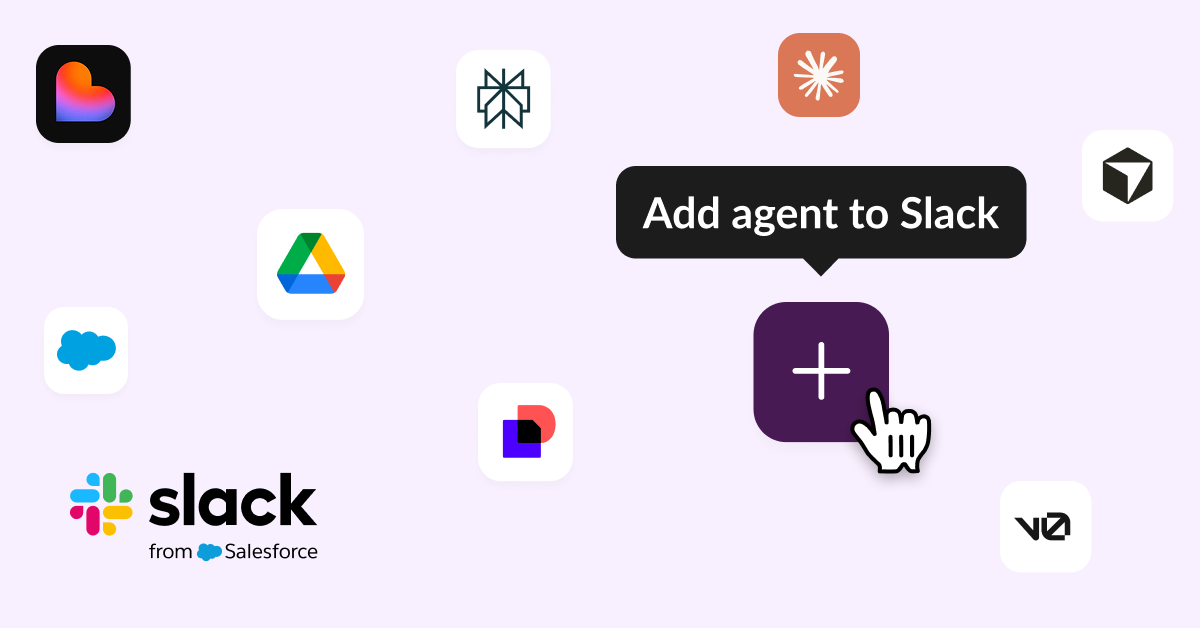
For non-developers and those utilizing "vibe-coding platforms" or point-and-click builders, the new "Add to Slack" option establishes a revolutionary deployment standard. This feature enables users to ship agents built on external services like Vercel and Lovable directly to Slack without requiring complex platform migrations. By automating OAuth, manifest configuration, and environment setup, Slack has reduced the journey from a simple prompt to a live, functional agent in Slack to a matter of seconds. Imagine a human resources department building a policy Q&A agent in Vercel to help employees navigate the company handbook; with a single click, this agent can be installed and immediately accessible within the Slack workspace, eliminating the need for specialized technical expertise in deployment.
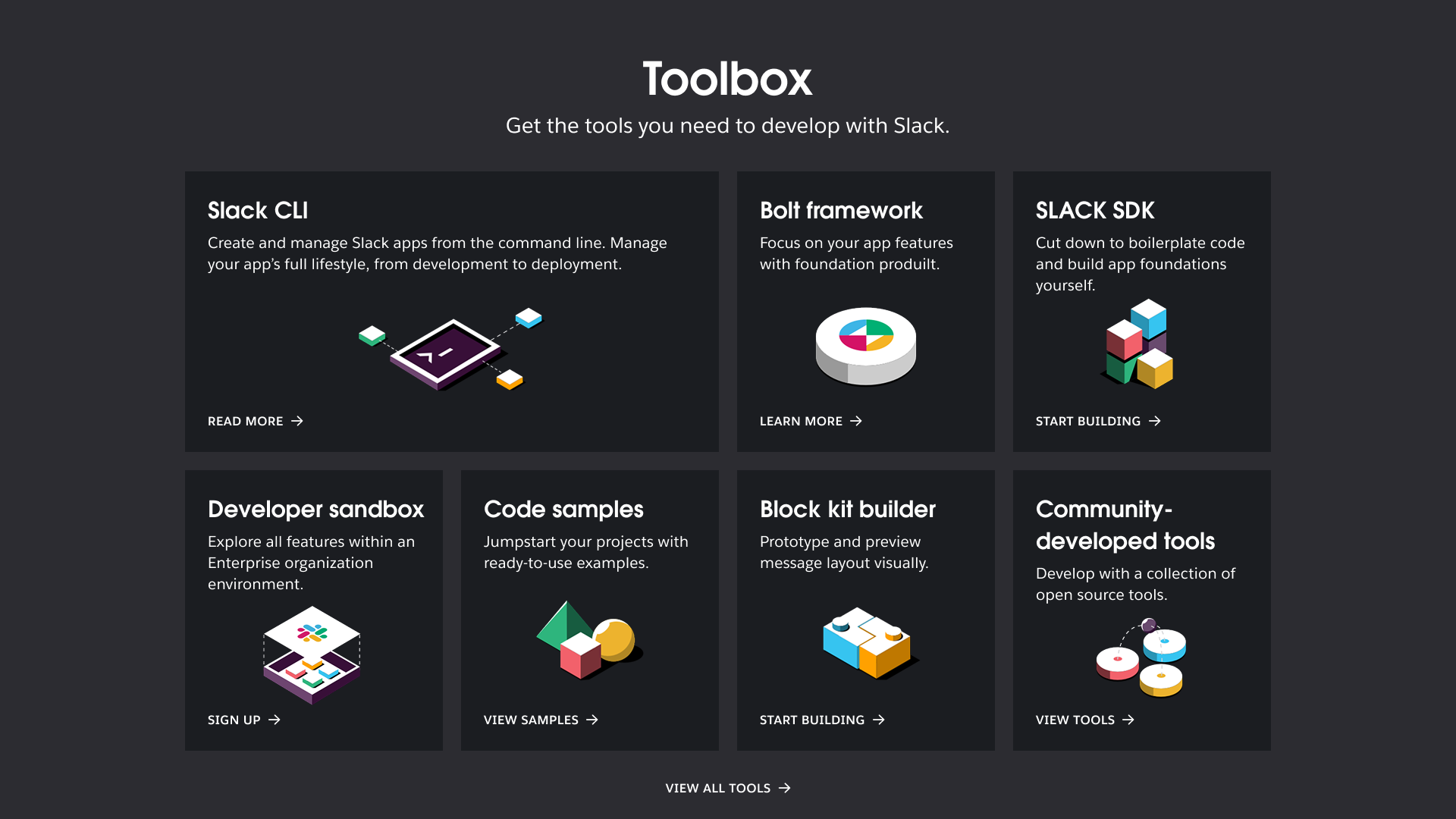
For professional developers creating more sophisticated agents, Slack introduces the Slack Agent Kit. This comprehensive toolkit, which includes enhanced Bolt frameworks and new CLI commands, is designed to facilitate the integration of agents built using any platform or framework into Slack, adhering to best practices. It offloads much of the complex chat setup and background coding, allowing developers to focus entirely on the specific tasks their AI should perform. For example, a developer building a custom IT helpdesk agent could run slack create agent from the CLI, select a Python template, and have a live agent in Slack within 10 minutes, complete with streaming text and "thinking" statuses. Integrating custom tools, such as searching Confluence, becomes straightforward with simple decorators, removing the need for Slack-specific tool registration boilerplate. This focus on core logic accelerates development cycles and fosters innovation.
Unified Management through AgentExchange and the Agent Browser
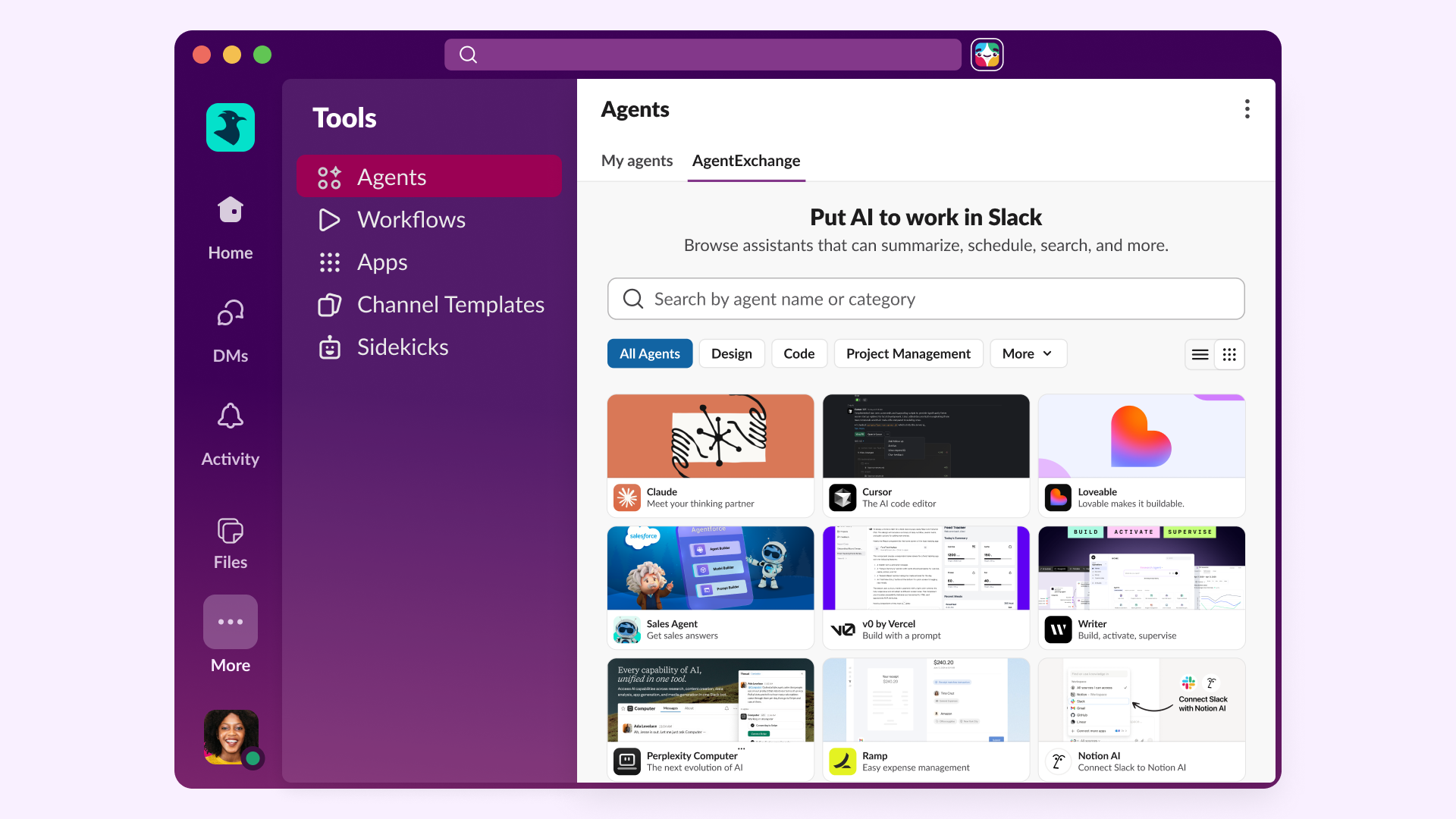
Effective AI adoption necessitates robust management and discoverability. If employees cannot easily find and utilize agents within their workflow, they will inevitably revert to manual processes. Conversely, if IT leaders lack governance over deployed AI solutions, "shadow AI" can pose significant security and compliance risks. Slack’s solution is AgentExchange, a unified marketplace that consolidates the rich ecosystems of AppExchange, Slack, and Agentforce into a single, secure experience.
Built on an ecosystem refined over two decades with enterprise-grade security at its core, AgentExchange serves as the central hub for discovering, acquiring, and managing trusted agents from leading partners such as Google, Anthropic, and Box. This curated marketplace ensures that only vetted, secure, and high-quality AI solutions are accessible to organizations.
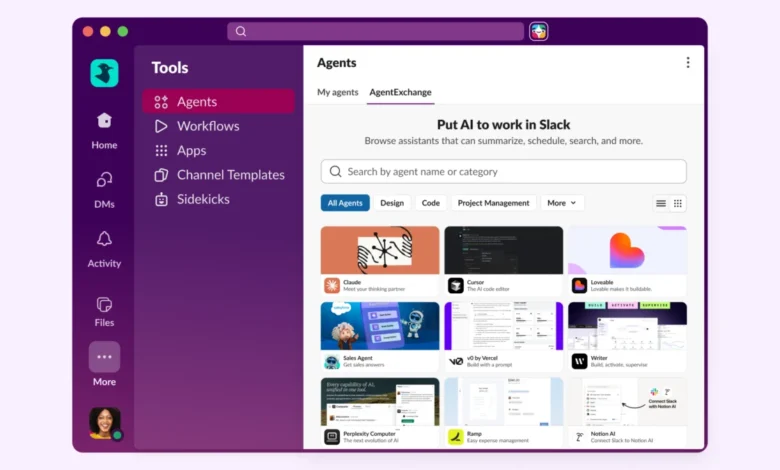
The agent browser within Slack brings this entire ecosystem directly into the flow of work. By navigating to Tools > Agents, users can browse AgentExchange, manage active agents in a unified tab, and instantly resume recent conversations. This seamless integration ensures that the collective power of the Salesforce and Slack ecosystem is always available precisely where teams collaborate, without requiring users to leave their primary workspace. For example, a marketing manager needing to analyze a 50-page industry report can simply open the Agent Browser, find and instantly install a vetted agent like Anthropic’s Claude, and receive a summary in minutes—all without ever leaving Slack.
Enriching Interactions with Block Kit’s New Components
The utility of AI extends beyond mere text generation; it lies in its ability to present information in an actionable, easily digestible format. Recognizing that a "mountain of messy text" can obscure insights, Slack has significantly enhanced its Block Kit, the UI framework for building interactive apps and agents.
The updated Block Kit introduces five powerful new components: Card, Alert, Carousel, Data Table, and Chart. These components enable developers to construct high-density, interactive user interfaces for agents without the need for custom code. Crucially, these rich UIs render natively across both desktop and mobile platforms, ensuring that complex data remains comprehensible and actionable regardless of the device.
This capability transforms how teams interact with AI. Imagine a sales leader preparing for a meeting, asking their agent for an update on escalated issues. Instead of a verbose text response, the agent delivers a rich, interactive UI: a Card summarizing the contact’s key interests, an embedded Chart reflecting consumption rates from Tableau, and a Data Table detailing open opportunities. The leader can then instantly ask the agent to schedule a prep session, with the agent comparing calendars and suggesting a time slot, allowing the leader to send the invite without ever leaving the conversation thread.
The implications extend to the development lifecycle itself. A developer leveraging a Claude or Vercel agent in Slack to generate code can receive a rich code preview directly in the channel, eliminating the need for constant copy-pasting into external browsers for testing. The team can then suggest changes and approve updates collaboratively alongside the AI agent using these new interactive blocks, deploying updated logic instantly once finalized—keeping the entire development cycle within the unified flow of work.
Enterprise-Grade Trust and Security
Central to Slack’s expanded AI platform is its unwavering commitment to enterprise-grade security and governance. The company acknowledges that the most powerful AI tools are only truly useful if they can be deployed with confidence, ensuring data sovereignty and compliance.
Slack’s platform incorporates granular AI exclusion controls, allowing organizations precise management over what data AI agents can access and process. Real-time permission synchronization ensures that access rights are consistently enforced, while full audit logging provides comprehensive oversight of all agent activities. These robust security features are designed to empower technical leaders to deploy AI agents at scale, mitigating the risks associated with "shadow AI" and facilitating a smooth transition from experimental AI initiatives to enterprise-wide adoption. Slack also provides detailed data and security best practices for AI apps and agents, offering clear guidelines for secure implementation.
The Future of Work is Integrated and Intelligent
Slack’s latest advancements underscore its vision for the future of work: a future where AI is not a peripheral tool but an integral, contextualized part of team collaboration. By bringing AI out of isolated browser tabs and into the shared conversational context of Slack, the platform aims to unlock unprecedented levels of productivity and innovation.
From the intuitive interactive UIs powered by Block Kit to the rapid deployment capabilities offered by the Slack developer toolkit and the unified management provided by AgentExchange and the agent browser, Slack is providing the essential building blocks for making AI a truly productive and embedded component of any team’s operations. As Slack leadership has emphasized, the goal is to create an environment where Slack is not just where your team works, but where your intelligent agents work seamlessly alongside them, transforming how organizations operate and innovate.
The new capabilities are slated for progressive rollout, with developers encouraged to explore the expanded platform and tools at Slack.dev to begin building the next generation of integrated AI agents. This strategic evolution positions Slack as a critical enabler for enterprises looking to harness the full potential of artificial intelligence within their daily workflows, promising a more efficient, intelligent, and collaborative future.