Revenue Operations Emerges as Critical Pillar for Modern Enterprise Growth, Driving Strategic Alignment and Predictable Success


In the rapidly evolving landscape of enterprise strategy, a pivotal function known as Revenue Operations (RevOps) has ascended to the forefront, transforming the traditional, siloed approaches to sales, marketing, and customer success into a cohesive, data-driven engine for growth. Far from being a mere administrative adjunct, RevOps is now recognized as the strategic backbone of any organization aiming for predictable revenue, sustained customer satisfaction, and scalable efficiency. This behind-the-scenes orchestration defines processes, implements sophisticated strategies, empowers revenue-generating teams, and ultimately drives measurable results across the entire customer lifecycle. Without a robust RevOps function, organizations risk operating in a vacuum, lacking the strategic direction and unified process necessary to navigate complex market dynamics and meet ambitious growth targets.
The Genesis and Evolution of Revenue Operations
The concept of Revenue Operations is not an overnight phenomenon but rather the natural evolution of specialized operational roles within businesses. Historically, sales operations and marketing operations emerged independently, focusing on optimizing their respective departments. Sales operations concentrated on CRM management, sales forecasting, territory planning, and compensation structures, while marketing operations managed marketing automation platforms, lead generation processes, and campaign analytics. However, as the digital era ushered in a more informed and empowered buyer, the traditional handoffs between these departments became increasingly fraught with inefficiencies. Leads generated by marketing often lacked sufficient qualification for sales, sales processes were disconnected from customer onboarding, and customer success teams sometimes operated in isolation from the initial sale.
This fragmentation led to inconsistent customer experiences, wasted resources, and unreliable revenue forecasting. Around the mid-2010s, with the widespread adoption of Software-as-a-Service (SaaS) models and the increasing emphasis on customer lifetime value (CLTV), businesses began to realize the urgent need for a unified approach. The term "Revenue Operations" gained traction as a strategic response to these challenges, advocating for the integration of marketing, sales, and customer success operations under a single, overarching function. This shift was not merely cosmetic; it represented a fundamental re-thinking of how organizations generate, sustain, and expand revenue, emphasizing end-to-end process ownership and a holistic view of the customer journey. Industry analysts like Forrester and Gartner began highlighting the strategic imperative of RevOps, predicting its rapid adoption across diverse sectors as a key differentiator for competitive advantage.
Unlocking Value: The Strategic Imperative of Intentionality
At its core, RevOps imbues an organization’s actions with intentionality, ensuring that every decision, process, and strategy is backed by data, logic, and a clear purpose. This means moving beyond anecdotal evidence and gut feelings to embrace a culture of continuous improvement driven by empirical insights. RevOps ideally encompasses all revenue-facing processes, spanning the entire sales cycle from the initial lead generation at the top of the funnel, through qualification and conversion, to post-sales activities such as customer renewals and expansion in customer success. By meticulously tracking leads from their inception to closure, and often beyond, RevOps provides an unparalleled understanding of the customer journey.
One of the most profound values of RevOps lies in its ability to bridge the perennial chasm between marketing and sales. The historical disconnect, characterized by misaligned goals, conflicting metrics, and inefficient handoffs, significantly diminishes the collective power of these critical departments. RevOps acts as the unifying force, marrying marketing and sales efforts to create a cohesive, streamlined, and efficient experience for prospective and existing buyers. This alignment ensures that marketing campaigns generate leads that are truly sales-ready, and that sales teams leverage consistent messaging and a deep understanding of customer needs informed by marketing intelligence.
The modern sales industry is undeniably buyer-centric. Customers today are more informed, have greater access to information, and demand consistent, value-adding experiences at every touchpoint. Customer experience (CX) has rapidly become a top priority, often outweighing traditional considerations like pricing. A seminal 2020 report by Walker Info, "Customers 2020: A Progress Report," notably highlighted that consumers increasingly value experience over pricing, a trend that has only accelerated. Further reinforcing this, statistics reveal that 86% of buyers are willing to pay more for a great customer experience, according to Superoffice. The influence of peer validation is also paramount, with 93% of consumers stating that online reviews significantly influence their purchasing decisions, a figure echoed in the B2B sector where 92% of B2B buyers are more likely to purchase after reading a positive review, as reported by G2. These statistics underscore the critical need for a frictionless, enjoyable customer journey, which RevOps is uniquely positioned to deliver, thereby fostering retention and growth. By centralizing the ownership of the customer journey, RevOps professionals gain a thorough understanding of where customers engage, where they disengage, and what factors contribute to successful conversions, empowering them to optimize every touchpoint.
Navigating the Operational Labyrinth: Challenges and Solutions
Despite its immense potential, the implementation and execution of Revenue Operations are not without their challenges. The primary adversary of effective operations is either a poorly defined process or, equally detrimental, poor execution of an otherwise sound process. RevOps teams are tasked not only with strategizing and defining effective processes but also with ensuring their consistent execution and continuous adaptation to meet evolving organizational needs. Coordination is paramount, particularly when dealing with the myriad teams that directly interact with sales, such as sales enablement, customer success, and marketing, all of whom contribute to revenue growth and maintenance.
While these teams share the overarching mission of setting customers up for long-term success, their independent focuses can lead to significant overlap, confusion, and miscommunication regarding responsibilities. This often results in fragmented, "Frankenstein" processes, where different teams optimize for their specific departmental goals rather than the collective organizational win. A crucial aspect of the RevOps mandate is to ensure that every department has clear, specific tasks and deliverables, fostering collaborative planning and coordination to eliminate redundancy. By streamlining and executing unified processes, RevOps prevents operational silos, ensuring that the entire organization functions as a cohesive unit towards shared revenue objectives.
The absence of a clear process or methodology inevitably leads to a lack of strategy, transforming sales efforts into mere guesswork, random outreach, and hopeful anticipation. This operational chaos is the antithesis of what an operations professional strives for. A strong RevOps team establishes a clear, measurable process, defines success metrics, and instills accountability across all relevant teams. When these teams are effectively enabled to execute their mandates, it initiates a positive domino effect, leading to consistent revenue generation, higher customer satisfaction, and predictable business growth.
Metrics and Methodologies: Driving Predictable Growth
Revenue Operations measures team success through performance-centric goals. A common baseline expectation for go-to-market teams is to consistently achieve 60% attainment. If attainment falls below this threshold, RevOps is responsible for diagnosing the underlying issues, such as ineffective channel support, misaligned ideal customer profiles, or flawed strategic implementation. The ideal operational machine, as envisioned by RevOps, thrives on the volume of the right activity; the greater the volume and sample size of correctly targeted efforts, the more predictable the outcomes become. This data-driven approach allows for precise forecasting and resource allocation.
The success of RevOps is inextricably linked to that of sales enablement, as both functions are ultimately measured by revenue attainment. Tying these two areas together helps to close critical communication gaps and directly contributes to the overall success of the sales team. While traditional operations teams often rely on basic territory and account planning for initial prioritization, more advanced strategies are required for sustained competitive advantage. Modern RevOps leverages sophisticated tools, often incorporating data and buyer intelligence, to refine prioritization and guide teams towards the most impactful activities and accounts.
Technological Foundations: CRM as the Single Source of Truth
Consistency in the sales motion is paramount for operational excellence. To achieve this, RevOps relies heavily on a sophisticated technology stack, with the Customer Relationship Management (CRM) system serving as the foundational cornerstone. Successful RevOps professionals understand that maximizing the utility of the CRM is non-negotiable. High CRM adoption rates and impeccable data integrity are vital, as they create a common source of truth that every department within the company can trust and rely upon. Without accurate and comprehensive CRM data, strategic decisions are built on shaky ground, leading to suboptimal outcomes.
Visibility into the entire revenue funnel is another non-negotiable requirement for effective RevOps strategy. Operations teams must possess a granular understanding of the customer journey, from initial engagement to conversion and beyond. This end-to-end visibility allows them to identify bottlenecks, optimize conversion points, and understand the impact of various interventions. Furthermore, robust tracking mechanisms are essential for perfecting the sales process. RevOps needs to precisely identify what activities are yielding results, what is not working, and where prospects or customers are disengaging.
A common pitfall organizations face is unreliable activity logging by sales representatives, which often leads to inaccurate or incomplete data in the CRM. Decisions made based on such flawed information are inherently unreliable, effectively causing teams to undermine their own efforts. This is where reliable CRM integrations become critical. These integrations ensure that all relevant activities are automatically logged and accurately tracked, eliminating the risk of unlogged, incorrectly tracked, siloed, or duplicated data. The CRM transforms into a definitive, one-stop source of truth, providing the accurate data necessary for informed strategic decisions.
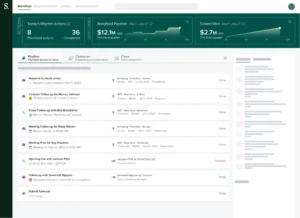
Platforms designed with operational effectiveness in mind, such as Playbooks, exemplify the advanced tools available to RevOps teams. These platforms offer leaders enhanced visibility into representatives’ performance and outcomes, enabling them to identify strengths and weaknesses. They facilitate the enhancement of workflows through automation and compliance features, track progress in real-time, and empower data-backed decision-making through native CRM reporting packages. By standardizing and structuring workflows, Playbooks ensures that critical processes are consistently followed, reducing the risk of oversight and promoting uniform execution. Such tools provide a clearer window into process weak points, "black holes" where opportunities are lost, and areas ripe for intensified effort. This eliminates the inefficiencies and risks associated with "random acts of selling" and operating without clear processes, guiding representatives towards the next best activity and contact through a meticulously designed sales experience.
The Future Landscape: RevOps Summit as a Catalyst
The growing recognition of RevOps’ strategic importance has led to an increasing demand for knowledge sharing and professional development within the field. Events like the upcoming RevOps Summit, hosted by XANT, serve as crucial platforms for industry experts and operations professionals to convene, discuss best practices, and explore emerging trends. These gatherings are vital for professionals to stay abreast of the rapidly evolving landscape of revenue generation, enabling them to implement cutting-edge strategies and overcome complex operational challenges.
The XANT RevOps Summit, scheduled for July 14th from 9 AM to 12 PM PT, is a virtual and completely free event, making it accessible to a wide audience of professionals seeking to deepen their expertise. Featuring several industry experts and seasoned operations professionals, the summit promises invaluable insights into the intricate, behind-the-scenes work of operations and its dramatic impact on business results. Such initiatives underscore the industry’s commitment to fostering a community of practice, where collective knowledge can be leveraged to drive continuous improvement and innovation in the critical domain of Revenue Operations. The insights shared at these summits are not just theoretical; they equip attendees with actionable strategies to refine their operational frameworks, enhance predictability, and ultimately, accelerate their organizations’ growth trajectories in an increasingly competitive global marketplace.
Related posts: